Types of Squishies Explained: PU Foam, TPR, Silicone & Slow-Rising Guide
Searching for different types of squishies reveals a wide range of squeeze toys that look similar in photos but behave completely differently in the hand. Depending on the base polymer and internal fill, a squishy can flatten like warm bakery dough and take ten seconds to recover, snap back instantly like a rubber gummy bear, stretch into sticky gel strands, or hold a dense indent like cold caramel.
Classifying squishies by their material family rather than just their outer character shape helps collectors, parents, and desk fidgeters pick a texture that matches their sensory preference and workspace habits.
The Five Main Types of Squishies by Material Family
Across retail stores and sensory catalogs, modern squishies fall into five core material groups:
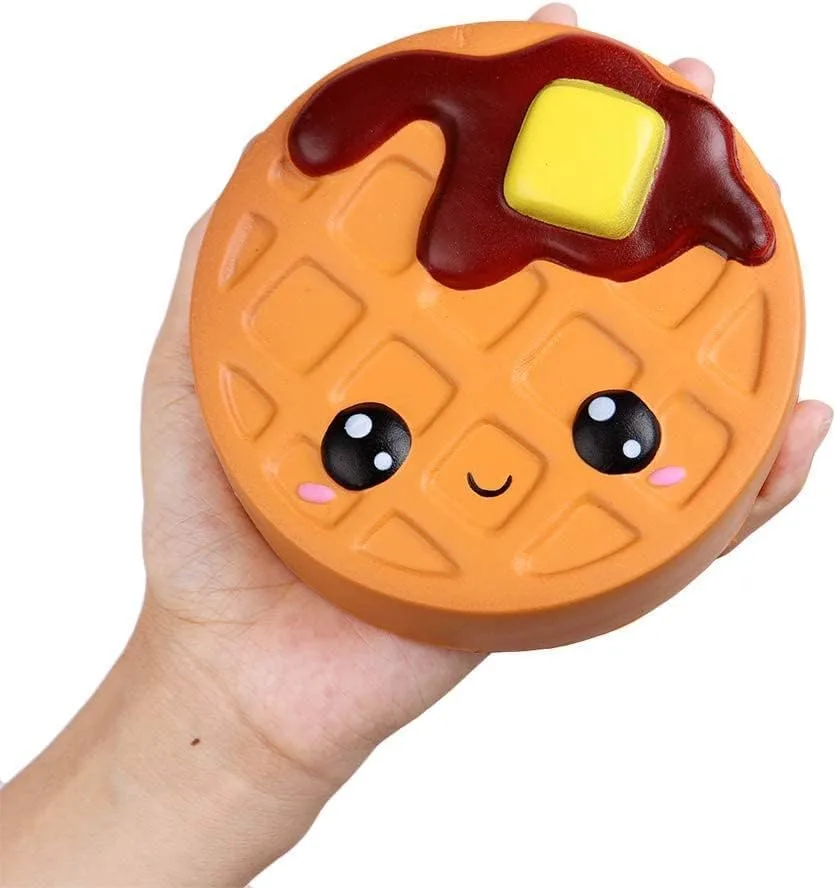
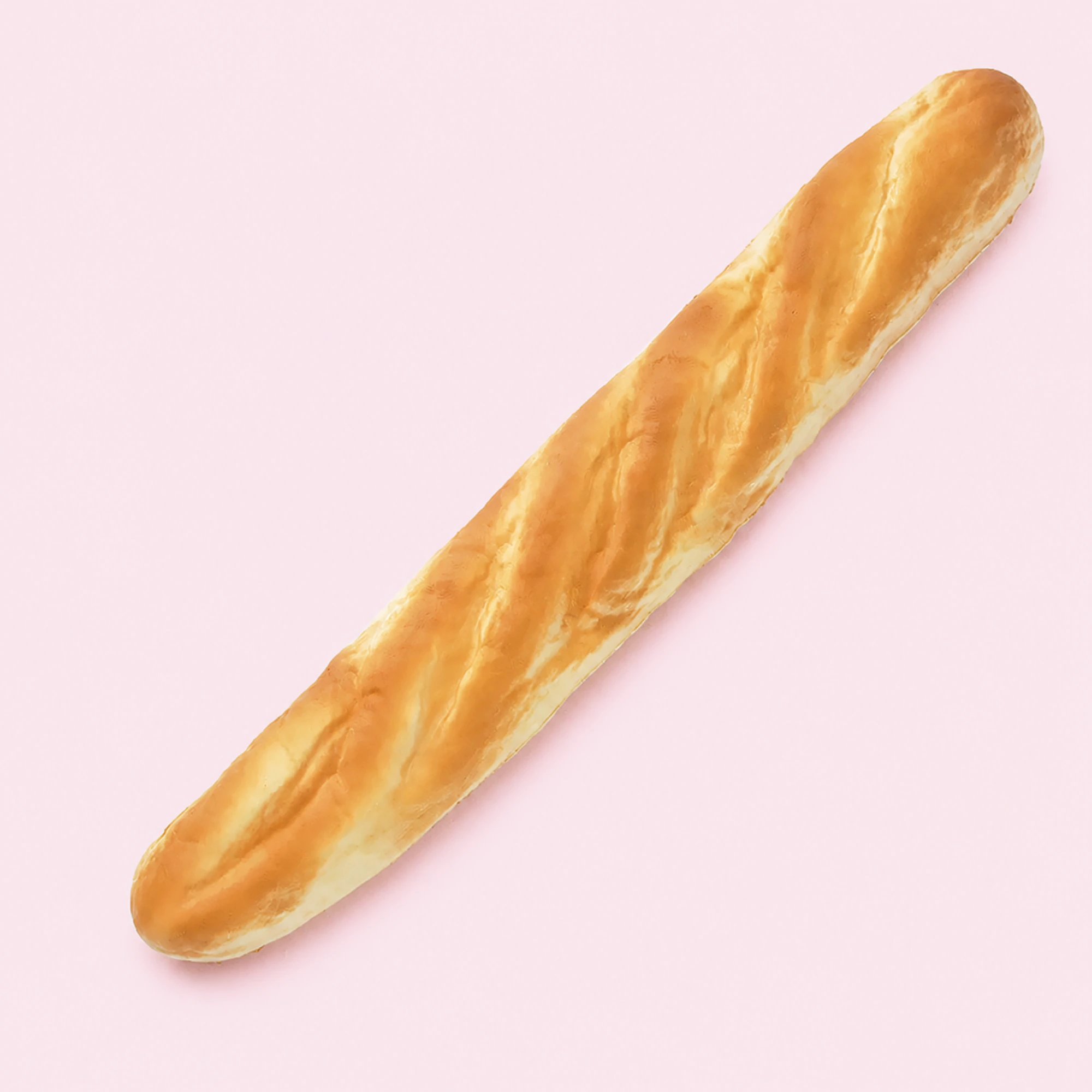
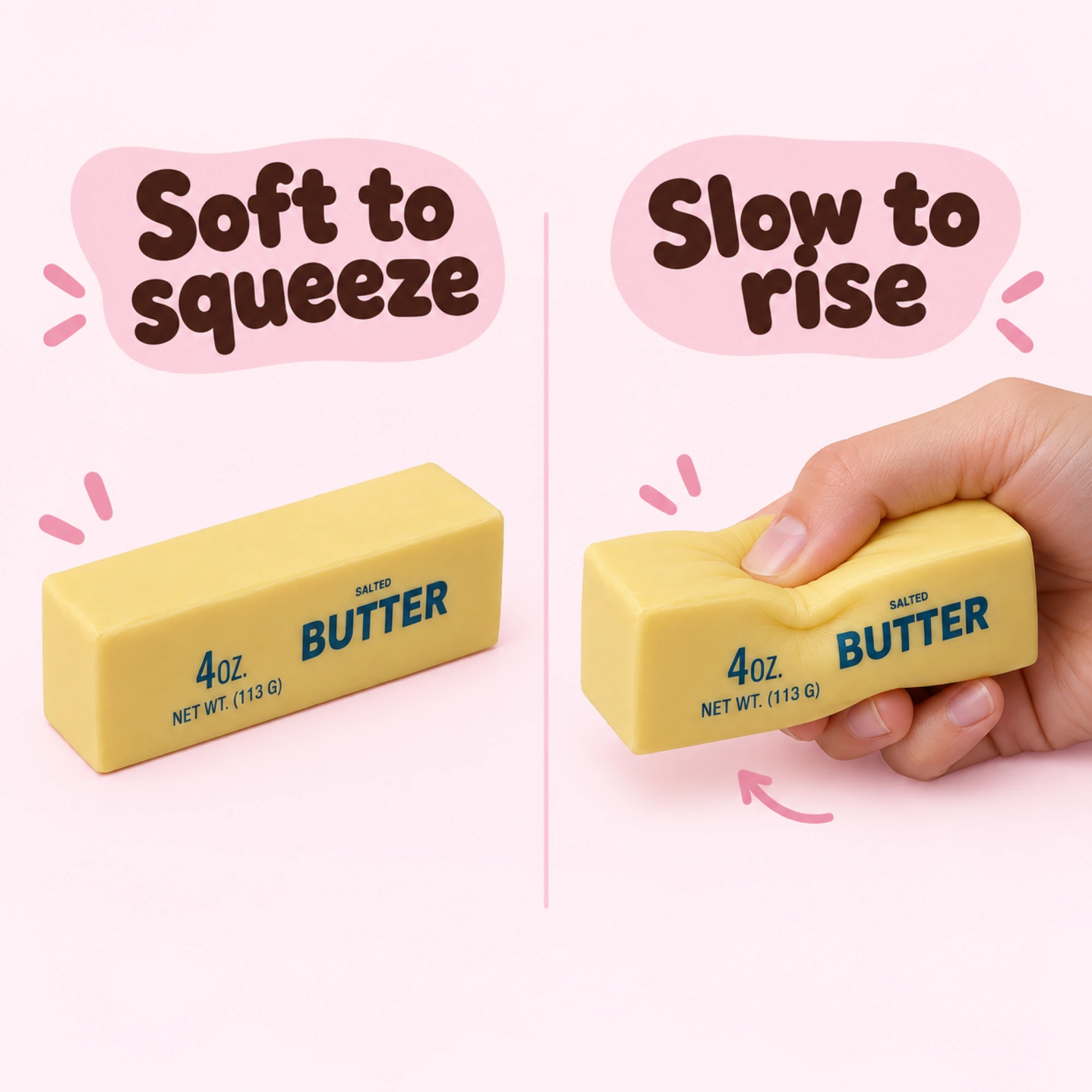
- Open-Cell Slow-Rising Polyurethane (PU) Foam: Used for bakery loaves, food blocks, and sticks of butter, these squishies are molded from micro-cellular memory foam with a smooth exterior paint skin. Squeezing the toy pushes air out of millions of interconnected pores, creating a dry, pillowy compression and a gradual 8 to 15 second rebound.
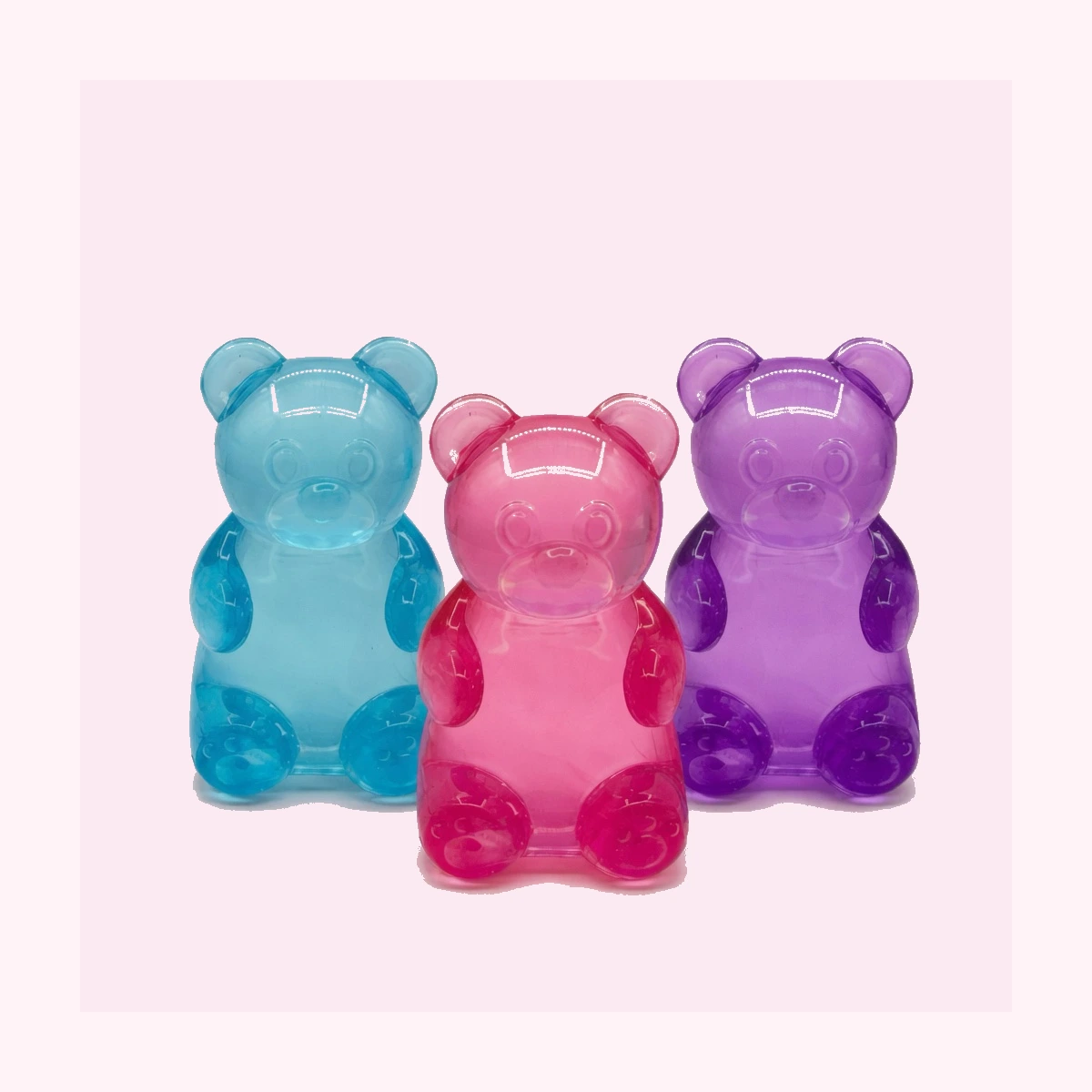
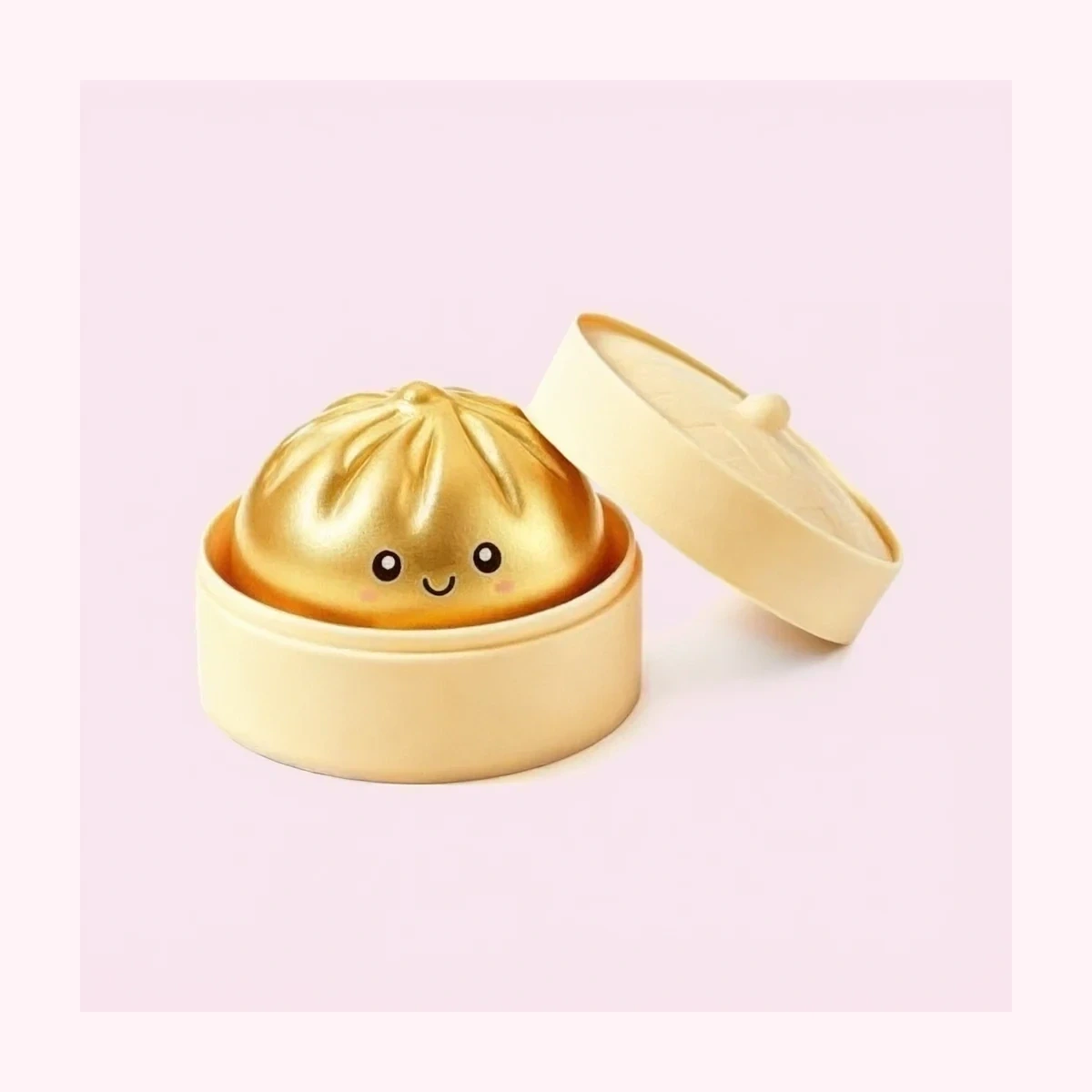
- Thermoplastic Rubber (TPR) Mochi Squishies: Pocket-sized translucent animal charms are injection-molded from oil-extended thermoplastic elastomer. They have a solid, non-porous rubber body that squishes with a quick, springy bounce and washes clean under tap water.
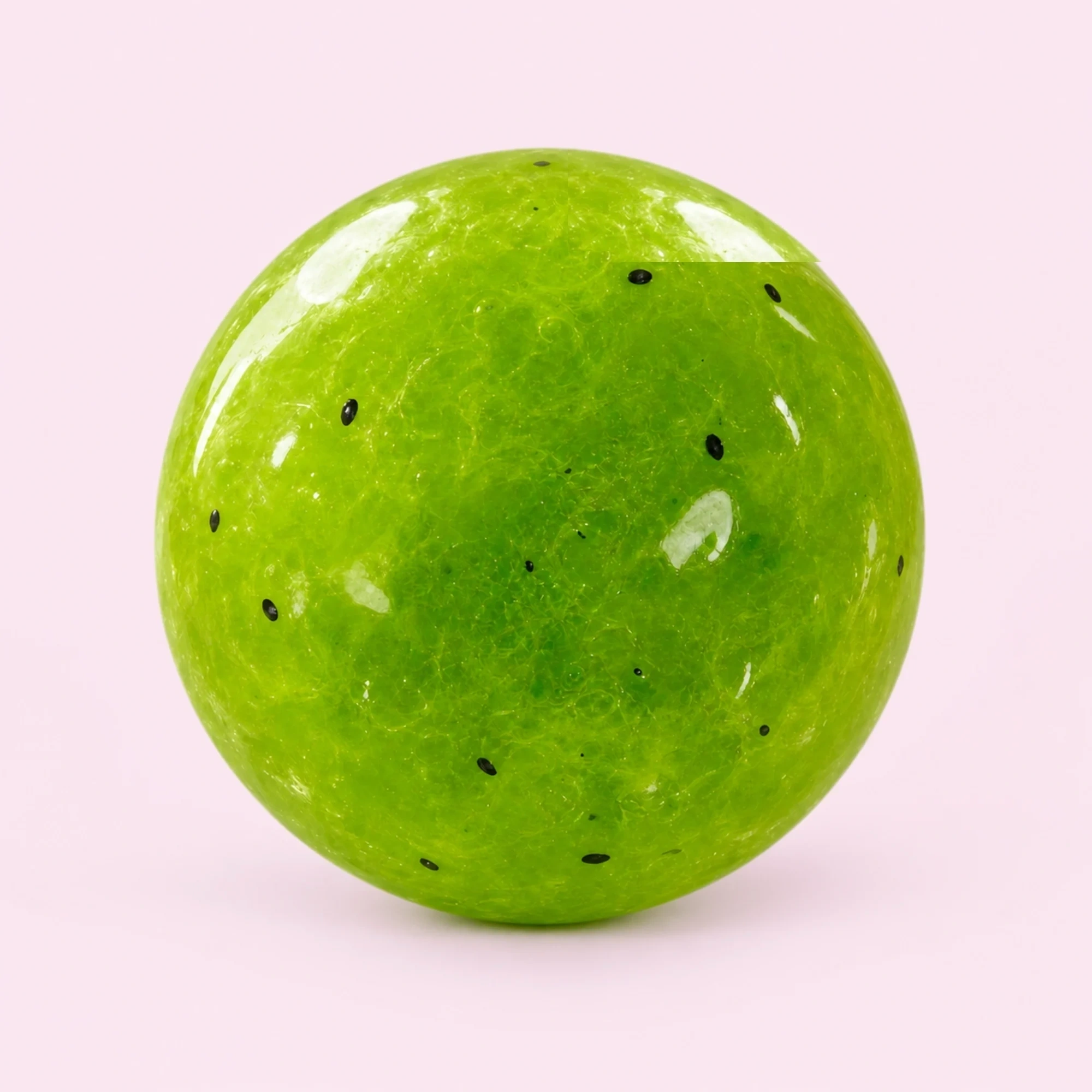
- Platinum-Cured Taba Liquid Silicone: Handmade and boutique cat-paw squishies use ultra-low-durometer two-part silicone gel. They deliver a jiggly, marshmallow-like pull with high surface tack, which is why most collectors keep them dusted with flocking powder or sealed inside a clear pinch bag.
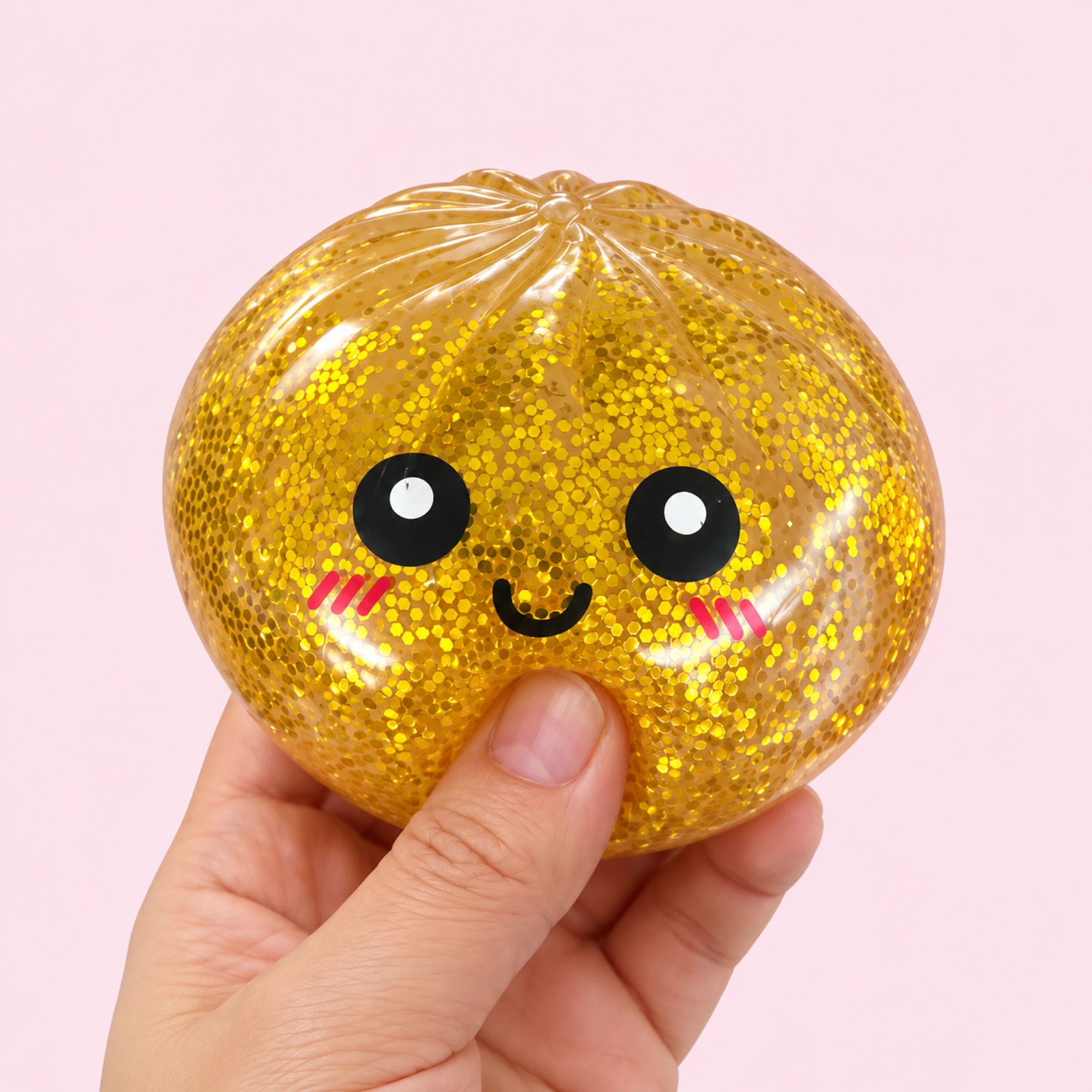
- Maltose-Filled High-Density Gel Balls: Enclosed in a thick TPR or latex membrane, these stress balls contain viscous maltose syrup or high-viscosity PVA gel. Instead of bouncing right back, they offer heavy grip resistance and slowly ooze back into a sphere after a hard squeeze.
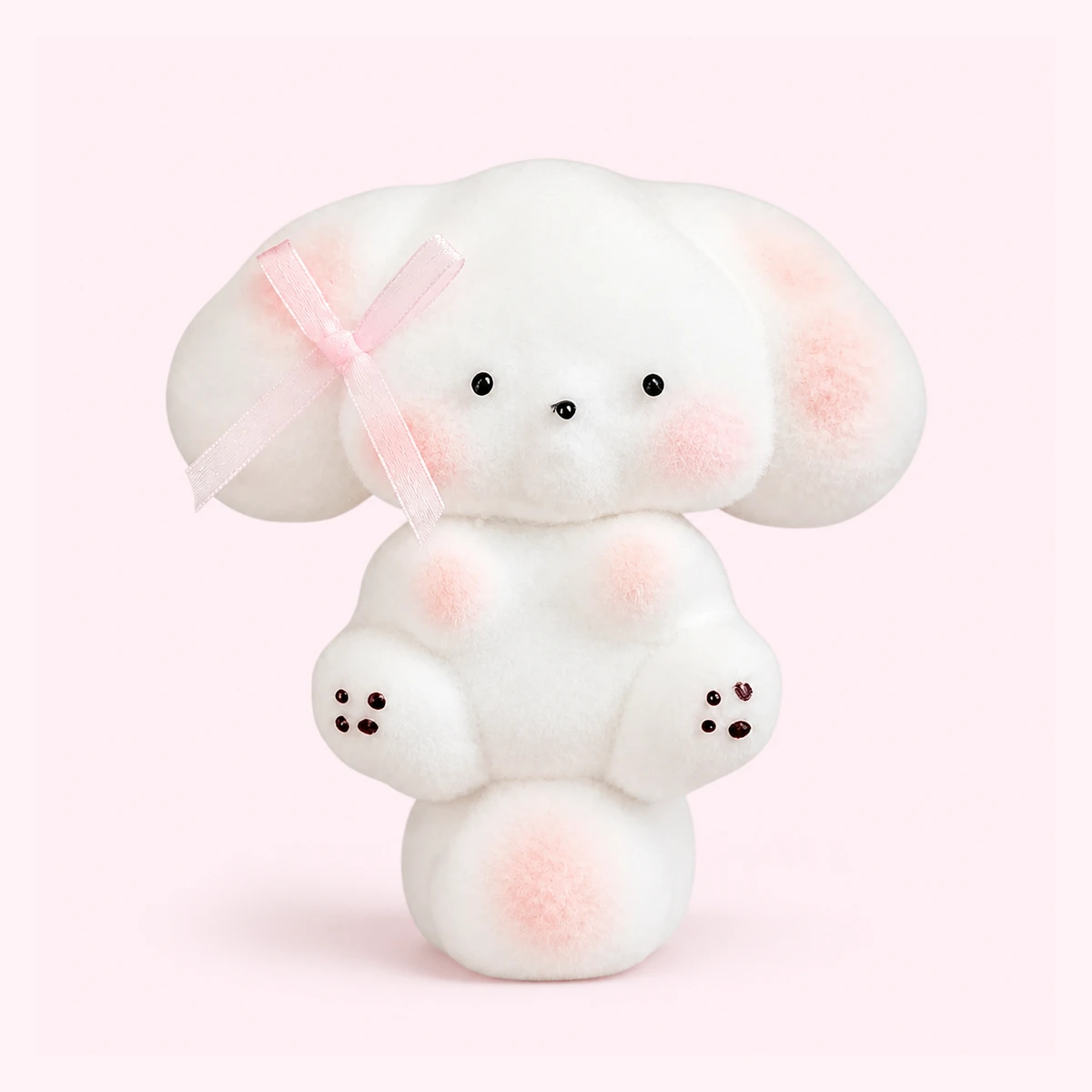
- Fiber-Stuffed Paper and Plush Squishies: Popular in craft kits and plushie lines, these combine polyester fiberfill or memory-foam crumb inside laminated paper or spandex fabric for a dry, crinkly or pillow-soft squeeze.
Knowing which polymer sits inside the toy prevents surprises around surface stickiness, washing care, and rebound timing.
Airflow vs. Elastomer Elasticity: Why Rebound Speeds Differ
The tactile gap between slow-rising foam and gel or rubber squishies comes down to pneumatic airflow versus solid volume displacement. Open-cell polyurethane foam is mostly air trapped inside flexible polymer walls. When your palm compresses a PU foam butter block flat against a desk, air vents gently through microscopic channels. Once you release your grip, the elastic cell walls pull air back in at a metered pace, producing the signature slow rise without any sticky residue on your fingers.
By contrast, TPR mochi charms, Taba silicone paws, and maltose balls are closed, non-breathable systems. When you squeeze a solid silicone paw or a syrup-filled sphere, no air leaves the toy; instead, the polymer or gel bulges outward between your fingers. Because soft elastomers rely on plasticizers and low crosslinking density to feel supple, their bare surfaces naturally attract lint, pet hair, and desk dust unless kept inside a protective pouch or coated in cornstarch.
Types of Squishies Compared: Rebound, Surface Tack, and Care Matrix
The comparison matrix below evaluates all five squishy categories across internal structure, rebound speed, surface feel, and daily maintenance:
| Squishy Type | Core Polymer / Fill | Rebound Speed | Surface Feel | Cleaning & Desk Care |
|---|---|---|---|---|
| Slow-Rising PU Foam | Open-cell polyurethane memory foam | Slow rise (8 to 15 seconds) | Dry, smooth painted skin | Wipe with dry cloth; never submerge in water |
| TPR Mochi Charm | Oil-extended thermoplastic rubber | Instant springy snap (under 1 second) | Slightly tacky rubber | Wash with mild soap and water; dust with cornstarch |
| Taba Liquid Silicone | Platinum-cured low-durometer gel | Snappy gelatinous bounce (1 to 2 seconds) | Very sticky or flocked | Keep inside pinch bag or re-dust with powder |
| Maltose Gel Stress Ball | Thick TPR bladder + maltose syrup | Heavy, slow plastic ooze (3 to 6 seconds) | Matte rubber skin | Rinse outer skin gently; avoid sharp fingernails |
| Fiber / Paper Pillow | Laminated paper or plush + polyfill | Medium fiber loft (2 to 4 seconds) | Smooth tape or soft fabric | Spot clean only; keep away from moisture |
Choosing between an open-cell foam block and a gel elastomer comes down to whether you want bag-free, dry keyboard fidgeting or a high-resistance pinch toy.
Slow-Rising PU Foam Examples in the FunnySquishy Catalog
For sensory seekers who prefer dry, bag-free slow-rising polyurethane foam that sits cleanly next to a laptop or notebook, the FunnySquishy catalog features four stick-of-butter and brick options:
The FS-BUTTER-005 description says it is a soft, slow-rising stick-of-butter toy made from dense premium foam, and the spec table names Material/Fill as Dense premium PU foam, size Palm-sized, and age Kids 3+ and adults. The same description gives a supplier reference weight of approx. 45 g and says weight may vary.
FS-BUTTER-005 is listed at 1299 cents, which is 12.99 US dollars, with a compare price of 2449 cents, which is 24.49 US dollars.
For shoppers comparing single sticks against shared desk sets, FS-BUTTER-011 is a 2-pack at 1999 cents, which is 19.99 US dollars, with compareCents 3249, which is 32.49 US dollars. The spec table says Material/Fill Soft foam, size Palm-sized, shape Stick of butter, and age Kids 3+ and adults.
If you want a three-piece rotation for home, backpack, and office, FS-BUTTER-007 is a set of three butter-stick-shaped toys at 2299 cents, which is 22.99 US dollars, with compareCents 3749, which is 37.49 US dollars.
For fidgeters who enjoy a wider two-stick block profile with a slow, drawn-out recovery, FS-BRICK-P006 is the Blue Butter Brick Squishy 2 Pack at 1999 cents, which is 19.99 US dollars, with compareCents 3749, which is 37.49 US dollars. The description says it takes a full-hand squeeze, folds flat, rises on its own slow schedule, and includes two sticks, for desk, car, and classroom.
How to Match Each Squishy Type to Your Sensory and Desk Needs
Selecting the right squishy material depends on where and how you plan to use it:
- Clean Desk and Classroom Fidgeting: Open-cell PU foam models such as FS-BUTTER-005, FS-BUTTER-011, and FS-BRICK-P006 operate silently and leave zero oil or powder on computer mice, textbooks, or keyboards.
- Heavy Grip Resistance: If you prefer high-force hand exercise over a gentle slow rise, a maltose-filled gel ball provides dense squeezing resistance, while a two-stick PU foam block like FS-BRICK-P006 offers a full-hand fold without risk of syrup leaks.
- Washable Pocket Charms vs. Display Collectibles: TPR mochi figures can be rinsed in the sink after being dropped outdoors, whereas painted slow-rising PU foam squishies last longest when squeezed with clean hands and kept dry.
Frequently Asked Questions
What is the difference between PU foam and TPR mochi squishies?
PU foam squishies are made from breathable open-cell polyurethane memory foam that vents air for a dry, 8 to 15 second slow rise. TPR mochi squishies are solid, non-porous thermoplastic rubber charms that bounce back instantly and feel slightly sticky unless dusted with powder.
Which type of squishy has the slowest rebound time?
Open-cell polyurethane (PU) foam squishies deliver the longest and smoothest rebound time, typically taking 8 to 15 seconds to fully regain their shape after being folded flat.
Which FunnySquishy PU foam butter packs are best for desk and classroom use?
The FS-BUTTER-005 single stick ($12.99 USD) is ideal for individual desk use, while the FS-BUTTER-011 2-pack ($19.99 USD), FS-BRICK-P006 Blue Butter Brick 2-pack ($19.99 USD), and FS-BUTTER-007 3-pack ($22.99 USD) provide multiple dry, silent slow-rising sticks for classrooms and shared study spaces.