

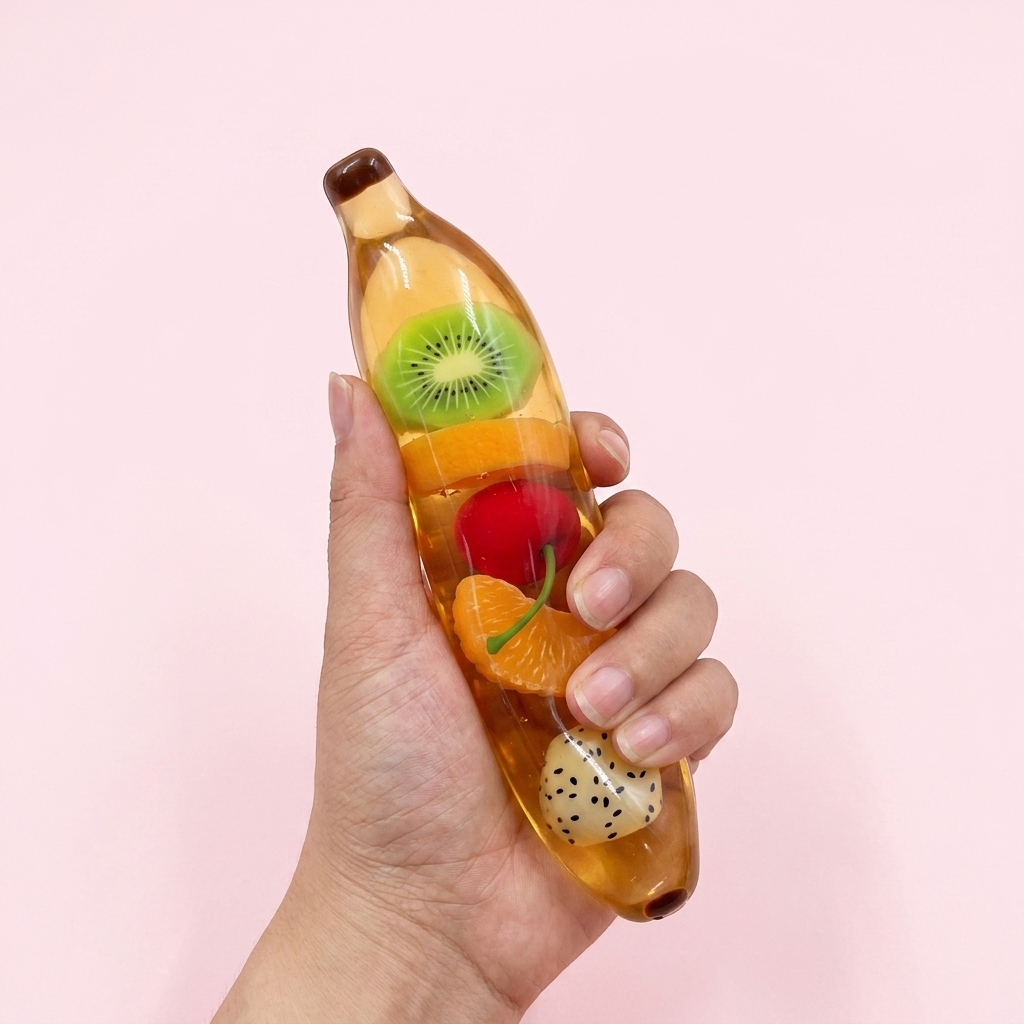

If you have scrolled through TikTok or Instagram lately, you have probably seen a hand slowly pressing into what looks exactly like a stick of butter—only for it to puff back into shape seconds later. That oddly satisfying clip is selling millions of butter squishy toys around the world. But behind the viral video is a genuinely clever little object: part sensory tool, part stress reliever, part collectible. This guide breaks down what a butter stick squishy actually is, how the slow-rise magic works, what to look for before buying, and how to keep yours in good shape for years.
Table of Contents
- What Is a Butter Squishy?
- How Slow-Rising Foam Works
- Realistic Design Details That Sell the Illusion
- Types of Butter Squishy Toys
- Sensory and Therapeutic Value
- How to Choose a Good One (Buying Guide)
- Care and Maintenance
- Why Butter Squishies Went Viral
- FAQ
What Is a Butter Squishy?
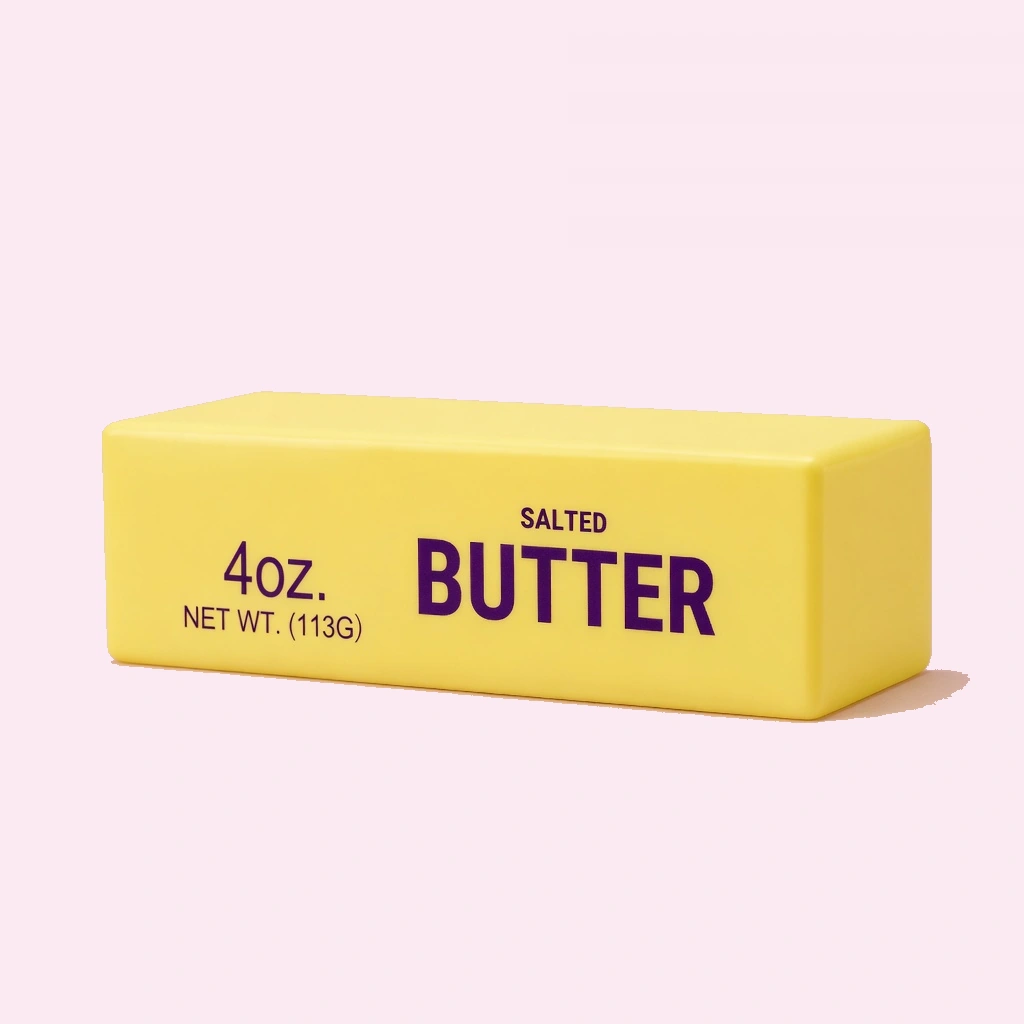
A butter squishy is a soft foam fidget toy molded and painted to look like a real stick or block of butter. The name comes from the uncanny realism—the pale-to-golden yellow gradient, the faux paper wrapper, even the subtle sheen that mimics a chilled dairy block. Squeeze it and it compresses like dough; release it and it slowly rises back to its original shape.
It belongs to the broader family of squishy stress toys, but the butter version stands out for two reasons. First, the food-mimicry is unusually convincing, which is exactly what makes the videos so shareable. Second, the best ones are true slow rising squishy toys, meaning the rebound is gradual and hypnotic rather than instant and springy. That slow recovery is the whole point—it is what separates a premium realistic butter squishy from a cheap rubber knockoff.
How Slow-Rising Foam Works
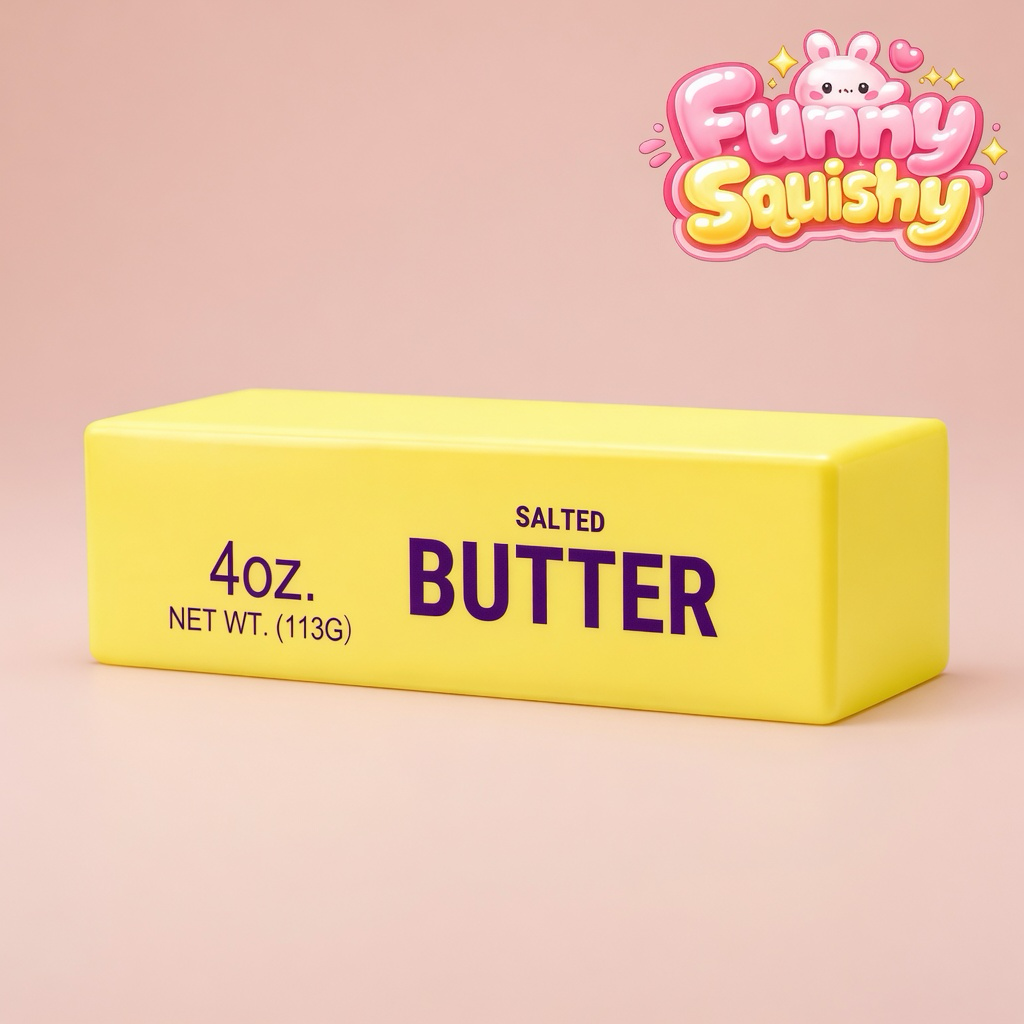
Inside a slow-rise squishy: compressed air cells gradually refill to create that satisfying slow rebound.
The satisfying part isn't the squeeze—it's the wait. Slow rising is a physical property of the foam itself, usually a soft polyurethane (PU) memory foam. Inside the toy is a structure of tiny interconnected air cells. When you press down, you force air out of those cells and collapse the foam. When you let go, air has to flow back in through narrow channels before the foam can re-expand. That airflow restriction is what creates the slow, controlled rise.
Rebound speed is essentially a design spec, and you can think of it in three rough tiers:
- Fast-rise: snaps back in under a second—common in cheaper or older squishies.
- Slow-rise: takes roughly 3–10 seconds to fully recover—the sweet spot most people want.
- Ultra-slow-rise: 15 seconds or more, prized by collectors for the most dramatic effect.
Denser foam with smaller, tighter air cells generally rises more slowly. A quality butter stick squishy is engineered for that mid-to-slow range so the rebound is visible and relaxing without feeling stiff or sluggish.
Realistic Design Details That Sell the Illusion
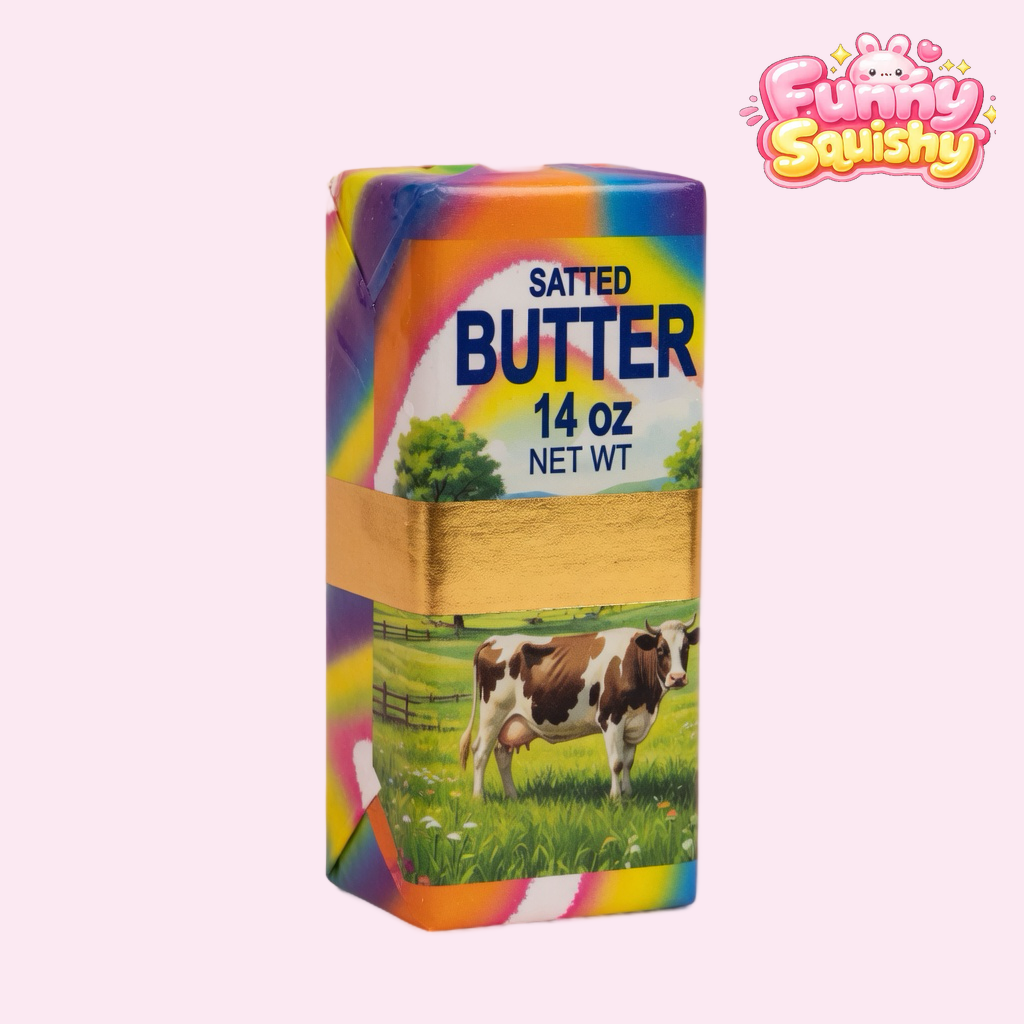
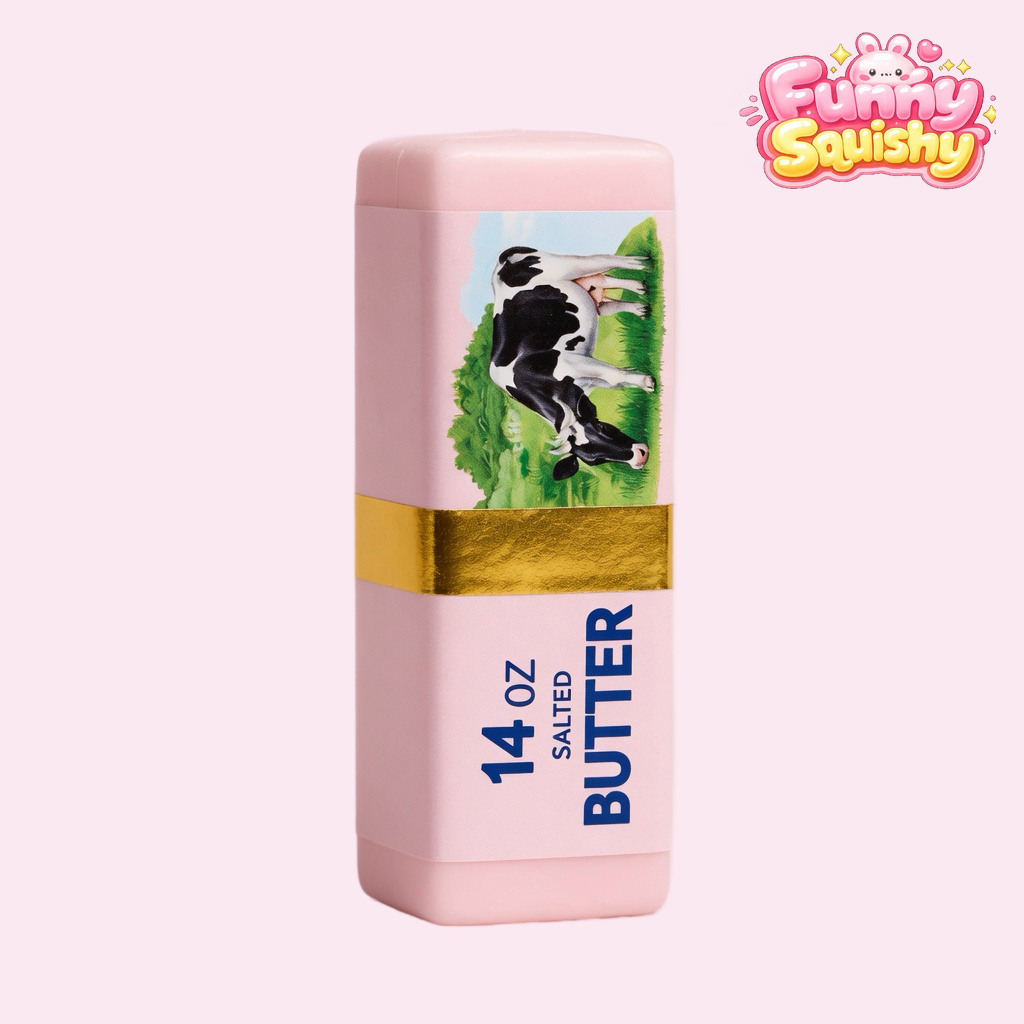
Quality butter squishies layer color gradients, printed wrappers, and surface texture to nail the dairy illusion.
What turns a yellow foam brick into a convincing prop is the finishing work. Manufacturers layer several details to nail the look:
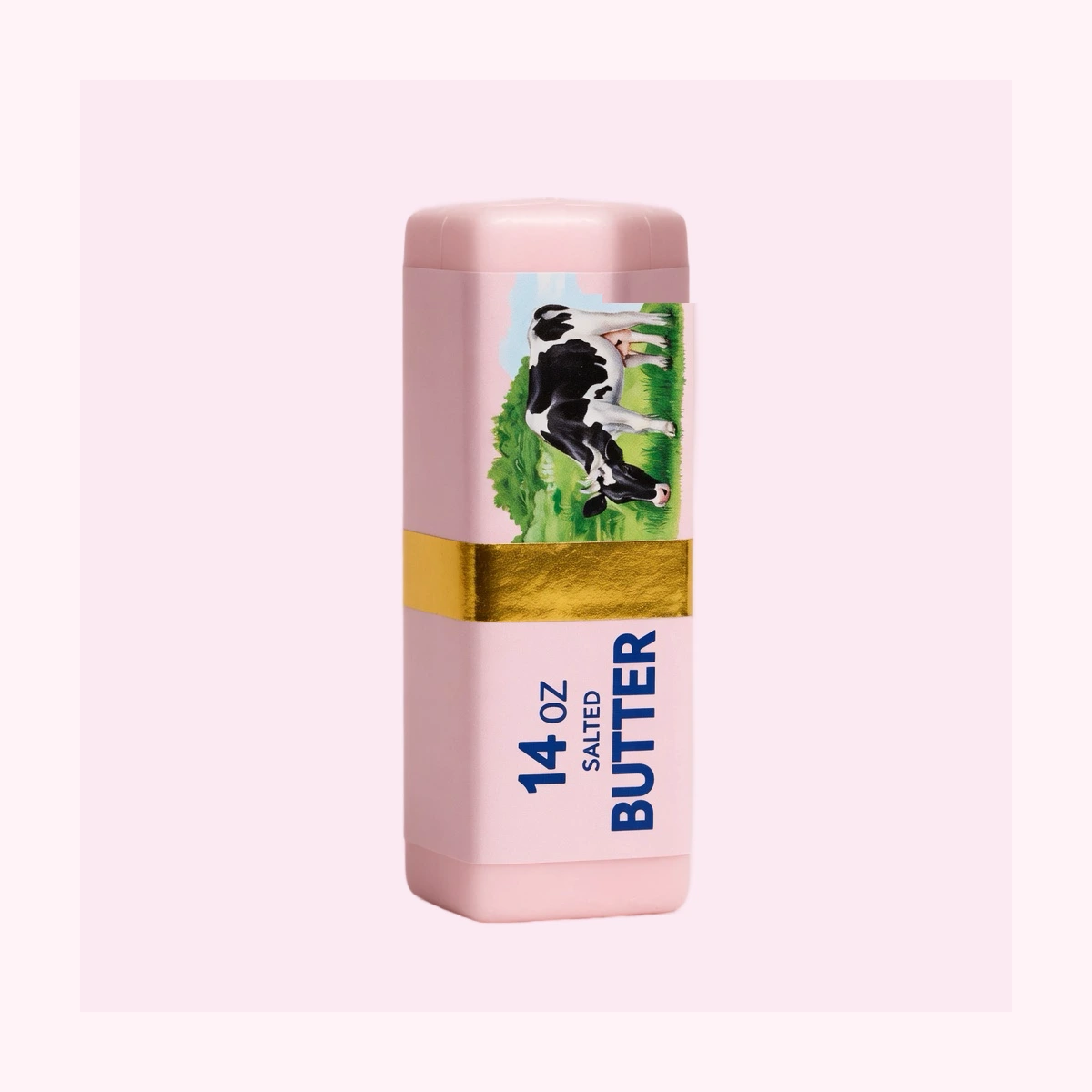
- Printed wrapper graphics: a mock paper or foil wrapper, often with a retro dairy-brand aesthetic reminiscent of classic American butter packaging.
- Color gradient: a soft transition from creamy off-white edges to a richer golden-yellow center, imitating the way real butter catches light.
- Surface texture: fine matte finishes, faux salt-crystal speckling, or a slightly waxy sheen that reads as "cold and fresh."
- Sculpted form: crisp rectangular edges on stick versions, or rounded corners on softened "half-melted" designs.
These touches are also a quick quality signal. Sharp, well-registered printing and an even color fade usually indicate better manufacturing than blotchy paint or a flat, uniform yellow.
Types of Butter Squishy Toys
Not all butter squishies are the same, and knowing the variants helps you pick the right one.
Stick vs. block. The butter stick squishy is the long rectangular version that mimics a wrapped quarter-pound stick—the most iconic and most photogenic shape. Block or cube versions are chunkier, give you more foam to grip, and tend to have a slower, more satisfying rebound simply because there is more material to re-inflate.
Wrapped vs. bare. Some come with a printed faux wrapper for maximum realism; others are bare painted foam, which can feel softer and stretch more freely.
Jumbo vs. mini. Jumbo sizes are display pieces and two-handed squeeze toys; minis clip to backpacks or sit in a pocket as a discreet sensory fidget toy.
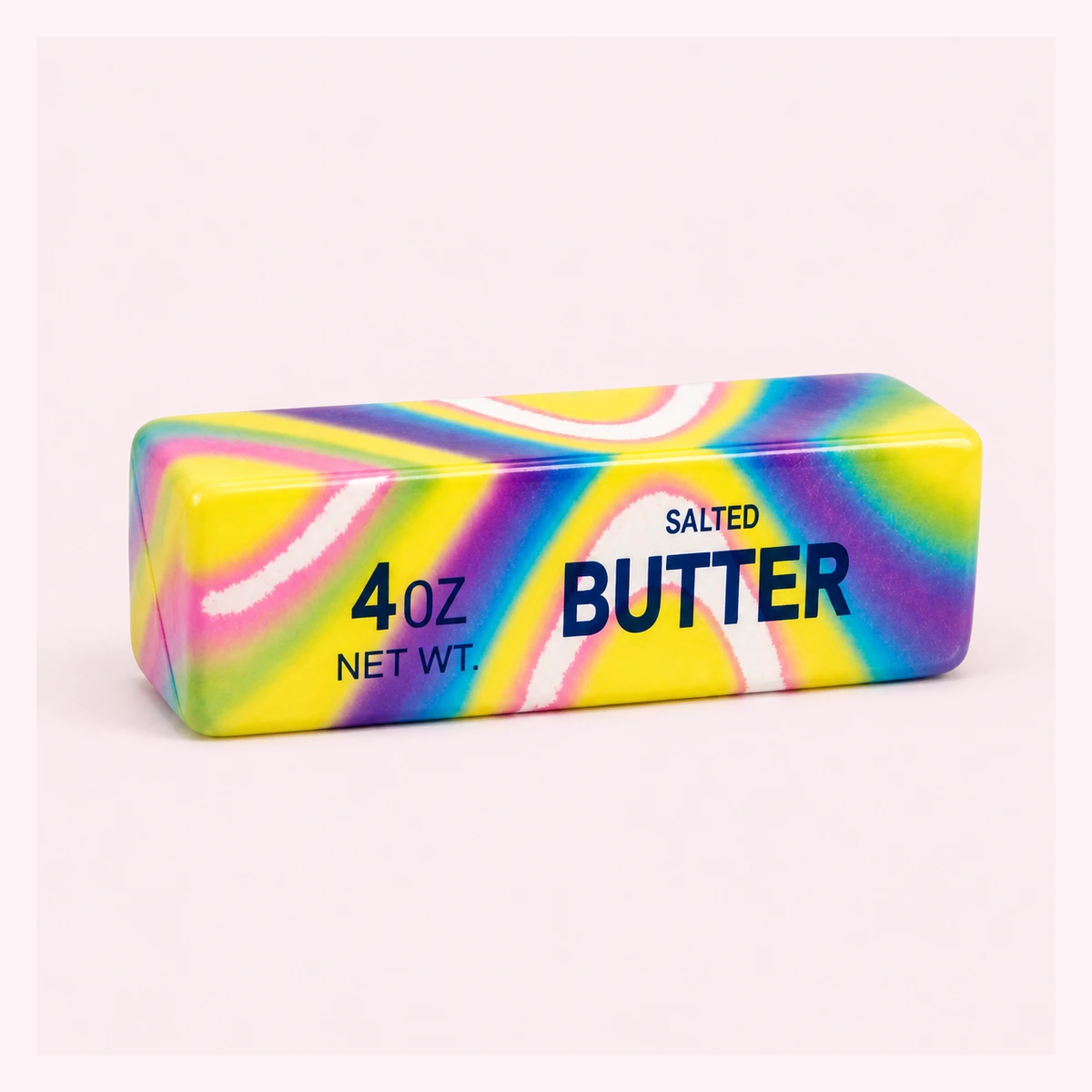
Solid vs. color series. Beyond classic yellow, many brands sell pastel or novelty color runs that keep the texture but drop the strict realism—popular with collectors building a set.
Sensory and Therapeutic Value
The rhythmic squeeze-and-release motion provides grounding tactile input that can ease stress and sharpen focus.
Beyond the viral fun, these toys earn their place as a legitimate sensory fidget toy. The repetitive squeeze-and-release motion delivers tactile and proprioceptive input—the kind of gentle, grounding feedback that can help regulate attention and calm a busy mind.
For people with ADHD, the toy offers a quiet outlet for restless hands that can actually improve focus during meetings, lectures, or study sessions. For anxiety, the slow rebound encourages a slower breathing rhythm; many users naturally sync an inhale and exhale to the squeeze and the rise. Occupational therapists also value squishies for hand-strength and fine-motor work, since the resistance gently exercises the fingers and grip. Individuals on the autism spectrum often use them for self-soothing and sensory regulation as well.
None of this requires a clinical label, of course. Plenty of people simply find that a squishy stress toy on the desk takes the edge off a stressful afternoon.
How to Choose a Good One (Buying Guide)
Prices typically run from around $9 for a basic single up to roughly $26 for a premium or jumbo piece. Higher price doesn't automatically mean better, so judge on these points:
- Rebound time: look for a stated or demonstrated slow rise. If a listing shows an instant snap-back, it isn't a true slow-rising squishy.
- Smell: a strong chemical odor that lingers is a red flag. Quality PU foam has a faint scent that fades quickly.
- Paint and finish: avoid toys prone to flaking or cracking. Cheap surface coatings peel after a few weeks of handling.
- Foam recovery: it should return to its full original shape, with no permanent dents or "dead spots."
- Size match: pick jumbo for display and two-handed stress relief, mini for portability.
When in doubt, paying a few dollars more for denser foam and cleaner printing usually buys a noticeably better—and longer-lasting—experience.
Want one that ticks every box? Our Butter Squishy Fidget Toy is a realistic slow-rising butter stick in dazzling colors—soft PU foam, a clean printed wrapper, and a satisfying slow rebound—for just $17.99.
Care and Maintenance
A little upkeep keeps a butter squishy looking fresh and rising slowly:
- Clean gently: wipe with a slightly damp cloth and mild soap, then air-dry fully. Never soak it, as trapped water degrades the foam.
- Keep it cool and dry: heat and direct sunlight can yellow the paint unevenly and stiffen the foam over time.
- Store unsquished: leave it resting in its natural shape rather than under heavy objects, which can cause permanent flat spots.
- Keep hands clean: oils and dirt transfer onto the surface and dull the finish, so dry, clean hands extend its life.
Treated well, a good squishy easily lasts a year or more of daily fidgeting.
Why Butter Squishies Went Viral
The butter squishy's rise is a textbook case of the right object meeting the right platform. Short-form video rewards content that is visually satisfying in under five seconds, and a slowly re-inflating stick of butter is almost engineered for that loop. The food-realism adds a layer of surprise—viewers do a double take before realizing it's a toy—and the calming, ASMR-adjacent quality keeps them watching. Each clip doubles as both entertainment and an ad, which is why a relatively simple foam toy turned into a search trend that retailers scrambled to stock.
FAQ
Are butter squishies safe for kids?
Generally yes for older children, but because they are foam, small or torn pieces are a choking hazard for very young kids. Always check the manufacturer's age rating and supervise little ones.
Why does my squishy rise back faster than the videos?
You likely have a fast-rise model rather than a true slow-rising one, or the foam is on the lighter, less dense side. Rebound speed is set by foam density and air-cell structure—denser foam rises more slowly.
Do they have a smell?
A faint scent from the PU foam is normal and fades within days. A strong, persistent chemical smell suggests lower-quality materials, so air it out and consider returning it if it doesn't dissipate.
Can I wash a butter squishy?
Spot-clean only. Use a damp cloth with mild soap and let it air-dry completely. Never submerge it, since soaking damages the foam and ruins the slow-rise effect.
Why is there such a big price range?
Cheaper toys use thinner foam and basic printing, while pricier ones offer denser slow-rising foam, sharper realistic detailing, and larger jumbo sizes. Pay more for rebound quality and finish, not just brand.
Is it actually helpful for anxiety or ADHD?
Many users find the repetitive squeezing grounding and focus-friendly, and therapists use squishies for sensory regulation. It's a helpful aid, not a medical treatment—use it as one tool among many.
A butter squishy is one of those rare toys that works on every level at once: it photographs beautifully, feels wonderful in the hand, and quietly does real work calming nerves and busy fingers. Whether you grabbed one because a video hooked you or because you need a discreet desk companion for stressful days, the key is choosing genuine slow-rising foam and giving it a little care. Ready to squeeze the stress away? Grab our realistic butter squishy fidget toy and explore more squishy fidget toys in our collection.