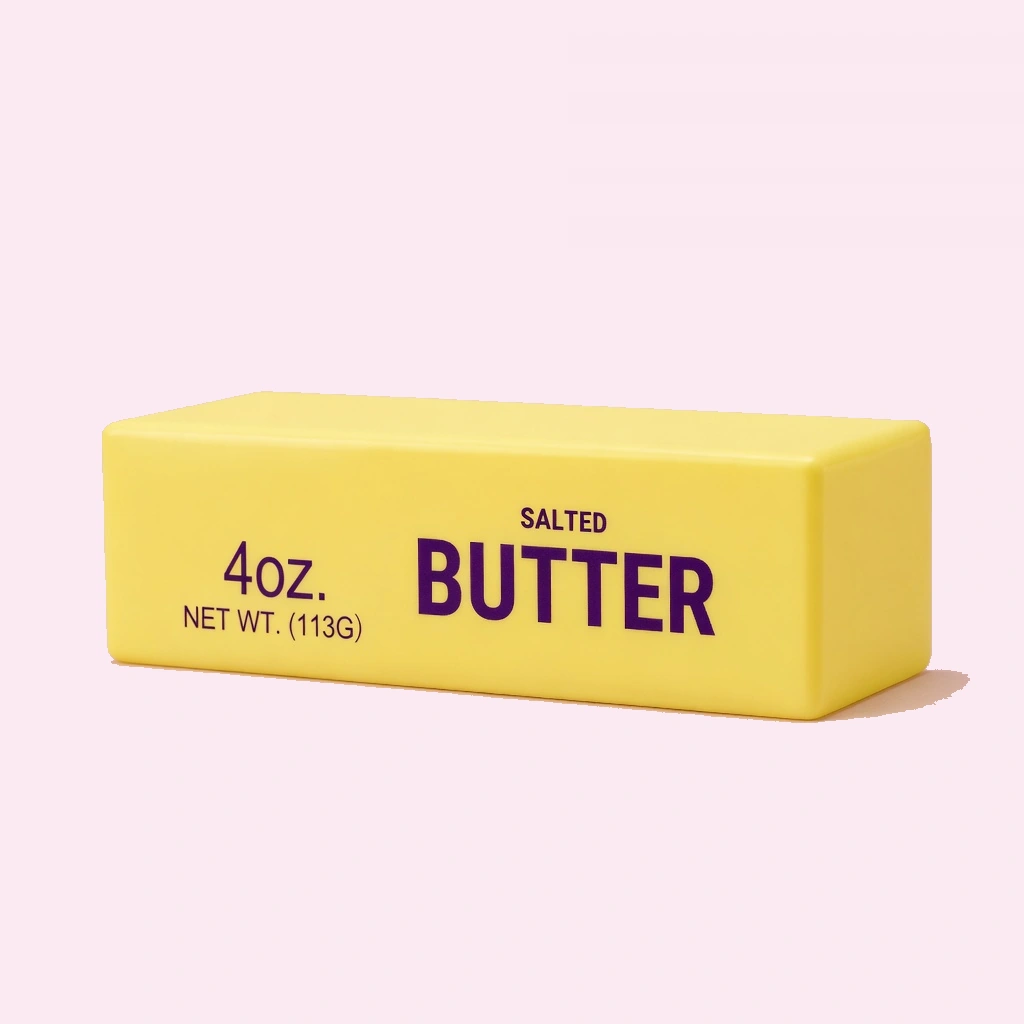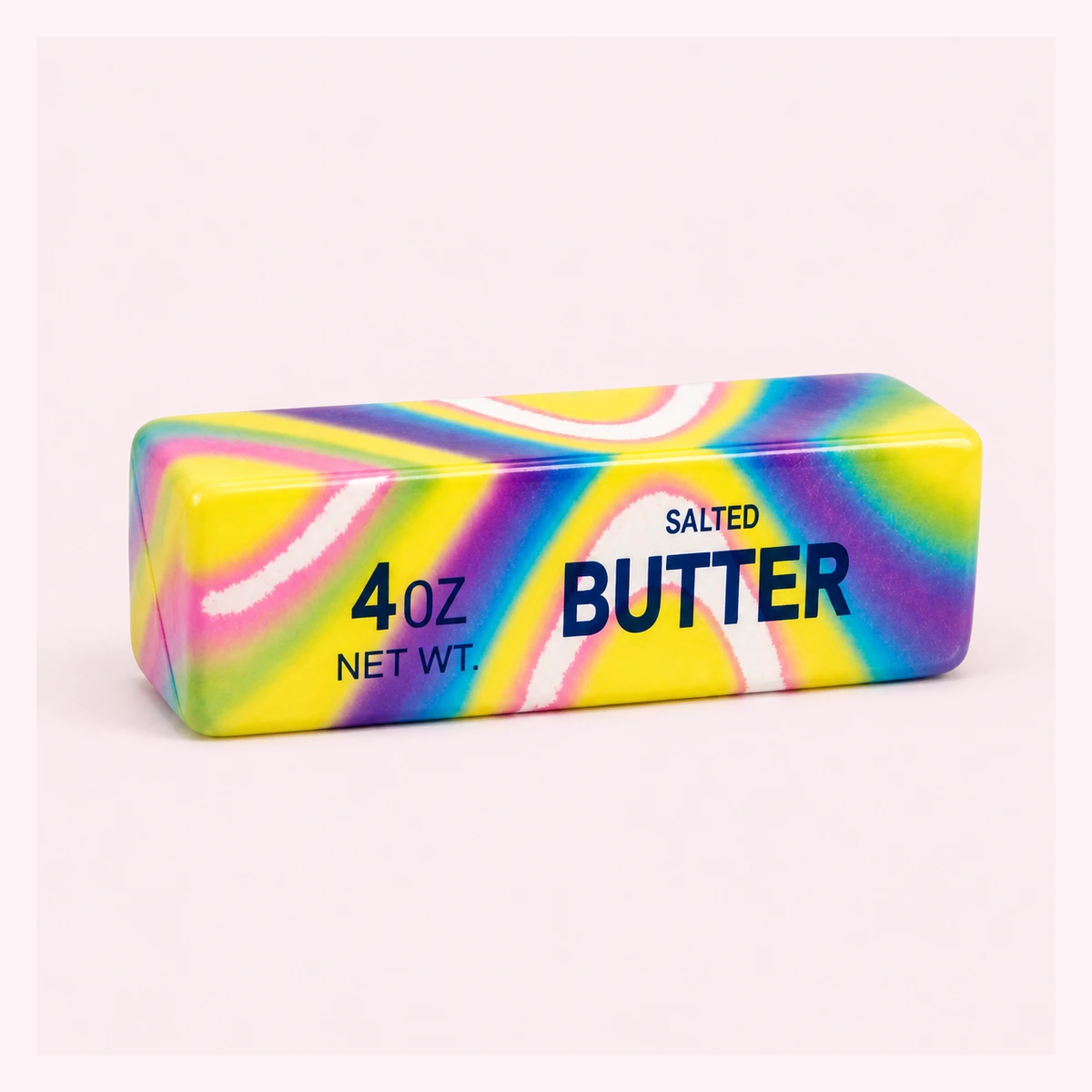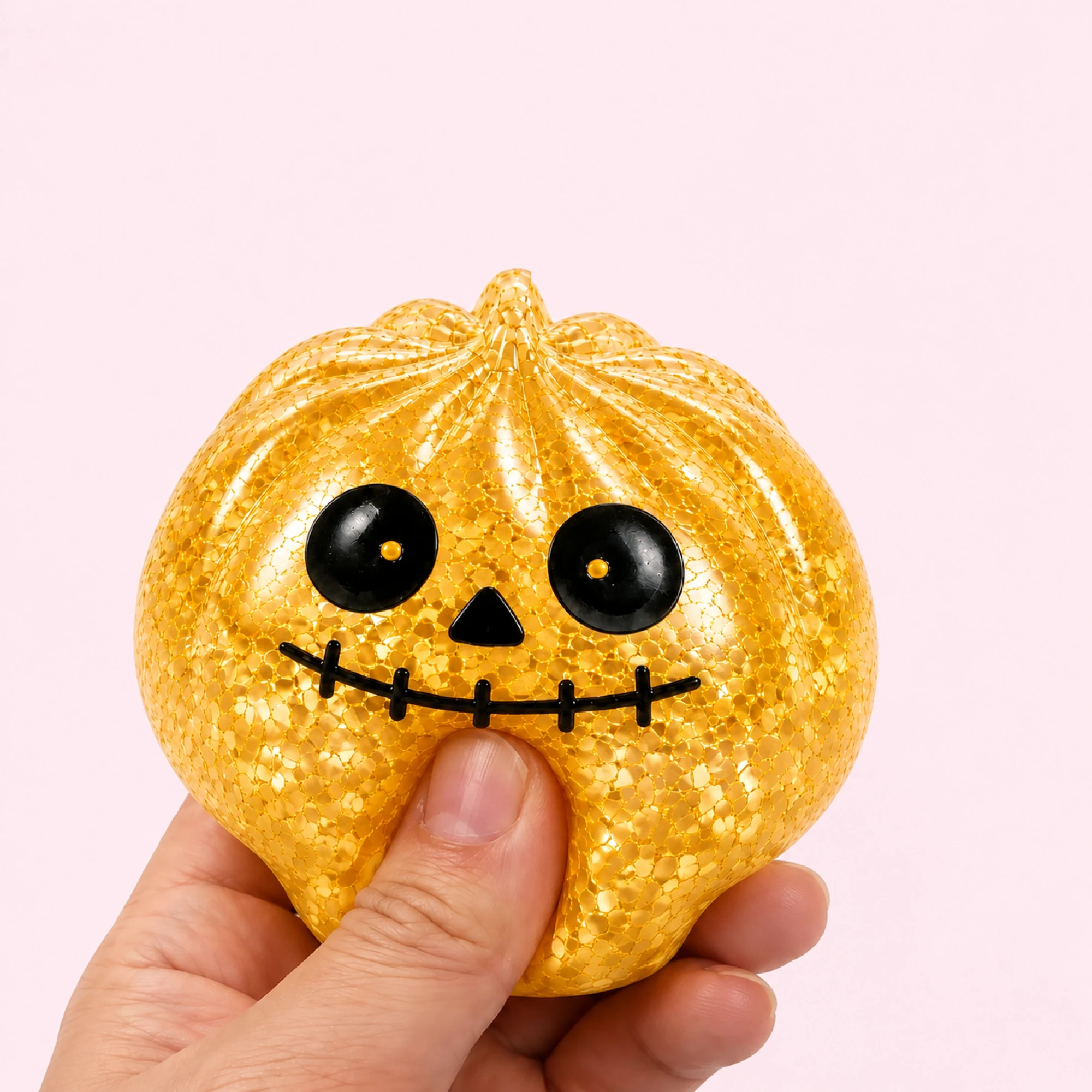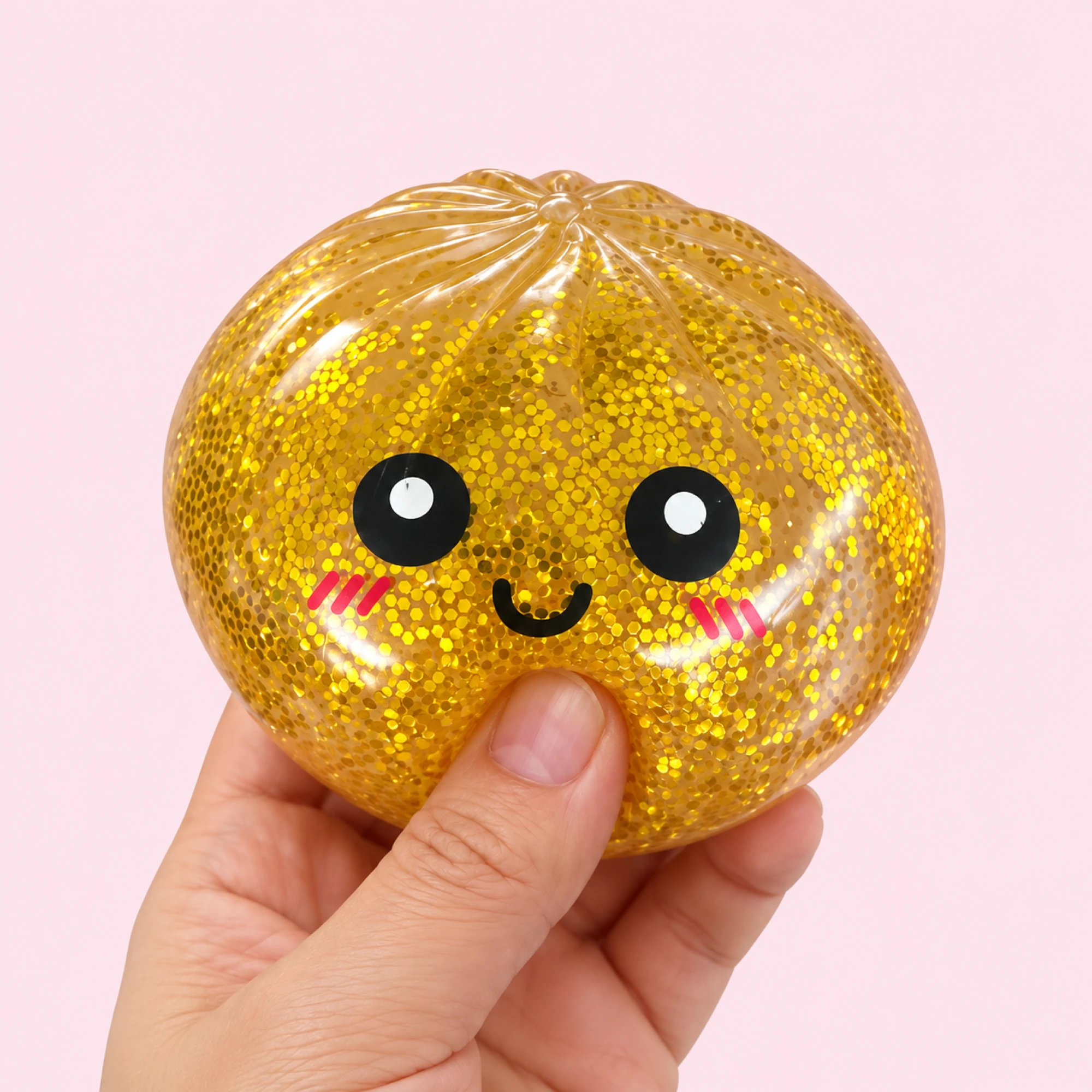



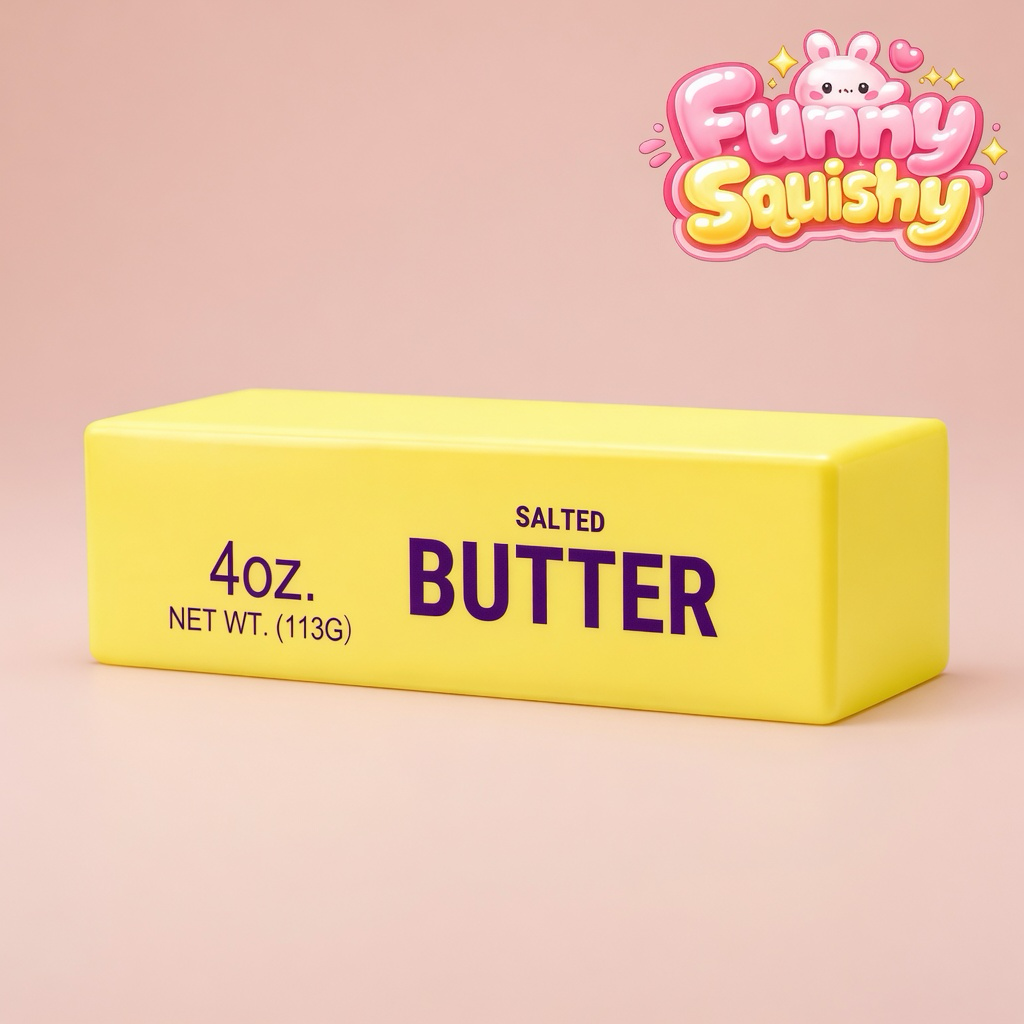
Squeezing a stick of butter feels a little ridiculous. Your brain expects firm and cold. Your fingers find something soft and slow instead. That tiny contradiction is exactly why a butter squishy has quietly become a cult favorite among people who fidget to stay calm. Dress it up in pumpkins and friendly ghosts, and it turns into one of the most satisfying Halloween squishy toys you can slip into a pocket or drop into a party bag.
Here's what a butter squishy actually is, why the slow rise soothes so well, and how a soft foam squeeze settles a busy mind. No hype. No fake science.
Table of Contents
- What Is a Butter Squishy?
- The Science of Slow Rising
- Why Squeezing Foam Calms the Nervous System
- Why "Butter" Makes It Better
- The Halloween Connection
- Who Benefits Most
- Butter Squishy vs. Other Fidget Toys
- How to Choose a Good One
- FAQ
What Is a Butter Squishy?
A butter squishy is a slow rising squishy shaped and printed to look like a realistic stick or block of butter. Most run around 5–6 inches long, which makes them easy to grip in one hand. They're molded from soft polyurethane (PU) foam and finished with a smooth, matte "butter" coating. Some even add a paper-wrapper print for extra realism.
The shape isn't what defines it. The behavior is. Press your thumb in, and the foam gives immediately, holding your fingerprint like a dent in soft dough. Then, over several seconds, it slowly pushes itself back into shape. That delayed rebound is the whole appeal. It's what separates a true slow-rising squishy from a cheap, springy foam block.
The Science of Slow Rising
"Slow rising" refers to how long the foam takes to recover after being compressed — usually 3 to 10 seconds for a decent butter squishy. This isn't a defect. It's the point.
Fast-rebound toys like a firm stress ball snap right back. One press, and it's done. A slow-rising squishy stretches that moment out, and your brain leans into it. There's a small anticipation–reward loop at work here: you press, you watch, you wait, and the shape returns. That gentle predictability — a tiny event that always resolves the same calm way — reassures a stressed mind.
The visual feedback helps too. Watching your fingerprint slowly fill back in gives you something soft and repetitive to fix on, which naturally slows your breathing and pulls attention off racing thoughts. Kind of like watching a lava lamp. Except you're the one causing the motion.
Why Squeezing Foam Calms the Nervous System

The magic ingredient? Open-cell polyurethane foam. Unlike a solid rubber ball, open-cell foam is full of tiny interconnected air pockets. Squeeze it, and air moves through those channels slowly, which is why it compresses easily but rebounds gradually.
For your hands, that means a steady stream of gentle resistance instead of one abrupt push-back. That continuous, low-level pressure delivers what occupational therapists call proprioceptive input — sensory information about where your body is and how much force your muscles are using.
Proprioceptive input is one of the most dependable ways to signal safety to the body. Deep, sustained pressure tends to engage the parasympathetic nervous system, the "rest and digest" side that lowers heart rate and eases tension. Same principle behind weighted blankets and firm hugs. Just scaled down to fit in your palm.
This is why so many fidget toys for anxiety are squeeze-based. A butter squishy gives your hands a small, repetitive job. Repetitive motion occupies the part of the brain that would otherwise spin on worries. The squeeze itself redirects nervous energy into a harmless, satisfying loop.
Why "Butter" Makes It Better
Plenty of squishies exist. So why does butter, specifically, land so well?
It's about sensory surprise. Your brain holds strong expectations about everyday objects, and a stick of butter is supposed to be dense, cool, and firm. Hold one that's warm, soft, and slow, and you get a mild, pleasant mismatch — the "this shouldn't feel like this" moment. That little jolt of novelty makes it more engaging than squeezing some abstract blob.
Realistic food shapes carry a comforting, familiar association too. There's a quiet humor in fidgeting with fake butter, and that small smile is part of the relief. Novelty, familiarity, and tactile satisfaction — together, they really work.
The Halloween Connection
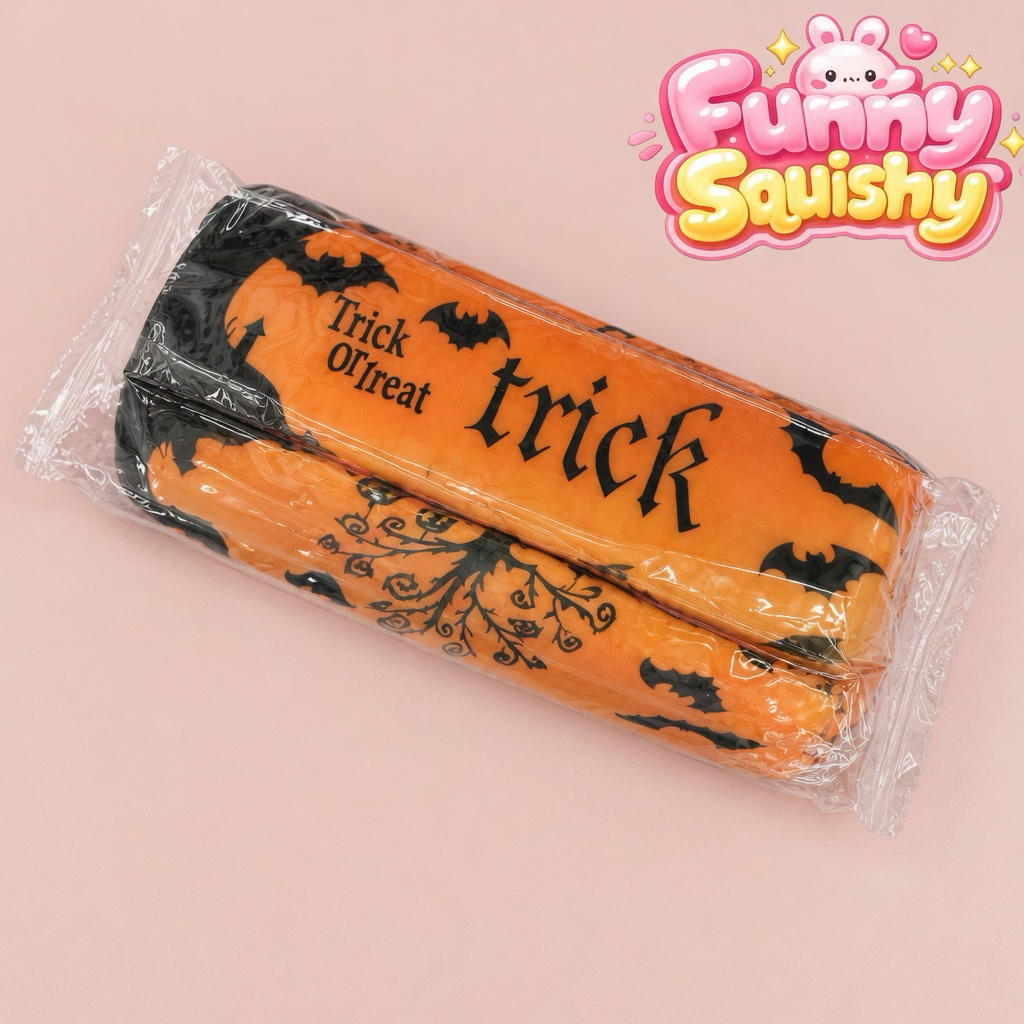
A butter squishy becomes a Halloween squishy the second it's printed with jack-o'-lanterns, ghosts, bats, or spooky pastel colors. That seasonal twist makes it one of the most practical festive buys around, because it works as both decoration and calming tool.
Where it shines during Halloween:
- Party favor bags — a longer-lasting, more useful pick than plastic trinkets that break the same night.
- A candy alternative for trick-or-treaters with allergies, dietary restrictions, or households skipping the sugar.
- Classroom rewards — teachers love quiet, non-disruptive fidgets that help kids self-regulate during the over-stimulating spooky season.
- Sensory-friendly celebrations for kids and adults who find Halloween's noise and crowds too much.
Because it calms instead of over-stimulates, a Halloween butter squishy fits the exact moments the holiday tends to spin out.
Who Benefits Most
Slow rising squishies aren't just for kids. Different groups reach for them for different reasons:
- People with anxiety use them as a discreet, non-medication tool to ground themselves during stressful moments — before a meeting, on a commute, in a waiting room.
- Adults with ADHD benefit from the constant low-level stimulation, which can actually sharpen focus by giving restless energy somewhere to go.
- Kids and adults with Sensory Processing Disorder (SPD) appreciate the reliable, controllable input that helps regulate an over- or under-responsive system.
- Office workers keep one on the desk as a silent stand-in for pen-clicking or leg-bouncing.
- Kawaii and food-squishy collectors just love the design — and get the calming benefits as a bonus.
Butter Squishy vs. Other Fidget Toys
Not every fidget delivers the same input. Here's how a butter squishy stacks up:
| Toy | Main sensory input | Best for | Noise level |
|---|---|---|---|
| Butter squishy (slow rising) | Sustained deep pressure + visual feedback | Calming, winding down, anxiety | Silent |
| Stress ball | Quick squeeze-and-release resistance | Fast tension release | Silent |
| Fidget spinner | Motion + visual spin | Restless energy, boredom | Slight hum |
| Pop-it | Tactile clicks + sound | Repetitive satisfaction | Clicky |
The takeaway? If you want something soothing rather than stimulating, the slow rise wins. A spinner or pop-it keeps you busy. A butter squishy helps you slow down. That's why it's the calmer choice for anxiety and for winding down before sleep.
How to Choose a Good One
Quality varies wildly. A bad squishy can feel stiff, smell chemical, or tear fast. Watch for these signs:
- Even, consistent rebound. Press it in several spots. It should rise back smoothly everywhere, taking a few seconds, not snapping or staying dented.
- No strong chemical odor. A faint new-foam smell fades quickly. A harsh, lingering one points to poor materials. Air out any squishy before giving it to a child.
- Safety certifications. For kids' items, look for non-toxic, phthalate-free labeling and age-appropriate guidance.
- A durable printed coating that won't crack or peel after a few squeezes.
- The right size — around 5–6 inches gives a satisfying full-hand grip, while mini versions suit keychains and pencil cases.
Keep it away from direct sunlight and sharp objects. Give it an occasional gentle wash to keep the surface clean and grippy.
FAQ
Is a butter squishy safe for young children? Larger butter squishies work fine for supervised play, but any small or torn foam piece is a choking hazard. Follow the age rating, and toss the toy the moment it starts breaking apart.
How long does a slow rising squishy stay slow? With normal use, months to a couple of years. Over time the foam can dry out and rise faster. Keeping it clean and out of heat helps it stay slow longer.
Do fidget toys for anxiety actually work? They're not a cure. But the research on sensory tools is encouraging. Squeeze-based fidgets provide grounding pressure and a focus outlet that many people find genuinely calming in the moment.
Why does mine smell when I first open it? A mild odor from fresh PU foam is normal. Let it air out for a day or two. A strong, stubborn smell signals low-quality material.
Can I use one at work without being distracting? Yes. That's a big plus. A butter squishy is silent, so unlike a clicky pop-it or a spinner, it won't bother anyone nearby.
What makes it a good Halloween gift specifically? A Halloween-themed butter squishy is reusable, allergy-safe, and calming — a rare combination for a seasonal party favor that usually ends up in the trash by November.
A butter squishy asks almost nothing of you. Just a squeeze, a pause, and a slow return to shape. In a season built on jump scares and sugar highs, that quiet little rhythm is a surprisingly welcome thing to keep close. As calming as it is delightfully, deliberately ridiculous.
🎃 Shop This Guide
Ready to squeeze one for yourself? Browse the full Butter Squishy collection, or start with our Halloween hero — the Orange Trick-or-Treat Butter Squishy at $6.99.
Shop butter squishies →