



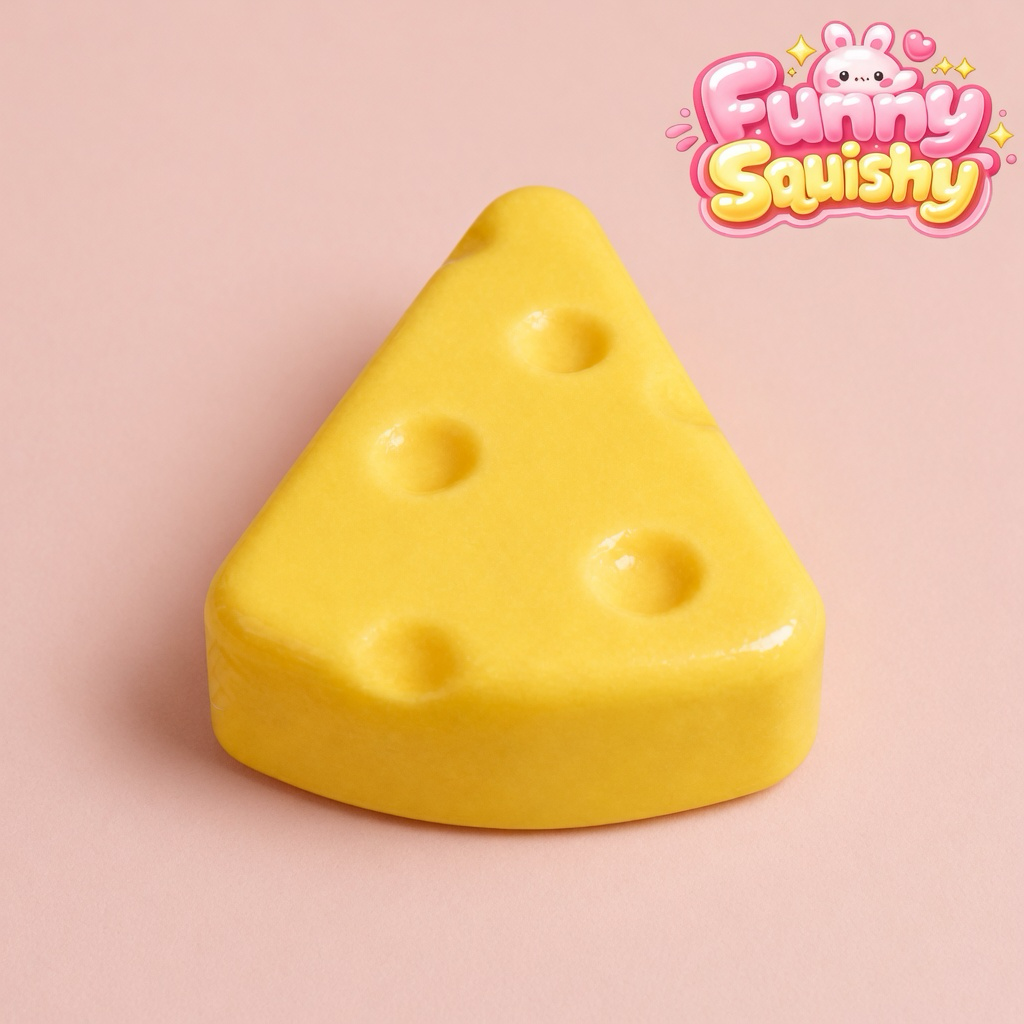
Picture a yellow foam block. It's dotted with cartoonish holes, and after a firm squeeze it slowly puffs back into shape. Right now it's one of the most oddly satisfying things on the internet. The cheese squishy started as a niche sensory novelty. These days it's a mainstream bestseller, riding a wave of "cut it open" and "squish test" videos on TikTok.
Here's what we'll cover: what makes the cheese block squishy work, why slow-rising foam feels so good in the hand, the actual science behind its calming effect, and how to pick a good one without getting burned.
Table of Contents
- What Is a Cheese Squishy?
- Why Slow Rising Feels So Satisfying
- The Science of Stress Relief
- Sizes, Styles and Variations
- How to Choose a Quality Cheese Block Squishy
- Care, Cleaning and Safety
- FAQ
What Is a Cheese Squishy?
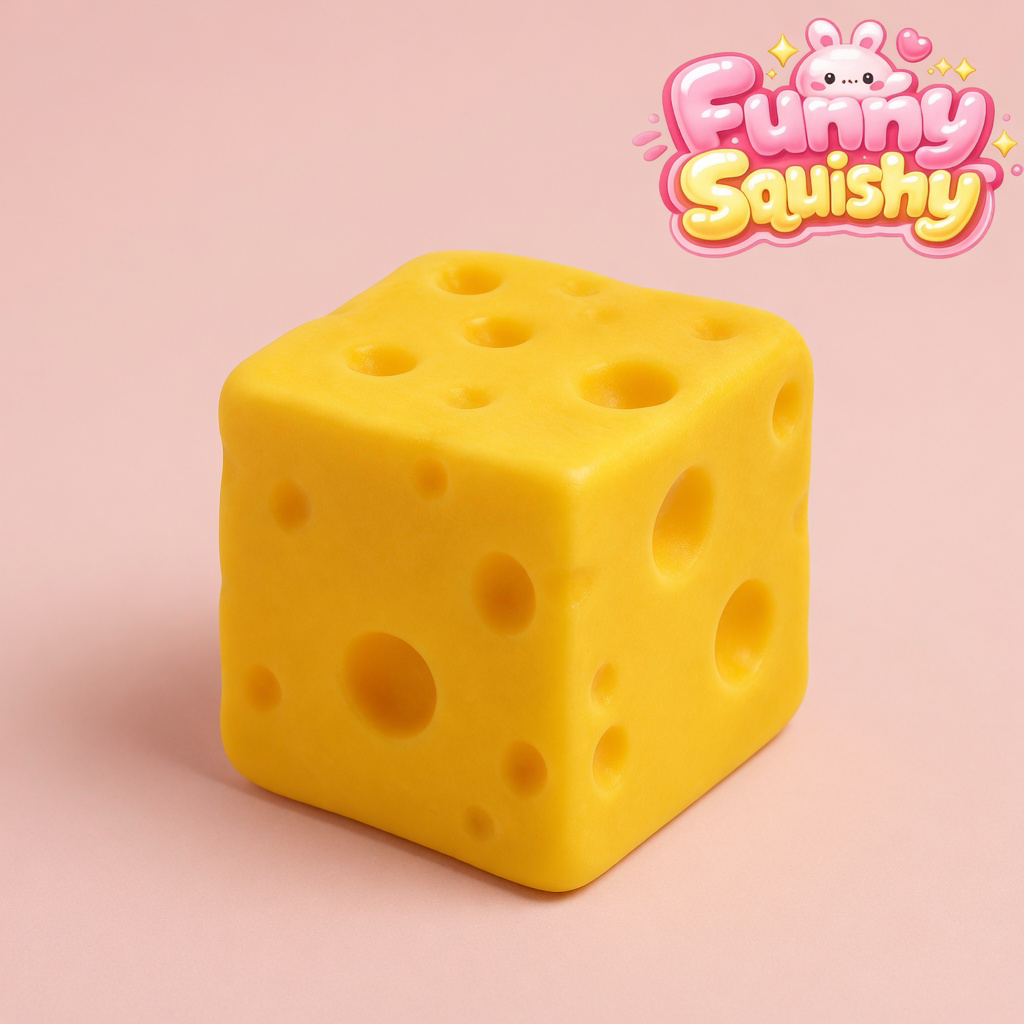
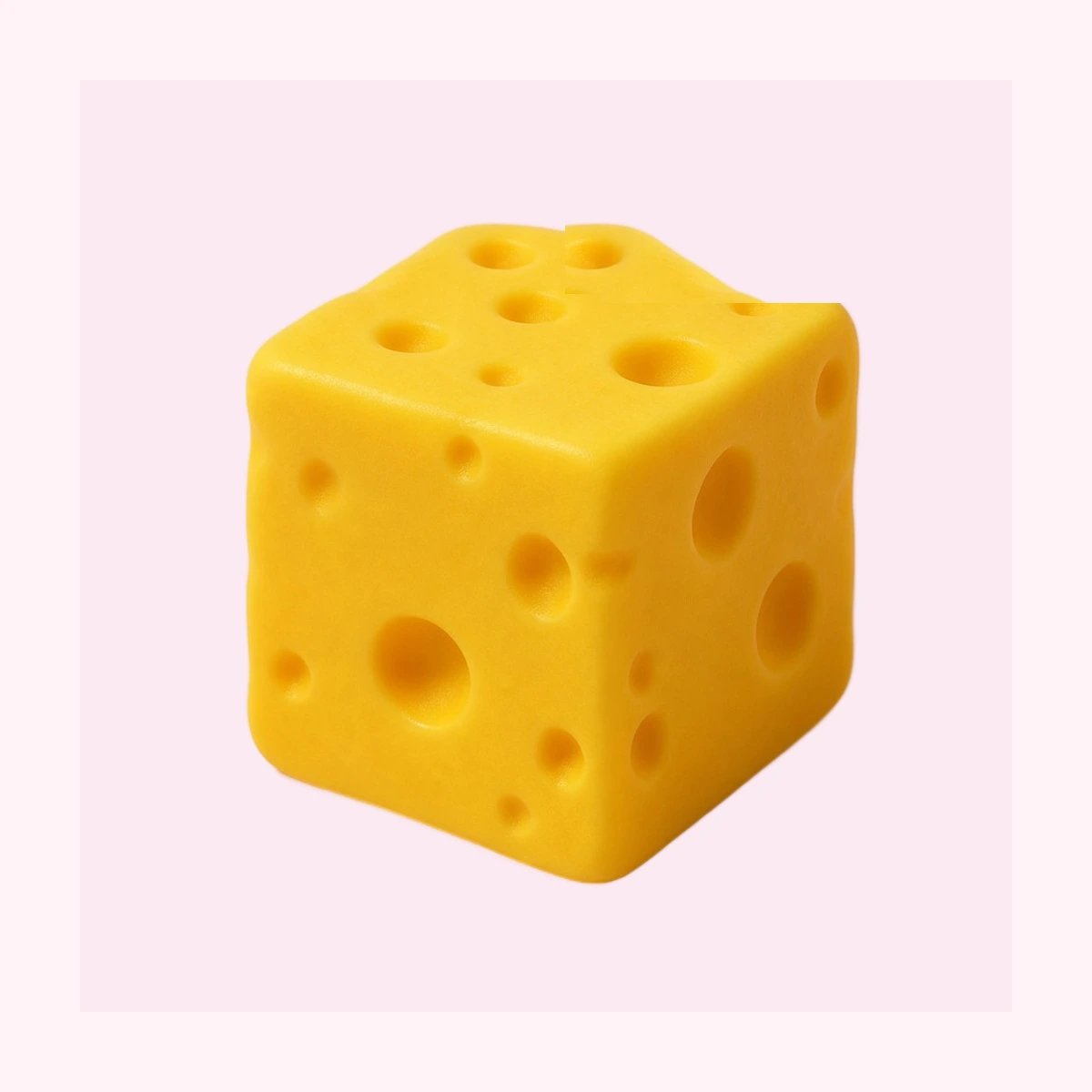
A cheese squishy is a soft sensory toy molded to look like a chunk of yellow cheese, holes and all, made from high-density polyurethane (PU) foam. The thing that defines it? Slow rising. Press it flat and it recovers its shape gradually and smoothly, taking roughly 3 to 10 seconds depending on how dense the foam is.
The cheese shape isn't an accident. A bright yellow cube with cartoon holes pops in a TikTok thumbnail. The boxy form sits comfortably in your palm. And the texture practically begs you to squeeze it again. Visual punch, easy grip, tactile reward — those three things turned a plain squishy cheese block into a viral object.
Today the category covers three overlapping reasons people buy:
- Sensory satisfaction — the simple pleasure of the squish-and-rise cycle.
- Stress relief — using it to bleed off tension or settle a restless mind.
- Collecting and display — fans grab multiple sizes and styles to show off.
That layered appeal explains how one product wins over kids, teens and adults at the same time.
Why Slow Rising Feels So Satisfying
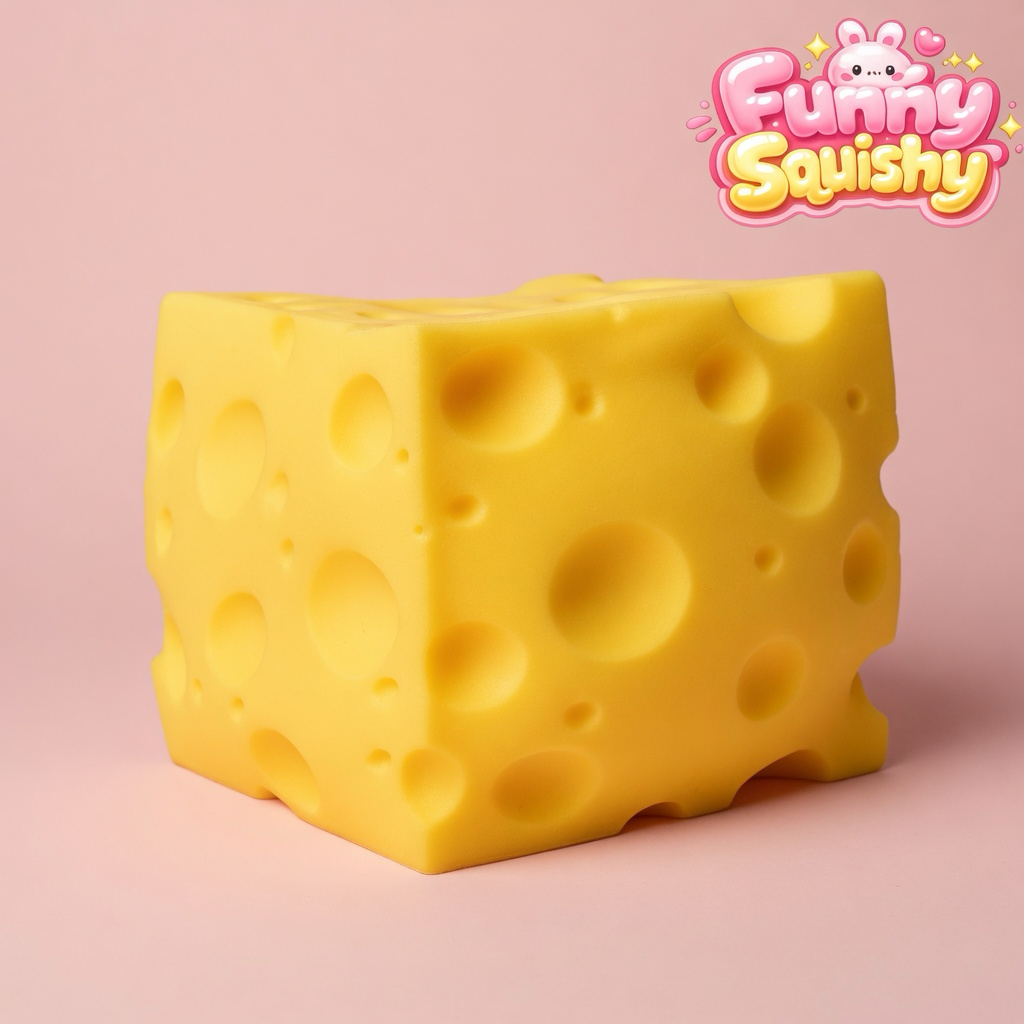
Ordinary stress balls snap right back. A slow rising squishy does something else, and it's far more compelling: it resists, then gives in, then rebuilds itself right in front of you. That drawn-out recovery is the whole point.
The effect comes down to the foam's open-cell structure. Compress a quality PU foam cheese cube squishy and you force air out of thousands of tiny connected cells. Let go, and air slowly creeps back in. The foam re-expands at its own measured pace. Cheaper, denser, or closed-cell foam either springs back too fast or just stays dented. Neither feels good.
Why is slow rising so addictive? A few reasons:
- Anticipation reward. Your brain likes the predictable, gentle build as the cheese inflates back to full size.
- Tactile contrast. Firm enough to push against, soft enough to flatten completely. The hand never gets tired of that sweet spot.
- Visual feedback. Watching the dent fill itself in turns a fidget into a little show. That's exactly why "squish test" clips do so well online.
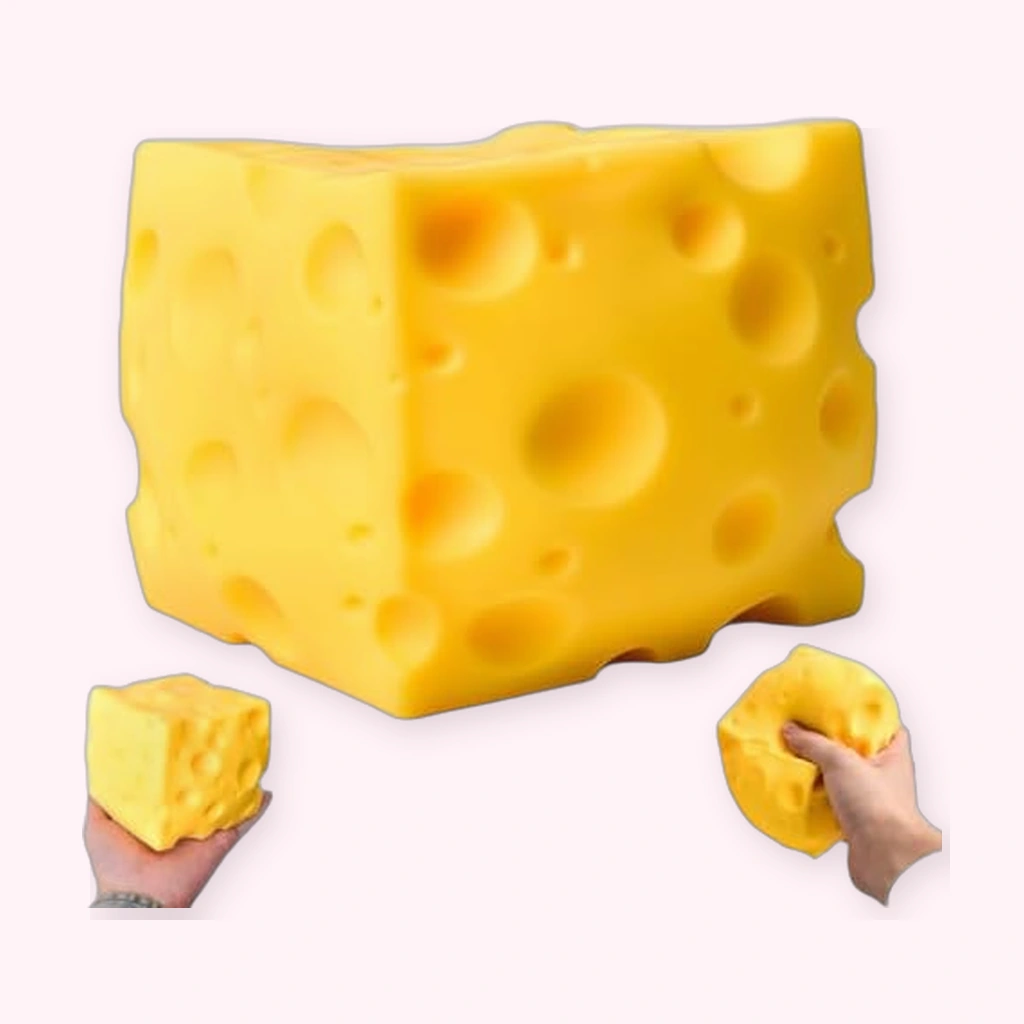
This is also why a jumbo cheese squishy is a different beast, not just a scaled-up one. Bigger block, longer and more dramatic rise. A five-inch cube can take several mesmerizing seconds to recover, which makes it the star of any video and the crown jewel of a collection.
The Science of Stress Relief
People toss around the phrase "stress relief squishy" pretty loosely. But there's real reasoning behind why these toys actually help.
Repetitive tactile motion is regulating. Rhythmic, low-stakes hand movement — squeezing, kneading, releasing — feeds the nervous system a steady, predictable signal. For a lot of people, that nudges the body out of fight-or-flight and toward calm. Same principle as worry stones and kneading dough.
It channels nervous energy. A sensory fidget toy gives restless hands a job, which can free up your attention for whatever's in front of you. People with ADHD, anxiety, or sensory-processing differences often say that keeping their hands busy actually sharpens their focus instead of pulling it away. Browse a community like r/AuDHDWomen and you'll find pages of first-hand accounts: squishies during meetings, phone calls, stressful moments.
It interrupts rumination. A vivid sensory input, like cool, firm foam slowly pushing back, drags your attention out of spiraling thoughts and into right now. That grounding effect is small, but it's a real coping tool.
None of this turns a cheese squishy into a medical device. It won't treat a clinical condition. As a cheap, low-risk way to self-soothe and refocus, though? It earns its keep. Which is exactly why the same toy sells as a kid's gift, a desk accessory, and a sensory aid all at once.
Sizes, Styles and Variations
The category has grown fast. Here's how the main options stack up.
| Type | Typical Size | Best For |
|---|---|---|
| Mini cheese cube | ~1.6 in | Keychains, pocket carry, kids |
| Standard cheese block squishy | ~3–4 in | Everyday desk fidget, all ages |
| Jumbo cheese squishy | ~5–5.5 in | Display, content creation, maximum slow-rise drama |
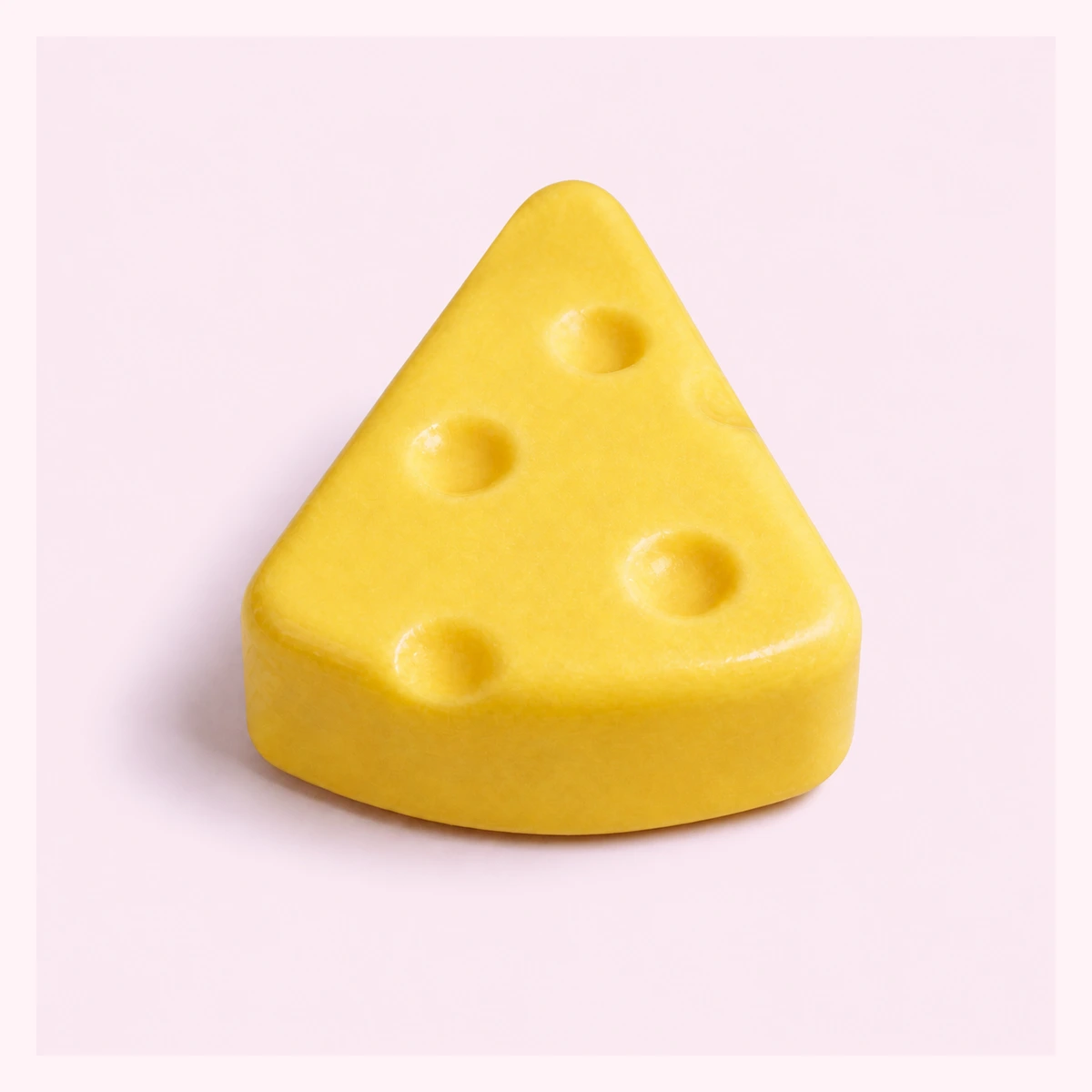
| Cheese wedge / slice | Varies | Collectors who want realism |
| Cheesecake slow-rising | Varies | Crossover dessert-squishy fans |
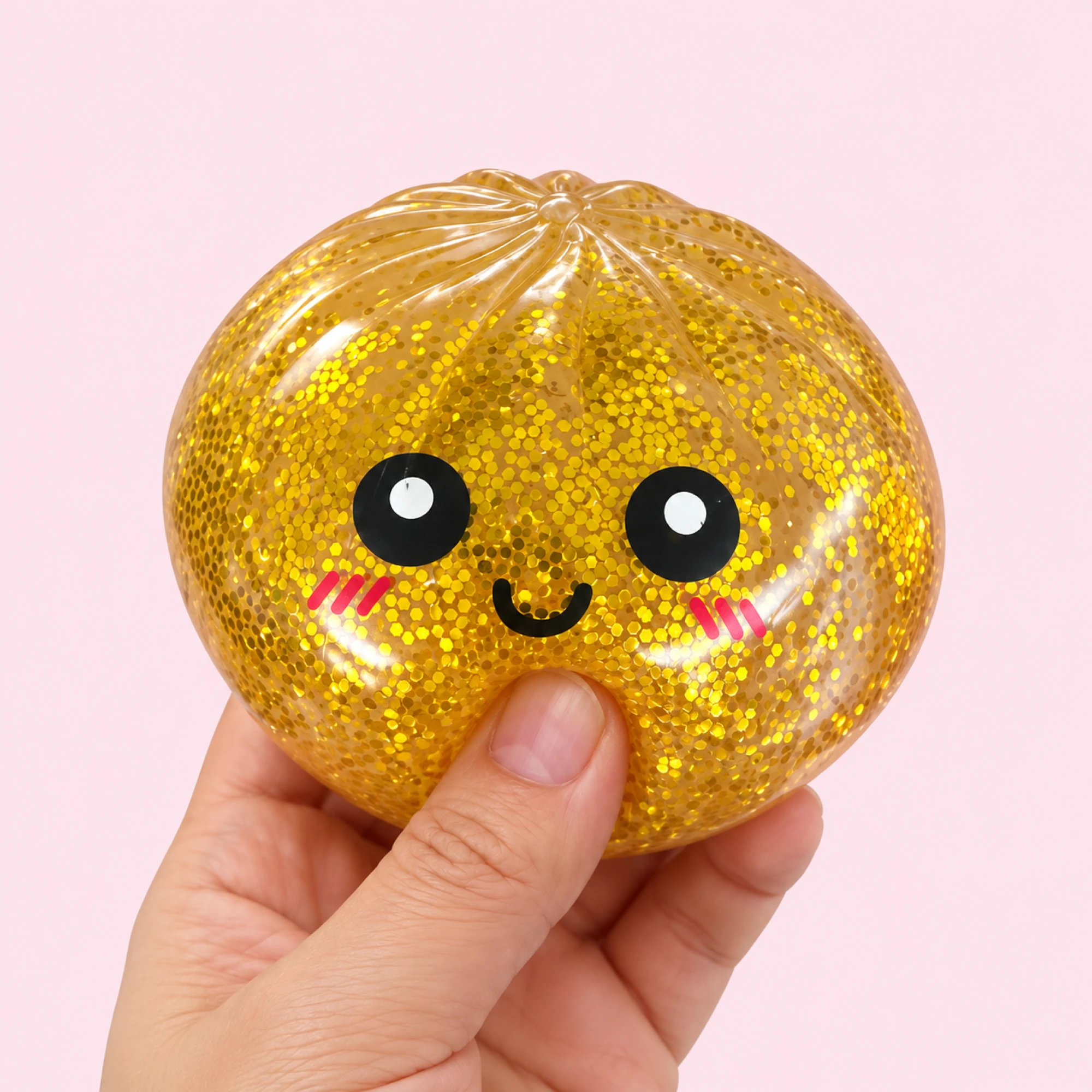
Plain blocks are just the start. You'll also find cheese wedges with a triangular profile, cartoon faces printed on the foam, scented versions, and dessert spin-offs like slow-rising cheesecake slices from brands that specialize in them. Buying your first one? A standard or jumbo plain block gives you the most reliable squish.
How to Choose a Quality Cheese Block Squishy
Foam is not foam. The gap between a great squishy and a sad one is wide. Run through these checks before you buy.
Look for explicit "slow rising" claims and a rise time. Good listings tell you the recovery is gradual. Photos showing a hand denting the foam are a green flag. Listings with only a static block? They might be hiding firmer, faster foam.
Check the foam density in reviews. Buyers won't hold back. Watch for repeated mentions of "rises back smoothly," "no dents left behind," and "soft but not flimsy." Then watch for the opposite: "stayed squished," "smells strong," "tore easily."
Read for tearing and surface durability. PU foam can crack or tear at the surface under heavy use. The good ones survive thousands of squeezes. Budget ones split right at the holes.
Mind the smell. A chemical or off-gassing odor that won't fade is a classic low-quality complaint. Reputable brands cure the foam properly, so the scent clears out fast.
Match size to purpose. Pocket fidget? Go mini or standard. Want that satisfying multi-second rise for videos or a desk centerpiece? Go jumbo.
Buy from established sellers. Visible review counts and steady quality control matter far more than a familiar logo on the box — that's the bar we hold ourselves to across the full Funny Squishy shop. Hundreds of ratings averaging around four stars beats an unreviewed listing every time.
Care, Cleaning and Safety
A little upkeep and your cheese squishy lasts a lot longer:
- Wipe gently. Use a slightly damp cloth with mild soap on the surface. Don't soak it. Water trapped inside open-cell foam takes forever to dry and can break the material down.
- Keep it dry and dust-free. Foam grabs lint, so store it somewhere clean, or in a small bag if you carry it around.
- Avoid heat and sun. Long sun exposure and high temperatures wear PU foam down, and they can yellow or harden it unevenly.
- Supervise young children. Most squishies are made for older kids and up. Foam isn't food, realistic look or not, and a torn piece is a choking hazard for toddlers. Always check the manufacturer's age rating.
Treat it well and a good slow rising squishy keeps its bounce-back for a long time.
FAQ
What is a cheese squishy made of? Nearly all of them are molded from polyurethane (PU) foam. That open-cell structure is what creates the signature slow-rising recovery. How smooth and durable the recovery is comes down to density and curing quality.
Why does my squishy stay dented and not rise back? Usually it means low-quality or overly dense foam, or you've kept it compressed too long. A genuine slow rising squishy should return to full shape within several seconds. If it stays squished for good, the foam is worn out or was poorly made to begin with.
Are cheese squishies good for anxiety and ADHD? Plenty of people find them genuinely helpful as a stress relief squishy and sensory fidget toy. The repetitive squeezing can calm the nervous system and give restless hands something to focus on. Think of it as a supportive tool, not a medical treatment, and remember results vary from person to person.
What's the difference between a standard and a jumbo cheese squishy? Mostly size and rise drama. A jumbo cheese squishy (around 5 inches) compresses more dramatically and takes longer to come back, which makes it ideal for display and video content. A standard block is easier to carry for everyday desk or pocket use.
Can I wash a cheese block squishy? Wipe it with a damp cloth and mild soap, nothing more. Don't submerge it. Trapped water lingers inside the foam and can ruin it. Let it air-dry fully before you put it away.
Why are they shaped like cheese? The bright yellow color and hole pattern read instantly, they catch the eye in thumbnails, and the cube fits the hand perfectly. That mix is what made the cheese version stand out and go viral over other squishy designs.
The cheese squishy works because it nails three things at once. It looks irresistible. It feels uniquely satisfying as the slow-rising foam rebuilds itself. And it hands you a small, real moment of calm. Grab a pocket-sized cube or a show-stopping jumbo block — either way, pick a well-reviewed one with genuine slow-rising foam. That's the difference between a fidget you reach for daily and one that ends up forgotten in a drawer.
Shop This Guide
Ready to pick one up? Browse the full cheese squishy collection for every size and colorway. The one this guide is built around is the Funny Squishy Cheese Block Squishy — a slow-rising, palm-sized marble-swirl cube in soft PU foam.