


The trade every cute fidget ring makes is between how it looks on a hand and how much of it actually moves, and it is a real trade rather than a marketing one: decoration takes up the same millimetres the mechanism needs. Some designs pay that cost and some absorb it cleverly, and you can tell which is which before buying.
Where the Styling Cost Lands
A fidget ring has a fixed amount of room. An outer band that spins needs clearance; beads need a channel; a rotating face needs depth. Add an ornament and something gives.
The usual casualty is travel. A decorated spinning band often turns through less of a circle, or turns with more friction, because the ornament stiffens the ring.
The second casualty is the thumb path. A raised motif that sits where your thumb needs to sweep interrupts the motion every revolution, which is the single most common way a pretty ring stops getting worn.
The third is fit. Applied decoration adds width, and a wide band behaves differently on a finger over a full day.
Designs That Absorb the Cost Well
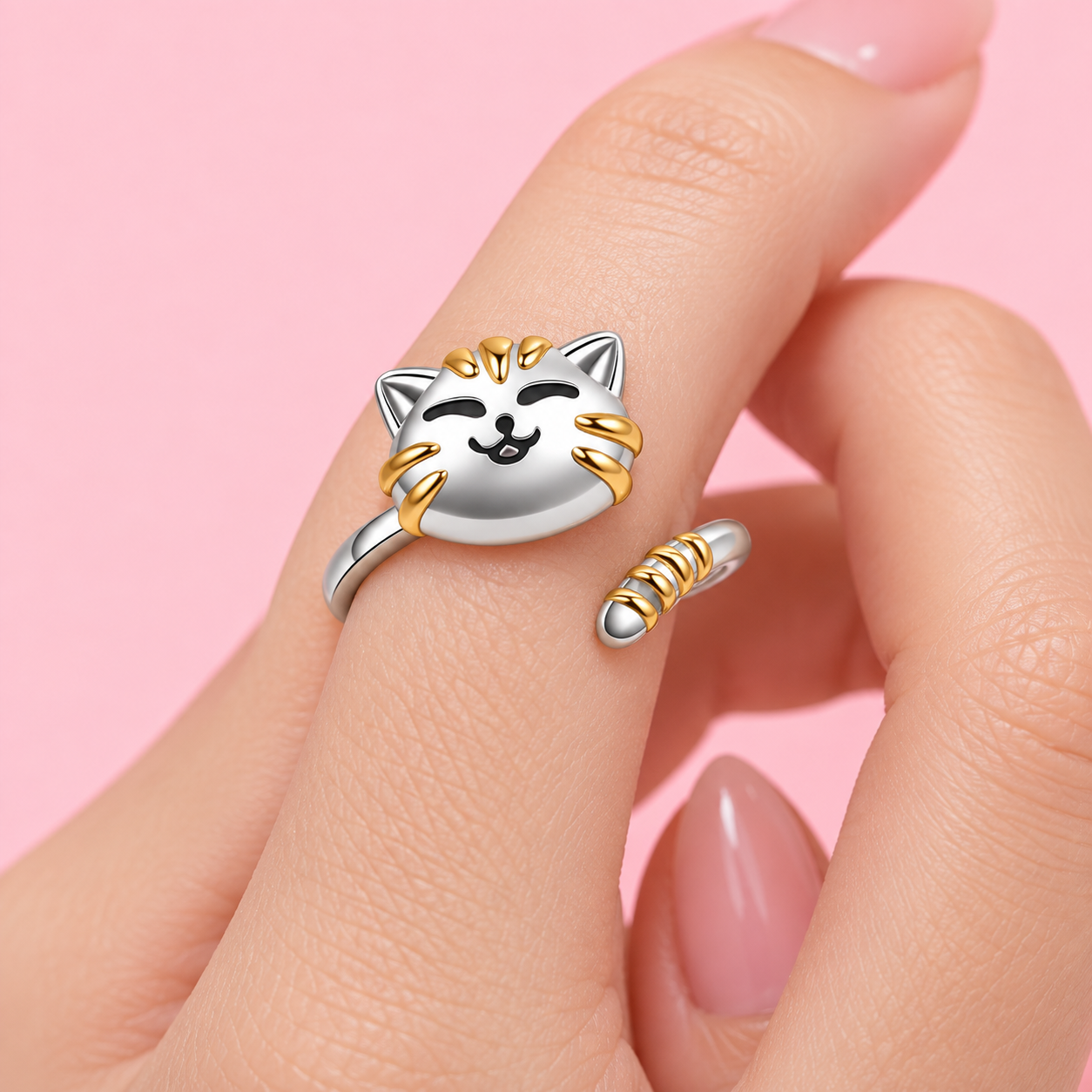
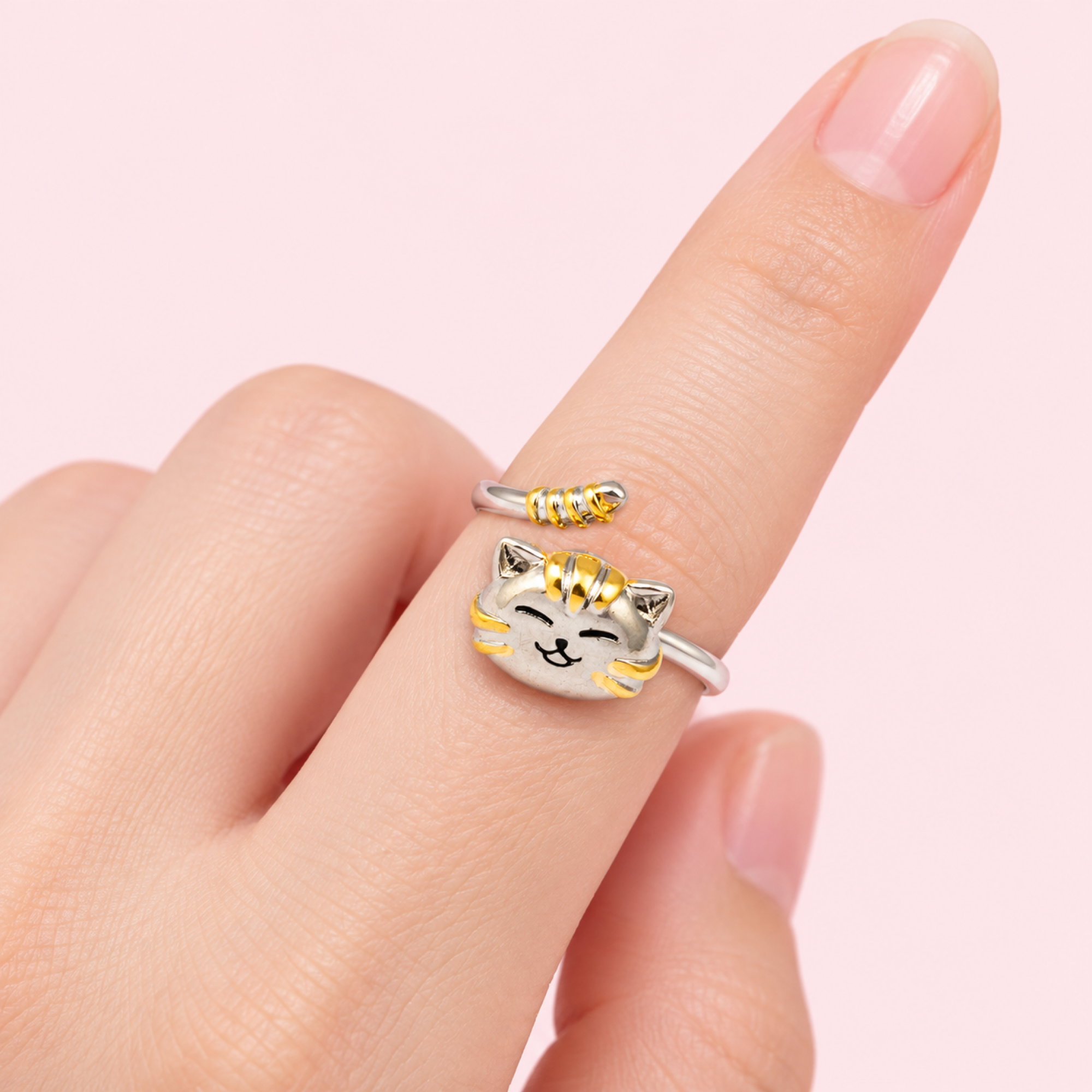
The decoration is the moving part. Best solution available, because nothing is added — the ornament is what spins. A Cat Spinner Fidget Ring puts the motif on the rotating element rather than beside it.
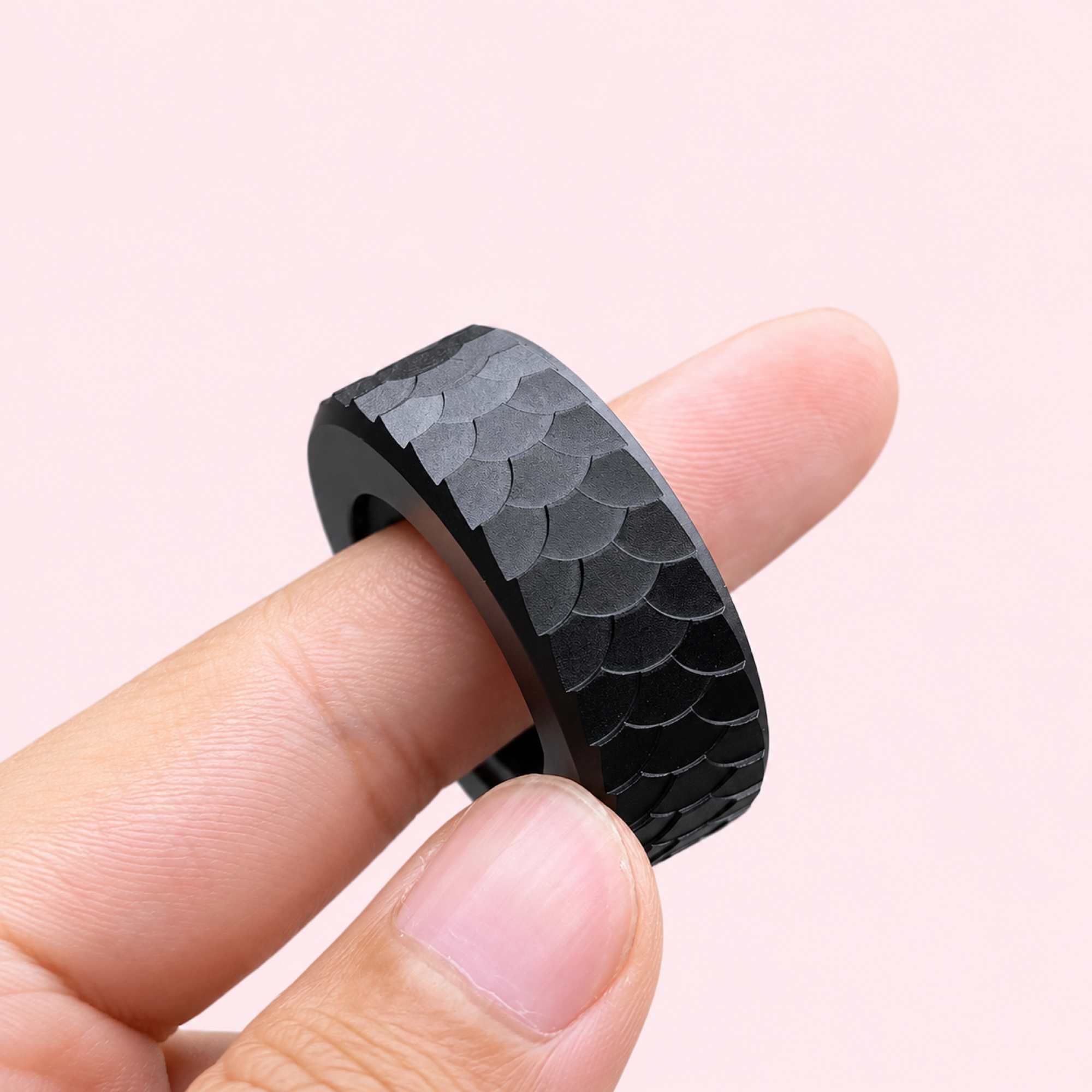
Colour instead of relief. Anodising, enamel and plating change how a ring looks without adding a millimetre. A Sunburst Spinner Ring keeps a flush profile and does its work with the surface.
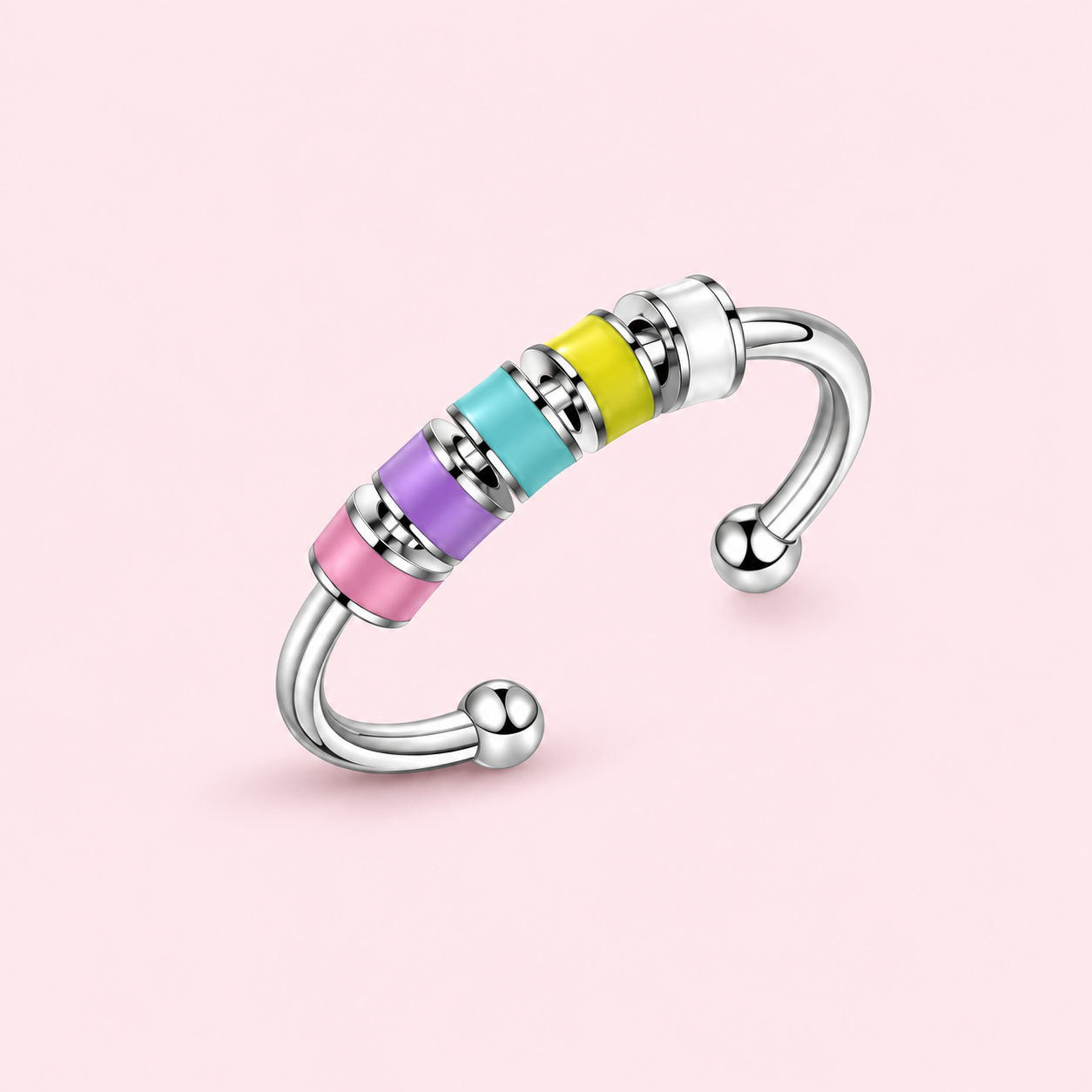
Decoration as the mechanism’s parts. Beads are both the ornament and the thing that moves, which is why the Rainbow Bead Spinner Fidget Ring reads as decorative and behaves as a fidget — and it is an adjustable open band, so it dodges the sizing problem too.
Soft-bodied rings. Silicone bands like the Blue Silicone Sensory Spinner Ring can be moulded into shapes without machining clearances, so styling costs almost nothing mechanically.
Three Checks Before You Buy a Cute Fidget Ring
Does anything protrude into the thumb sweep? Look at the band from the side. If the ornament stands above the surface your thumb travels along, the motion will catch on it every turn.
Is the moving part still full-width? A spinner band narrowed to make room for a motif has less to grip and turns worse.
Is the decoration applied or integral? Glued-on charms and crystals fall off, especially on an object designed to be rubbed constantly. Moulded, cast or set-in decoration survives; stuck-on decoration does not.
When Jewellery Is the Honest Answer
Some rings in this category are ornaments with a nominal spin, and there is nothing wrong with that as long as you know before buying.
The tell is that the moving part turns freely for a quarter of a rotation and then resists. That ring is meant to be looked at.
If that is what you want, buy it as jewellery and buy a plain one to actually use. What you should not do is buy one decorative ring and expect it to do both, then conclude the format does not work for you.
The same logic across the whole category is set out in cute fidget toys that still work.
What Cute Costs in Durability
Plating is the first thing to go on any ring, and a decorated ring has more surface for it to go from. Expect visible wear at the thumb contact point within a year of daily use.
Enamel chips at edges. A ring with raised enamel detail will show it at the high points first.
Set stones loosen. Constant rotation and thumb pressure is the worst possible environment for a setting.
Solid material sidesteps all three, which is the argument in the stainless steel guide — and if you are new to the category, what a fidget ring is covers the four motions before you choose a look.
Sizing Matters More on a Decorated Ring
A wide decorated band needs a slightly larger size than a plain one, because width reduces effective internal diameter in practice.
An adjustable open band removes the problem entirely and is the safest choice when you are buying on looks and cannot try it on.
If you fall between sizes on a decorated ring, size up — decoration makes the band wider, and a wide band needs the larger size to clear the knuckle. That is a rule about width, not a general rule about fidget rings: on a narrow plain band the smaller size is correct, because a ring loose enough to rotate on the finger defeats the mechanism.
Stacking, and Why It Usually Fails
Wearing two or three decorative rings together is the look most people are actually after, and it is where fidget rings behave differently from ordinary ones.
A spinning band needs clearance on both sides. Press another ring against it and the outer band drags, which kills the spin without breaking anything — the ring simply stops being a fidget while stacked.
Beads are worse, because a neighbouring ring can sit against the channel and stop a bead dead at one point in its travel.
If stacking is the point, put the working ring on its own finger and stack plain bands on the next one. You keep the look and the mechanism instead of trading one for the other.
Three That Look Good and Still Move
Cat Spinner Fidget Ring — the motif is the rotating part, so nothing blocks the thumb.
Rainbow Bead Spinner Fidget Ring — beads as both decoration and mechanism, adjustable open band.
Sunburst Spinner Ring — flush profile, surface detail only, full-width spinning band.
Browse the fidget rings range, or all fidget toys if you want more motion than a ring can give.