

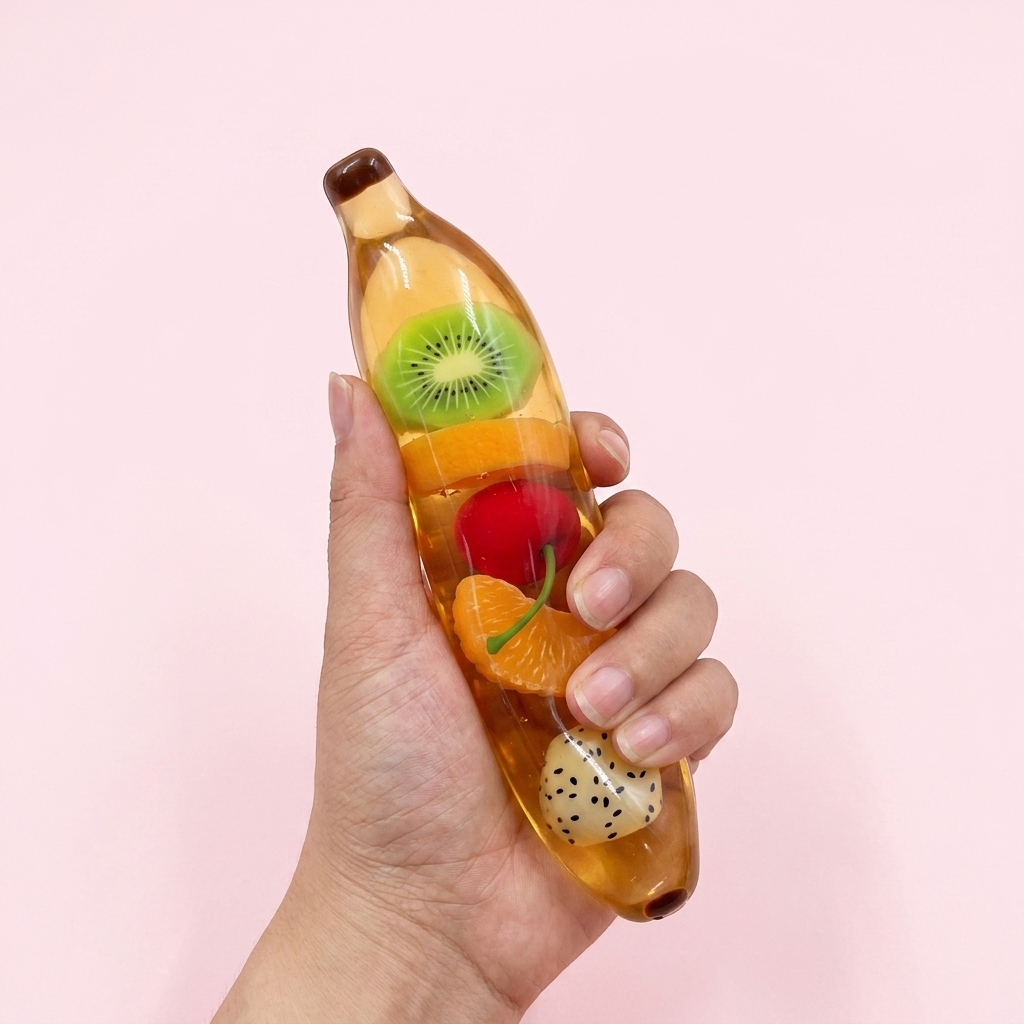

Your attention doesn't drain gradually. It collapses in spikes. One minute you're deep in a spreadsheet, and the next you've read the same sentence four times and can't remember your own name. Most productivity advice tells you to power through. That's exactly wrong.
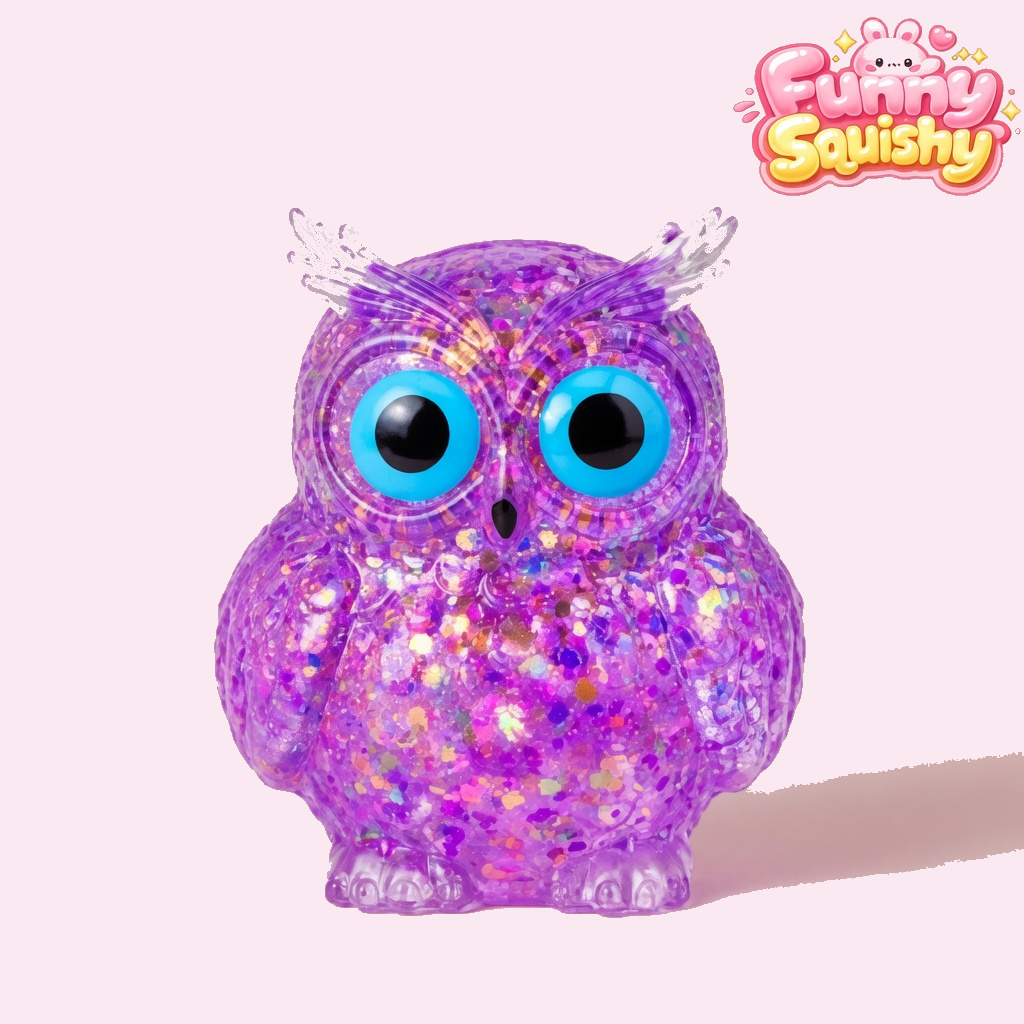
Try something smaller. Stranger. A lot more satisfying, too: pick up a bead-filled glitter squishy, give it a slow squeeze, watch the sparkles drift, and let your brain quietly reboot. Done on purpose, it takes about 60 seconds. And it works because of how your sensory system actually functions, not because it's cute — though it is.
This guide covers why glitter- and bead-filled squishies outperform ordinary stress relief toys, how to style them as real desk decor, and the exact reset ritual that turns a novelty toy into a focus tool.
Table of Contents
- Why a Glitter Squishy Beats a Plain One
- The Science Behind the Micro-Break Reset
- The 60-Second Glitter Desk Reset Ritual
- Halloween Squishies as Year-Round Desk Decor
- Why This Works Especially Well for ADHD Brains
- Choosing the Right Desk Fidget Toy
- FAQ
Why a Glitter Squishy Beats a Plain One
Here's the detail nobody mentions. The filling matters enormously.
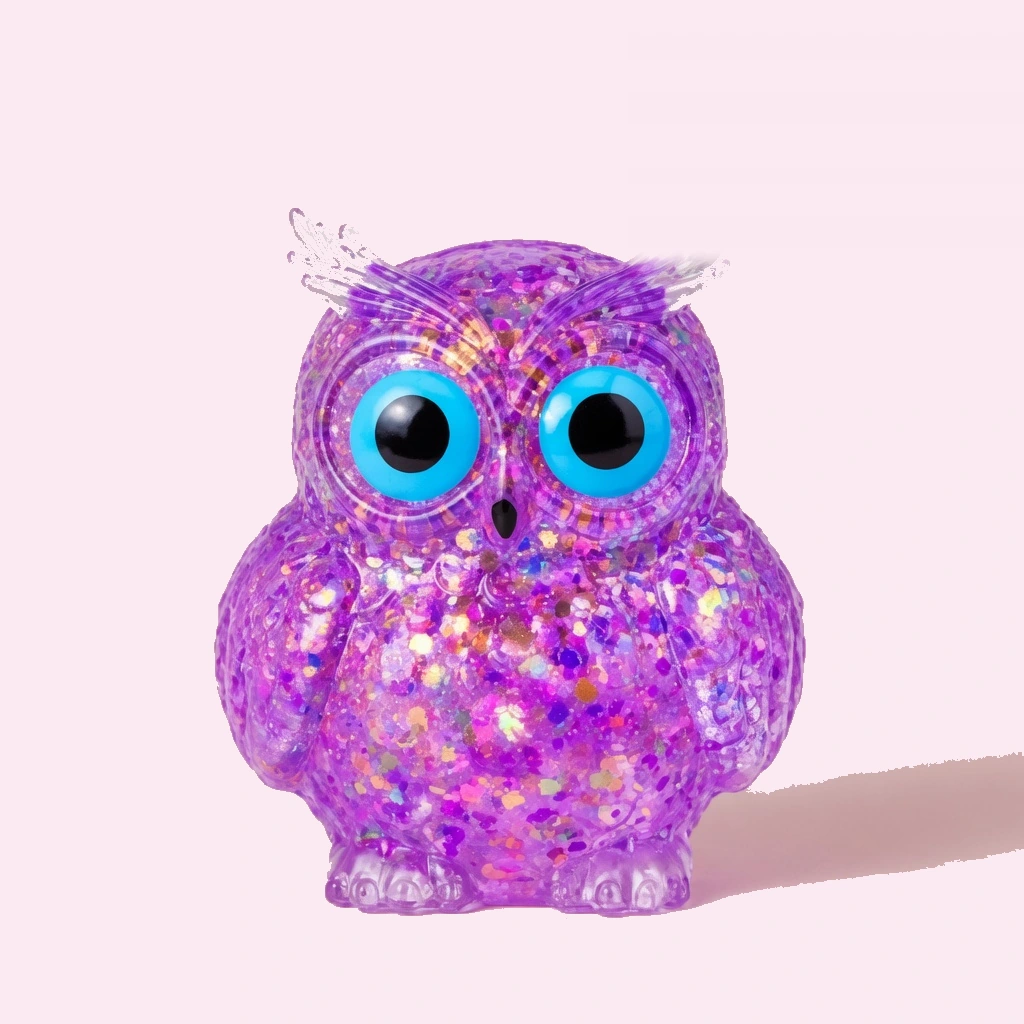
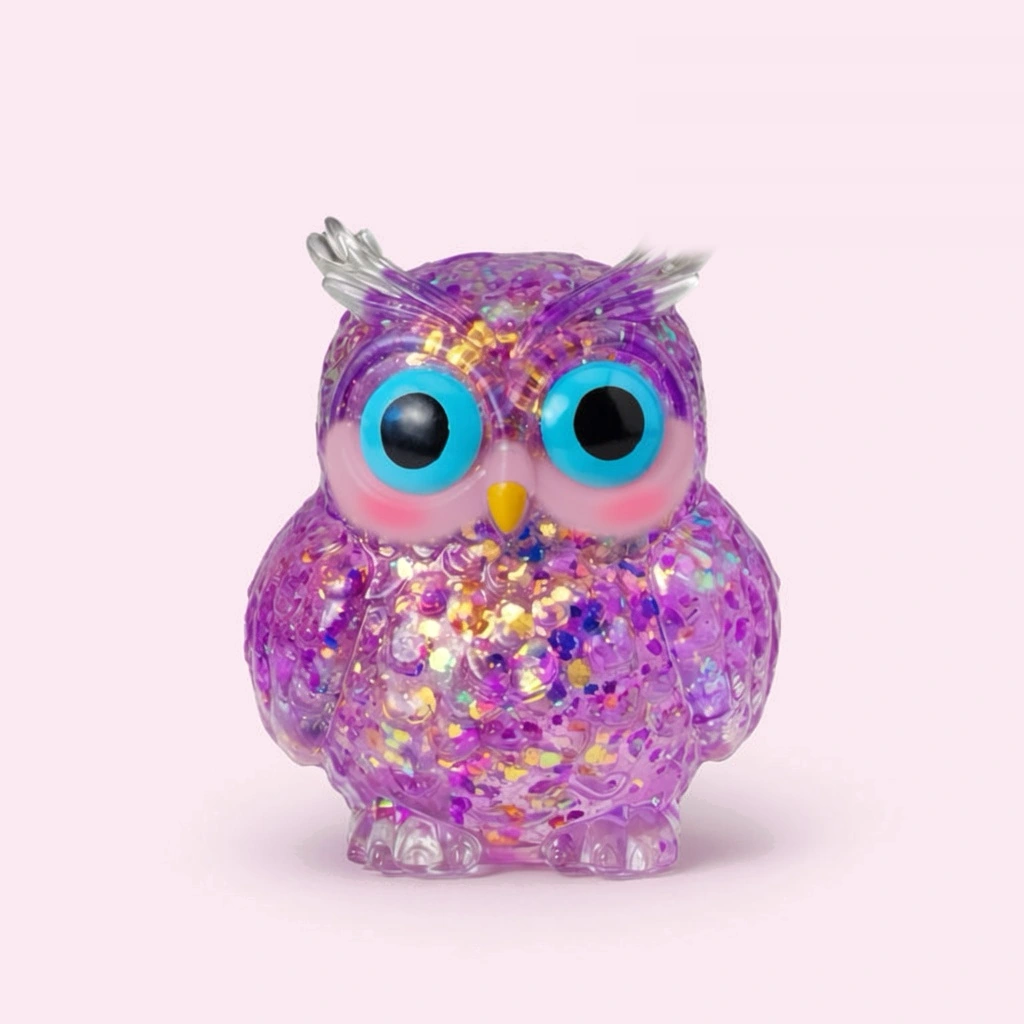
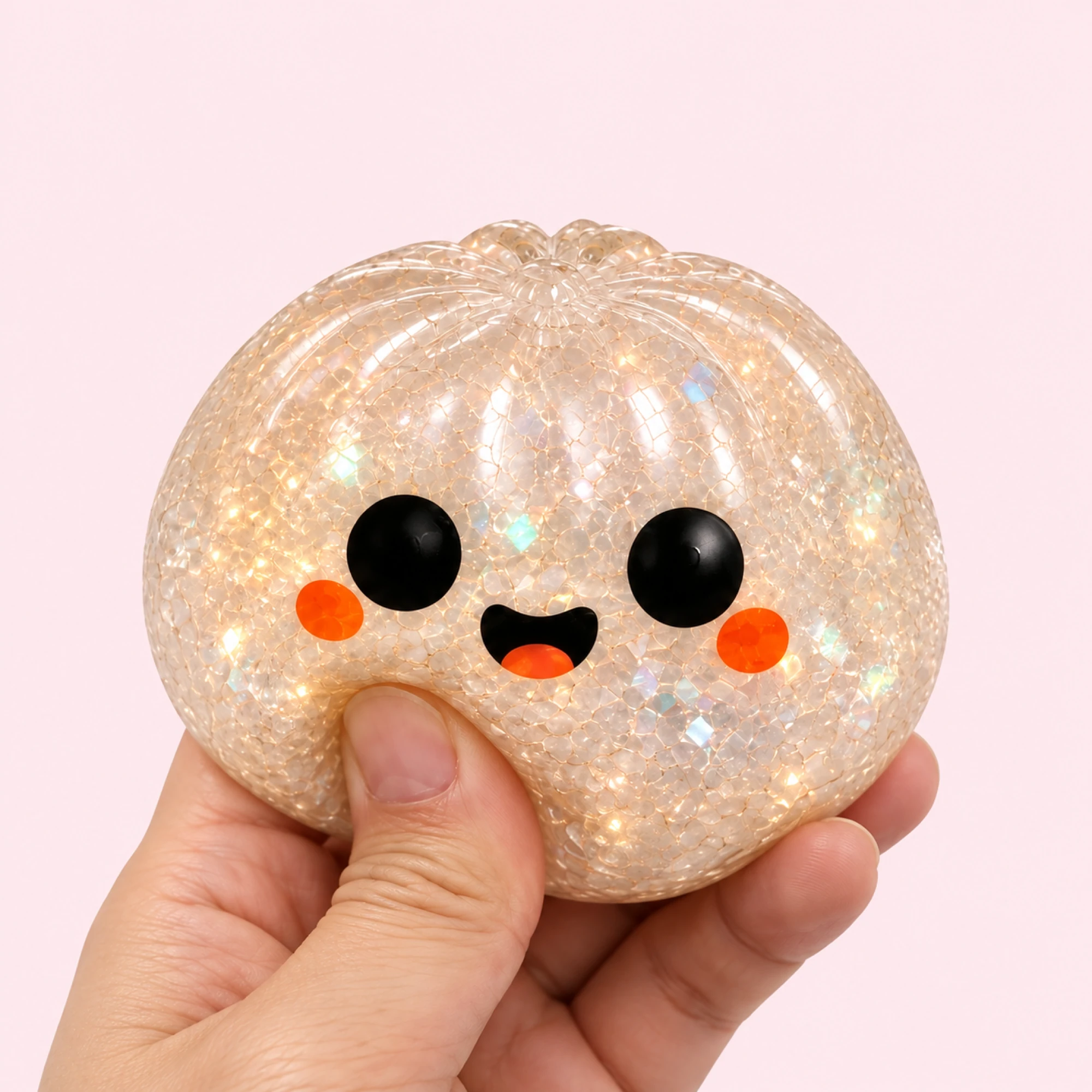
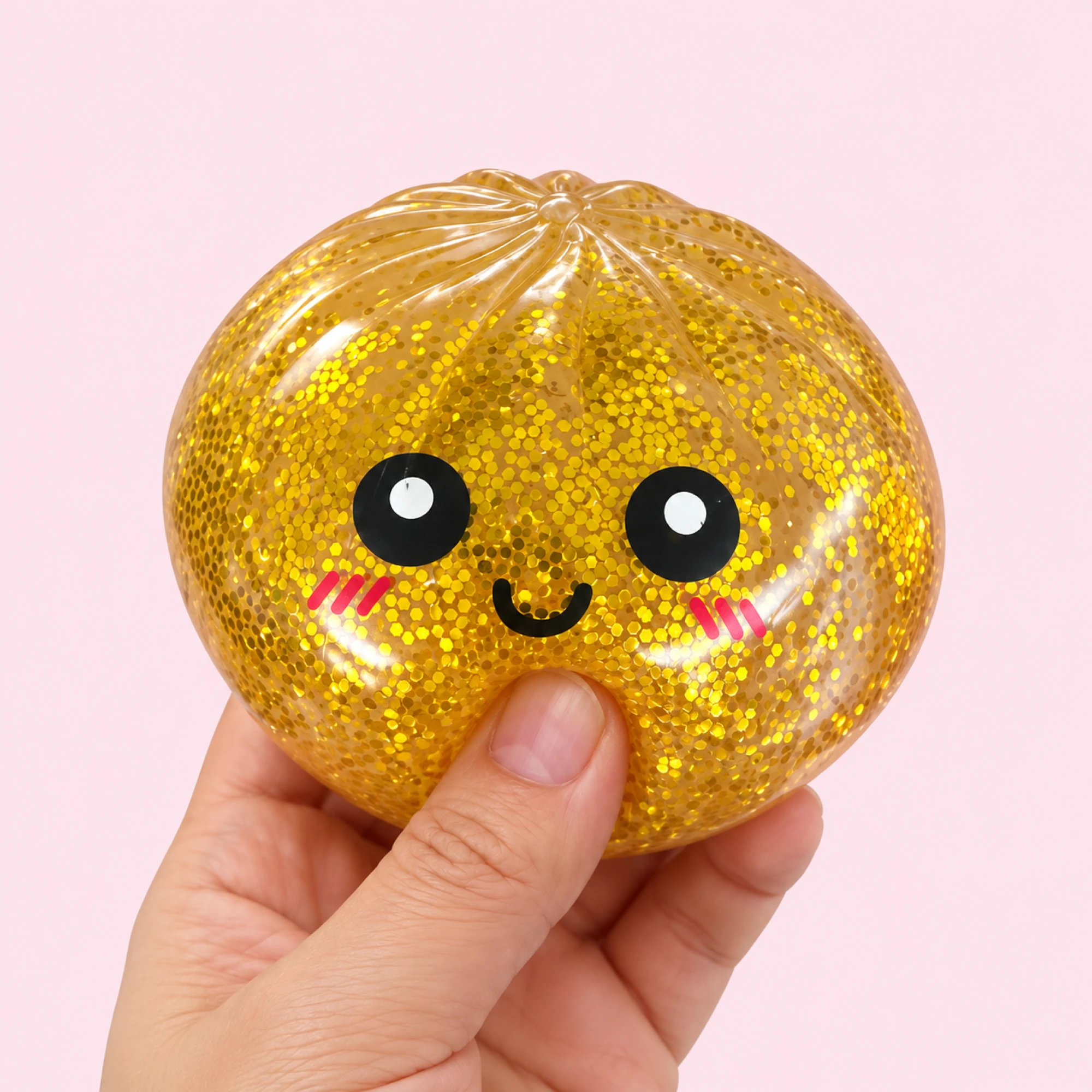
A standard foam squishy gives you one sensory channel — touch. You squeeze, it compresses, it rebounds. Pleasant, sure. But one-dimensional. A glitter squishy or a bead-filled model does something else: press it, and the beads shift while the glitter suspension swirls, giving your eyes something to track.
That visual movement isn't decorative filler. Squeezing engages your tactile system while the drifting glitter briefly grabs your visual attention. Two channels at once, occupying more of your brain's bandwidth than touch alone. When more perceptual channels are gently busy, there's less room left for the anxious, looping thoughts that fracture your focus. You're not distracting yourself. You're redirecting attention into something bounded and finite.
The bead texture adds a third layer. Unlike smooth foam, that granular shift under your fingers produces a subtle, ASMR-adjacent feedback that satisfies sensory-seeking urges — the fidgety need to touch, click, and manipulate that most desk workers feel without naming it. That's exactly why bead- and glitter-filled models have become the standout category among desk fidget toys. They solve a two-channel problem with a single object.
The Science Behind the Micro-Break Reset
Fidget toys get dismissed as childish. The research says otherwise.
Micro-breaks work. Research on brief workday pauses consistently shows that even 30-to-60-second breaks help sustain cognitive performance and slow the buildup of mental fatigue. The catch? The break has to be genuinely restorative, not another screen. Scrolling your phone doesn't rest attention. It just relocates the same depleted resource.
This connects to Attention Restoration Theory (ART). ART proposes that directed attention — the effortful focus you use for work — is a finite resource that fatigues. It recovers when you engage "soft fascination": a gentle, effortless kind of attention that doesn't demand cognitive control. Watching glitter settle inside a squeezable shell is a near-perfect miniature of the soft fascination ART describes, minus the walk in the woods.
Then there's the tactile side. Concepts from sensory integration suggest that proprioceptive and tactile input — pressure, resistance, texture — can help regulate arousal levels. A firm squeeze delivers deep-pressure feedback that many people find calming, and the repetitive rhythm helps down-regulate a stress response. This is why fidget toys for adults aren't a gimmick. They're a low-tech interface to your own nervous system.
Combine the three and you get the mechanism:
- Micro-break → interrupts the fatigue spiral
- Soft fascination (glitter) → restores directed attention
- Tactile/proprioceptive squeeze → regulates arousal and stress
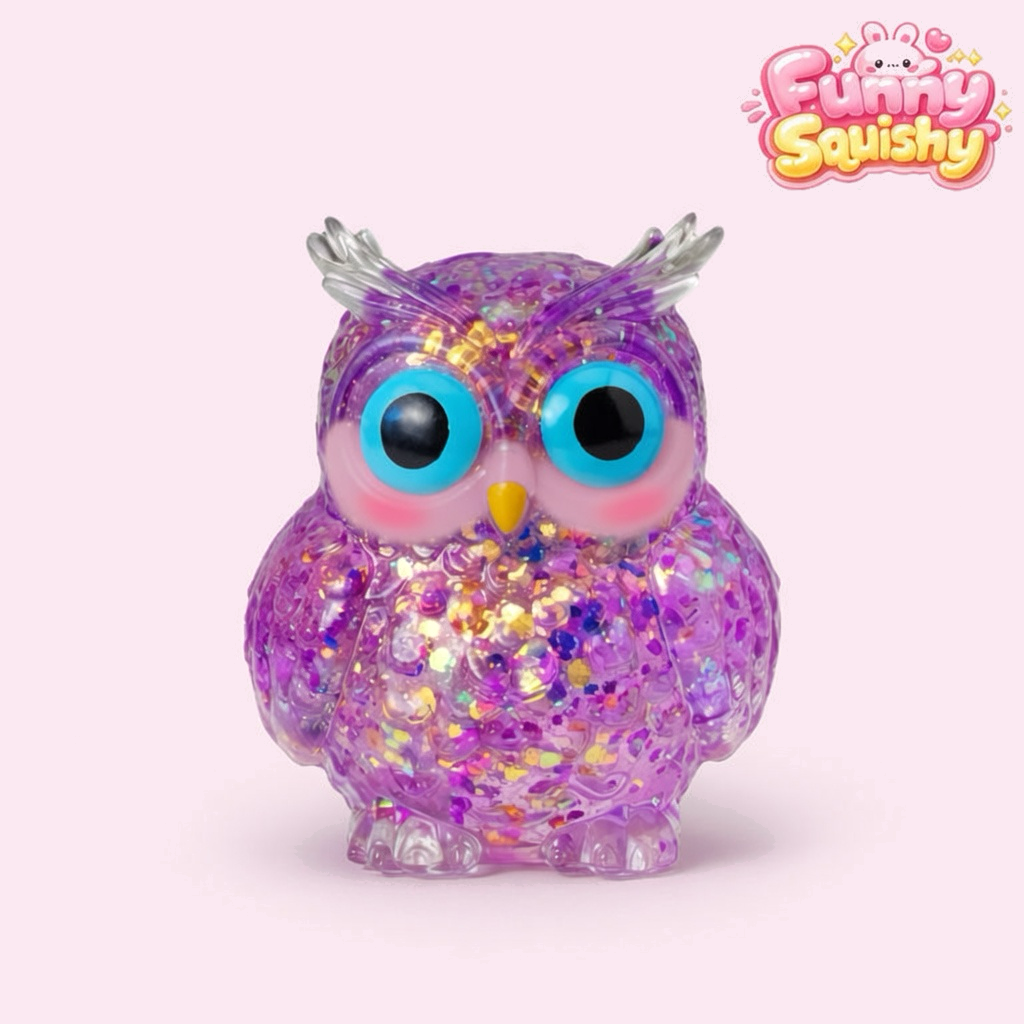
The 60-Second Glitter Desk Reset Ritual
Most advice stops at "squeeze it, you'll feel better." That's useless. A ritual needs structure, or it just becomes idle fidgeting that never signals your brain to actually reset. Here's the protocol.
Trigger it deliberately. Use the reset when you notice a focus collapse: re-reading, task-switching urges, restlessness, or the moment you reach for your phone out of boredom. That reach is your cue.
Then run these four phases:
- Seconds 0–15 — Grip and exhale. Pick up the squishy. Squeeze it firmly and slowly while breathing out for a count of six. The long exhale nudges your nervous system toward calm; the pressure gives your hands a job.
- Seconds 15–35 — Watch the glitter. Release the squeeze and let your eyes track the glitter and beads settling. Don't force focus — just watch. This is the soft-fascination phase that lets directed attention recover. Blink, unclench your jaw, drop your shoulders.
- Seconds 35–50 — Rhythmic squeezes. Squeeze and release at a slow, steady rhythm — roughly one press every two seconds. Sync it loosely to your breathing. This is where the tactile regulation does its quiet work.
- Seconds 50–60 — Set your return cue. Put the squishy down in the same spot every time and state your next micro-goal in your head: "Finish this paragraph," "Reply to one email." A specific re-entry point keeps the reset from sliding into procrastination.
The whole thing fits between tasks, makes no noise, and disturbs nobody in an open office. Run it three to six times across a workday, not every ten minutes. It's a reset, not a hobby.
Halloween Squishies as Year-Round Desk Decor
Here's the fun part nobody's written about. Your reset tool can also be the best-looking thing on your desk.
Halloween-themed squishies — glitter-filled pumpkins, translucent ghosts, spiderweb orbs, jelly bats — sit right at the crossroads of kawaii squishy charm and seasonal aesthetic. They're small, glossy, sculptural. So they double as intentional decor rather than clutter. A stress ball hides in a drawer. A sparkly ghost earns a spot on the shelf.
Style ideas depending on your setup:
- Kawaii / pastel desk: cluster a few pastel glitter squishies on a small tray beside a plush or a pen pot. Cohesion comes from a shared color story.
- Dark academia / spooky aesthetic: a translucent black spider or amber pumpkin squishy pairs beautifully with brass, dark wood, and candle-style lamps. It reads as tasteful, not tacky.
- Minimal setup: one standout piece on a ceramic dish. A single well-placed glitter squishy looks deliberate; five scattered ones look like a toy box.
The seasonal framing is a feature, not a limitation. Ghosts and jack-o'-lanterns feel festive in October and quietly quirky the rest of the year — a small, glittering full stop in a sea of monitors and cables.
Why This Works Especially Well for ADHD Brains
Adults with ADHD often describe a constant background hum of understimulation — the need to move, touch, or click just to stay engaged. This is sensory-seeking behavior, and suppressing it usually makes focus worse, not better.
A bead-filled squishy channels that impulse into something contained and non-disruptive. Instead of leg-bouncing, pen-clicking, or doom-scrolling, the hands get a rich, rhythmic input that satisfies the craving without pulling attention off-task. Many ADHD adults find that a low-key fidget in one hand actually stabilizes attention on the main task — the fidget soaks up the restless energy that would otherwise derail focus.
The visual glitter component adds a novelty hit. ADHD brains, especially responsive to novelty, tend to find that rewarding. It's a real advantage over plain, matte fidget cubes.
Choosing the Right Desk Fidget Toy
Not all squishies are built for repeated daily use. Look for:
| Feature | Why it matters |
|---|---|
| Bead + glitter fill | Dual sensory channels (touch + visual tracking) |
| Slow rebound / firm squeeze | Gives satisfying deep-pressure feedback |
| Durable outer skin | Cheap TPR splits after weeks of squeezing |
| Quiet operation | Essential for shared and open offices |
| Aesthetic you actually like | You'll only use decor you enjoy looking at |
Skip the overly soft foam squishies (single-channel, less durable) and anything that clicks or crinkles loudly. For office-friendly fidget toys for adults, silence and durability beat novelty.
🎃 Shop This Guide
Build your glitter desk reset with a bead-filled Halloween novelty squishy, or browse the full squishy collection for more desk-friendly picks.
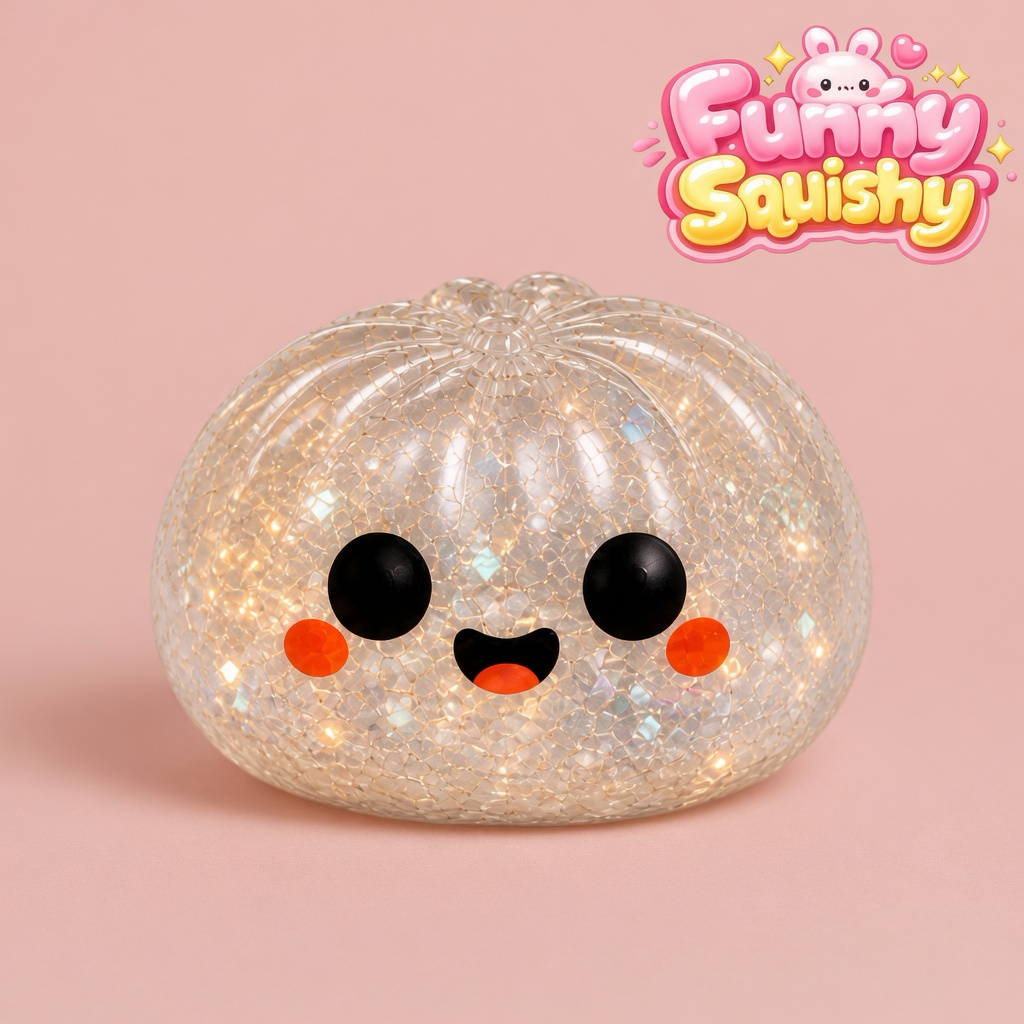 Halloween Skull Squishy$17.99 · Shop now →
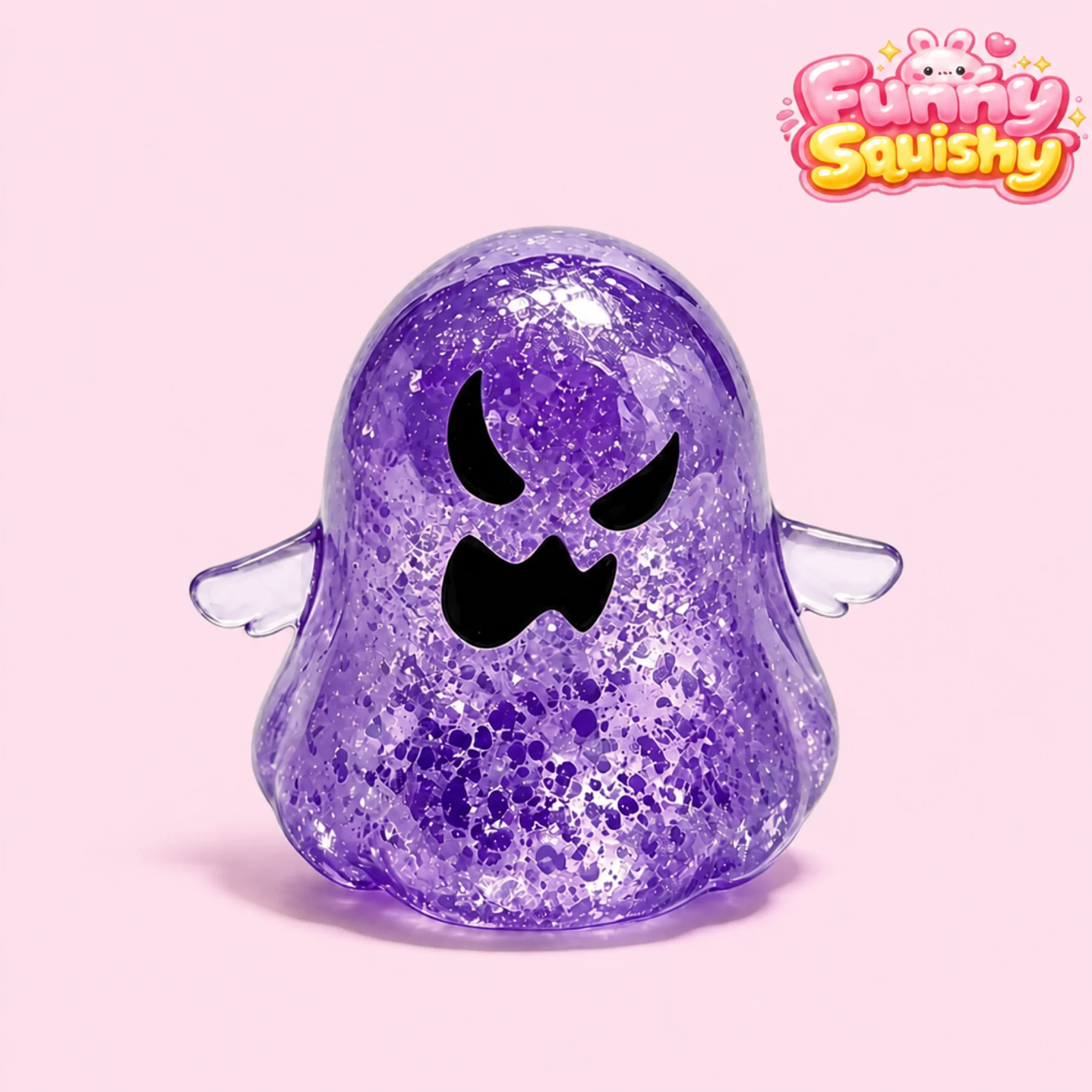 Clear Glitter Ghost Squishy$17.99 · Shop now →
FAQ
Are fidget toys actually good for focus, or just a distraction? Used aimlessly, any object can distract. Used as a structured micro-break with a clear return cue, a fidget supports focus — it channels restless energy and gives directed attention a brief recovery window, consistent with micro-break and attention-restoration research.
Why glitter or beads instead of a plain squishy? The moving glitter gives your eyes something to track, adding a visual channel on top of touch. That "soft fascination" is what helps reset attention — plain foam only stimulates one sense.
How often should I do the reset ritual? Three to six times across a workday, triggered by genuine focus dips rather than a timer. Overuse it and a reset turns into a procrastination loop.
Is a Halloween squishy office-appropriate? Yes — styled as decor, a glitter pumpkin or ghost reads as a tasteful desk accent. Choose muted or translucent colors for conservative offices and keep it to one or two pieces.
Do these help people with ADHD? Many ADHD adults find that quiet, rich tactile input satisfies sensory-seeking urges and stabilizes attention on the main task. It's a supportive tool, not a treatment.
Will it disturb my coworkers? A quality bead-filled squishy is silent. Avoid clicking or crinkling models in shared spaces.
Next time your focus slips, don't reach for another tab. Reach for the little glowing pumpkin on your desk, squeeze slowly, watch the glitter settle, and give your brain the 60 seconds it's actually asking for. It looks like play. It works like maintenance.