


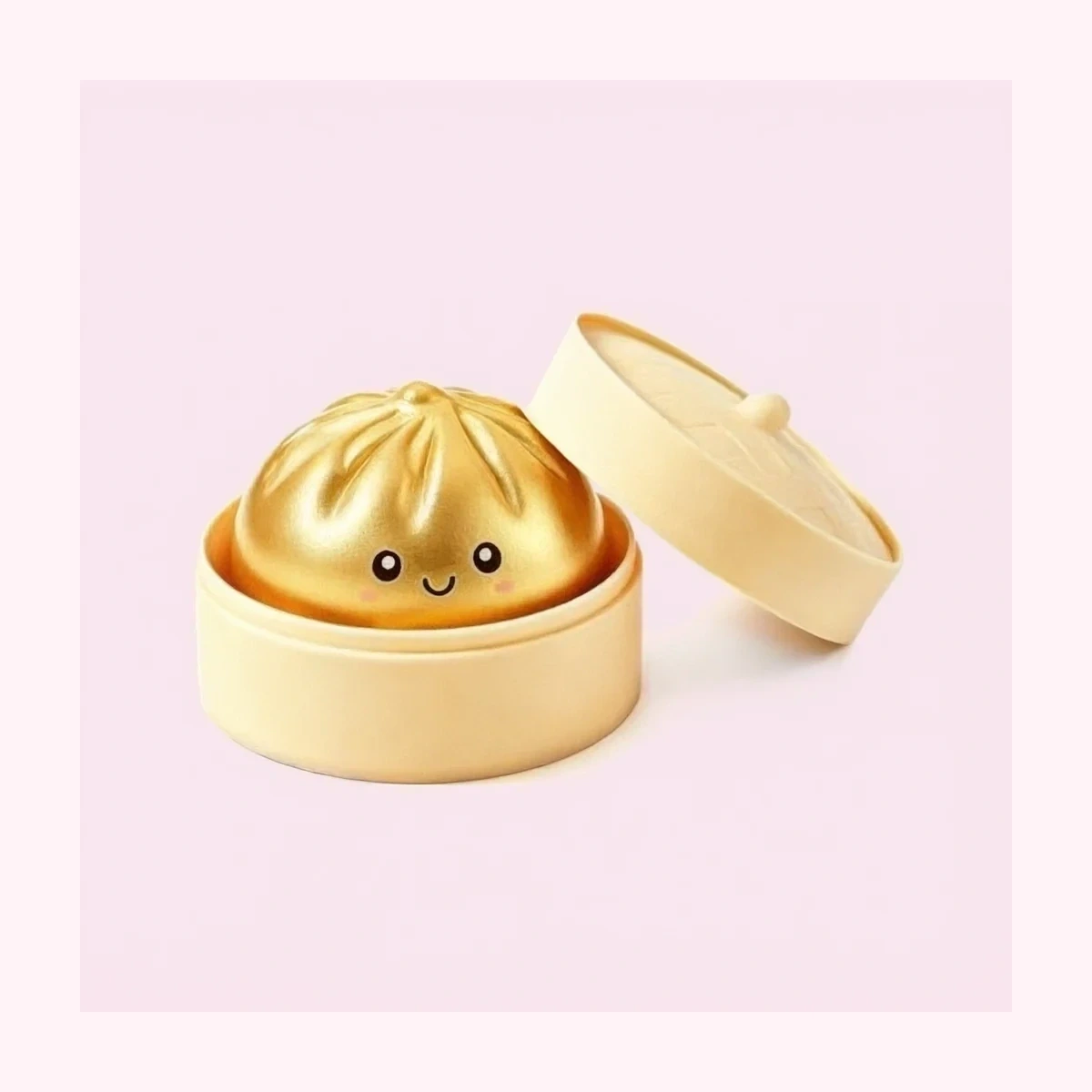



What actually makes a golden dumpling squishy worth hunting? Scarcity, mostly — gold is the colorway blind-box lines usually reserve for their rarest slot, so pulling one feels like hitting a tiny jackpot. The foam squeezes the same as any other dumpling; the shine is doing all the work. Here’s how rarity tiers usually run, how collectors finish sets, and how to avoid getting scammed.
The Usual Rarity Ladder
Most collectible squishy lines follow a familiar ladder, even when nobody prints it on the box. From easiest to hardest pull, it typically runs:
| Tier | What it looks like | How it feels to pull |
|---|---|---|
| Everyday solids | White, cream, single pastels | The baseline — still soft, zero drama |
| Two-tones and brights | Gradients, hot colors | A small “oh nice” |
| Glitter | Sparkle flecks through the color | Genuine grin territory |
| Marbled / galaxy | One-of-one swirls | Post-it-online energy |
| Metallic gold / secret | Shimmer finish, sometimes unlisted | The scream |
Lines differ in the details, but the emotional arc of the ladder is close to universal.
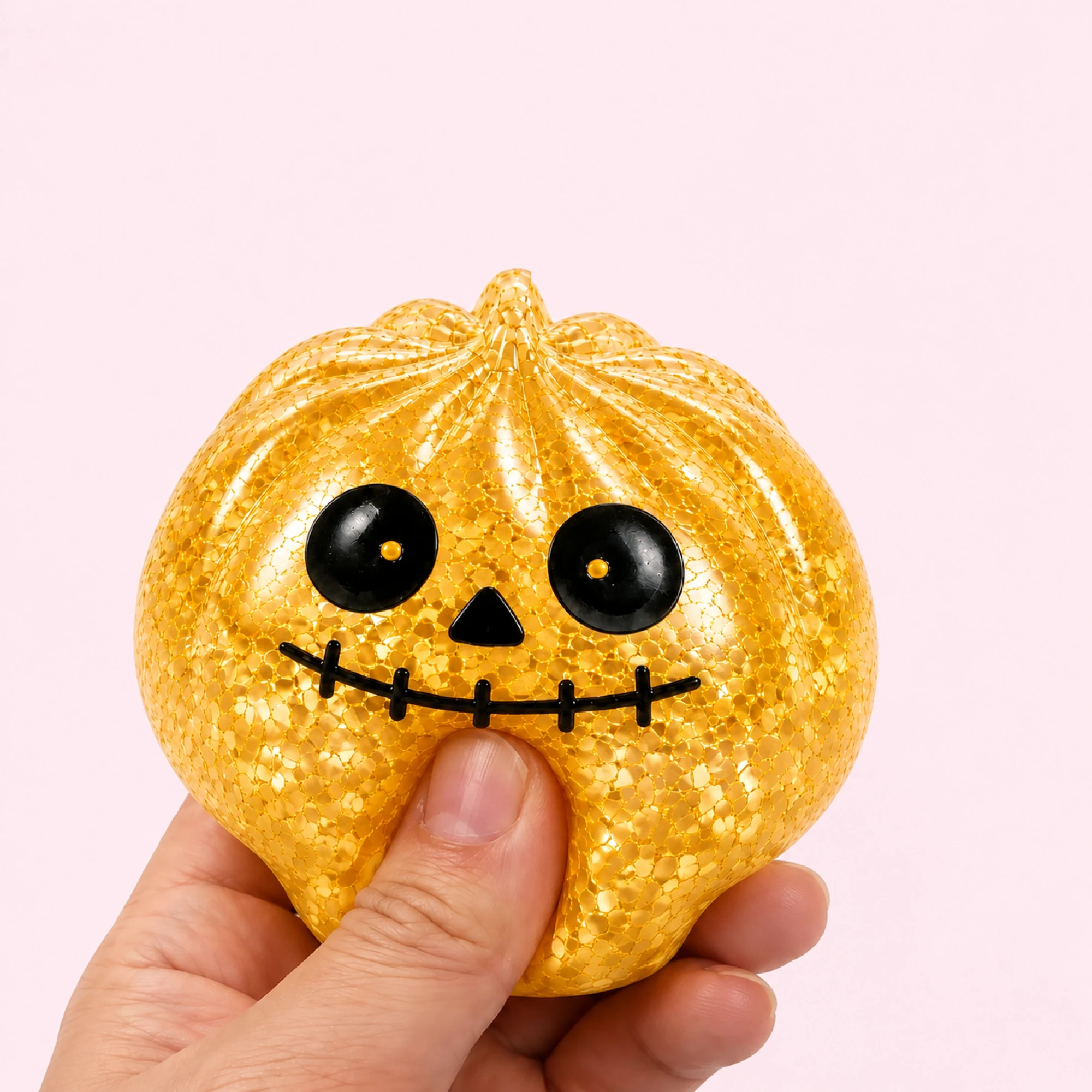
The glitter tier is the one you don’t have to gamble for. Pieces like the Ghost Squishy with glitter, its purple glitter sibling, and the Halloween Skull Squishy in glitter sell as straightforward listings — all sparkle, no odds.
What Sets a Gold Dumpling Squishy Apart
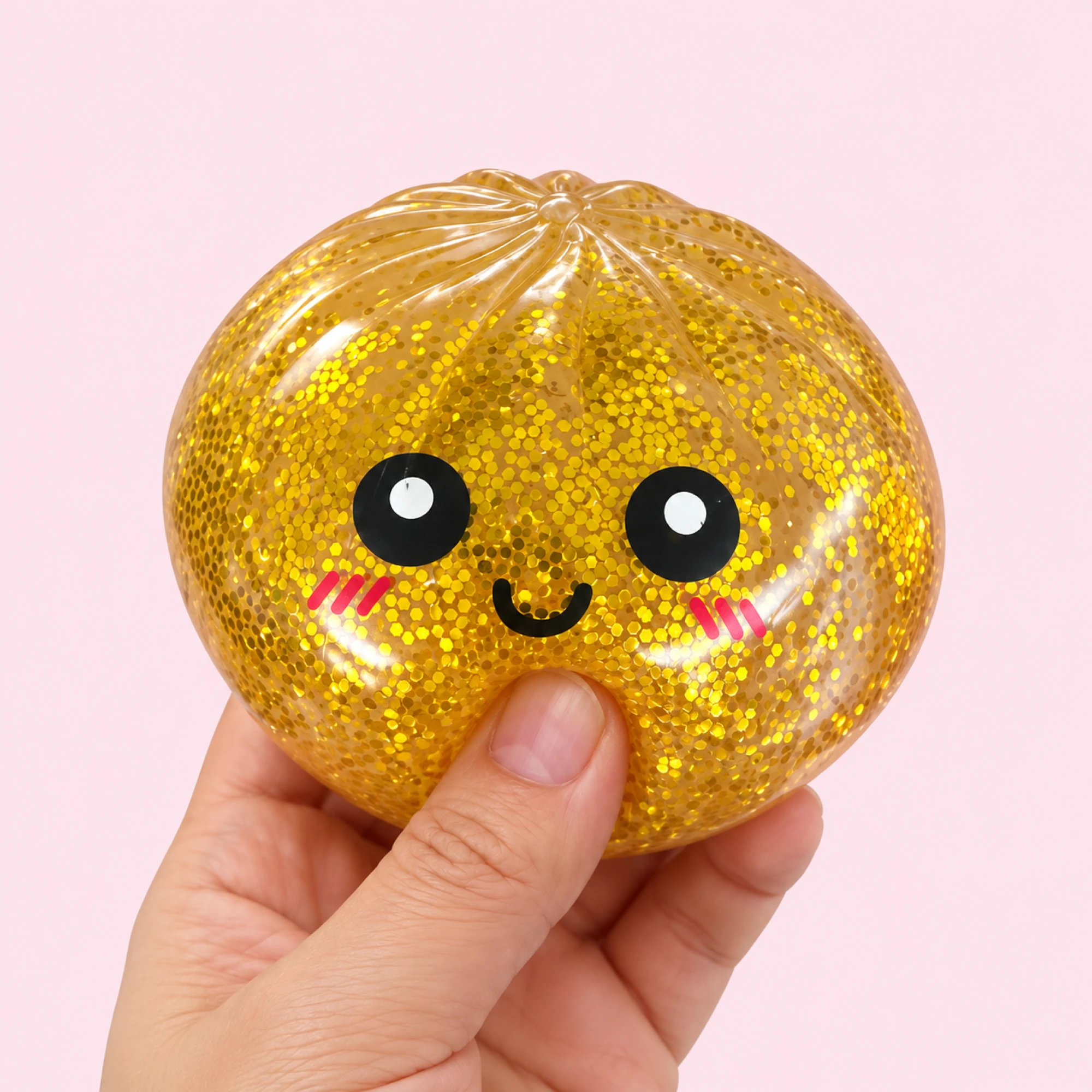
Feel-wise, honestly, nothing — a gold dumpling squishy is typically the same slow-rising foam as its plain siblings, with the same doughy sink and patient refill. Rarity lives entirely in the finish: a metallic shimmer that catches light the way normal matte foam can’t.
That finish changes the toy’s job. A white bun is a desk fidget; a gold one is a trophy that happens to be squeezable. It photographs like jewelry, anchors a display shelf, and tends to be the piece collectors won’t let guests squeeze. Perfectly reasonable. Guests have nails.
There’s a display trick worth stealing: park the gold piece next to the palest thing you own. Metallic finishes read twice as rich beside white or cream, and the pairing photographs like an ad without any staging effort.
How Blind-Box Odds Really Work
Blind-box assortments are typically packed to fixed ratios — commons fill most slots, specials get a thin slice, and some lines keep a “secret” colorway off the published lineup entirely. Some makers print pull rates on the packaging; many don’t, and the community reverse-engineers the odds from unboxing tallies.
The practical takeaways: no individual box is “due,” case buyers chase ratios rather than luck, and the rarest dumpling squishy in any line is rare precisely because most boxes aren’t it. Our blind box guide for beginners walks through the mechanics before you spend, and the hunting itself starts in the mystery boxes collection.
A caution about “confirmed odds” posted in comment sections: small sample sizes lie. Fifty unboxings is a vibe, not a statistic, so treat community tallies as rough weather forecasts rather than promises.
Finishing the Set Without Going Broke
Completing a lineup on blind pulls alone is the expensive route. Collectors who finish sets usually work three lanes at once: pull for the thrill, trade duplicates aggressively (commons are currency, not clutter), and buy the openly listed colorways outright from the dumpling squishy collection so the gamble budget goes only toward actual chase pieces.
If you’re ordering monthly anyway, run the numbers on Squishy+ — $19.99/month for 10% off every order plus free shipping twice a month. Set completion is a marathon; small percentages compound.
And log your pulls somewhere — a note on your phone beats memory. Sets stall most often because someone bought a duplicate they were absolutely sure they didn’t own.
Also worth saying: a rare dumpling squishy is only worth what the chase is worth to you. The gold one squishes exactly like the white one. If the shine doesn’t spark anything, skip the ladder entirely and buy what you’ll actually squeeze.
Repaints, Fakes, and Too-Shiny Listings
Wherever rarity exists, repaints follow. The classic scam is a common colorway coated gold and resold as a rare pull, and the tells are consistent: paint pooling in the pleats, shimmer that flakes or transfers to your hands, seams where the coating cracks when squeezed, and a seller price that’s dramatically off from what the line usually trades at.
Real metallic finishes are typically part of the material or applied at production quality — squeezing shouldn’t shed sparkle. Before paying aftermarket prices, read our guide on how to spot a fake or toxic squishy; the same checks that catch toxic junk catch repaints. When in doubt, ask the seller for a quick video of the piece being squeezed — repaints hate motion; honest finishes don’t.
FAQ
Is gold always the rarest color? Not always, but metallic finishes commonly occupy the top slot, and many lines add an unlisted “secret” that outranks even gold. Check unboxing tallies for the specific line you’re chasing.
Do rare colors feel different from common ones? Typically no — same foam, same slow rise, same squeeze. Rarity is a finish and a probability, not a texture upgrade.
Should I buy a “confirmed gold” from a reseller? Only with clear photos of the pleats and seams, a seller history you can verify, and a price you’d survive being wrong about. Repainted commons are the standard trick in every collectible category.
Do glitter squishies shed sparkle? Well-made ones carry the glitter in the material, so nothing rubs off on your hands. Glitter transfer on a new piece is a quality red flag worth acting on.