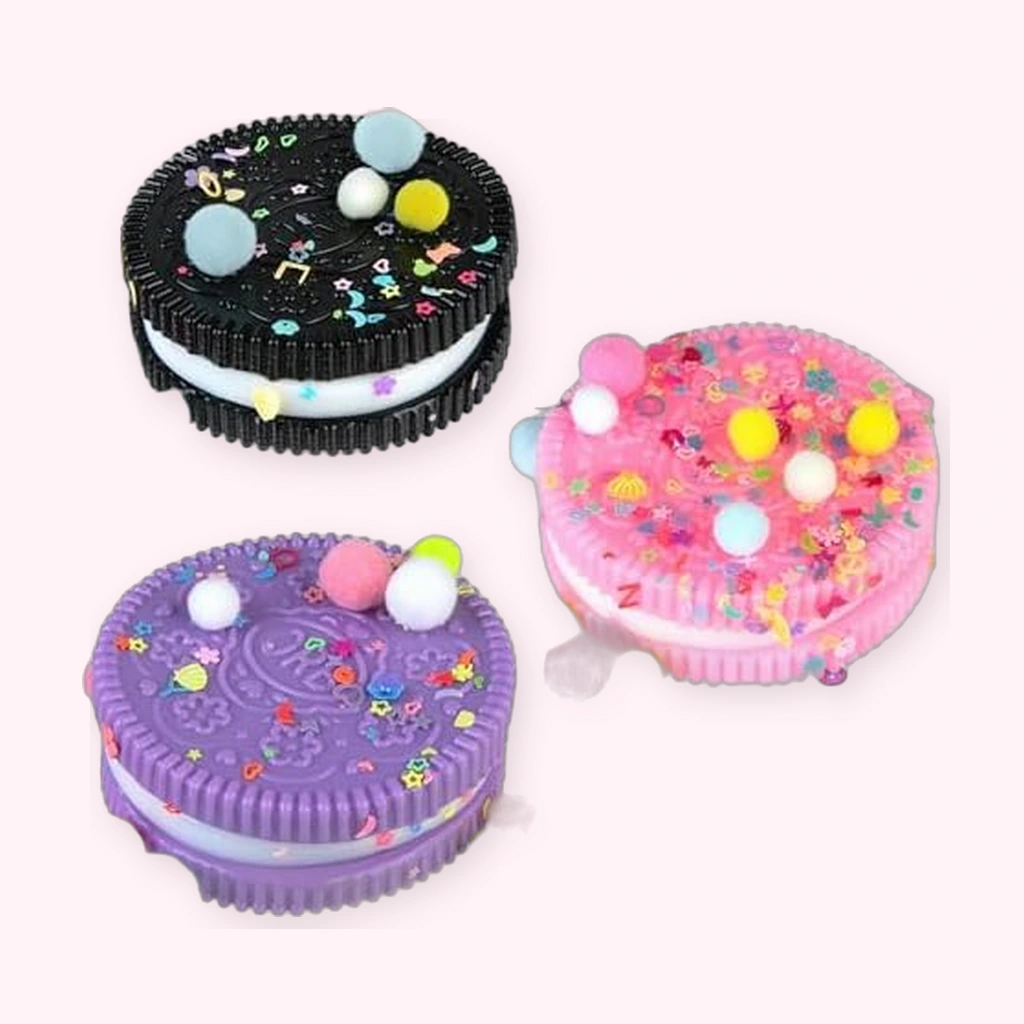



Oreo squishies are slow-rising foam toys molded to look like the classic sandwich cookie — two dark chocolate-colored wafers, one white cream line, sometimes a twisted-open top. They exist because cookie realism photographs absurdly well and because pressing a “cookie” that rises back is oddly satisfying. Here’s how the realistic ones are made, why the black-and-white look wins, and what to check before buying.
What Makes Squishy Oreos Look So Real
Realism in a cookie shape comes down to the mold. Convincing versions copy the embossed wafer pattern — the ridged edge, the stamped surface design, the crumbly-looking seam where wafer meets cream. Cheap versions skip the embossing and just paint a dark disc, and your eyes clock the difference in about half a second.
Finish matters as much as shape. A matte, slightly rough surface reads “baked,” while a glossy one reads “toy.” The cream line sells the whole act: a clean white band with a little squish-out at the edge, like someone twisted it open and then changed their mind.
Then there’s the rise. Foam cookies typically sink under your thumb and refill in slow motion, which is the best kind of wrong — real cookies crumble, and this one politely reassembles itself.
The Black-and-White Camera Trick
Most squishies fight your camera. Neon pinks blow out, pastels wash into white backgrounds, and glitter turns into noise. Cookie colorways are basically monochrome, and monochrome behaves: dark wafer, white cream, instant contrast on almost any surface.
That’s why cookie shapes keep showing up in flat lays, desk photos, and fake snack-table pranks. They anchor a frame the way an actual plate of cookies would, minus the crumbs. If food realism is your whole thing, our realistic food squishies guide covers the rest of the menu.
One more reason creators reach for them: repeatability. A real cookie survives one shoot before it gets eaten or broken, while the foam version does a hundred takes, holds the same pose all afternoon, and never attracts ants. Prop budgets have been built on worse logic.
Foam Wafers, Mochi Middles
The classic build is slow-rising foam: a dense little puck with that familiar sink-and-return cycle. It’s the version most people mean when they search for a cookie squishy, and it’s the one that looks most convincing on a shelf.
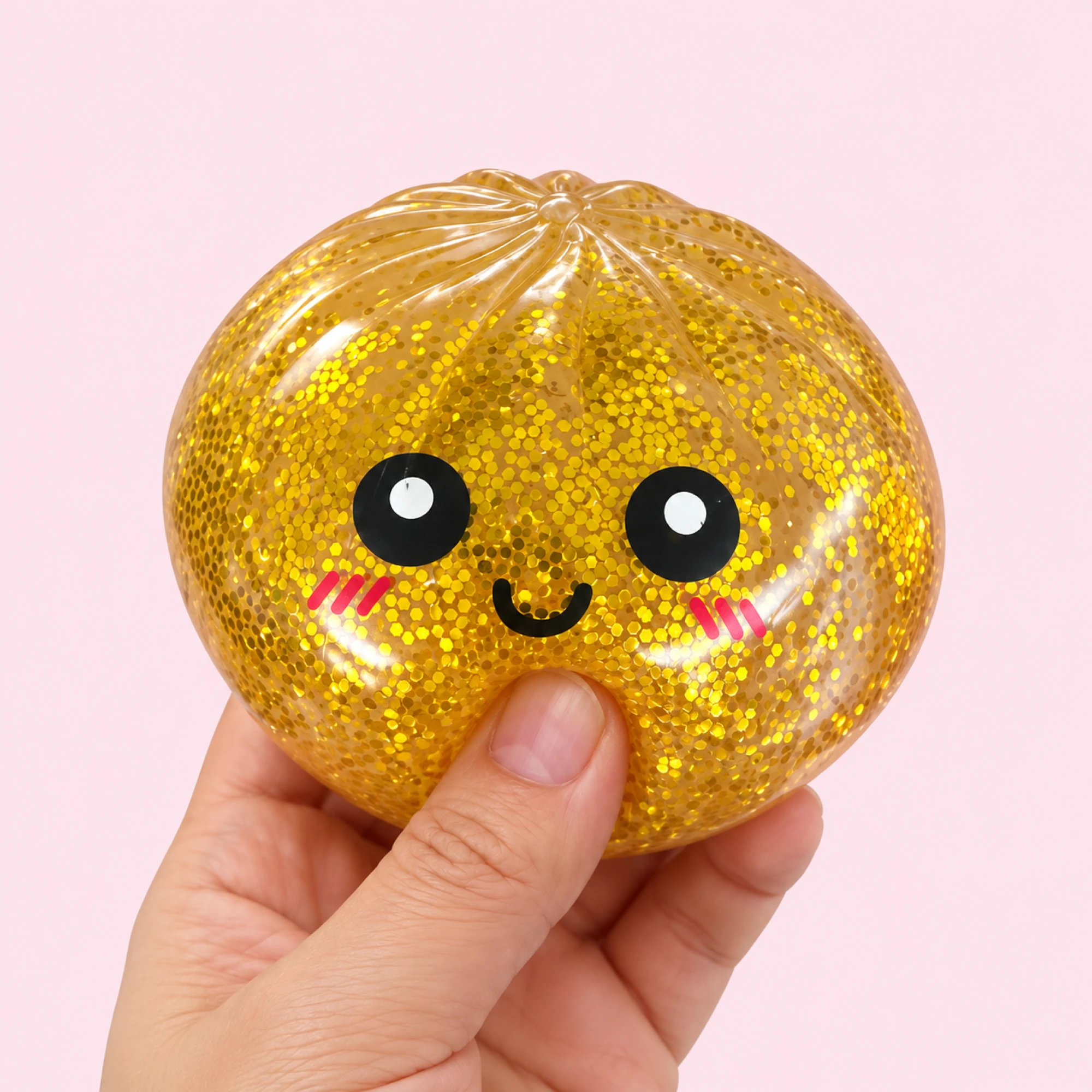
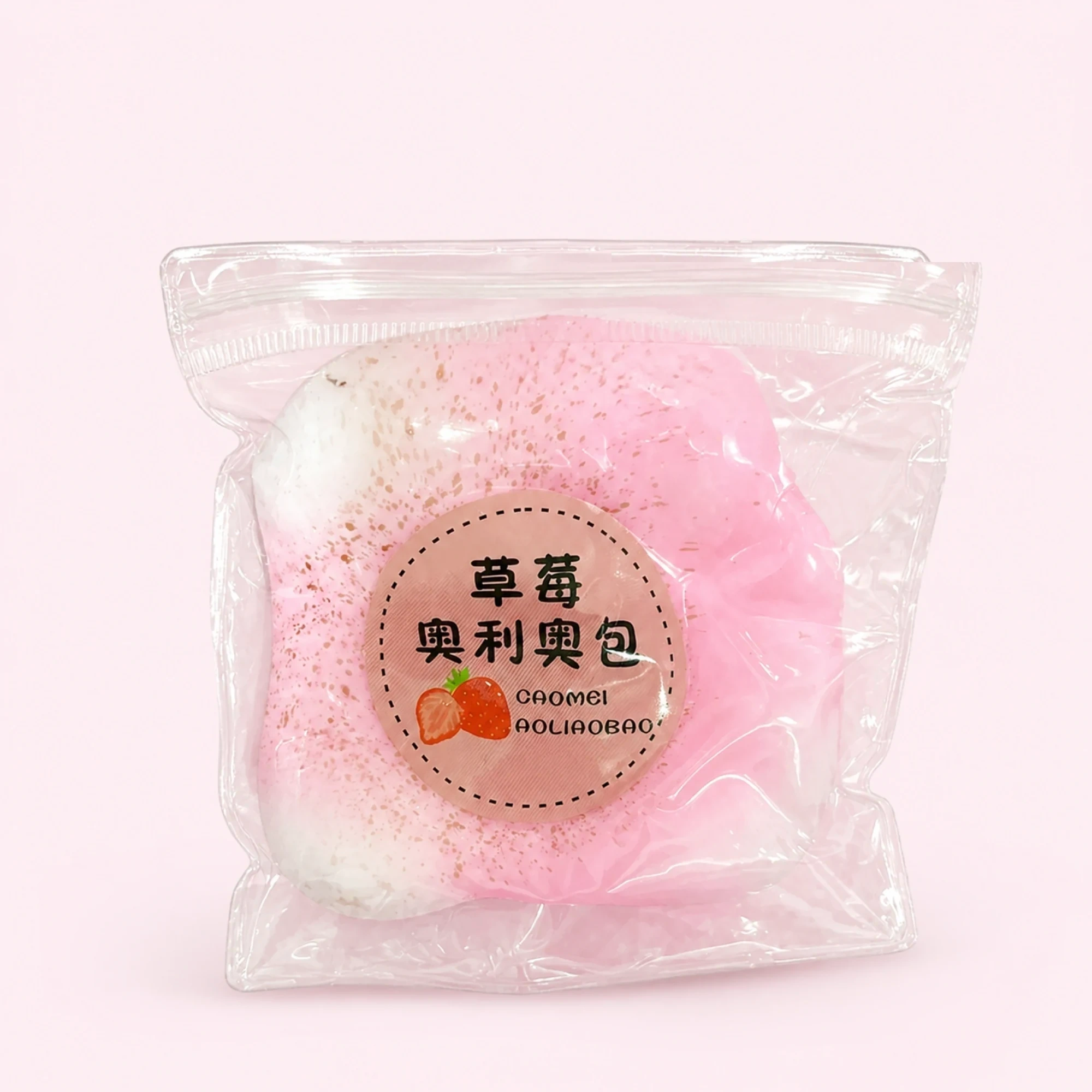
The other school is squishier in the literal sense. Mochi-style and fluid-filled builds trade the slow rise for a sticky, stretchy, cool-to-the-touch squeeze. Our Daifuku Mochi Squishy — Strawberry & Oreo leans that way: sticky-bun softness in a cookies-and-cream colorway, more wobble than rise. For a deeper feel-by-feel comparison of that texture family, the mochi squishy guide breaks it down.
Which build wins depends on your idle habits. Slow-rise foam suits people who like watching a shape recover in peace; sticky mochi suits people who need their hands busy every single second of a call.
Brand Name vs. Look-Alike
“Oreo” is a trademarked cookie brand, and brand-name toys typically come through official licensing programs — logo on real packaging, sold through mainstream retailers. That’s the version worth a premium if you’re collecting branded merch specifically.
Everything else is a sandwich-cookie squishy wearing a nickname. That’s not a crime; plenty of generic ones look fantastic. Just price them like the unbranded toys they are, and side-eye any listing that uses a famous name with zero official packaging in the photos.
If you’re gifting, the distinction matters less than you’d think. Kids care that it looks like the cookie, squishes well, and comes back for more — the trademark line on a box has never once impressed a nine-year-old. Spend the premium when the recipient is a merch collector; spend it on more squishies when they’re not.
Setting Up the Dessert Table
Cookies are the anchor pieces of a dessert shelf because their dark color grounds all the pastel around them. Build outward with the sugar squishy collection for frosted and candy-coated company, or go wide with the full food squishy lineup until your desk looks like a bakery case.
Standard reminder for anything food-shaped: these are strictly not edible, and they’re made for ages 3 and up. Keep them away from kids young enough to taste-test — and maybe from hungry roommates at 1 a.m., because the resemblance is genuinely that good.
A quick styling cheat sheet:
- One dark piece (cookie) per three light pieces keeps a shelf from washing out
- Odd-numbered groups photograph better than pairs
- A half-squished cookie mid-rise makes the best action shot
- Keep the display out of direct sun so the “cream” stays white
FAQ
Are Oreo squishies official merchandise? Some are — food brands commonly license their look to toy makers, and licensed versions show the logo on genuine packaging. Listings that use the name with no official packaging are typically generic sandwich-cookie designs.
Do cookie squishies rise slowly? The foam ones typically do, with that classic sink-and-refill cycle. Mochi and fluid-filled builds don’t really “rise” — they stretch, wobble, and slump back into shape instead.
Can I use one as a food-photo prop? Absolutely, and it’s one of the best uses. The black-and-white contrast reads clearly on camera, it never melts under lights, and a mid-squish frame is an instant scroll-stopper.
Are they safe for young kids? They’re made for ages 3 and up, same as the rest of the food-shape family. The realism is the risk with very small children — a toy that looks exactly like a cookie is an invitation to bite it.