Sensory Stress Balls by Texture: Mesh, Bead, Gel & Slow-Rising Foam Guide
Shoppers searching for sensory stress balls encounter a wide spectrum of outer skins and internal fillings. While a mesh-wrapped grape ball, a hydrogel bead sphere, a spiky acupressure ring, and a slow-rising polyurethane foam block all fit in one hand, each material delivers a completely different cutaneous sensation and resistance curve.
Understanding how these five tactile textures respond under palm pressure, evaluating membrane puncture risks near computer keyboards, and reviewing solid foam catalog options helps buyers select the cleanest, most satisfying stress reliever for home or office desks.
The 5 Core Sensory Stress Ball Textures Explained
Sensory hand toys create distinct physical feedback depending on the interplay between their outer membrane and inner core:
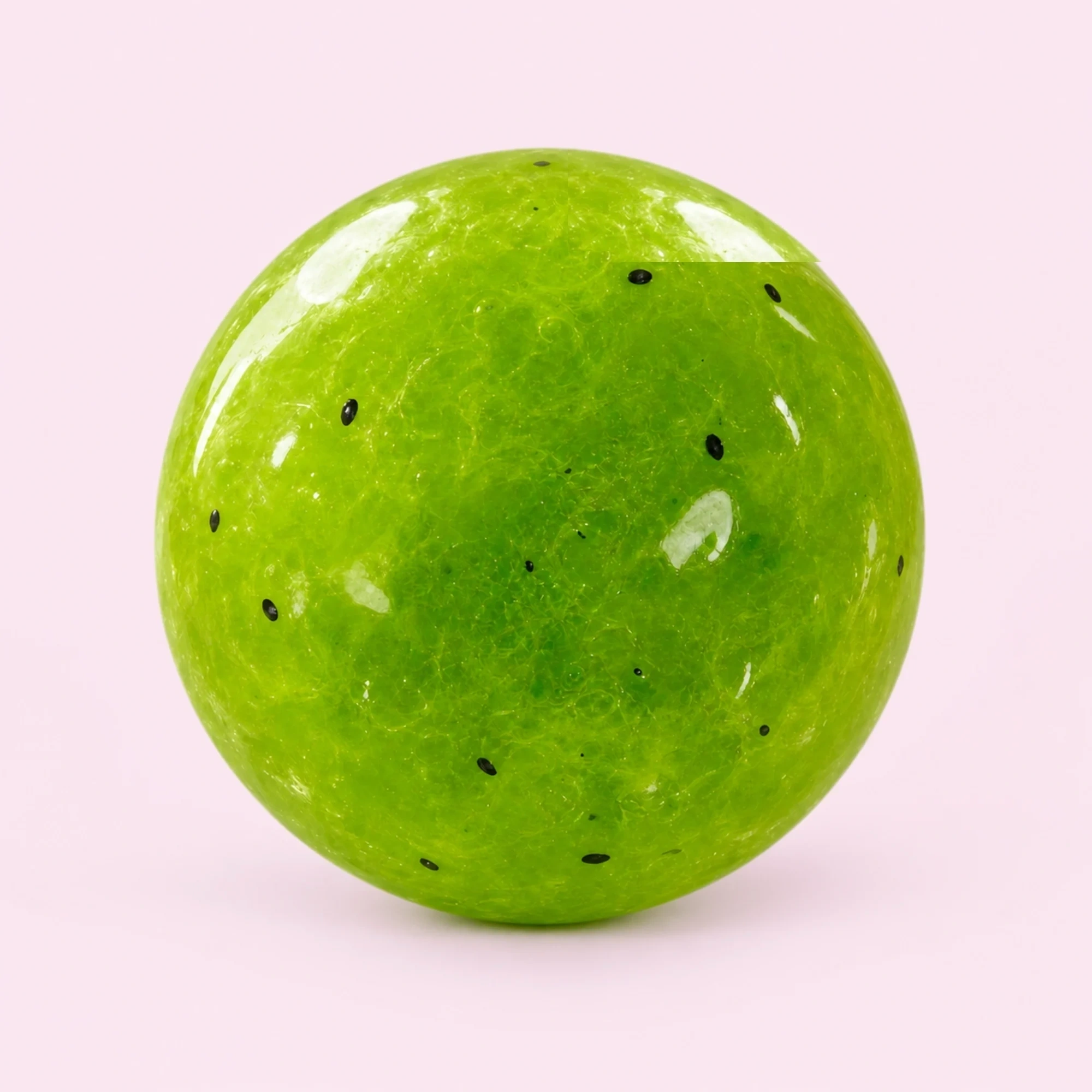
- Mesh-Netted Grape Balls: A thin elastomer bladder wrapped in woven nylon netting. Squeezing forces the inner gel membrane to bulge through the grid openings like miniature grapes, creating a dramatic visual and bumpy fingertip sensation.
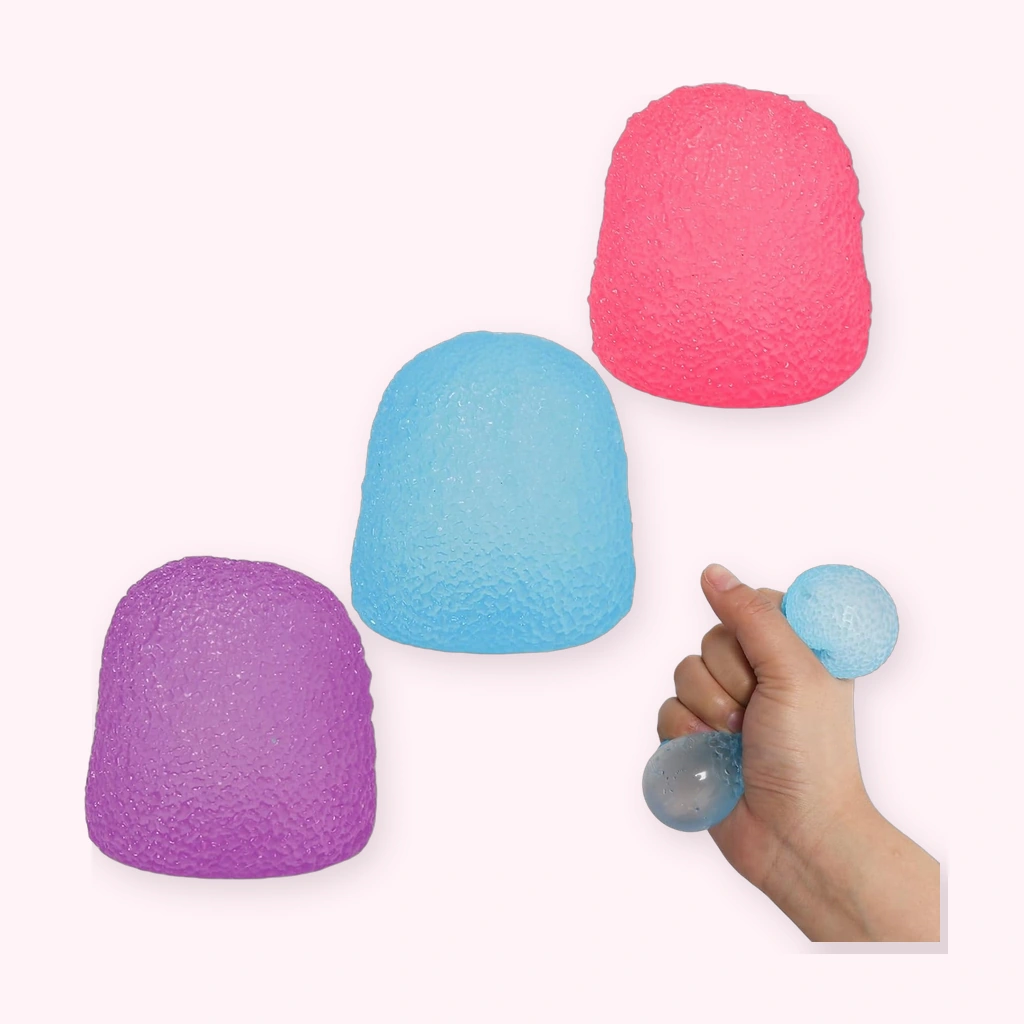
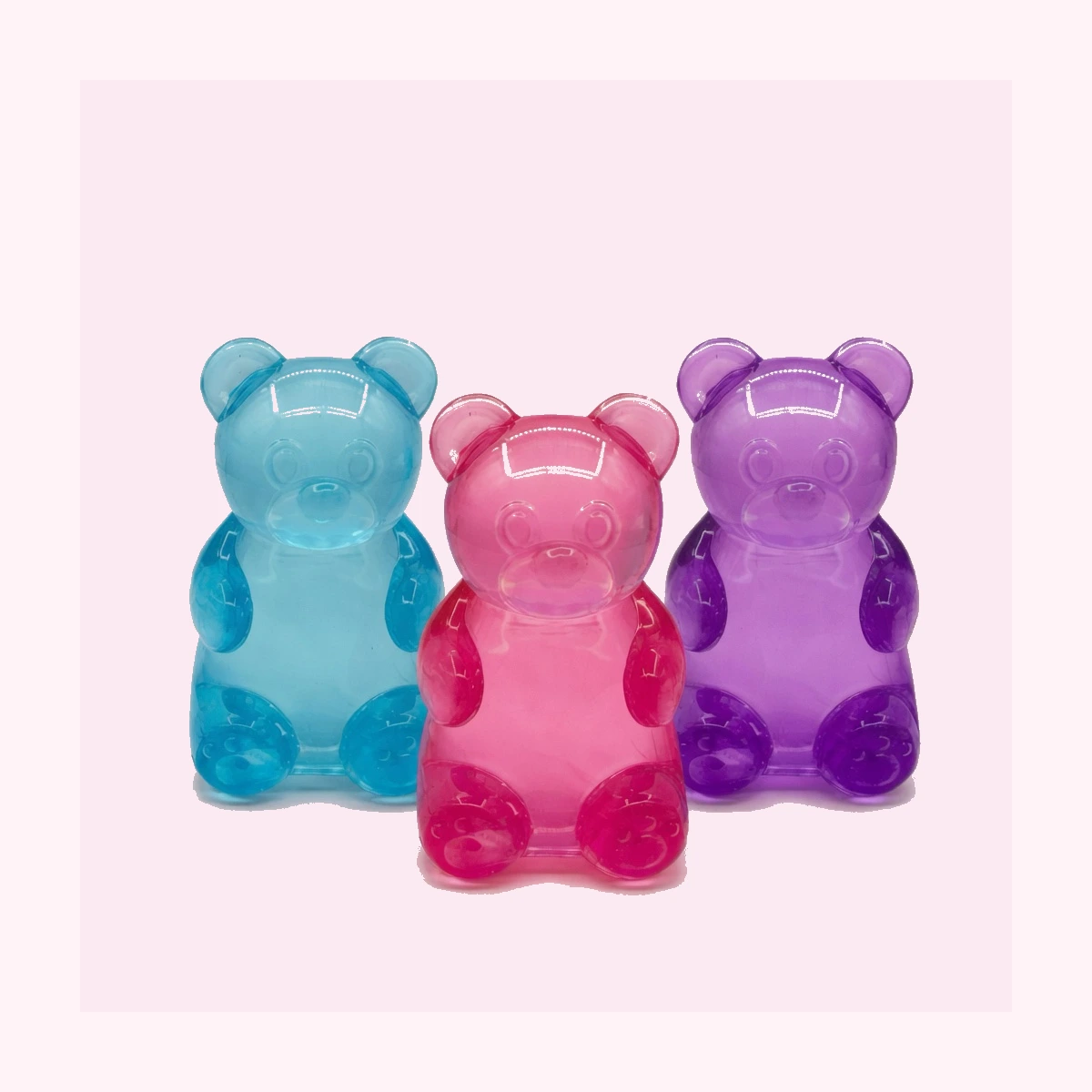
- Hydrogel Water-Bead Spheres: A transparent TPR skin packed with hydrated polymer spheres (Orbeez-style beads) that slide past one another under finger pressure, delivering a rolling, granular massage across the palm.
- Spiky Acupressure TPR Shells: Molded with flexible rubberized nubs across the exterior surface to stimulate palm mechanoreceptors without requiring a deep squeeze.
- Dense Maltose and High-Viscosity Gel Balls: Filled with thick syrup-like maltose polymer that yields slowly to strong finger kneading and holds temporary indentations before settling.
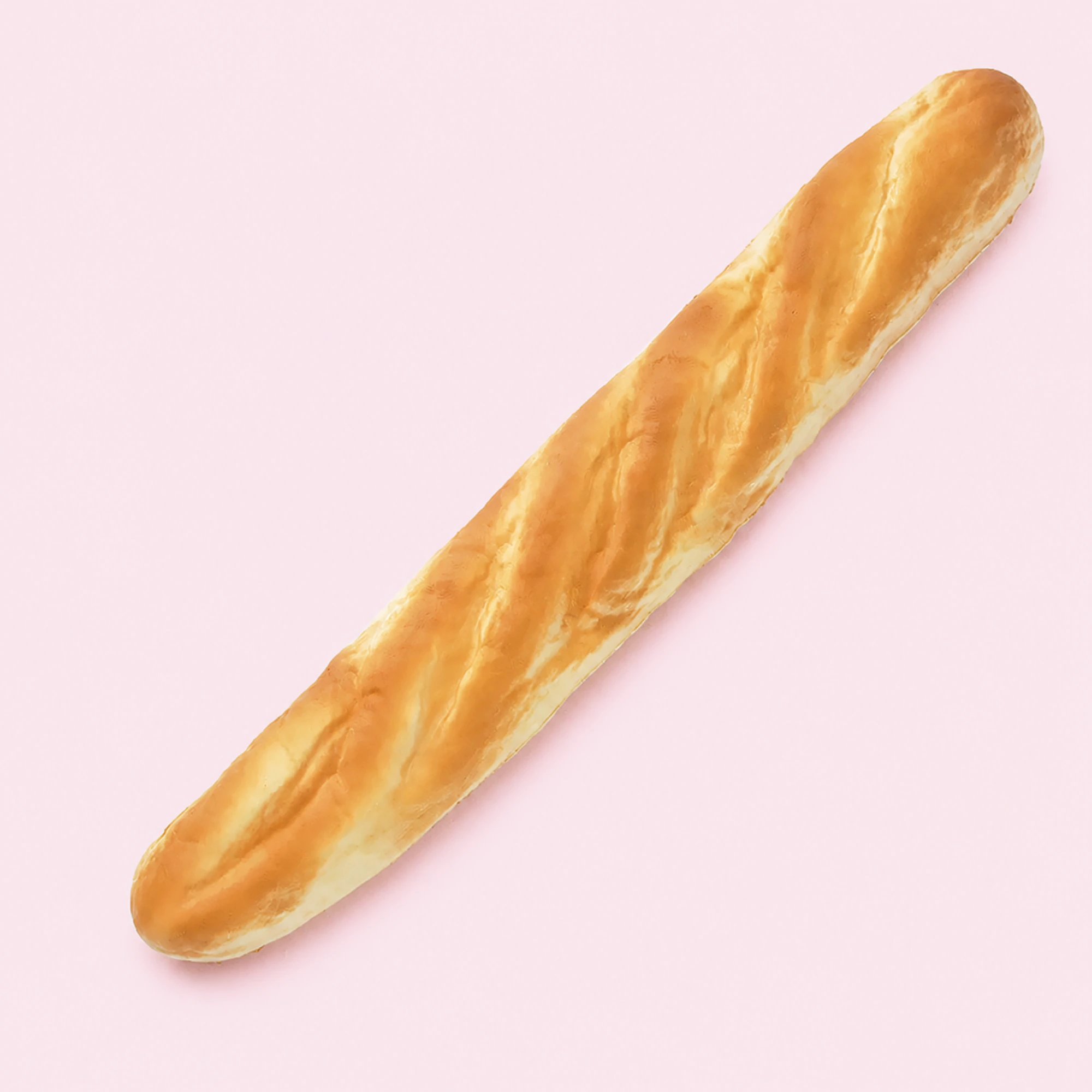
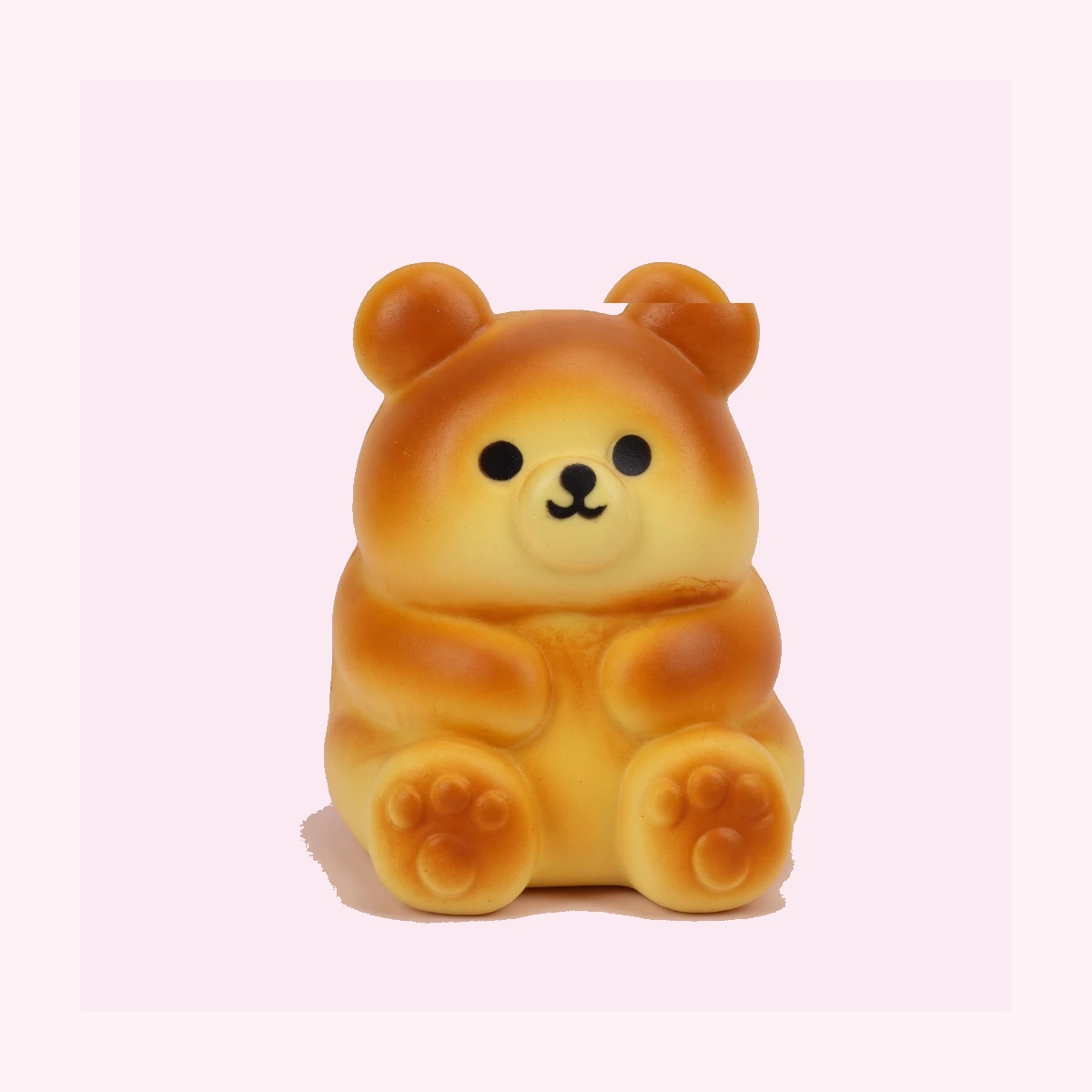
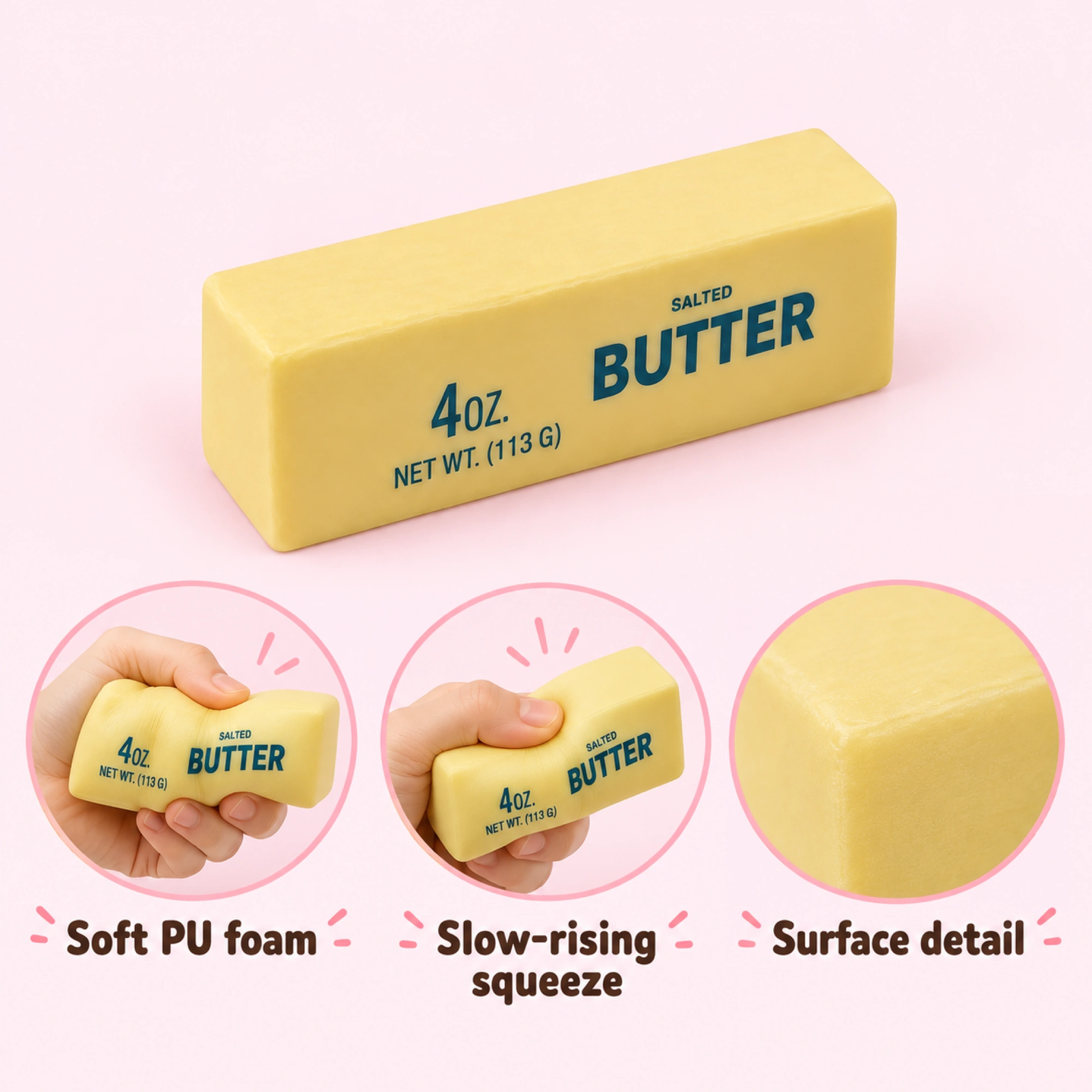
- Solid Slow-Rising PU Foam Blocks: Cast from open-cell viscoelastic polyurethane with a smooth painted skin. Instead of shifting liquid or beads, the cellular matrix vents air softly and rises back over 8 to 15 seconds.
Recognizing these five structural mechanisms makes it easy to match a texture to your preferred grip strength and sensory goal.
Membrane Rupture Risk vs Solid Open-Cell Foam Construction
When keeping a sensory stress ball beside a laptop, notebook, or textbook, internal core architecture directly determines desk safety:
Liquid-filled, gel-filled, and hydrogel-bead stress balls rely on a single pressurized thermoplastic elastomer membrane to contain their contents. If pinched repeatedly by fingernails, abraded by mesh knots, or nicked by a metal pen nib, a pressurized bladder can split and spill sticky gel or wet polymer beads across electronics.
Solid open-cell polyurethane foam eliminates liquid leak risks completely. Because a PU foam squishy contains only interconnected polymer struts and ambient air, accidental surface wear never releases fluid, making solid foam the safest texture for computer workstations.
Sensory Stress Ball Texture Comparison Matrix
To help buyers compare all five tactile families across feel, resistance, and workspace safety, the matrix below summarizes their traits:
| Texture Category | Cutaneous Surface Feel | Internal Resistance | Leak & Burst Safety | Ideal Use Case |
|---|---|---|---|---|
| Slow-Rising PU Foam | Smooth painted velvety skin | Gentle viscoelastic drag | 100% leak-free solid core | Laptop desks, classrooms, travel |
| Mesh Grape Stress Ball | Bumpy netted bubble bulges | Light fluid displacement | High rupture risk if pinched | Short visual play away from tech |
| Water-Bead Sphere | Rolling internal bead massage | Low-friction shifting | Moderate leak risk under pressure | Casual home sensory exploration |
| Dense Maltose Dough Ball | Smooth stretchy TPR membrane | Heavy dough-like kneading | Sticky residue if punctured | Deep hand tension workouts |
Using this comparison ensures you pick a texture that satisfies your fingers while protecting your daily work equipment.
FunnySquishy Catalog Options for Leak-Free Slow-Rising Foam Relief
For users who want the smooth, velvety compression of solid open-cell polyurethane without any risk of liquid leaks, the FunnySquishy catalog maintains verified butter block listings:
The FunnySquishy catalog lists FS-BUTTER-005 as the PU Foam Butter Squishy, featuring palm-sized proportions, dense foam construction, and a gentle buttery drag priced at $12.99 USD.
For shoppers who want a matching pair for home and office desks, the FunnySquishy catalog lists FS-BUTTER-011 as the 2-Pack Butter Squishy Slow-Rising Stress Relief Fidget Toy priced at $16.99 USD.
For classrooms, family rooms, or gift bundles, the catalog lists FS-BUTTER-007 as the 3-Pack Butter Squishy Slow-Rising Stress Relief Fidget Toy Set priced at $24.99 USD.
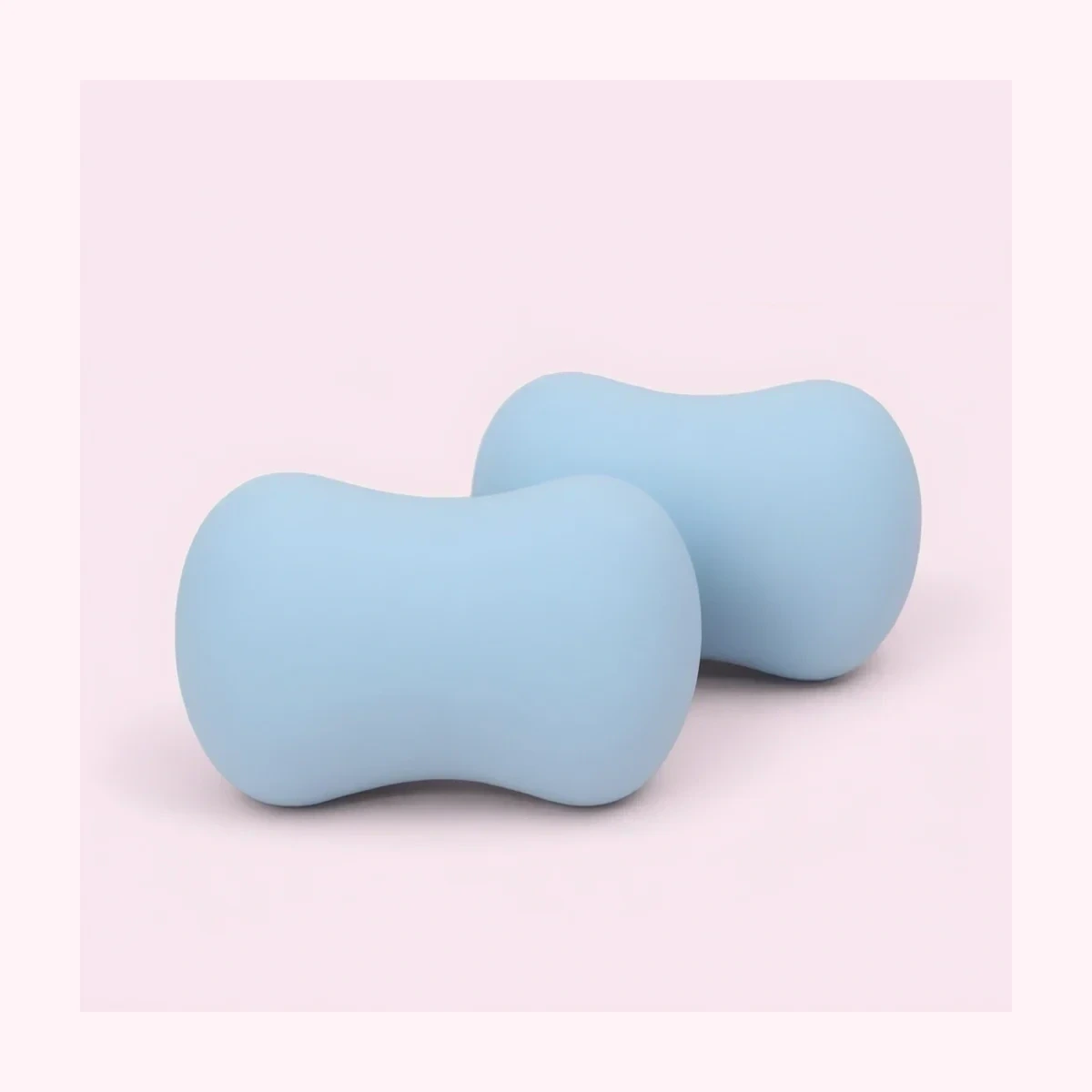
Additionally, for collectors who prefer a cool-toned color accent, the FunnySquishy catalog lists FS-BRICK-P006 as the Blue Butter Brick Squishy 2-Pack Squeezy Stress Relief Block priced at $14.99 USD.
Care Habits, Surface Hygiene, and Texture Preservation
Keeping textured stress balls and slow-rising foam blocks clean and responsive requires tailored maintenance habits:
- Whole-Palm Squeezing: Compress both membrane balls and painted PU foam blocks with the flat of your palm rather than sharp fingernails to prevent surface creases or skin punctures.
- Dry Microfiber Wiping for PU Foam: Clean solid polyurethane squishies with a dry or barely damp microfiber cloth; never submerge open-cell foam in water, whereas sealed TPR balls can be rinsed briefly and dusted with cornstarch.
- Protective Pouch Storage: Store foam blocks and gel spheres inside resealable pouches away from direct sunlight and sharp desktop stationery when not in use.
Practicing these simple care steps preserves the surface finish and calming resistance of your sensory collection for months.
Frequently Asked Questions
Which sensory stress ball texture will never leak on a laptop keyboard?
Solid open-cell polyurethane (PU) foam squishies, such as the FS-BUTTER-005 PU Foam Butter Squishy, contain no liquid, gel, or water beads and can never leak onto electronics.
Why do mesh grape balls and water-bead stress balls feel different from PU foam?
Mesh and bead balls rely on shifting liquids or slippery hydrogel spheres inside a stretched rubber bladder, whereas PU foam compresses microscopic air cells for a smooth, slow-rising rebound.
How do you keep textured stress balls and foam squishies clean on your desk?
Wipe painted PU foam squishies gently with a dry microfiber cloth and store them in a zip pouch, while sealed non-foam TPR balls can be wiped damp and lightly dusted with cornstarch.