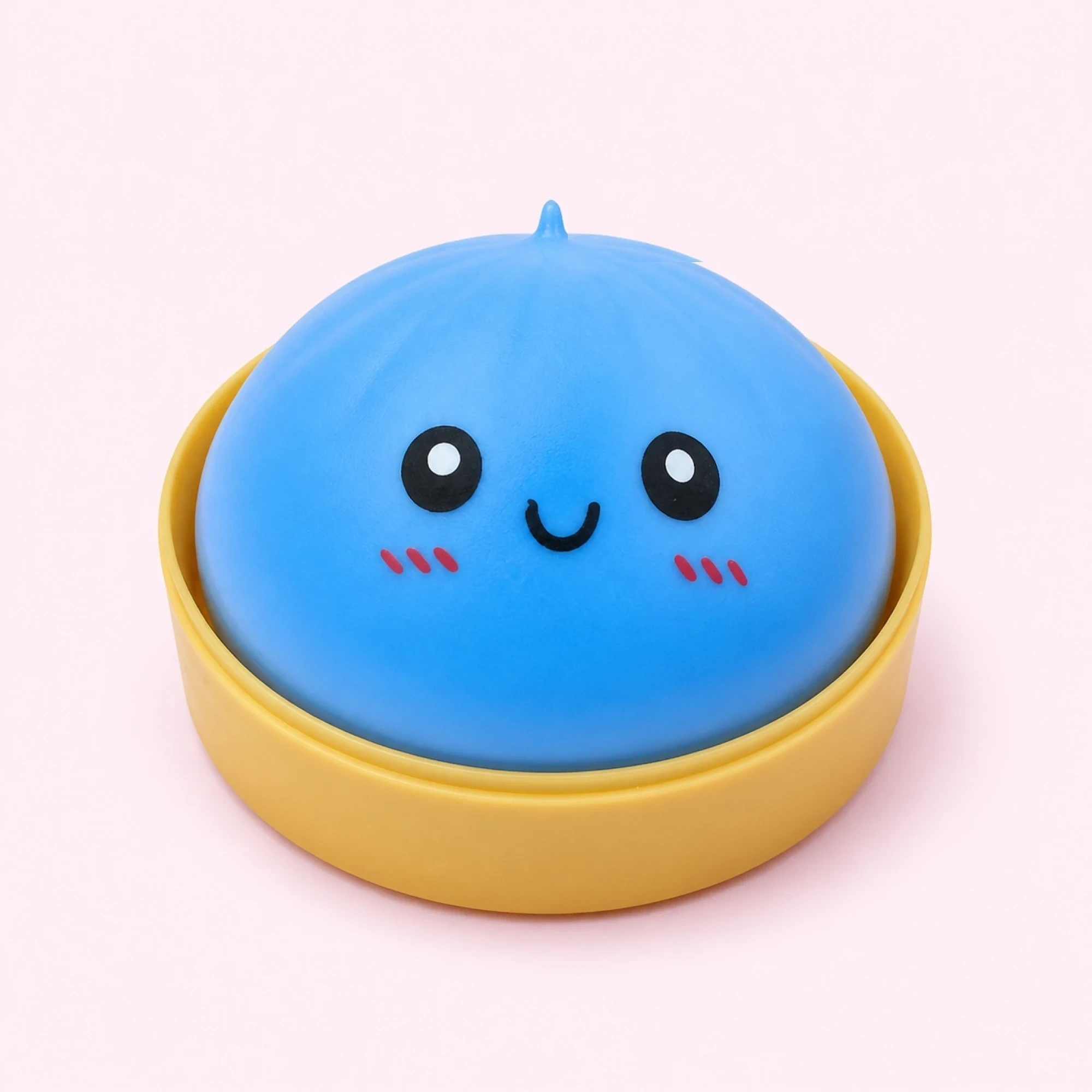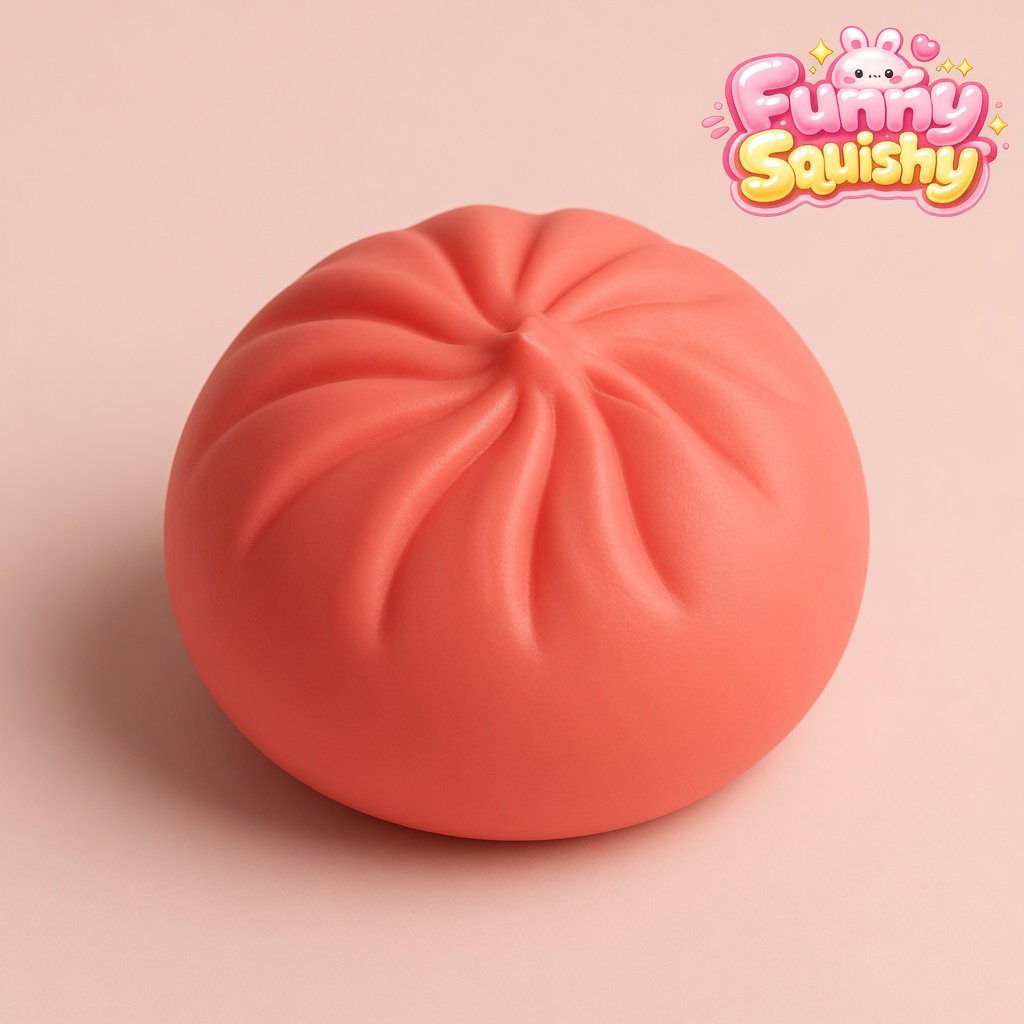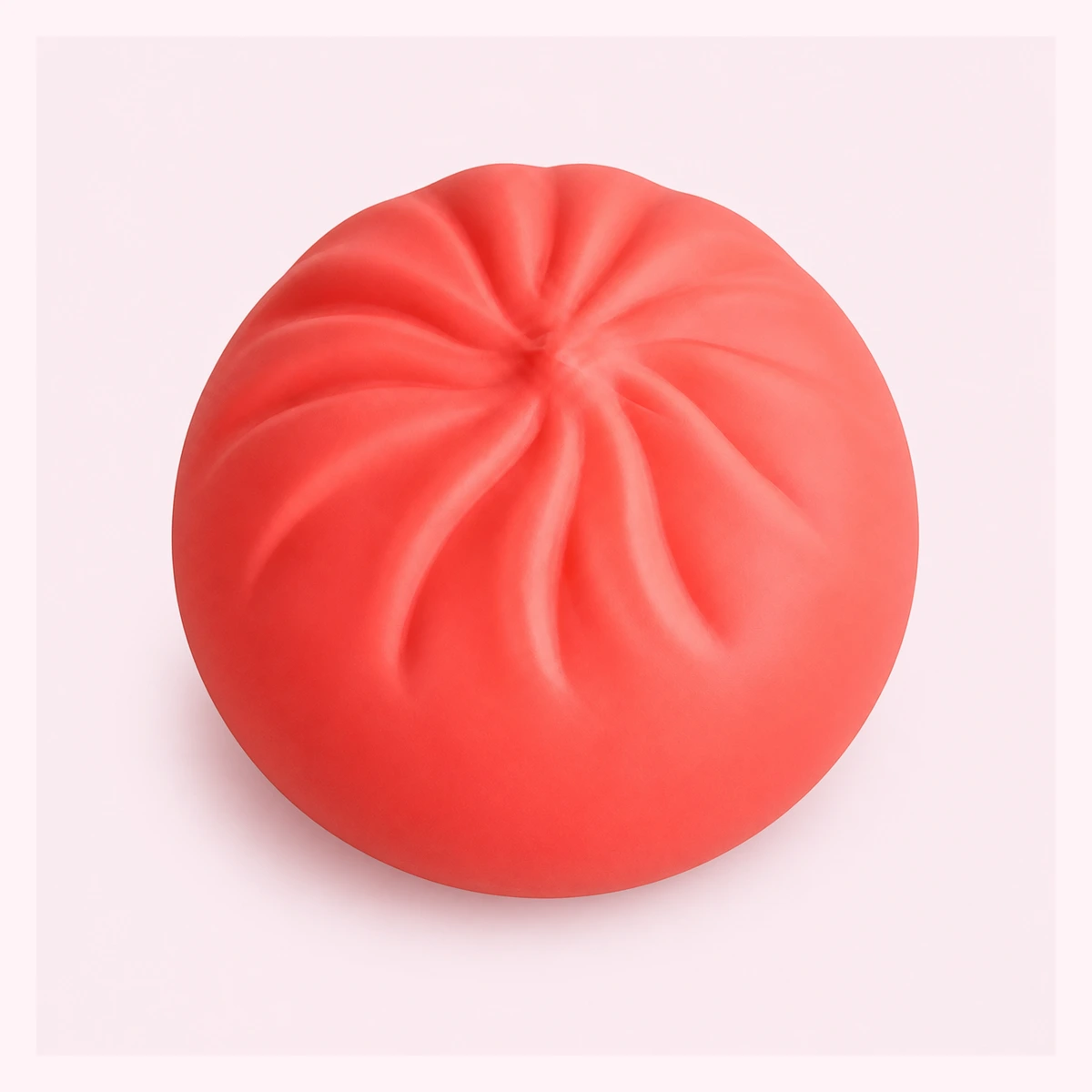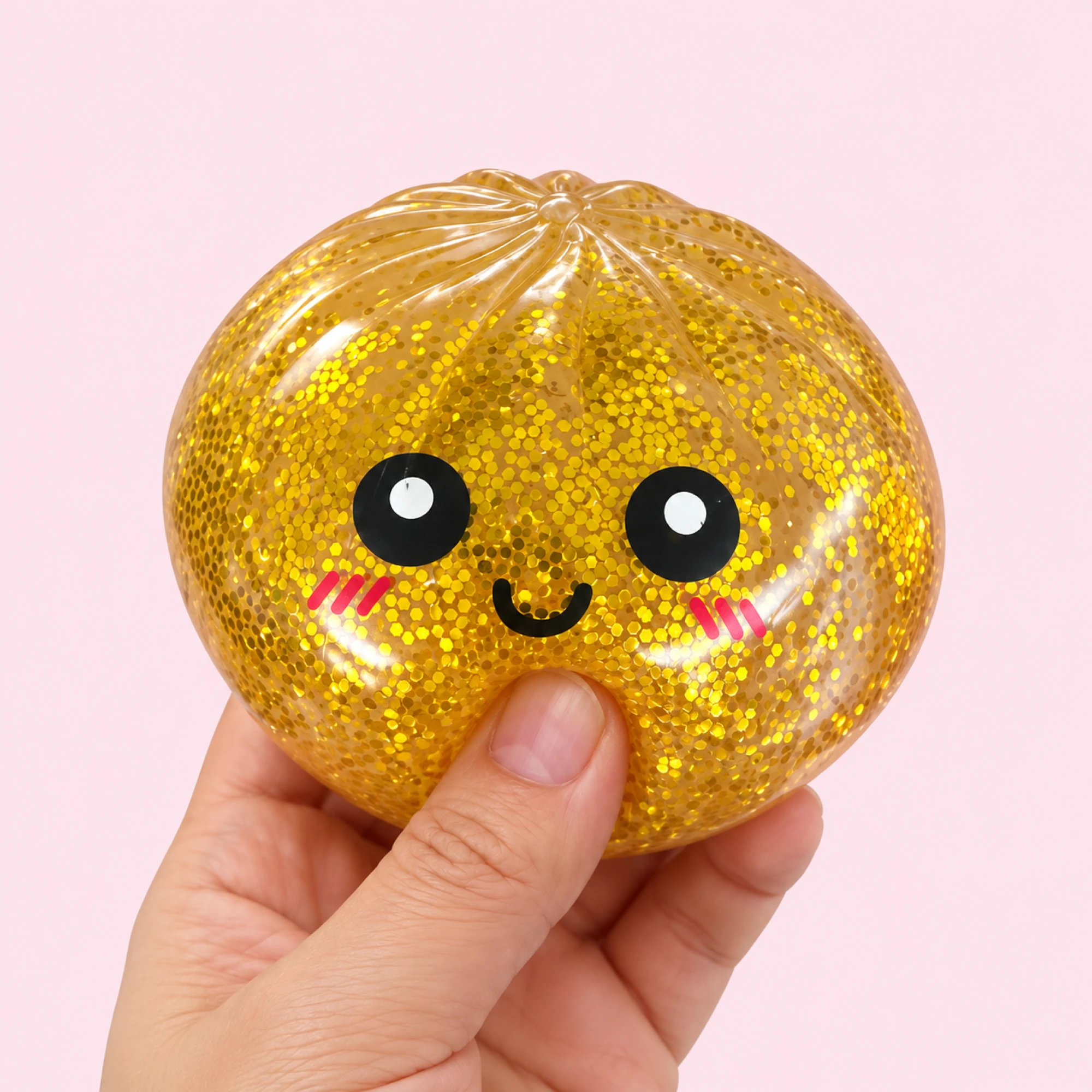


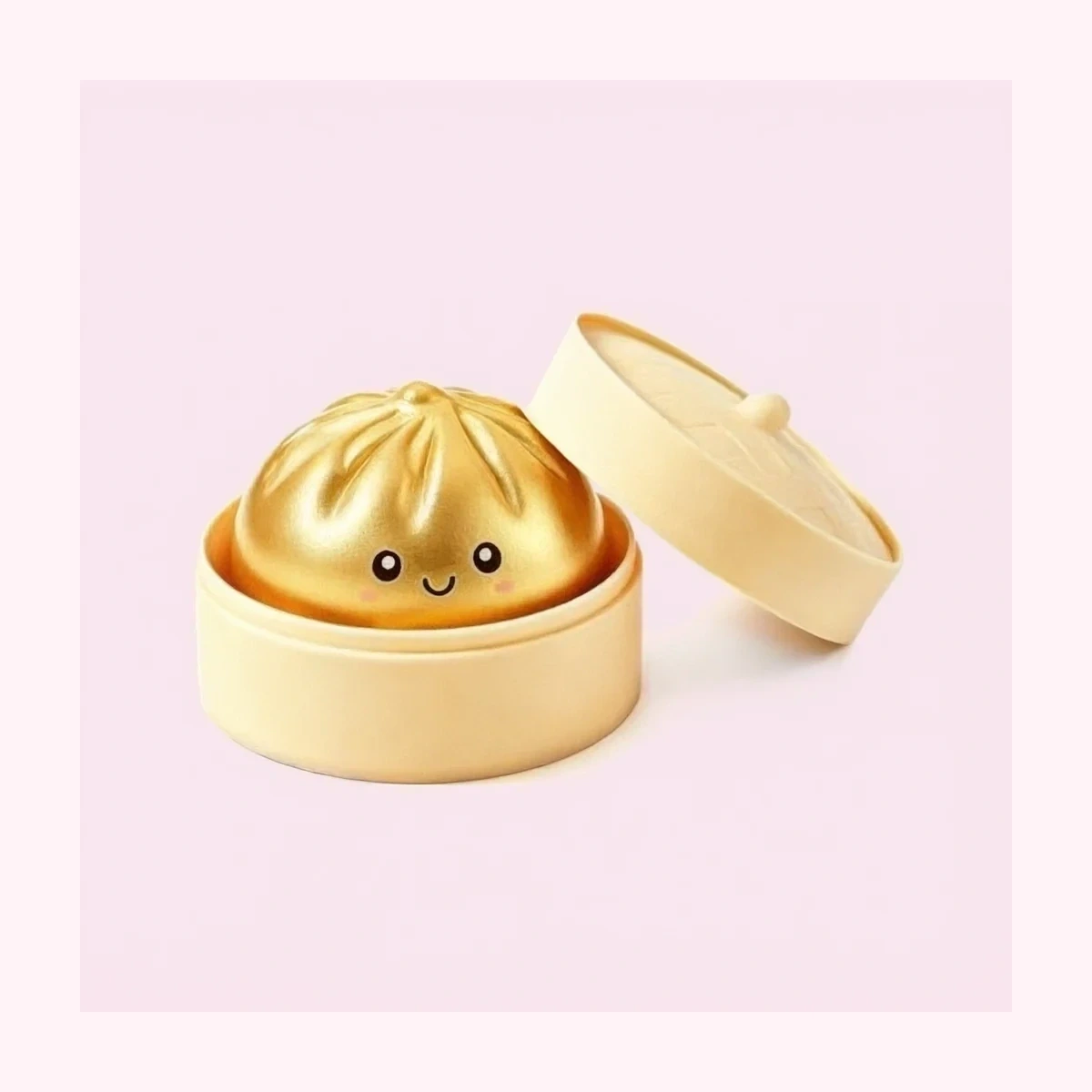
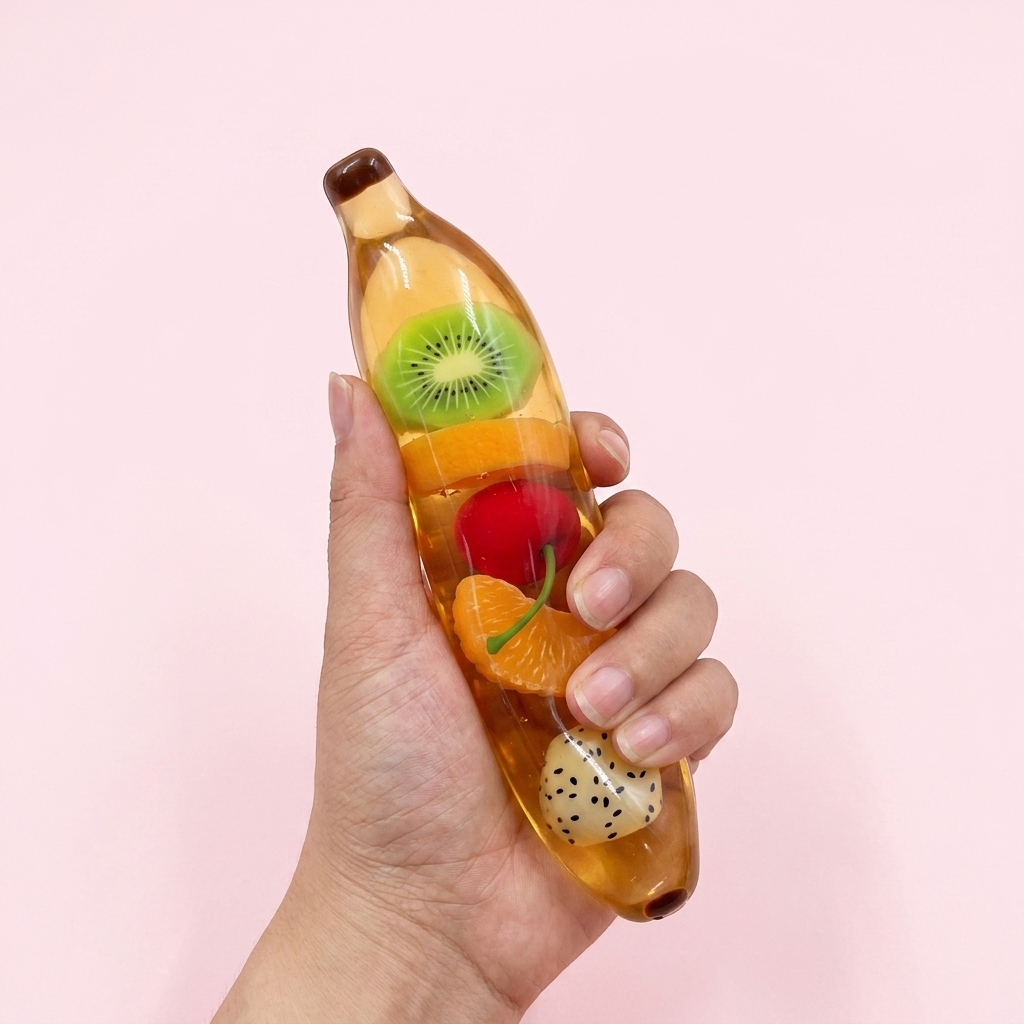

Dumpling squishies blew up online, and now everyone wants one — but what actually arrives in your hand varies wildly. The cute pleated design, the satisfying slow-rise squeeze, and the thrill of a glittery rare pull only work if the squishy underneath is genuinely well made. If yours went flat after a week, the problem wasn't you.
This guide breaks down exactly what to check before you buy a dumpling squishy: how fast it should rise, how it should feel, what the sculpt should look like, and which size and format fits the way you'll use it. No fluff, just the checklist.
Table of Contents
- What Makes a Dumpling Squishy Worth Buying
- The Squeeze Test: Slow Rise and Rebound
- Material and Feel: What Good TPR Feels Like
- Pleats and Paintwork: The Detail Test
- Size and Format: Mini, Standard or Jumbo
- Singles, Sets and Bundles
- The Full Buying Checklist
- The Dumpling Squishy Mystery Box, Explained
- Red Flags of a Low-Quality Squishy
- FAQ
What Makes a Dumpling Squishy Worth Buying
The short version: dumpling squishies look nearly identical in photos and feel nothing alike in person. Two toys with the same pleated shape can behave completely differently the moment you press them.
The difference comes down to three things you can judge in seconds: rise speed, material density and sculpt detail. Get those right and the squishy survives months of daily fidgeting. Get them wrong and it creases, hardens, or splits along a seam.
So the useful question isn't where the cheapest one is. It's what a good one does when you squeeze it. Everything below is that answer, broken into checks you can run yourself.
The Squeeze Test: Slow Rise and Rebound
The single best test is the slow rise. Press a dumpling squishy flat with your thumb, let go, and watch it. A good one takes two to four seconds to return to its full shape, smoothly and evenly.
A squishy that snaps straight back is under-filled and feels hollow in the hand. One that stays dented has lost its internal structure and won't recover on its own.
What to watch for while you test the rise:
- Even recovery across the whole body, not just the spot you pressed.
- No lasting crease once it has fully risen back to shape.
- A quiet squeeze, with no crinkling or hiss of air escaping from inside.
- Repeat the test five or six times in a row, because weak fillings fade fast.
Rise speed is the one thing a photo can never show you, which is why a listing that describes it is worth more of your trust than one that only shows the colour.
Material and Feel: What Good TPR Feels Like
Most dumpling squishies are moulded from TPR, a soft rubber-like material. The grade of that TPR is where cheap and good part ways.
Good TPR feels dense, cool and slightly matte, closer to soft silicone than to a balloon. Low-grade TPR feels greasy, stays tacky to the touch, and carries a sharp chemical smell that never quite airs out.
A few things worth checking on any listing before you buy:
- Look for wording about the material itself, not only the shape and the colour.
- Check that the surface is described as non-sticky, because tack attracts lint and turns a squishy grey fast.
- Prefer sellers who show the toy mid-squeeze in their photos, not only sitting still on a table.
If a squishy arrives sticky, it will stay sticky. That's a material problem, not a cleaning problem, and no amount of washing fixes it.
Pleats and Paintwork: The Detail Test
The pleats are what make a dumpling squishy read as a dumpling instead of a lump, so the sculpt deserves a close look before you commit.
Crisp pleats hold their folds even while the toy is being squeezed, and the ridges stay defined instead of melting into the body as it rises.
Paintwork is the second tell. Colour should be moulded in or sealed under the surface so it survives handling, because anything that looks printed on top will scuff off at the corners within days, and glitter should sit inside the material rather than on it.
Seams are the last check. A well-made squishy has a single faint moulding line, not a raised ridge you can catch a fingernail on, and no visible glue where two halves meet. That ridge is exactly where a squishy eventually splits.
Size and Format: Mini, Standard or Jumbo
Size changes what the toy is actually for, and it's the choice people most often get wrong. Bigger is not automatically better.
Pocket-size pieces are the ones that genuinely get used, because they ride along in a bag or a pencil case and come out during a meeting or a lesson. If you want a working fidget rather than a shelf piece, start with the smaller squishies and pick a shape you won't mind carrying every day.
Oversized pieces are the opposite trade: slower, heavier and far more satisfying to squeeze two-handed, but they stay at home. Browse the jumbo squishies if the depth of the squeeze matters more to you than portability.
Singles, Sets and Bundles
How you buy matters almost as much as what you buy, and there are three sensible formats to choose between.
Buying singles lets you pick the exact colour and finish you want. Multi-piece sets bring the cost per dumpling down and leave you spares to share, which is why teachers, party planners and gift-givers usually head straight for the squishy sets and packs. Mystery boxes trade that control for surprise.
Sets also make the quality question easier to answer. If one piece rises slowly and cleanly, the rest almost always do too, because they came off the same mould in the same production run.
The Full Buying Checklist
| What to Check | Good Sign | Warning Sign | How to Test | Why It Matters |
|---|---|---|---|---|
| Rise speed | Returns in 2–4 seconds | Snaps back or stays dented | Press flat, then let go | Defines the whole feel |
| Surface | Smooth, matte, non-sticky | Tacky or greasy | Run a fingertip over it | Sticky toys collect lint |
| Smell | Faint or none | Sharp chemical odour | Sniff it as you unwrap it | Signals low-grade filler |
| Pleats | Crisp, defined folds | Blobby or melted look | Squeeze and release | It is the dumpling look |
| Colour | Moulded in or sealed | Printed on the surface | Rub a corner gently | Paint scuffs off first |
| Seams | One faint moulding line | Raised ridge or glue | Feel around the edge | Seams split first |
| Size | Matches how you'll use it | Bought on the photo alone | Compare the listed dimensions | Wrong size gets shelved |
| Format | Single, set or mystery box | Vague bundle, no piece count | Check the stated piece count | Sets cost less per piece |
The Dumpling Squishy Mystery Box, Explained
A mystery box is a sealed assortment: you pay a set price and don't know exactly which dumplings are inside. It's half the fun and half the frustration.
Most boxes mix three tiers:
- Standard styles in solid colours, the most common pulls.
- Glitter styles, more sought-after and less frequent.
- Rare styles, like a golden or pearlescent finish, that turn up in only a small fraction of boxes.
A few things to keep in mind so you don't overpay:
- Bigger boxes improve your odds of a rare pull, simply because you're opening more of them.
- Compare the cost per dumpling, not just the price on the box. A larger box is often the better deal once you divide it out.
- Check the stated piece count before you buy, because a box that won't say how many are inside rarely has good news to hide.
- There's no guarantee of a rare style in any single box, so buy for the fun of the surprise, not as an investment.
Red Flags of a Low-Quality Squishy
The viral demand brought a wave of low-quality imitations along with it. Walk away when you see any of these:
- Instant snap-back, or a dent that stays after a single squeeze.
- A sticky or greasy surface, or a chemical smell strong enough to notice through the packaging.
- Soft, blurred pleats that make the sculpt look melted rather than folded.
- No piece count, no dimensions and no squeeze photos, which usually means there's nothing flattering to show.
If a deal looks far cheaper than everything comparable and the listing tells you nothing about the material, treat that as a red flag. The few dollars you save rarely survive the disappointment.
FAQ
How can I tell if a dumpling squishy is good quality?
Press it flat and let go. A good one rises back in roughly two to four seconds, evenly and without leaving a crease. Add a smooth, non-sticky surface and crisp pleats and you have a keeper.
Why did my dumpling squishy go flat or hard?
Low-grade filler loses its memory after repeated squeezing, and heat speeds that up. Keep squishies out of direct sun and away from radiators, and start with a denser piece next time.
What size dumpling squishy should I get?
Pocket sizes get carried and used every day, while oversized ones give the deepest squeeze but stay at home. If it's your first, a standard hand-size piece is the safest middle ground.
Are dumpling squishy mystery boxes worth it?
They're worth it if you enjoy the surprise and want variety. Compare the cost per dumpling across boxes and favour the ones that state their piece count. Don't expect a guaranteed rare pull.
Are dumpling squishies suitable for young children?
They're squeeze toys, not chew toys. Choose larger pieces for little hands, check the seams for splits from time to time, and keep an eye on play with anything small enough to swallow.
How do I keep a dumpling squishy clean?
Wipe it with a damp cloth and let it air-dry fully before putting it away. A non-sticky surface makes that easy, which is one more reason the material grade matters more than the price.
Choosing a dumpling squishy comes down to four things: a slow, even rise, a surface that isn't sticky, pleats that stay crisp, and a size that matches how you'll actually use it. Run that checklist once and you'll never end up with a flat, greasy squishy again.
Shop dumpling squishies
Ready to squeeze one for yourself? Browse the full dumpling squishy collection for glitter styles, steamer sets and singles — or jump straight to the mystery boxes if the surprise is the whole point. Two fan favourites to start with: