Fidget Toys and Stress Balls for Adults: Quiet Desk & Grip Guide
Adult professionals and university students spending hours at keyboards, monitors, and conference calls frequently reach for tactile objects to channel restless physical energy, relieve forearm muscle tension, and sharpen cognitive focus. However, bringing sensory items into a modern professional environment introduces constraints rarely addressed by mass-market novelty toys. Loud mechanical clicks, snapping switches, high-gloss neon plastics, and the catastrophic risk of a burst liquid core across a work laptop quickly turn a helpful desk tool into an office liability.
To find the right tool for workplace concentration and hand tension relief, adults must look beyond children’s novelties and evaluate tools based on physical resistance, acoustic output, and material durability. By categorizing tools into three distinct tactile resistance tiers—silent slow-rising polyurethane (PU) foam, heavyweight desk blocks for deep bilateral tension, and moldable fluid gel stress balls—adults can tailor their sensory setup to their workspace without drawing unwanted attention or creating desk clutter.
Why Adults Need Dedicated Desk Fidgets and Stress Balls (Acoustics & Grip Force)
Adult sensory needs differ fundamentally from children’s play preferences. While classroom fidgets often incorporate audible ratchet clicks, high-frequency spinning bearings, or popping silicone bubbles, workplace environments require near-zero decibel acoustic discretion. During open-plan office work, shared library study, or live Zoom and Teams calls, repetitive clicking sounds travel across desks and register instantly on conference microphones, irritating coworkers and creating unnecessary embarrassment.
Beyond acoustics, adult hand anatomy and grip force exert significantly higher mechanical demands on squeeze toys. An adult grip generates substantial compression pressure that easily ruptures cheap single-seam novelty stress balls. When choosing a sensory tool, adult users must balance acoustic silence with sufficient tactile feedback to prevent hand cramping without bottoming out instantly.
| Tactile Category | Primary Core Filling | Acoustic Output | Grip Resistance Level | Primary Workplace Scenario | Key Advantage |
|---|---|---|---|---|---|
| Slow-Rising PU Foam | Solid open-cell polyurethane foam | Absolute silence (0 dB) | Soft to medium progressive compression | Open-plan offices, conference calls, subtle palm fidgeting | Zero leak risk; slow, predictable rebound |
| Heavyweight Desk Blocks | Dense marbled compound or TPR flour dough | Absolute silence (0 dB) | High to heavy bilateral resistance | Intense deep pressure, grounding between meetings | Sturdy desk anchoring; high physical heft |
| Fluid Gel Stress Balls | Dense moldable fluid gel | Soft muffled dampening | Medium firm, shape-conforming squeeze | Ergonomic isometric grip strengthening, micro-breaks | Conforms dynamically to finger contours |
| Ergonomic Textured Fidgets | Textured exterior silicone or ribbed TPR | Zero decibels (silent tactile feedback) | Light fingertip friction and targeted pinches | Solo reading sessions, breaking nail-picking habits | Subtle physical grounding without palm fatigue |
Sensory squeeze toys diverge by core filling: PU foam provides slow-rising bounce-back, whereas gel stress balls contain dense moldable fluid gel without foam rising behavior. Understanding this core physical difference allows users to select tools that match their exact sensory preference.
Tactile Profile 1: Silent Slow-Rising PU Foam for Open Offices
For environments where complete silence is non-negotiable, solid open-cell polyurethane foam represents the gold standard in office-friendly fidgeting. Unlike mechanical gadgets with internal springs or gears, PU foam operates with zero decibels of sound. Compression expels air through microscopic cell pores, while the internal polymer matrix slowly restores the toy to its original shape over three to six seconds.
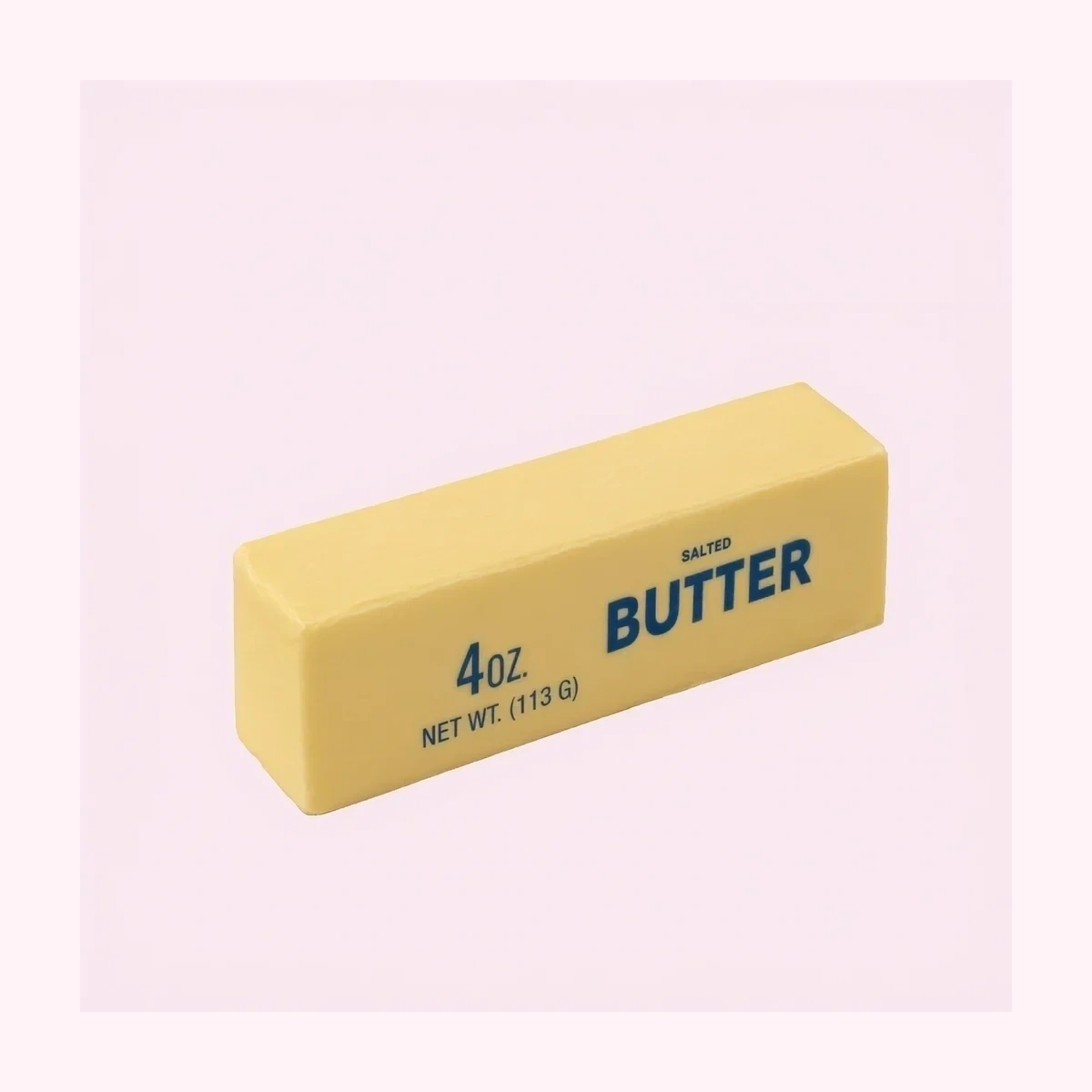
A prime example of this tactile profile is the PU Foam Butter Squishy (FS-BUTTER-005). Molded from dense premium PU foam, this palm-sized desk companion mimics a rectangular stick of butter. It carries a supplier reference weight of approximately 45 grams, offering a soft, progressive resistance that molds smoothly beneath individual fingers and the palm without sudden snapping or popping.
Because the interior consists of continuous solid cellular foam rather than a liquid reservoir, the PU Foam Butter Squishy carries zero risk of liquid leakage or messy desktop ruptures. It can be compressed flat against a desk pad or rhythmically kneaded under a desk during long virtual presentations. While exact centimeter dimensions are unverified in the merchant catalog, its palm-sized footprint keeps it visually unobtrusive alongside keyboards, mice, and desk accessories.
Tactile Profile 2: Heavyweight Desk Blocks for Bilateral Tension
While lightweight foam squishies excel at subtle, repetitive single-handed compression, certain high-stress workplace moments call for substantial mass and deep isometric muscle engagement. When reviewing complex technical briefs, troubleshooting software errors, or decompressing immediately after demanding meetings, adults often benefit from two-handed bilateral kneading.
Desk blocks fulfill this need through significant physical weight and compact geometry, acting as sensory paperweights that remain securely placed on the desk when not in active use:
- Fluid Swirl Cube Squishy (FS-CZ8490): Featuring approximately 4.5 × 4.5 cm face dimensions and a listed weight of approximately 250 grams, this compact cube packs remarkable density into a hand-friendly geometric profile. Its marbled swirl finish delivers slow-rising compression with high resistance, requiring deliberate finger force that engages the flexor muscles of the hand and wrist. While its exact third dimension and material certification details are unsupplied in the manufacturer catalog, its 250-gram heft provides immediate sensory grounding.
- Yellow Holey Cheese Block (FS-CZ3716): At the highest end of resistance, this flour-filled TPR block measures up to 7 × 7 × 7 cm and weighs an impressive 390 grams. The flour-filled interior gives it an ultra-dense, doughy malleability that holds compressed shapes until deliberately worked back into form. Squeezing this block requires whole-hand bilateral engagement, making it ideal for deep tension release during dedicated work breaks.
Tactile Profile 3: Fluid Gel Stress Balls for Ergonomic Grip Resistance
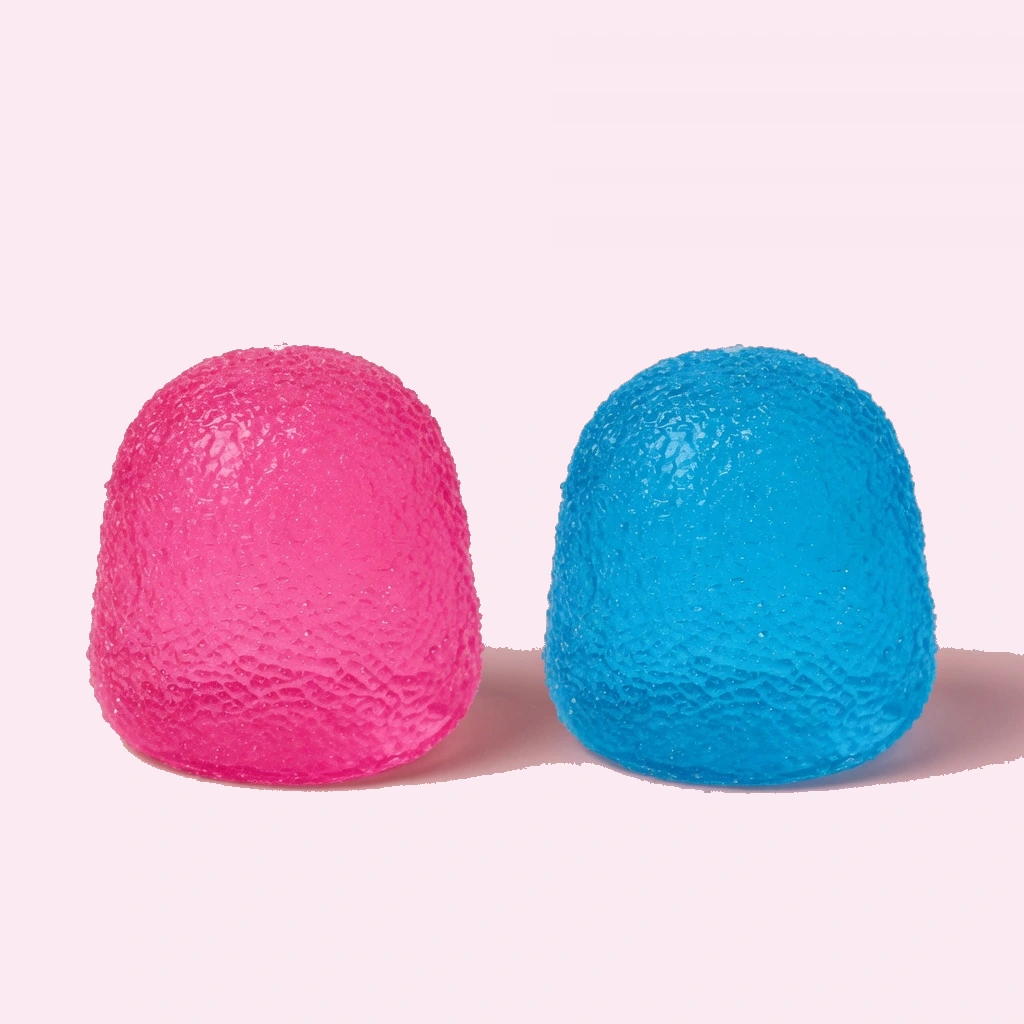
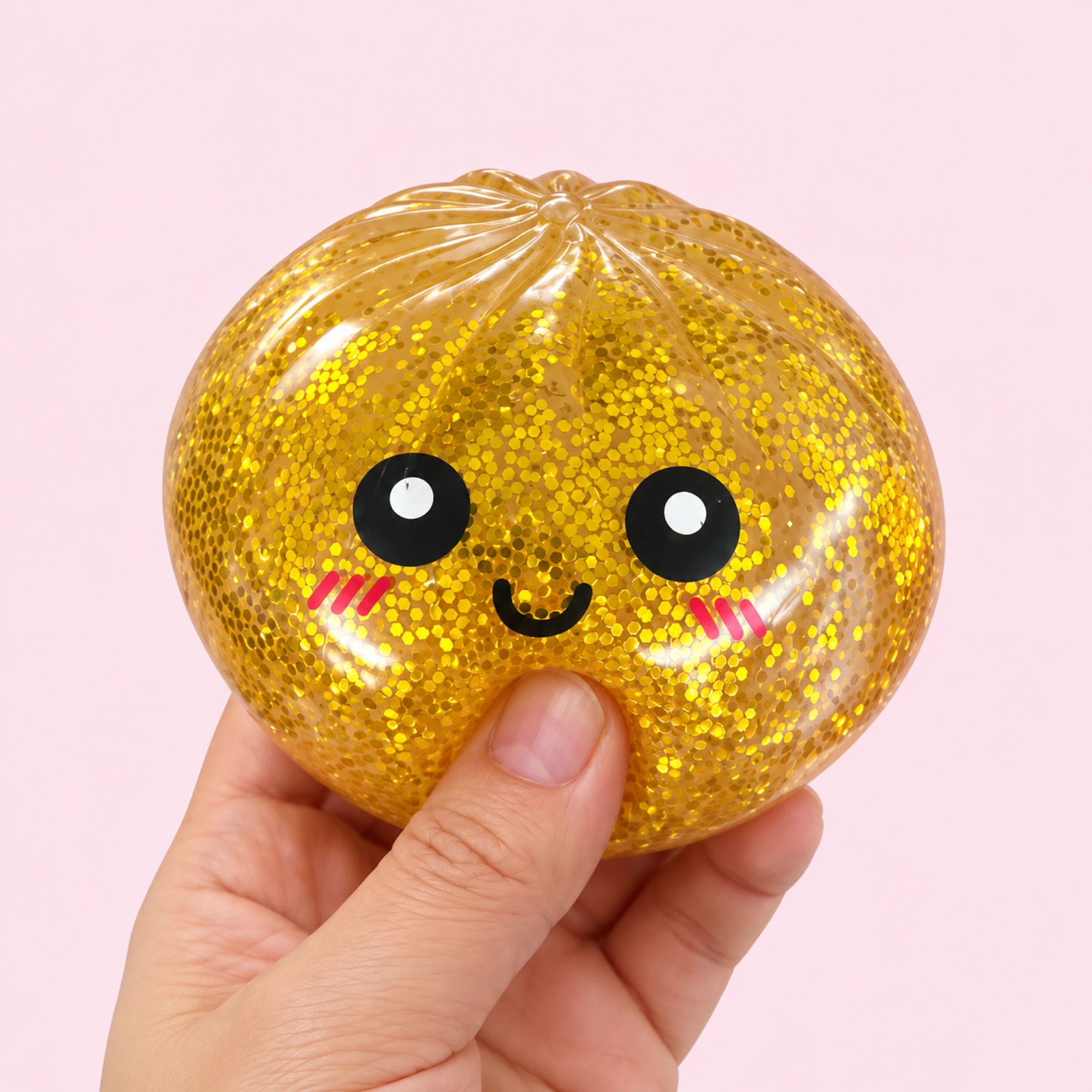
Fluid-filled stress balls provide a mechanical experience distinct from both foam and flour dough. Rather than compressing air from open cells or shaping dense flour, squeezing a fluid gel toy displaces an incompressible gel fluid across an elastic polymer membrane, distributing pressure evenly across all five fingers.
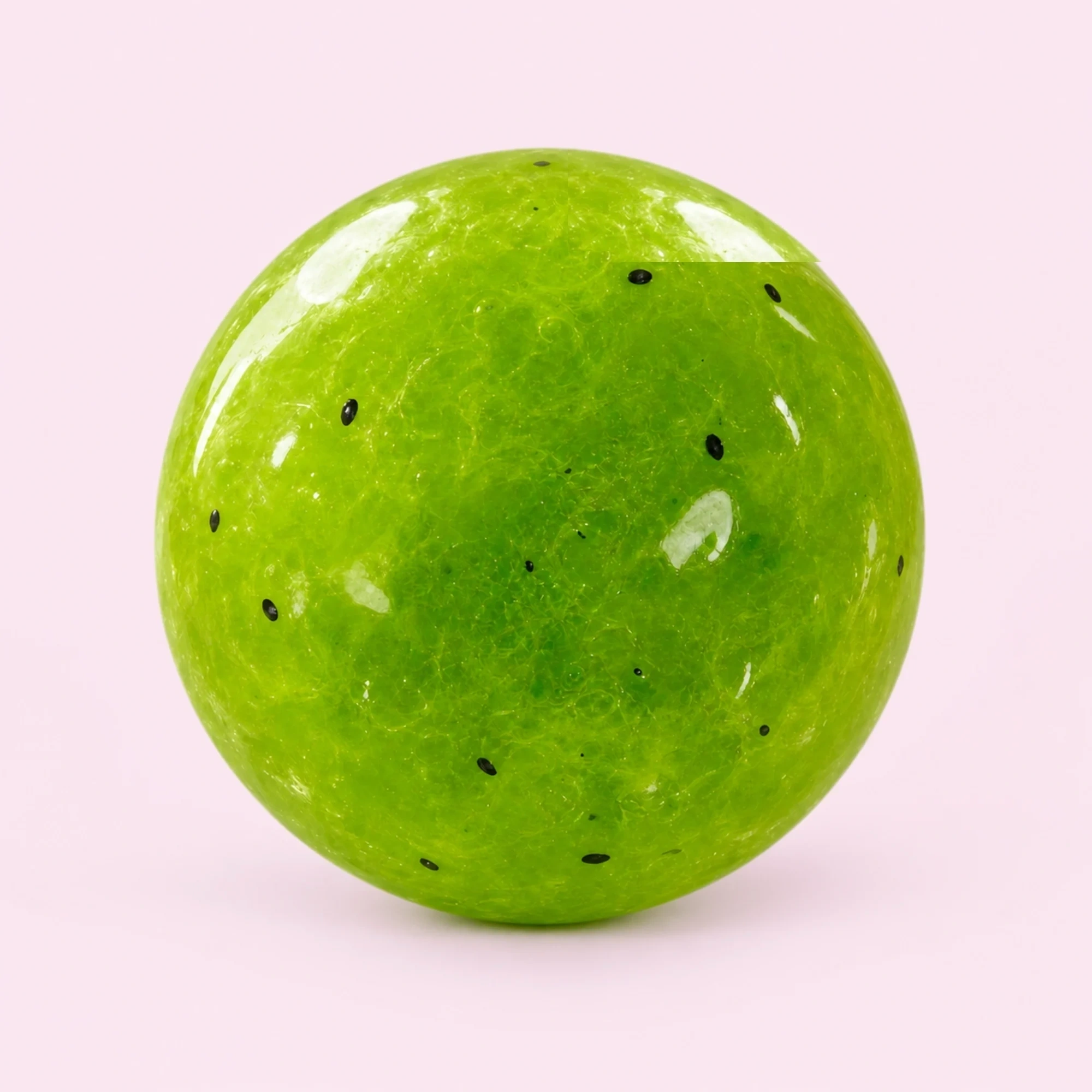
The Watermelon Squishy (FS-CZ3904) demonstrates this ergonomic profile. Measuring 6 × 5.5 cm with a catalog weight of 100 grams, this ball is filled with dense moldable fluid gel rather than polyurethane foam. Squeezing it produces a firm, immediate resistance that conforms dynamically to the user’s palm and fingers.
Unlike foam, which expands automatically through elastic polymer memory, fluid gel balls yield under isometric finger pressure, making them exceptionally effective for targeted finger pinches and forearm flexor engagement. The realistic textured rind provides secondary tactile feedback for fingertip stimulation, helping break nervous habits like pen-clicking or cuticle-picking during extended reading sessions.
Desk Maintenance and Anti-Burst Guidelines for Adult Users
To maintain hygiene, aesthetic appeal, and structural longevity, adult desk fidgets require straightforward daily care protocols tailored to their material compositions:
- Surface Cleaning and Oil Removal: Human hands naturally transfer sebum, sweat, and desk dust to squishy surfaces. For solid PU foam squishies like the Butter Squishy, clean surfaces using a damp microfiber cloth moistened with lukewarm water and a drop of mild dish soap. Avoid fully submerging open-cell PU foam in water, as trapped moisture inside cellular cavities takes days to dry and can degrade the foam structure.
- Tackiness Reduction: For TPR-skinned items (such as the Cheese Block or Watermelon Stress Ball), surfaces can occasionally feel tacky after washing. Dusting the dried exterior lightly with pure cornstarch instantly restores a velvet-smooth, non-sticky matte finish that will not transfer residue to documents or clothing.
- Anti-Burst Safeguards: While solid PU foam squishies are entirely burst-proof due to the absence of liquid cores, fluid gel and flour-filled toys rely on continuous outer elastomeric skins. Keep these tools away from sharp mechanical pencils, desk scissors, staple removers, and sharp fingernails. Squeeze with smooth, broad palm pressure rather than sharp localized clawing to prevent puncture-related leaks.
Frequently Asked Questions
What makes a fidget toy quiet enough for an adult office or video conference call?
Silent desk fidgeting for adult office work is best achieved with slow-rising PU foam squishies and fluid-filled stress toys that produce zero clicking, snapping, or squeaking noises during use. Mechanical clickers, toggle switches, and metallic spinners generate audible acoustic frequencies that easily cross office cubicles and get picked up by directional conference microphones. In contrast, solid foam compression and fluid displacement operate completely silently.
How do slow-rising PU foam squishies and fluid gel stress balls differ in tactile resistance?
Sensory squeeze toys diverge fundamentally by core filling: PU foam provides slow-rising bounce-back, whereas gel stress balls contain dense moldable fluid gel without foam rising behavior. PU foam compresses air out of porous cellular cavities and springs back gradually over several seconds, offering progressive cushioning. Fluid gel balls displace an internal fluid gel against an elastic outer membrane, delivering continuous, shape-conforming isometric resistance that holds finger indentations until released.
What are the verified dimensions and weights of the recommended adult desk fidgets?
Catalog specifications for the four recommended adult models are:
- PU Foam Butter Squishy (FS-BUTTER-005): Dense PU foam with a supplier reference weight of approx. 45 grams; palm-sized profile with exact centimeter bounds unverified.
- Fluid Swirl Cube Squishy (FS-CZ8490): Face measurement of approx. 4.5 × 4.5 cm and listed weight of approx. 250 grams (third depth dimension unsupplied).
- Watermelon Squishy (FS-CZ3904): Measures 6 × 5.5 cm with a listed weight of 100 grams, filled with dense moldable fluid gel.
- Yellow Holey Cheese Block (FS-CZ3716): Measures up to 7 × 7 × 7 cm with a listed weight of 390 grams, filled with heavyweight TPR flour dough.
Conclusion: Selecting Your Ideal Workplace Sensory Setup
Optimizing focus and hand comfort in a modern work environment does not require noisy gadgets or childish props. By matching your sensory requirements to verified physical materials—silent slow-rising PU foam for zero-decibel conference calls, dense desk blocks for bilateral stress relief, and fluid gel balls for ergonomic grip exercise—you can build a sophisticated, quiet desk setup that supports daily productivity.
Disclaimer: Sensory fidget tools and stress balls provide ergonomic tactile engagement and physical desk comfort. They are not medical devices and do not provide clinical treatment for diagnosed anxiety disorders or ADHD.