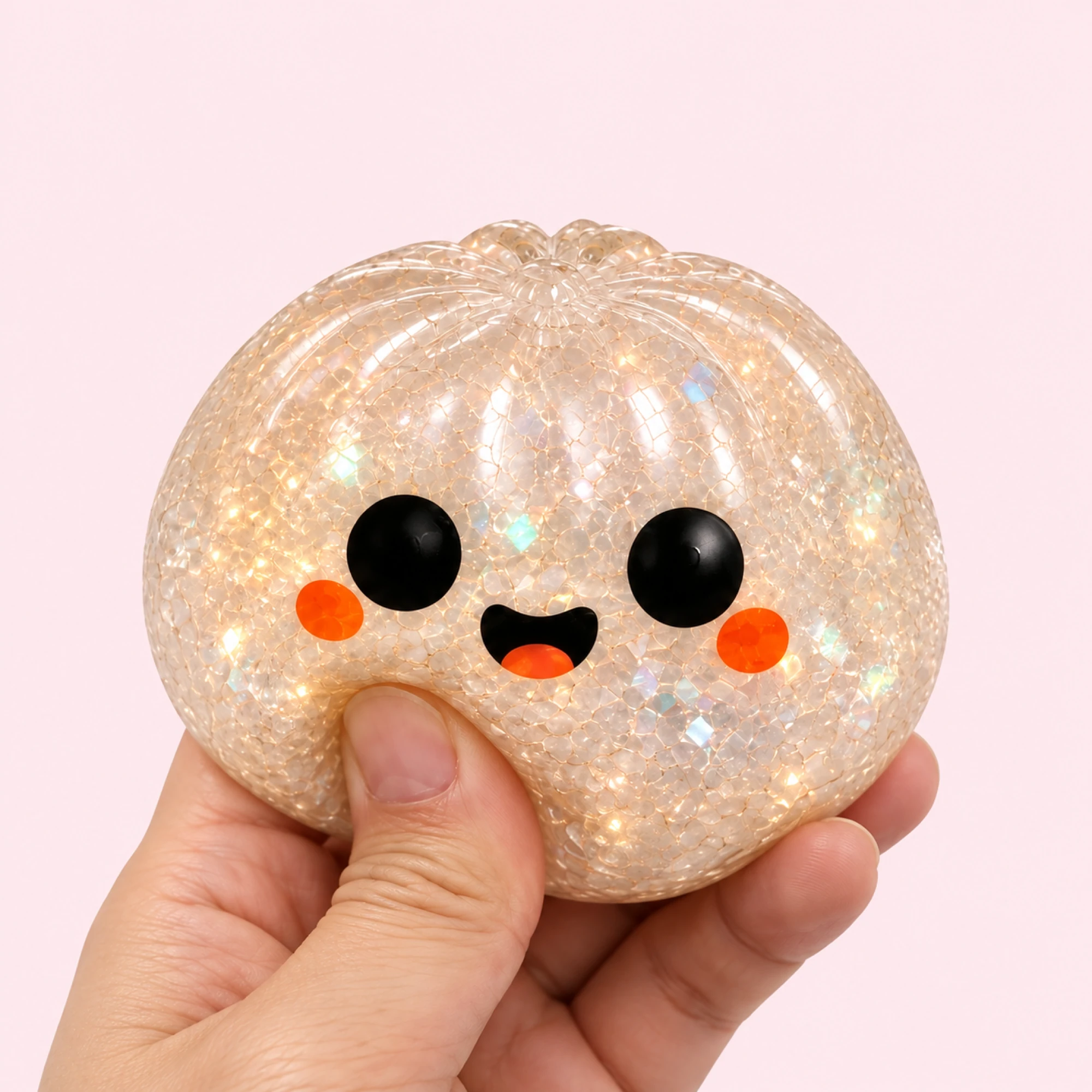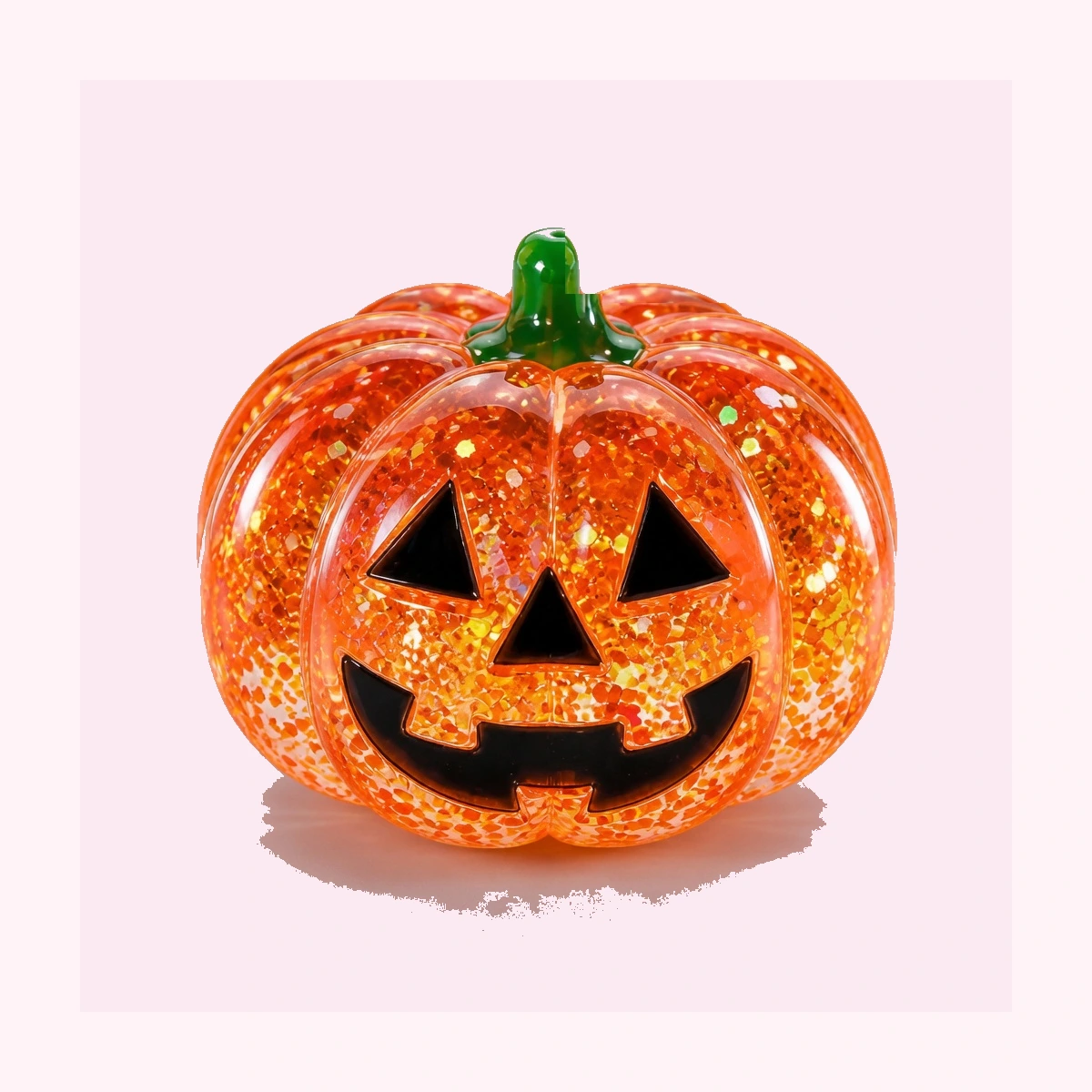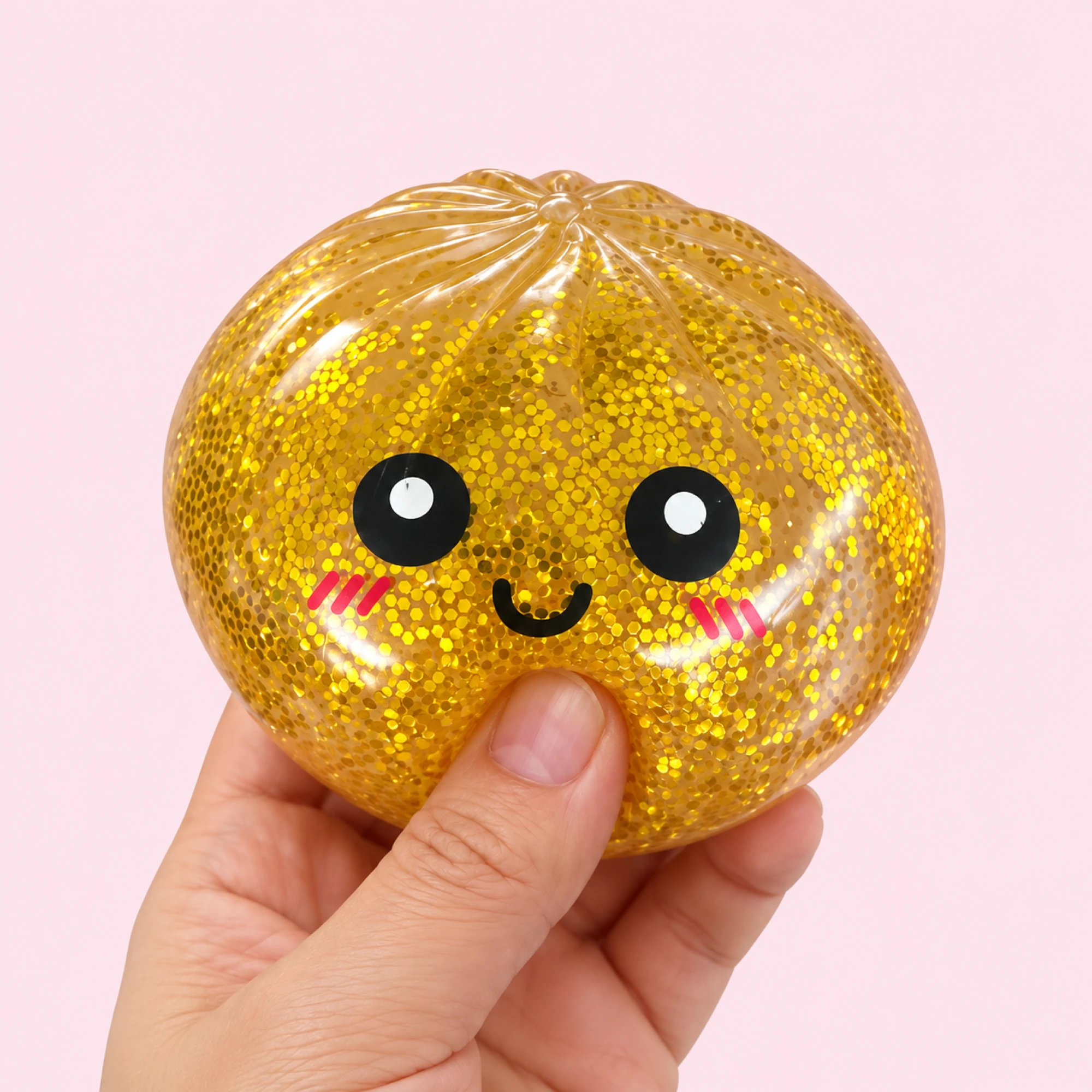



The appeal is obvious and the engineering is not. A glitter stress ball has to keep flakes visibly suspended inside a body you are squashing several hundred times a week, through a skin transparent enough to see them and tough enough to survive your grip. Those requirements pull against each other, which is why two glitter toys that look identical in a photograph can behave completely differently after a month.
How a Glitter Stress Ball Keeps Its Sparkle Suspended
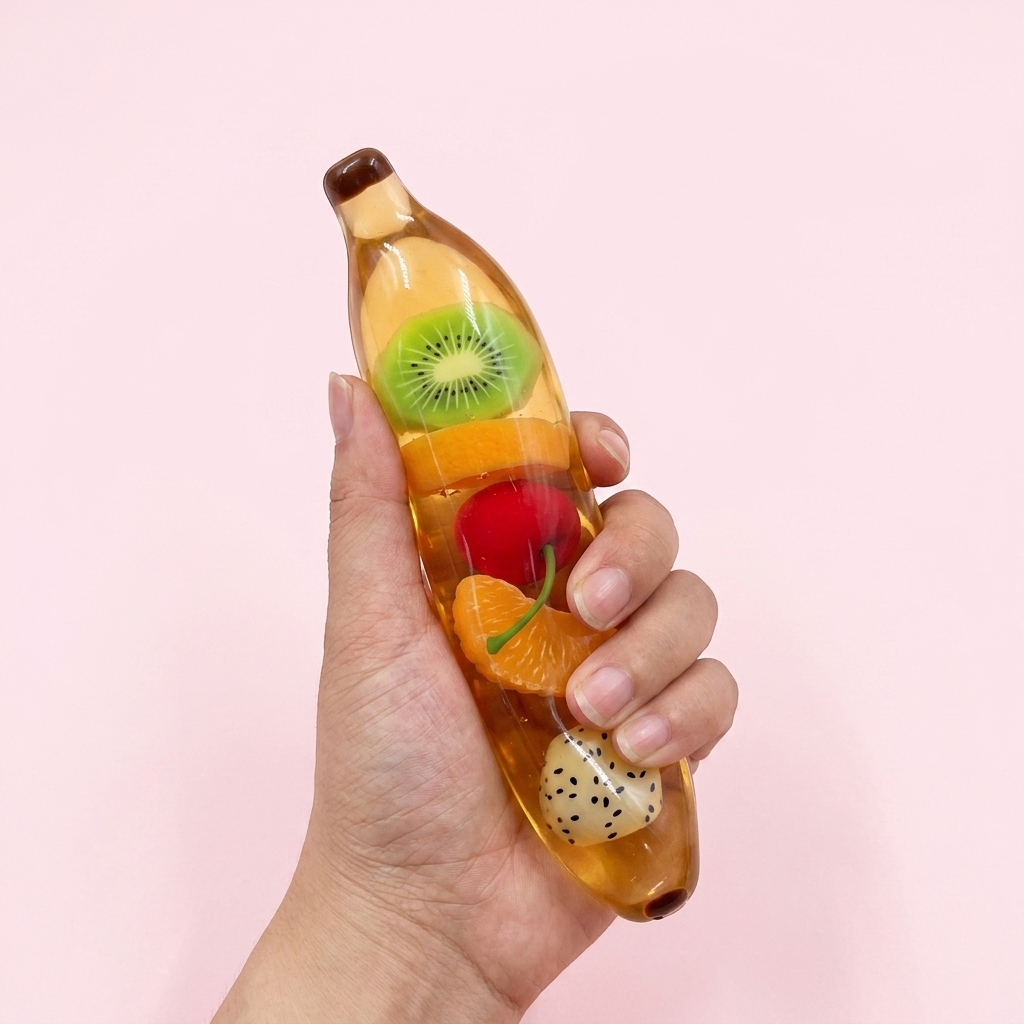
In a viscous gel. A thick clear fluid holds flakes in slow motion — squeeze and the glitter swirls, release and it drifts back. This is the version people picture, and it depends entirely on the gel’s viscosity. Too thin and the glitter sinks within days; too thick and the ball stops feeling squeezable.
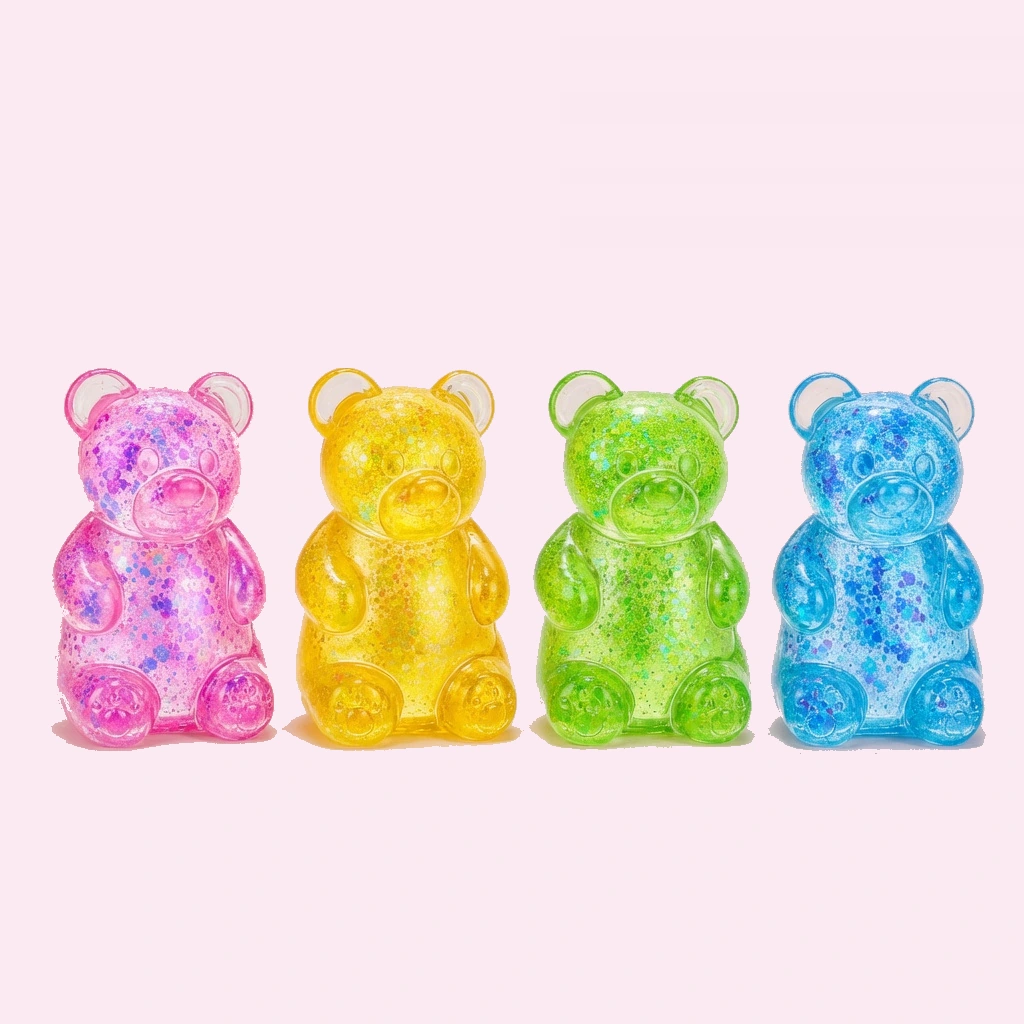
Cast into a solid. The flakes are mixed into the material before moulding, so they are locked in place permanently. Nothing moves and nothing settles, but you get sparkle from every angle as the light changes. The Glitter Gummy Bear Squishy 4-Pack is this construction — slow-rising bodies with the sparkle built into the material rather than floating in it.
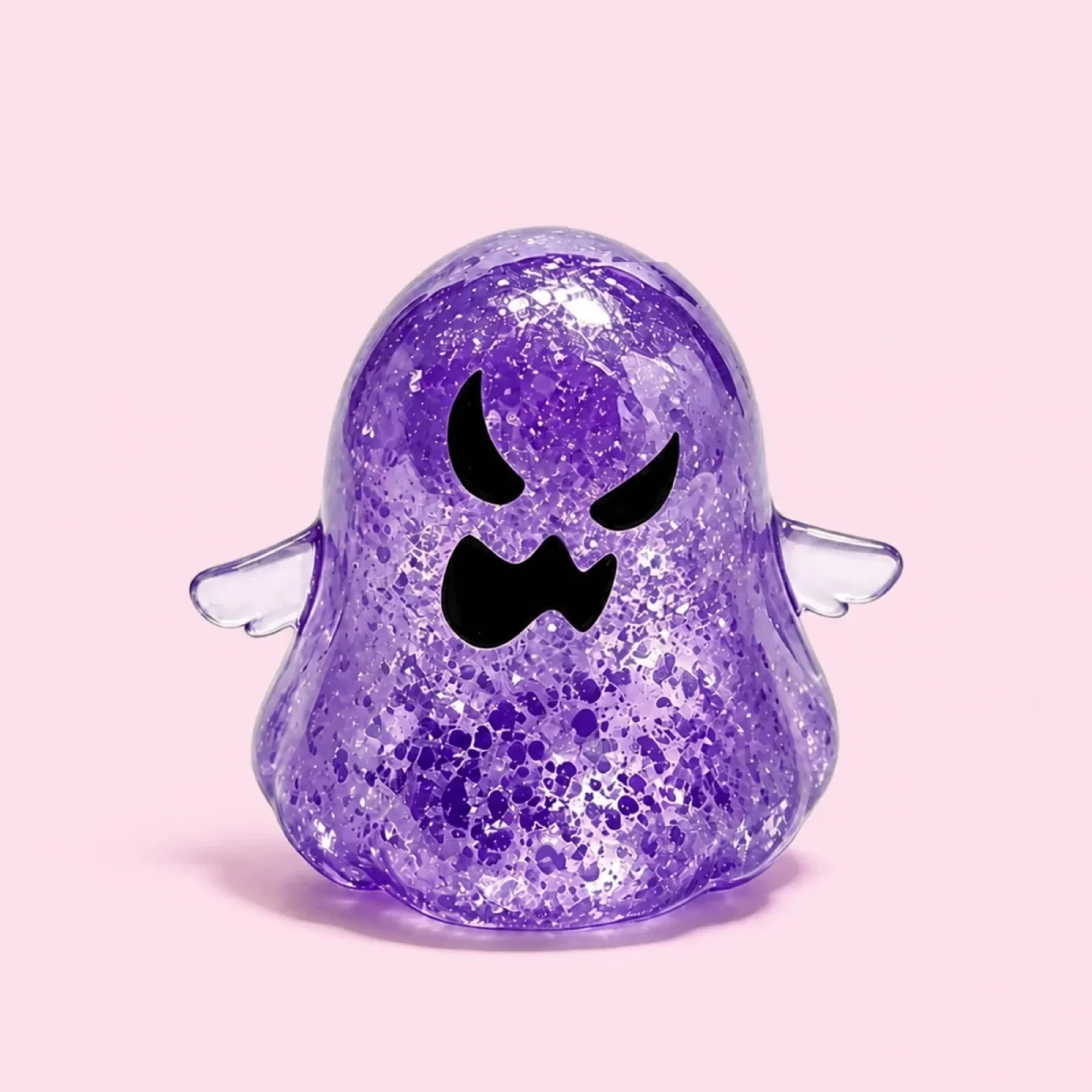
Mixed with beads or water beads. Glitter distributed among small spheres, so the movement is granular rather than fluid. The Glitter Ghost Squishy is bead-filled, and the beads do the resisting while the glitter does the looking.
Each construction ages differently, and the ageing is the part nobody photographs.
What Goes Wrong Over Time
Settling. Gel-suspended glitter separates if the gel is too thin, and once it has settled into a layer at the bottom it does not fully redisperse — squeezing stirs it up temporarily and it sinks again. A ball that arrives with an even sparkle and shows a line after two weeks has this problem, and it is not fixable.
Yellowing. Clear skins and clear gels are the parts most affected by ultraviolet light. A glitter ball left on a sunny windowsill goes amber-tinted from the outside in, and the glitter looks dull because it is being viewed through a filter. Keeping one out of direct sun is the single most effective thing you can do for its appearance.
Clouding. Repeated stretching creates microscopic crazing in a clear skin, which scatters light. The toy is structurally fine and visually finished.
Glitter migration. In bead-filled bodies the flakes gradually work their way into the low points and stay there. Purely cosmetic and entirely inevitable.
Solid-cast glitter avoids all four, which is the honest reason to prefer it if longevity matters more than movement.
The Trade-Off Nobody States
Visibility and durability are in direct opposition here.
A clear skin thin enough to show glitter crisply is thinner than an opaque skin would need to be, so it splits sooner. A thicker skin lasts longer and blurs what is inside. Manufacturers pick a point on that line and never tell you which.
The practical read is: treat any clear-skinned glitter toy as having a shorter life than an opaque one of the same construction, and keep it away from fingernails and sharp edges. The full comparison of what each filling does, including how each construction fails, is in what the filling changes.
Why Glitter Toys Photograph Better Than They Feel
Worth saying plainly, because it explains a lot of disappointed purchases. Glitter is a visual feature; it contributes nothing to resistance, rebound or texture. A glitter ball feels exactly like the same ball without glitter.
So if the appeal is the look, buy for the look and judge the mechanics separately. If the appeal is the squeeze, glitter is neutral at best and, in thin-skinned clear designs, a small durability cost.
The same trade-off applies across shaped and decorated fidgets generally, where the decoration frequently costs something mechanical — that case is made in cute fidget toys that still work.
Cleaning One Without Ruining It
Clear surfaces show every fingerprint, which is the main reason a glitter toy looks tired long before it is worn out.
A damp cloth and nothing else. Alcohol wipes, household cleaners and hand sanitiser all attack clear skins — they cause the crazing described above far faster than use does, and the damage is permanent. Dry it fully afterwards, because water trapped against a clear surface leaves marks as it evaporates.
For bead-filled bodies, avoid submerging them. Water that gets past a seam has nowhere to go and will sit inside.
Choosing One That Lasts
Prefer solid-cast glitter if you want it to look the same in a year.
Prefer gel suspension if the movement is the point, and accept that it is the shortest-lived of the three.
Prefer bead-filled if you want texture and sparkle together, and expect the glitter to pool eventually.
Keep any of them out of sunlight, away from radiators, and out of pockets with keys. Those three habits matter more than which one you buy.
Three Glitter Constructions to Compare
Glitter Gummy Bear Squishy 4-Pack — slow-rising bodies with the sparkle cast into the material. The version that does not settle.
Glitter Ghost Squishy — bead-filled with glitter through it, so the resistance is granular and the sparkle moves with the beads.
Fluid Swirl Cube Squishy — marbled glitter in a slow-rising block, where the pattern is in the body rather than floating in a fluid.
Browse the fidget balls range for other constructions, or see all fidget toys if the mechanism matters more than the finish.