




The buying advice for desk toys for adults almost always assumes a private desk. Put the same object on a bench in an open-plan room and half the list stops working, not because it breaks but because it becomes other people’s problem. A shared desk applies three filters no product page mentions, and anything that fails them ends up in a drawer within a fortnight.
The Three Filters a Shared Desk Applies
Audibility at two metres. Not loudness in your hand — carrying distance. Hard plastic on hard plastic travels; silicone against silicone does not. The test is whether a colleague can tell what you are doing without looking up, and most clicking mechanisms fail it while most compression mechanisms pass.
Visual motion in someone’s peripheral vision. This one surprises people. Anything that spins, flashes or swings creates repetitive movement at the edge of a neighbour’s field of view, and peripheral motion is exactly what human attention is built to catch. A spinner on an open bench is more distracting to the person beside you than to you, which is why it belongs at a private desk or in a hand under the desk line.
Whether it needs explaining. Objects that look like puzzles invite people to pick them up and ask. That is fine occasionally and corrosive daily. The best shared-desk fidgets are visually boring.
Nothing on that list is about quality, and all three are invisible when you are choosing online.
Desk Toys for Adults That Pass All Three
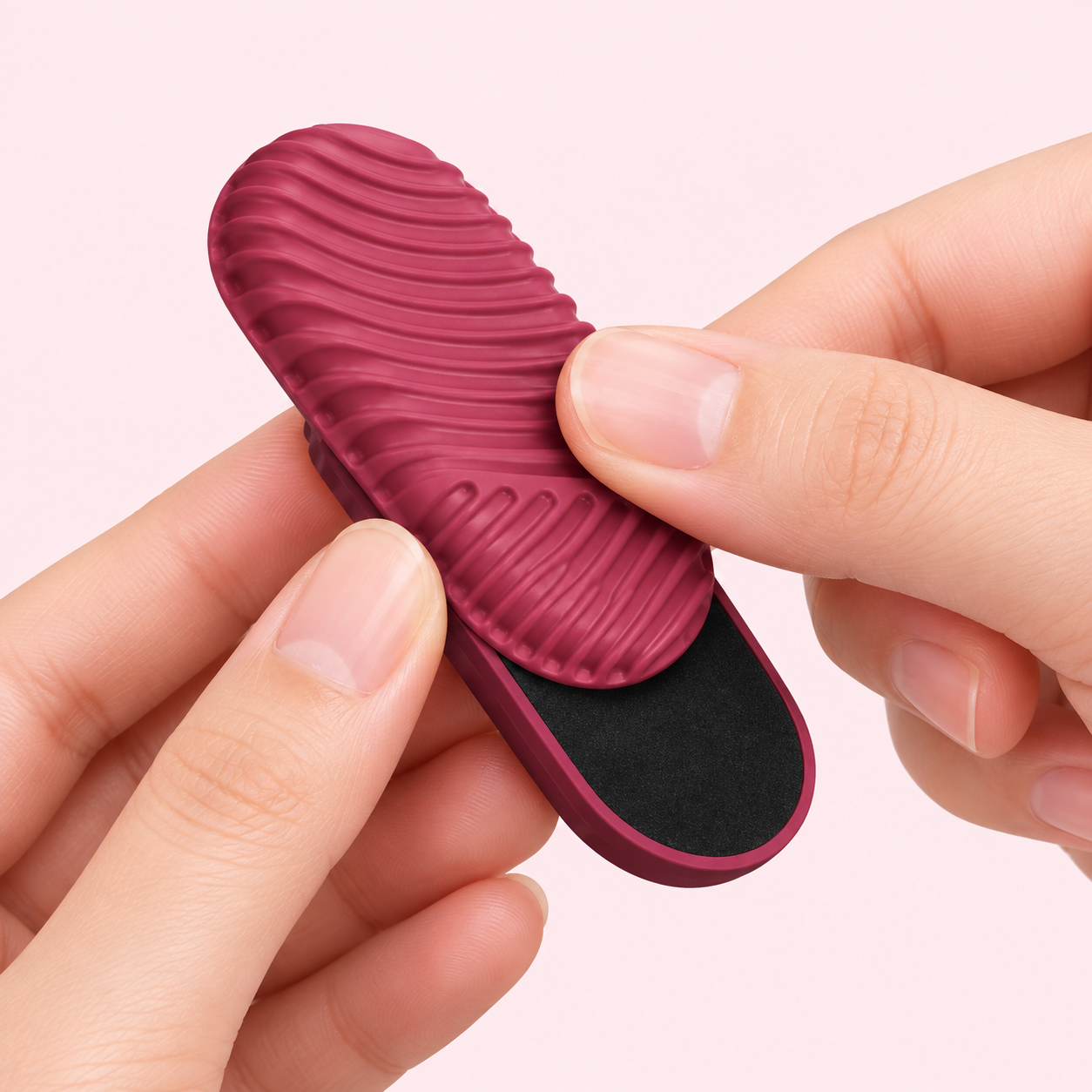
Flat sliders pass comfortably. A ridged silicone face over a smooth base gives you travel and an end-stop with almost no carrying sound, it does not move in anyone’s peripheral vision, and it looks like a coaster. The Magnetic Silicone Slider is the shape to picture: it stays flat where you put it, which also means it never rolls off the edge.
Compression toys pass on sound and motion. Anything you squeeze is silent by construction unless it has beads in it, and squeezing is a closed-hand motion nobody registers. The cost is that they need a home — a tray, a drawer lip, a mug — because a round object on a shared bench migrates.
Textured stones and small silicone objects pass all three and are the least discussed category. The Silicone Sensory Stones sit in a hand or a pocket, make no sound, and read as desk objects rather than toys.
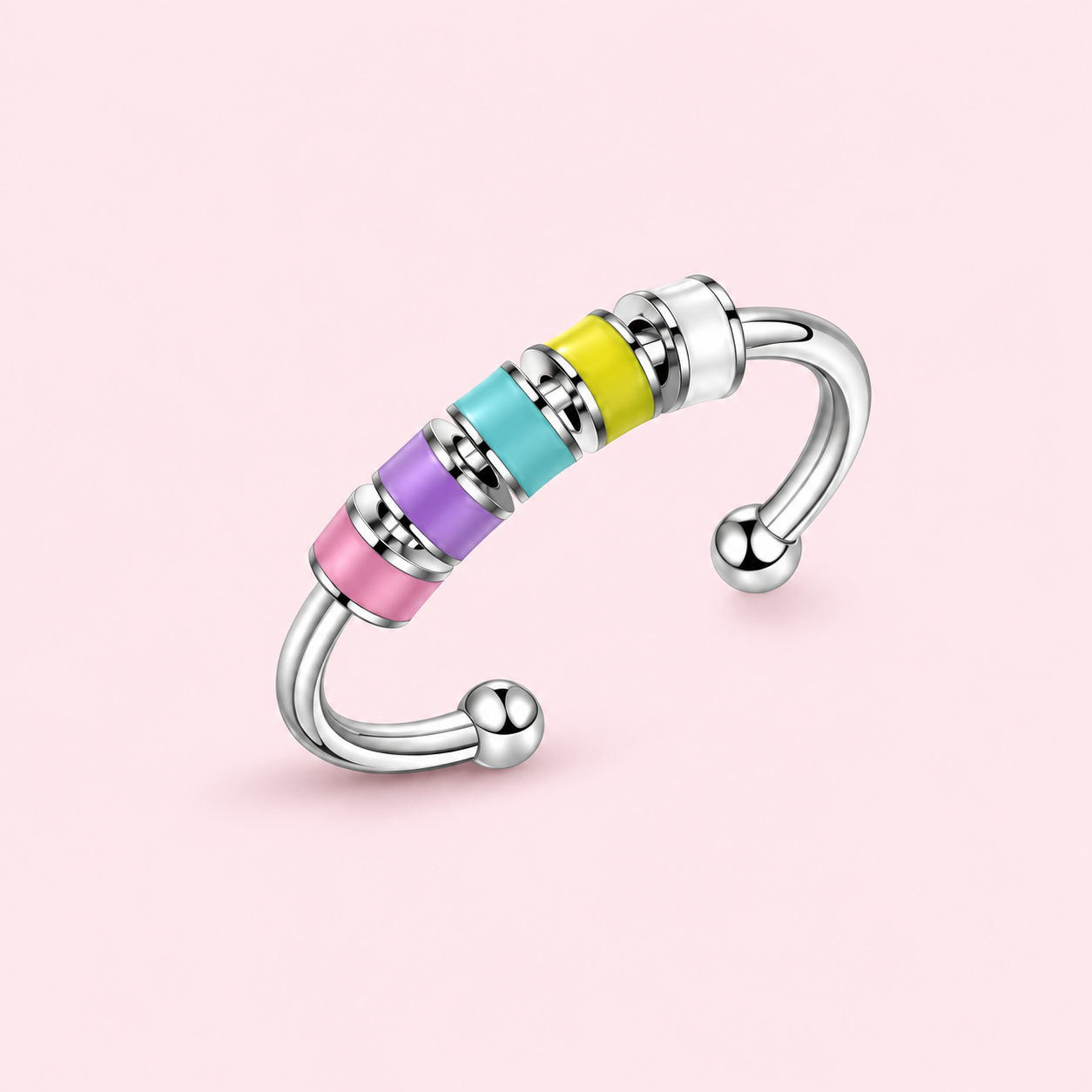
Worn fidgets pass by being invisible. A ring does not sit on the desk at all, which sidesteps the entire problem — the Black Mechanical Fidget Ring has a layered scale texture under the thumb and is damped by your own hand.
What Fails, and Where It Belongs Instead
Spinners fail the peripheral-motion filter, not the noise one. A good bearing is nearly silent; the issue is the visible rotation. They are excellent at a private desk and at home, which is where the fidget spinners range is worth browsing.
Clickers fail on audibility in a quiet room and pass in a room that already sounds like typing. That distinction is worth getting right rather than guessing, and which clicks are meeting-safe sets out the three mechanisms and how far each one carries.
Bead-filled squeeze toys fail on sound in a quiet office and pass everywhere else. The crunch is the appeal, so this is a location decision rather than a product flaw — the filling comparison in what the filling changes covers which constructions are audible by design.
Anything with lights fails all three at once.
The Placement Problem
Where a fidget lives on a desk decides whether it gets used, and the rule is counterintuitive: the best position is not the most reachable one.
A fidget within the same reach as your mouse competes with your mouse, and you end up picking it up mid-task and losing the thread. A fidget on the far side of the keyboard, or in a drawer you open deliberately, gets used during thinking rather than during doing — which is when it actually helps.
The second placement rule is that a fidget with no defined home is a fidget you will lose. Flat objects stay put; round ones need a container. That single fact predicts drawer-migration better than any quality difference between products, which is the argument our month-on-a-desk ranking is built around.
Building a Small Rotation
One object is rarely enough, because a single sensation stops registering after a few weeks. Two or three with genuinely different mechanisms — one compression, one sliding, one textured — keeps the habit alive without adding clutter, and each one stays effective because you are not using it constantly.
Keep the rotation to what fits in one drawer. The failure mode of a good desk fidget habit is collection rather than use, and a rotation you can see all of at once is a rotation you will actually cycle through.
Three for a Shared Bench
Magnetic Silicone Slider — ridged silicone over a smooth base, magnetic end-stops, flat and quiet. The default pick for an open-plan desk.
Silicone Sensory Stones — soft textured shapes that read as desk objects rather than toys. Silent, and nobody asks about them.
Black Mechanical Fidget Ring — worn rather than parked, damped by your own hand, and invisible to everyone else.
Browse the desk and everyday-carry range, or step back to all fidget toys to compare mechanisms before deciding what belongs on a bench you share.