



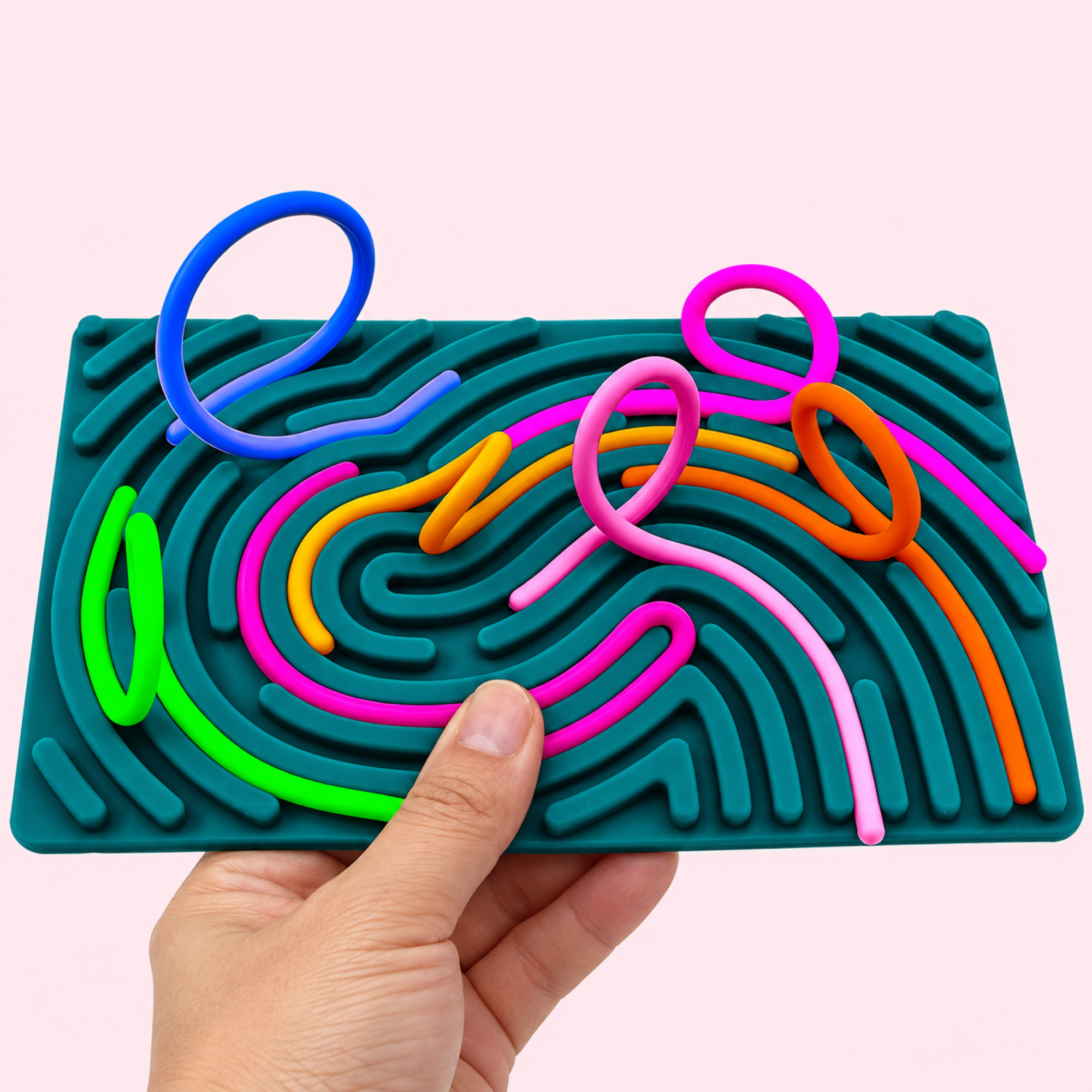
What is a sensory board? It is a flat panel with several different mechanisms mounted on it — sliders, tracks, textures, spinning parts, latches — arranged so a hand can move between them without picking anything up. That last detail is the whole point of the format, and it is what separates a board from every other fidget: the object stays put and your hand travels across it.
The Difference From a Cube
A cube puts six mechanisms on six faces, which means you rotate the object to reach each one. A board lays them out side by side, so nothing has to be turned.
That changes who it suits. Rotating a cube is a one-handed skill; sweeping across a board is not, so a board works for hands that are less precise, and it works when you are looking at something else entirely.
It also changes the scale. A board can be far larger than anything you would hold, which allows bigger travel — a slider with 10 cm of track feels nothing like a 2 cm one, and length is what a board can give you that a cube cannot.
The cost is portability. A cube goes in a pocket and a board does not, which is the honest trade between the two formats and the reason many people own one of each. The cube side of that comparison is in what is inside a fidget cube.
What Belongs on a Good One
Travel, not just buttons. The mechanisms worth having are the ones that move a distance — sliders, tracks, rolling balls. Buttons are cheap to include and get boring fastest.
Different resistances. If every mechanism takes the same effort, the board reads as one sensation repeated. Variation is what keeps a hand moving across it.
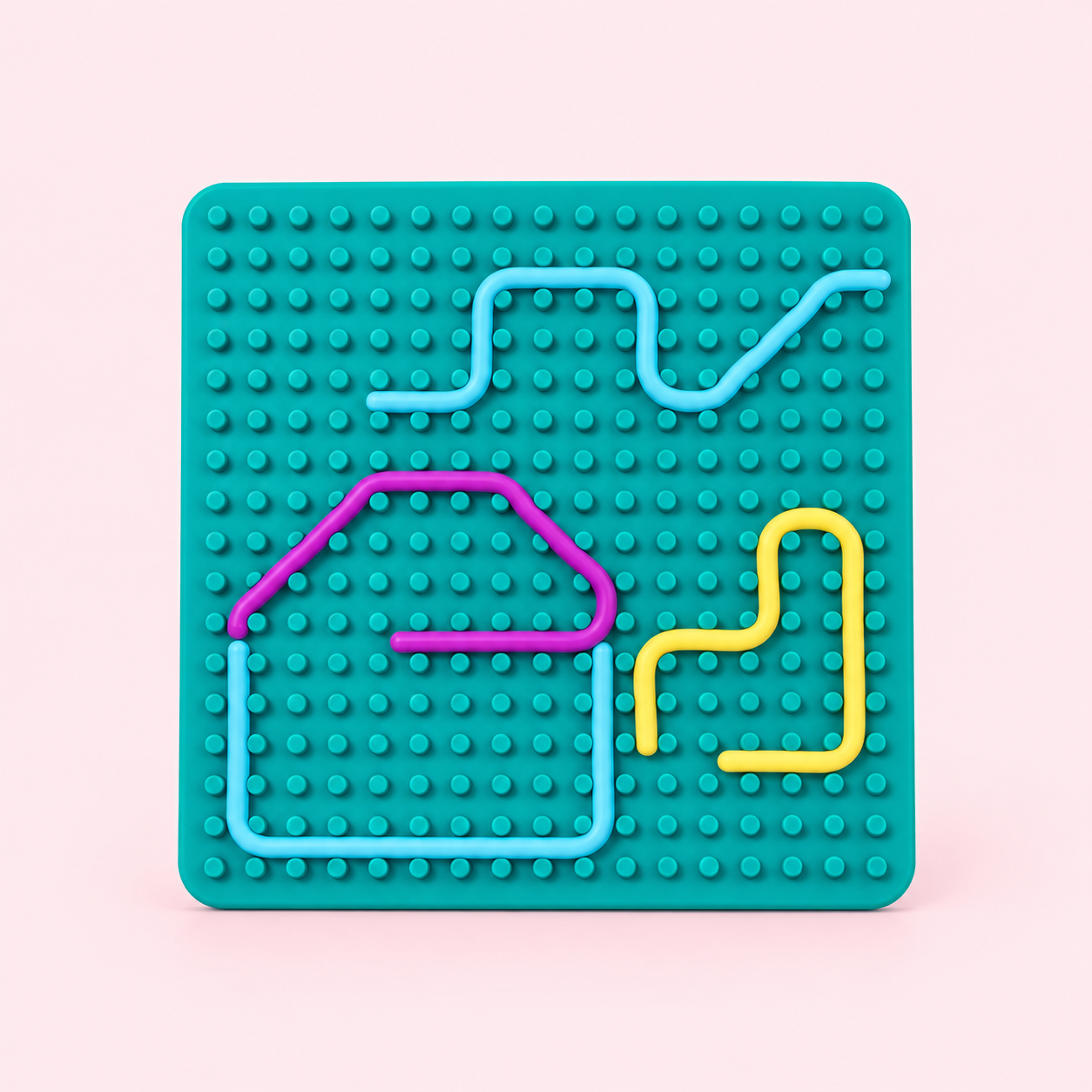
A texture zone with no moving part. The Yellow Textured Slider Fidget Board at 10 × 5 × 2 cm is built around exactly this: a surface to track rather than a mechanism to operate.
Enough space between elements. Crowded boards force your hand to hover; a well-spaced one lets it rest.
The Sizes, and What Each Is For
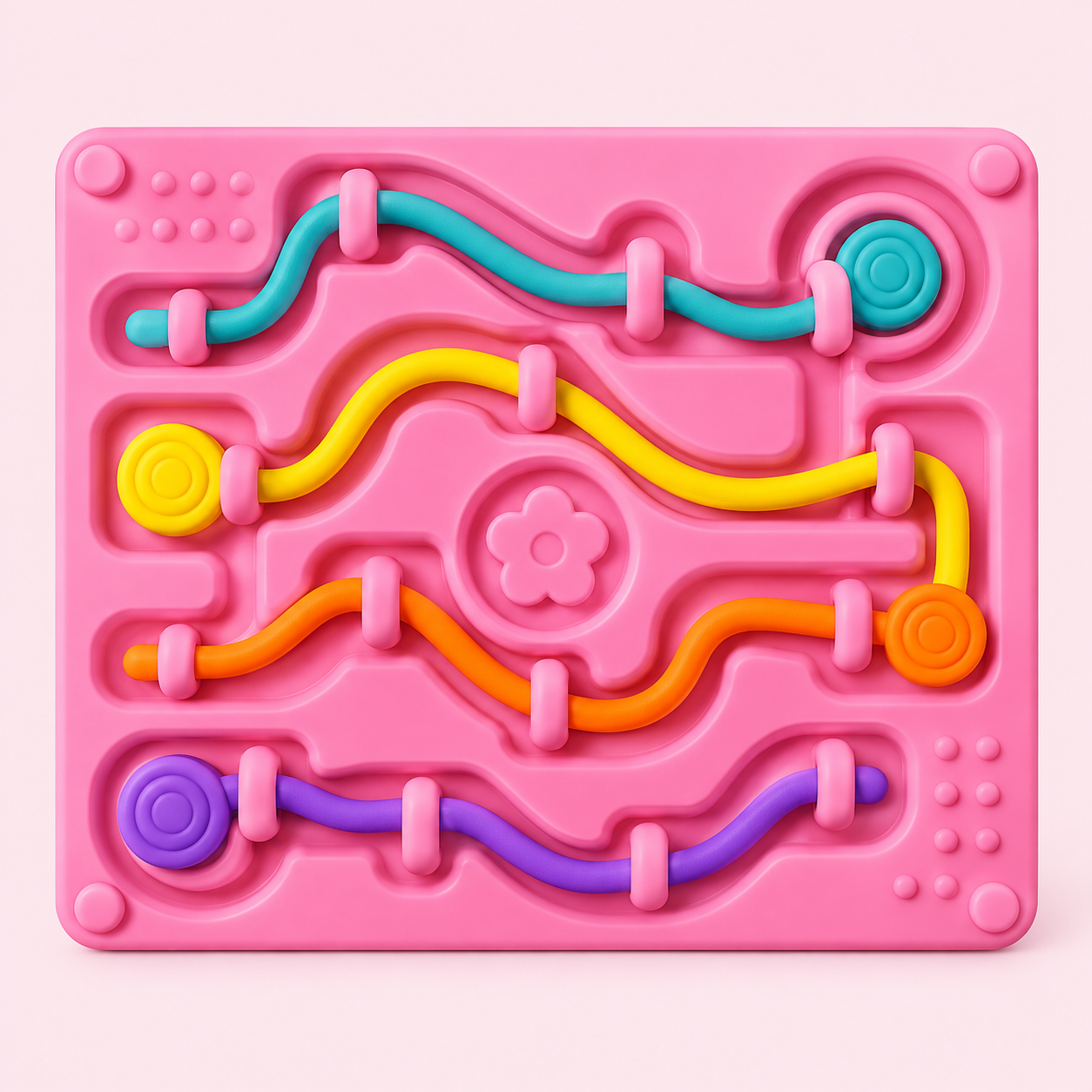
Palm boards, around 8 × 8 inches. Held in one hand and worked with the other, or rested on a lap. The Pink Multi-Track Fidget Activity Board at 8 × 8 × 1 in is this size, and it is the most usable format for an adult at a desk.
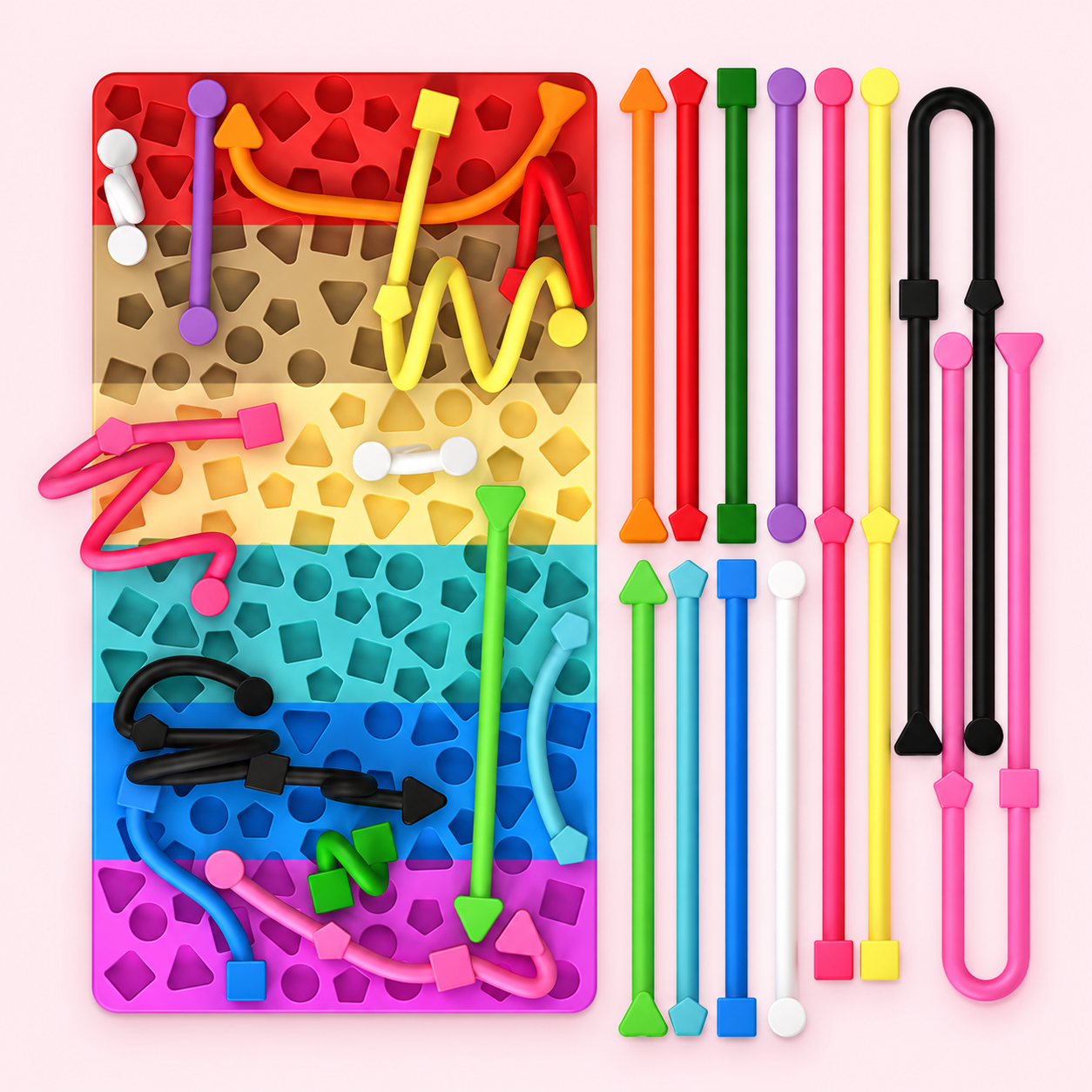
Larger panels, around 20 × 15 cm. These sit on a surface rather than in a hand, and they earn the extra size with longer tracks — the Rainbow Sensory Activity Board at 20 × 15 × 3 cm is an example.
Single-mechanism boards. Not really boards at all but often sold as them: one long track, one rolling element. The Wooden Rolling Maze Board is this type, and the single mechanism is the appeal rather than a shortfall.
What Is a Sensory Board Bad At
They stop travelling with you. The commonest failure is not mechanical: a board lives on one surface, and if that surface is not where your hands are, it stops being used.
Mounted parts work loose. Everything on a board is attached to the panel, and attachment points are where boards fail. Check that mechanisms are screwed or moulded in rather than glued.
Edges chip. A board gets knocked off tables. Rounded, thick edges survive that; thin decorative ones do not.
One dead mechanism spoils the whole thing. With a cube you rotate past a bad face. On a board the seized element sits in the middle of your hand’s path, and you feel it every pass.
Choosing One
Decide where it will live first, then buy for that place. A board bought without a home ends up in a cupboard.
Count the mechanisms that actually move a distance and ignore the rest of the spec. Four good travelling elements beat ten mixed ones.
Press each element at the point where it meets the panel and look for flex. Flex there means it will loosen.
And if what you want is a desk-side arrangement rather than a single object, the assembled-from-parts approach is covered in sensory board ideas for a desk.
Shared Use Is the Format’s Real Strength
A board is the only fidget in the category two people can use at once, and that turns out to matter more than the spec sheet suggests.
Because nothing is held, a board can sit between two people on a table. Nobody has to hand anything over, and nobody claims it.
That also makes it the easiest format to leave out in a shared space. A spinner on a table looks like someone’s toy; a board reads as part of the furniture.
And it survives being passed around, which pocket fidgets do not — rings are sized, cubes get dropped, sliders disappear into bags. A board comes back to the same surface every time.
Three Boards to Compare
Pink Multi-Track Fidget Activity Board — 8 × 8 × 1 in, several tracks in a one-hand size.
Rainbow Sensory Activity Board — 20 × 15 × 3 cm, the larger surface format with longer travel.
Wooden Rolling Maze Board — one mechanism done properly, for people who find multi-element boards busy.
Browse the fidget boards range, or all fidget toys if you want something that fits in a pocket instead.