



Any room where people are expected to concentrate quietly runs into the same problem, and the two obvious answers both fail. Ban them and the fidgeting relocates to pen clicking, desk tapping and whatever else is within reach. Allow anything and the room fills with noise and objects that get thrown. Managing fidgets in the classroom works better with a small number of rules about behaviour than with a list of permitted products, because a list goes out of date the moment something new appears.
Why Bans Do Not Work
The urge does not switch off when the object is removed. It redirects to whatever is available, and whatever is available is usually worse: a pen that clicks, a chair that rocks, a page that gets shredded.
Bans also create a secondary problem. A confiscated object becomes interesting, and interesting objects get passed around, hidden and talked about. The distraction ends up larger than the one being prevented.
The useful reframe is that the goal is not stopping fidgeting. It is choosing the form it takes, which is the same substitution logic set out in does a stress ball work.
Four Rules for Fidgets in the Classroom That Hold Up
It stays in one hand. Anything needing two hands competes directly with writing, typing and holding a book. One-handed operation is the single most useful requirement and it eliminates most problem objects automatically.
It makes no sound anyone else can locate. Not “quiet” — locatable. A soft continuous sound disappears into a room; a sharp intermittent click draws every head. That distinction is what separates workable objects from disruptive ones, and it is sorted by mechanism in which clicks are meeting-safe.
It stays below the desk line and out of anyone’s peripheral vision. Visible repetitive motion is more distracting to a neighbour than to the user, which is why spinners are the classic failure here despite being nearly silent.
It does not leave the desk. Anything that rolls, bounces, throws or gets passed is a different object socially, regardless of what it is physically.
Four behavioural rules cover every object that will ever exist, which a product list cannot do.
What Satisfies All Four
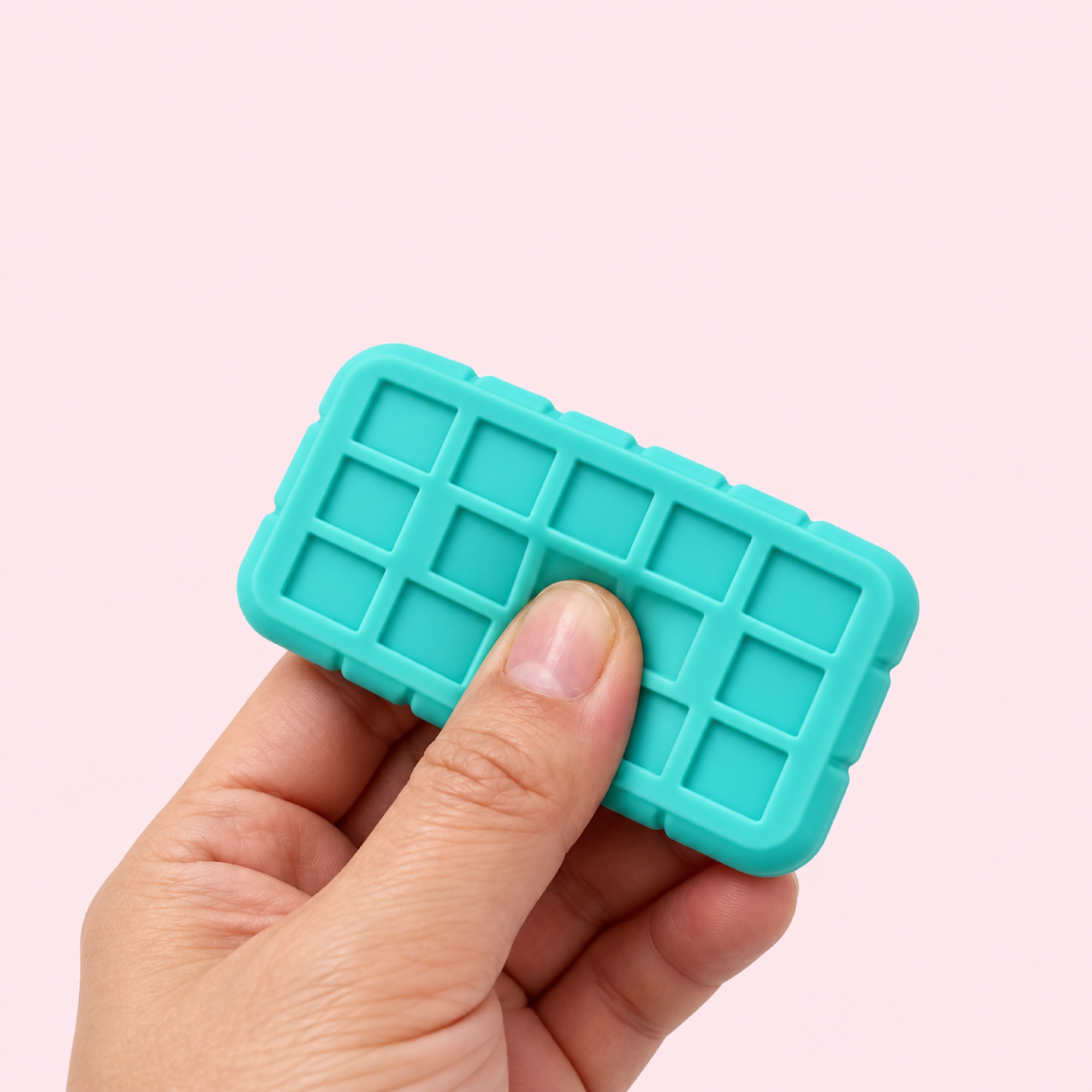
Textured solids. No mechanism, no sound, one hand, and they sit still. The Silicone Sensory Stones are the type — small, quiet, and they read as objects rather than toys.
Flat sliders with damped stops. Travel and a defined end without a locatable click, and a flat base keeps them where they are put. The Magnetic Silicone Slider has a ridged face for no-look use.
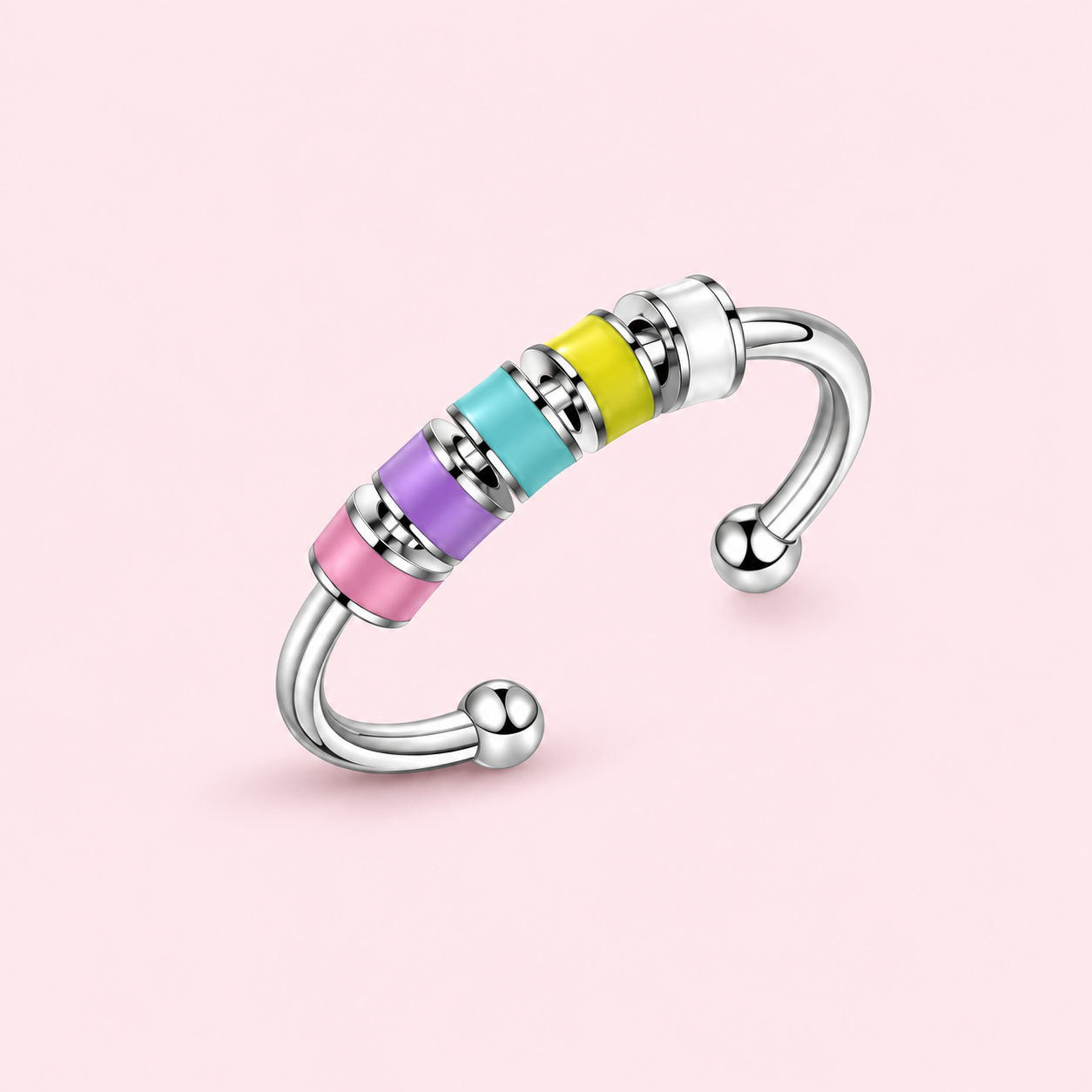
Worn fidgets. A ring never leaves the desk because it never was on the desk, and it is damped by the hand wearing it. The Black Mechanical Fidget Ring is a layered texture rather than a mechanism.
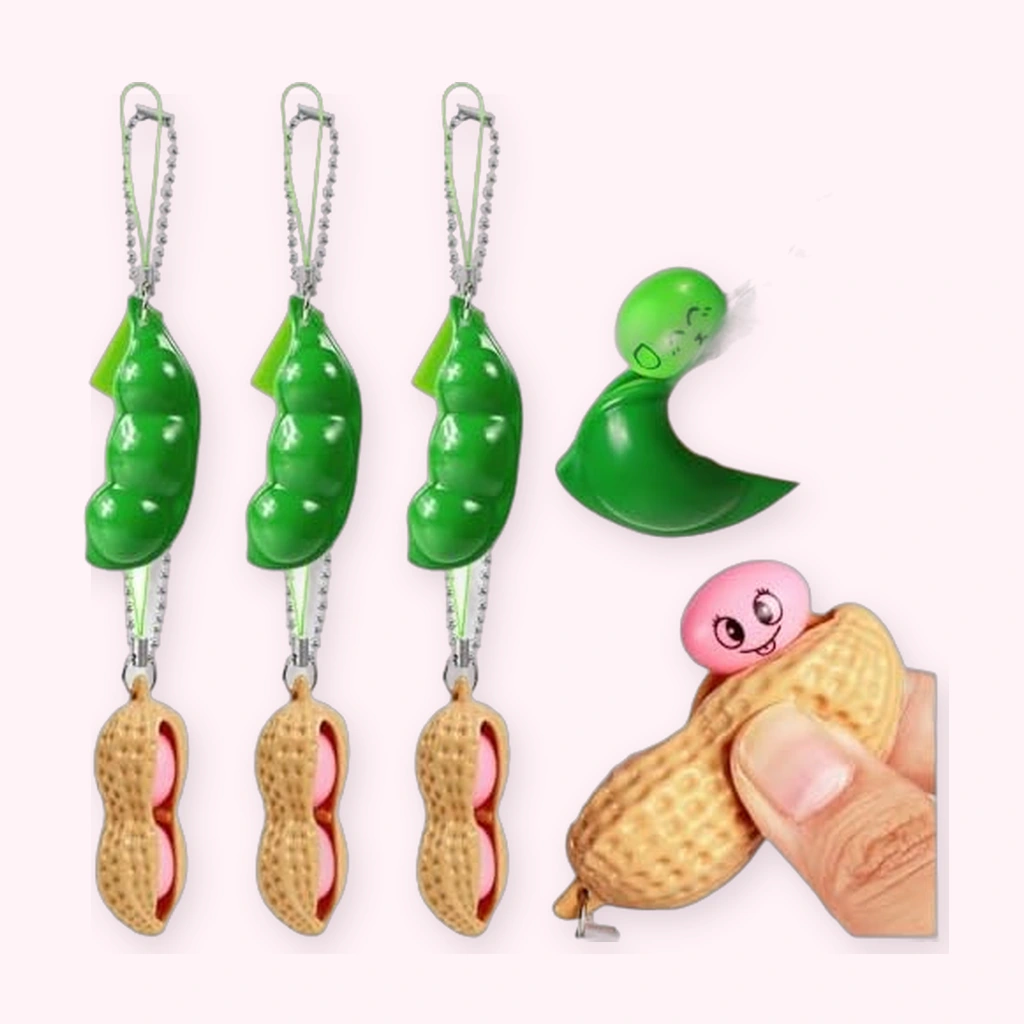
Soft compression toys, provided they are the silent kind rather than bead-filled — the audible constructions are identified in what the filling changes.
What Predictably Fails
Anything that clicks, because clicking is locatable by design.
Spinners, on visible motion rather than noise.
Bead-filled squeeze toys, which crunch.
Anything small enough to flick, and anything round enough to roll off a desk.
Anything that requires looking at it, since an object that needs attention is not solving the problem it was brought in for.
Making the Rules Stick
State them as rules about behaviour, not as a list of approved objects. “Stays in one hand, stays silent, stays on the desk” is memorable and self-enforcing; a list of brands is neither.
Let the object be replaced rather than confiscated when it breaks a rule. Confiscation makes the object the subject; substitution keeps the focus on the behaviour.
Agree a single storage place. An object with a defined home gets put away; an object without one migrates, gets lost and reappears at the wrong moment.
And accept the low-grade cases. Someone quietly running a thumb over a textured surface is not a problem to solve, even if it looks like one.
Choosing One Object for a Shared Room
If it has to be a single choice for a whole room, pick a silent compression or texture object over any mechanism. Compression and texture are the two most widely tolerated hand actions, so they satisfy the most people per object — the same reasoning behind assortment ratios in bulk fidget toys.
The Argument Worth Having in Advance
Most disputes about these objects are not really about the object. They are about whether someone is paying attention, and a fidget is simply the most visible evidence available.
Settling that in advance avoids the argument later. If the expectation is that attention is judged by output rather than by stillness, a silent one-handed object is irrelevant to it. If the expectation is stillness itself, then no object passes, and the honest position is to say so rather than to litigate each one.
Stating which it is takes one sentence and saves a term of negotiation.
Three That Pass the Four Rules
Silicone Sensory Stones — silent, one-handed, no mechanism, stays put.
Magnetic Silicone Slider — flat base, damped magnetic stops, operable without looking.
Black Mechanical Fidget Ring — worn rather than parked, so it cannot roll away or be left behind.
Browse the sensory fidget toys range for quiet options, or all fidget toys to check any candidate against the four rules.