


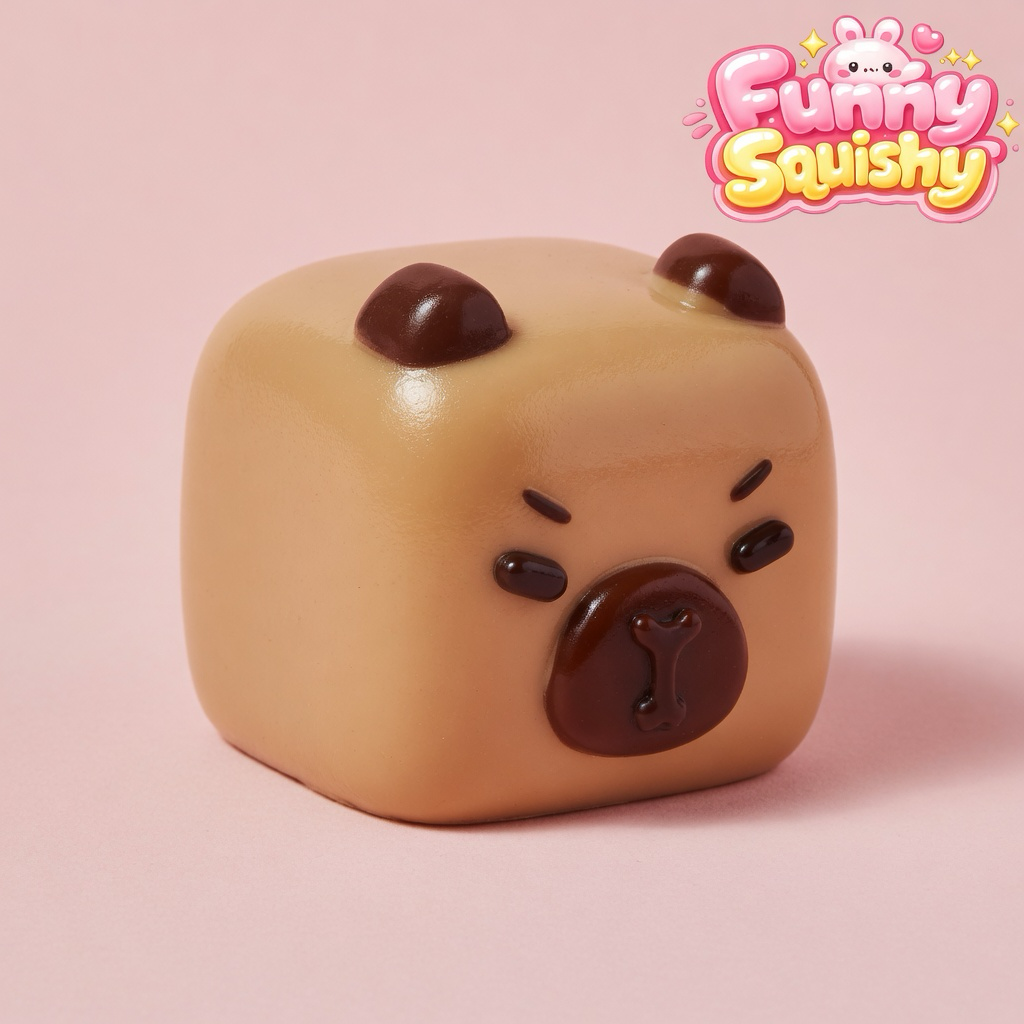
Capybaras earned their fame by being impossible to rattle, and that is exactly the energy a fidget toy should deliver. A capybara squishy pairs the loaf-shaped calm of the animal with slow-rising foam: squeeze it flat, watch it creep back, feel your shoulders drop a notch. Round body, soft matte surface, zero sharp edges — it is practically engineered for absent-minded hands.
Why the Calmest Animal Became a Fidget Icon
The internet decided some time ago that capybaras are the patron animal of not caring. They soak in warm water, let ducklings ride them like ferries, and stare into the middle distance as if their to-do list finished itself. No other creature has that brand, and no other creature deserves it less arguing.
That reputation matters for toy design more than you’d think. A fidget toy is a mood you keep within arm’s reach, and shape language does most of the talking. A snarling dinosaur sets one tone next to your keyboard; a serene bread loaf with a nose sets a very different one. When your hand drifts over mid-meeting, the capybara’s silhouette reads like a quiet instruction: unclench.
There’s an ergonomic bonus, too. Capybaras are essentially rectangles with a face, so the toy version fills your palm evenly instead of jabbing it with limbs and ears. Cute and comfortable rarely overlap this neatly.
There is even a quick test for whether the trend applies to you. Picture your browser tabs, your inbox, your unread count — now picture the capybara, unfazed by all of it. If that mental image alone loosens your grip on the mouse, the physical version will do considerably more.
How Capybara Squishies Actually Feel in Hand
Most versions run on soft slow-rising foam under a fine matte skin that drags slightly against your fingertips — closer to suede than to rubber. The first press meets almost no resistance, then the foam packs down and starts pushing back. Release, and the body re-inflates at its own leisurely pace, which is the entire point.
Your thumb will find the snout within seconds. That blunt little nose invites a very specific press-and-hold, the same way bubble wrap invites popping, and there is no fighting it. For the full story on why a lazy rebound feels so different from a springy stress ball, the slow-rising vs. fast-rising breakdown walks through it squeeze by squeeze.
Three Builds, Three Personalities
Capybara designs cluster into a few distinct builds, and they feel noticeably different in hand.
| Build | Squeeze character | Best for |
|---|---|---|
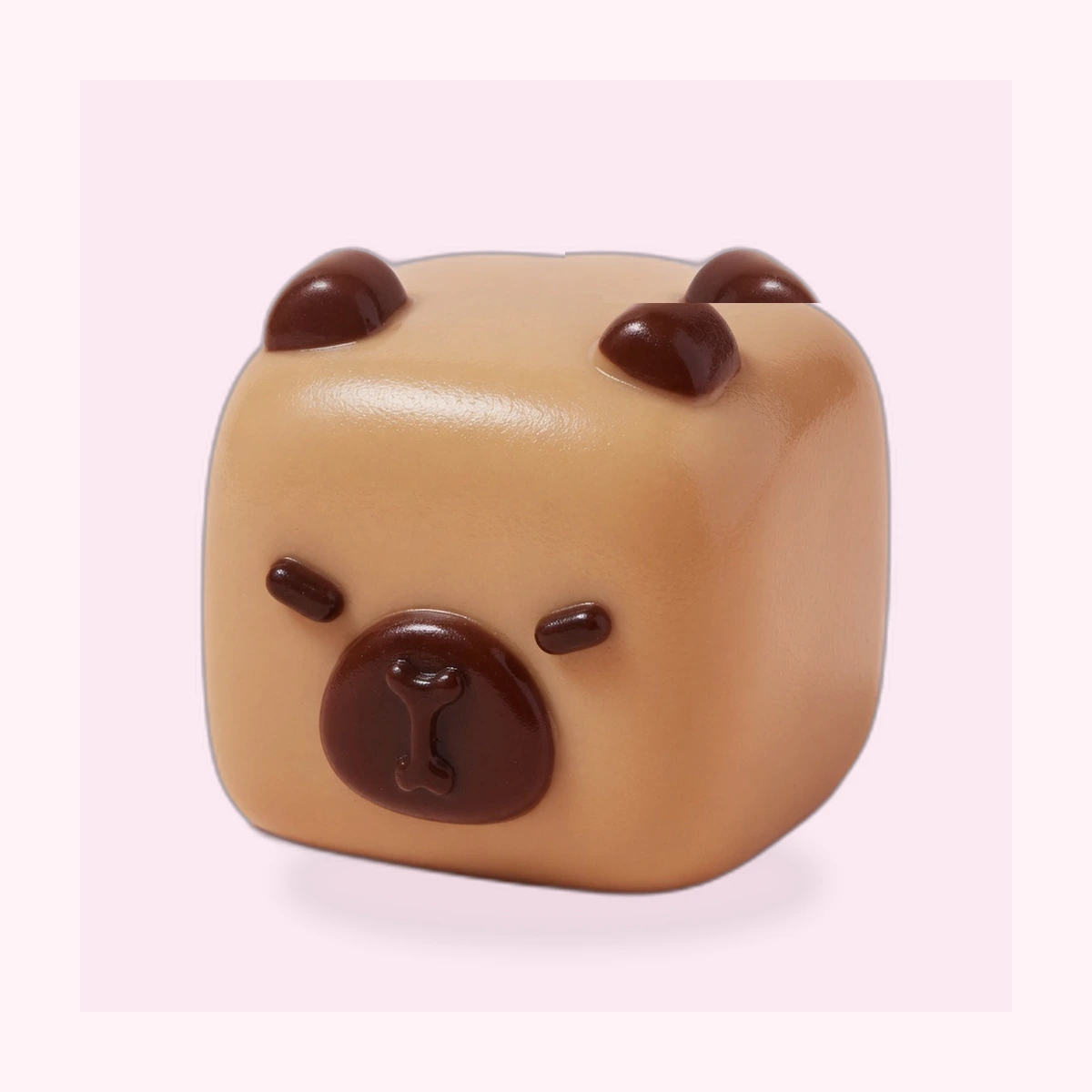
| Mochi capybara cube | Dense and doughy; holds a fist print, then slowly fills back out | One-hand kneading at a desk |
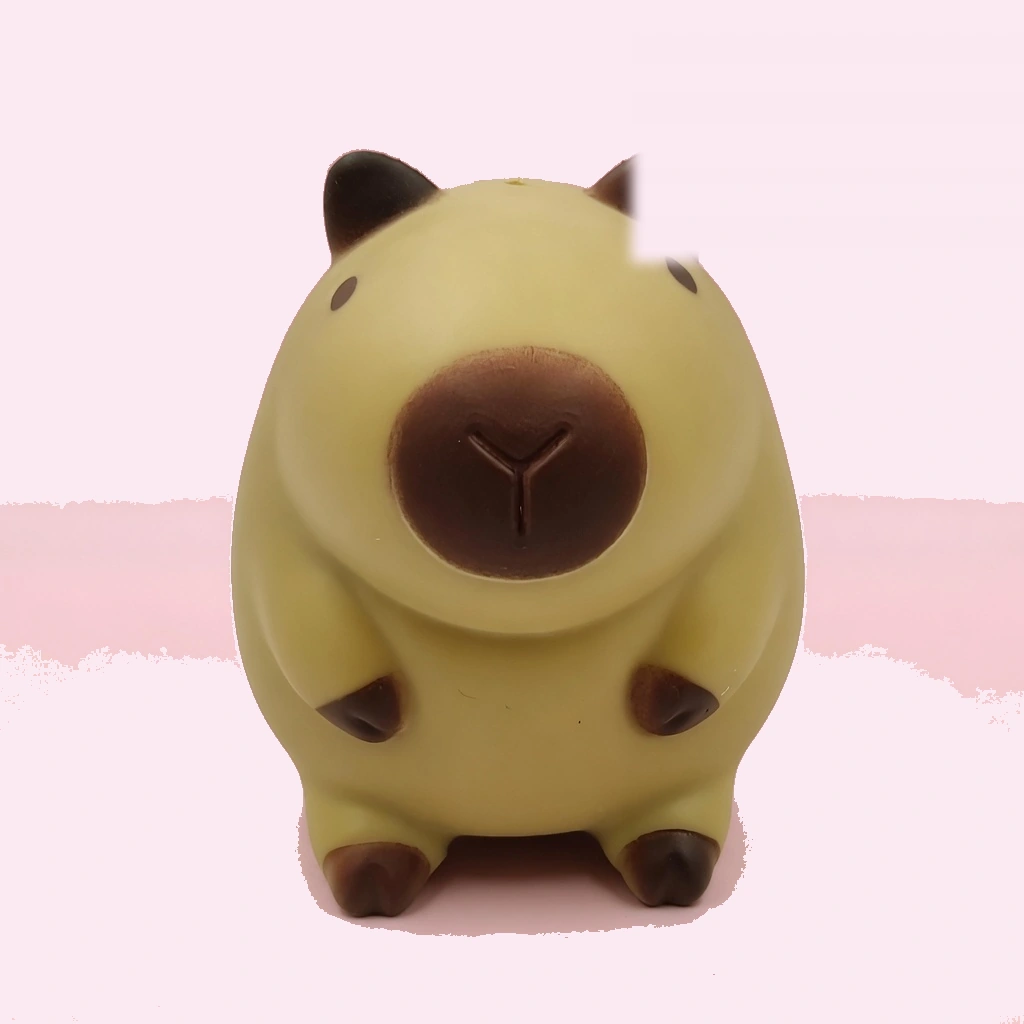
| Round capybara stress ball | Deep sink with an even, unhurried creep back | Anxious-hands moments, bag and pocket duty |
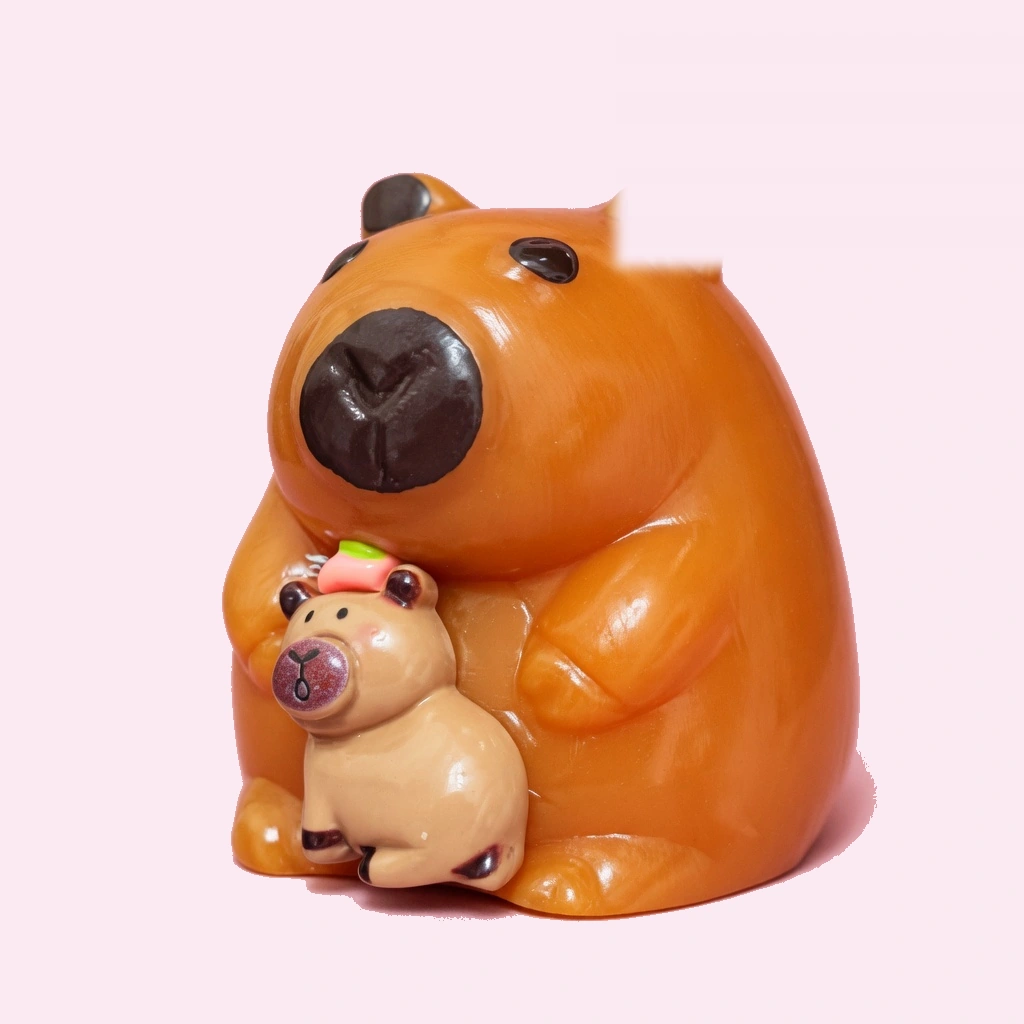
| Mama and baby capybara | Soft all over, with double the character | Gifting, shelf display that still gets squeezed |
The cube is the sleeper pick. A block body gives your fingers more material to work through, so every squeeze feels substantial rather than quick. The mama-and-baby design is the one people gasp at — the squeeze is almost beside the point, though it happens to be lovely.
If you want to weigh the capybara against other species before committing, the animal squishy collection lines up the whole zoo in one place.
Who to Gift One To
Capybara people identify themselves loudly. If someone has ever sent you a capybara video with no caption, no context, just vibes — the gift decision has already been made for you.
Beyond the superfan, these land well with desk workers who claim fidget toys are silly (give it an hour), students deep in exam season, and anyone who treats stress like a collectible. The squishy gift guide sorts more ideas by person and occasion, and if your recipient runs anxious, the stress-relief squishy picks explain which textures calm busy hands fastest.
One practical note: squishies are toys for ages 3 and up, so toddler siblings should admire the capybara from a respectful distance.
Picking Yours and Keeping It Slow
Match the build to your fidget style. Kneaders want the cube, squeezers want the ball, and display-first people want the mama and baby — they already know who they are.
Buying blind for someone else? The ball is the safest single answer. It suits the widest range of grips and moods, and it travels well between home, bag, and office without any ceremony.
Care is refreshingly boring. Keep it off sunny windowsills and away from heater vents, squeeze with clean dry hands, and never give it a bath. Slow foam ages best when it stays dry, shaded, and regularly squished.
The fine print is friendly, too. Orders of $49 or more ship free worldwide, everything is backed by the 30-Day Squishfaction Guarantee, and if capybaras become a habit, Squishy+ ($19.99/month) takes 10% off every order and covers free shipping twice a month.
FAQ
Are capybara squishies slow rising? Most are, and the best ones commit fully — a deep compress takes a long, satisfying moment to recover. That unhurried rebound suits the capybara concept far better than a quick snap-back would.
Do capybara toys make noise? No squeaks, no clicks, just quiet foam doing quiet foam things. That silence is why they survive in offices and classrooms where clacky fidgets get confiscated.
Which style works best on a desk? The cube build, by a nose. It sits flat between squeezes, looks tidy next to a keyboard, and offers the densest material for serious kneading.
Why are capybaras suddenly everywhere? Years of viral clips turned them into shorthand for staying calm under absolutely any circumstances, and the merch followed. The squishy version is simply the one you can flatten during a long call.