



You opened your phone for a quick scroll. Twenty minutes later, you're still watching a thumb press into a pale yellow block that slowly, almost reluctantly, swells back to its original shape. You don't fully understand why you can't look away — but you're not alone. The oddly satisfying squishy trend has quietly colonized millions of feeds, and there's real science behind why it works.
This article unpacks the psychology, the neuroscience, and the algorithmic mechanics that turned a niche Japanese foam toy into one of the most replayable formats on the internet — plus a practical guide to buying the good stuff.
Table of Contents
- What Exactly Is a Butter Squishy?
- Why Watching Is Satisfying (Even Without Touching)
- The ASMR Layer: Sound Meets Squish
- How TikTok's Algorithm Supercharges Slow-Rise Content
- The Adult Appeal: Touch, Stress, and Losing the Shame
- How to Buy a Good Butter Squishy
- FAQ
What Exactly Is a Butter Squishy?

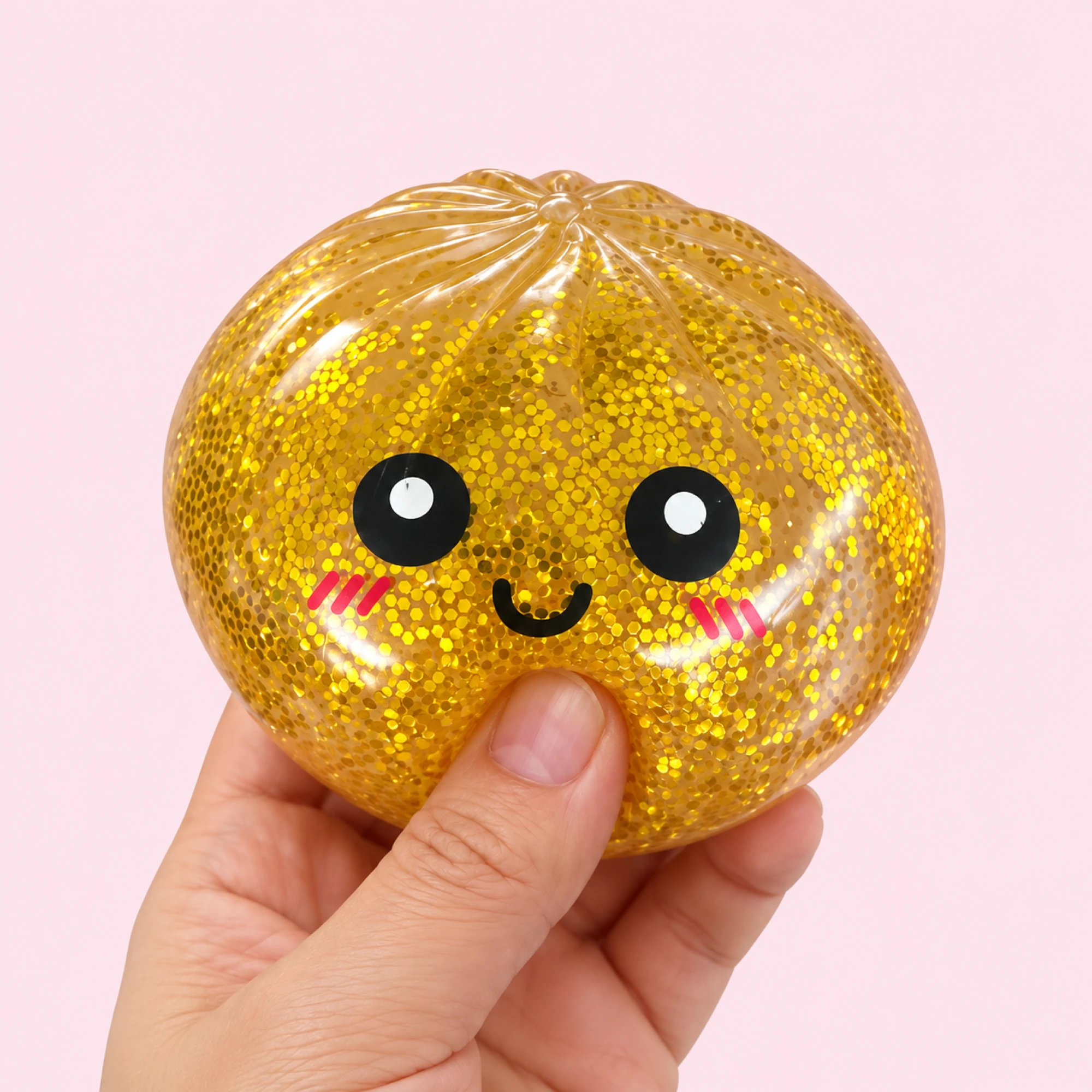
A squishy is a slow-rebound foam toy. Press it, and instead of snapping back instantly like a stress ball, it recovers in slow motion. The category traces back to Japan in the early 2000s, where soft, collectible foam novelties first gained a following before TikTok triggered a global second wave.
The viral butter squishy is the current breakout star of the category. The name describes both its look and feel: a dense, fine-grained foam with a smooth, matte, almost dairy-like surface. Compared to a standard squishy, a slow rise butter squishy has three defining traits:
- Finer texture — fewer visible air bubbles, giving it a creamy, uniform appearance on camera.
- Slower rebound — the rise can take five to ten seconds, stretching the satisfying payoff.
- A muted, buttery sheen — it photographs and films beautifully under soft light.
That combination is exactly why butter squishies dominate the trend. Where a tiktok fidget toy like a pop-it or fidget spinner delivers one sensory channel, a butter squishy hits three at once: it looks satisfying, feels satisfying, and sounds satisfying. That triple-sensory payload is the whole reason these videos outperform.
Why Watching Is Satisfying (Even Without Touching)
Here's the part most coverage misses. We tend to assume squishies are about squeezing — the physical release of tension in your hand. But the explosive growth of the trend isn't happening in toy stores. It's happening on screens, where you can't touch anything at all. So why does watching feel so good?
Several overlapping mechanisms are at work.
Mirror neurons do the touching for you
When you watch a finger sink into soft foam, networks in your brain partly simulate the sensation as if your own hand were doing it. This is the same mirror-system response that makes you wince when someone else stubs a toe. A slow-rise video essentially lets your brain "feel" the squish vicariously — a low-effort, screen-friendly version of the real thing.
The prediction-and-resolution loop
Your brain is a prediction engine. It constantly forecasts what happens next and rewards you when reality matches a clean, expected outcome. A butter squishy is a perfect prediction toy: you know it will return to its original shape, and the slow rise draws out the moment of confirmation. Each full rebound delivers a tidy "yes, exactly as expected" signal — a small, reliable hit of dopamine tied to completion and order.
Slowness extends the reward
Speed would ruin it. The slowness is the product. A fast snap-back gives one quick beat; a five-second rise gives a sustained, almost meditative arc of anticipation. That elongated payoff is why "slow rise" became a feature people search for by name, not an accident of materials.
The ASMR Layer: Sound Meets Squish
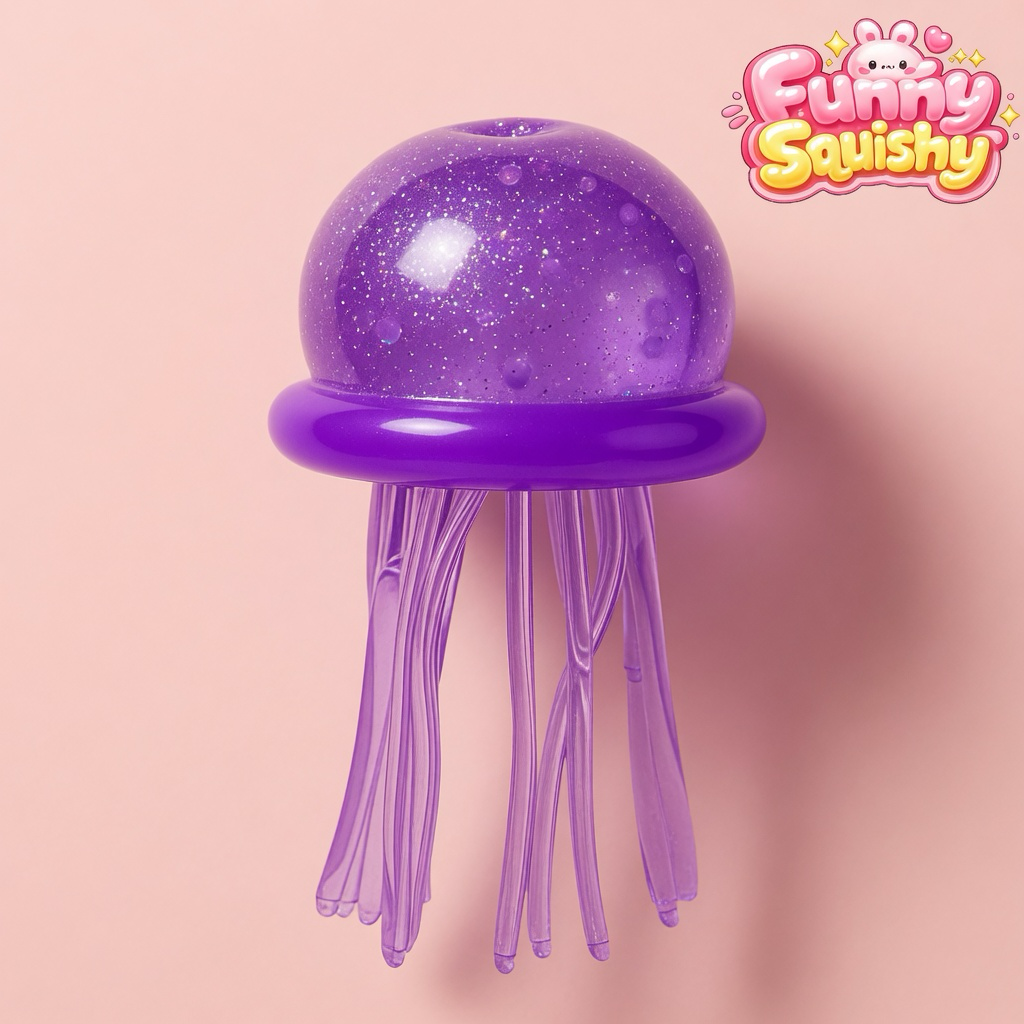
The visual is only half the experience. The best squishy videos are also asmr fidget toy content, engineered to trigger that tingly, relaxed response some people feel from gentle, repetitive sounds.
A quality butter squishy produces a quiet, satisfying acoustic signature: a soft squish on compression, a faint crackle as air re-enters the foam, sometimes a delicate suction sound on release. Creators amplify this with close-mic recording, so the sound feels like it's happening right next to your ear.
This crossover matters because it stacks triggers. ASMR works through gentle, predictable sensory cues; a slow-rise squishy provides both a visual cue (the rebound) and an auditory cue (the squish) in perfect sync. The result is far stickier than sound or sight alone — and it's a big reason this content reliably calms viewers and keeps them watching far longer than a typical clip.
How TikTok's Algorithm Supercharges Slow-Rise Content
There's a structural reason these videos spread that has nothing to do with biology — and everything to do with how short-form platforms rank content.
TikTok and similar feeds weight completion rate heavily. A video that people watch all the way through (and ideally rewatch) is judged valuable and pushed to more viewers. Slow-rise squishy videos are almost custom-built to win this metric:
- You wait for the payoff. Once the squish begins, you stay to see the full rebound. Leaving early means missing the satisfying resolution your brain is craving — so you don't leave.
- They invite rewatches. A 7-second loop is easy and tempting to watch twice, tripling effective watch time.
- They're loop-friendly. A clean rise that ends near the starting frame creates a seamless loop, so the clip plays again before you consciously decide to keep watching.
In other words, the format's psychological hook (delayed, guaranteed satisfaction) maps perfectly onto the algorithm's preferred behavior (high completion and replay). The neuroscience and the distribution mechanics reinforce each other — which is precisely why oddly satisfying squishy content went from niche to inescapable.
The Adult Appeal: Touch, Stress, and Losing the Shame
Fidget toys were once marketed mostly to children or framed as classroom tools. The squishy boom is overwhelmingly an adult phenomenon, and that shift deserves attention.
Part of the draw is touch itself. Many adults experience genuine touch deprivation, and a tactile object that's soft, warm-ish, and responsive offers a small, accessible form of sensory comfort. Squeezing a squishy gives the nervous system something gentle to do — useful for stress, focus, restlessness, or simply unwinding after a screen-heavy day.
The bigger cultural change is the loss of stigma. A decade ago, an adult openly collecting foam toys might have felt sheepish about it. Today, sharing and watching this content is normalized — even aspirational — across millions of accounts. The trend gave grown-ups permission to enjoy a simple, regulating pleasure out in the open, and that de-shaming is a quiet but significant part of why the format keeps growing.
How to Buy a Good Butter Squishy
Not all squishies are equal, and a cheap one can rebound in half a second or smell strongly of chemicals. Use these criteria to choose well.
| Factor | What to look for | Why it matters |
|---|---|---|
| Rebound speed | A slow, controlled rise of roughly 4–10 seconds | The slowness is the satisfaction; instant snap-back defeats the purpose |
| Material/texture | Fine, dense, "butter-smooth" foam (often PU foam) | Determines the creamy look and feel that define the category |
| Smell | Minimal odor, or a light, pleasant scent | Strong chemical smell signals low-quality foam |
| Size | Palm-sized or larger for a satisfying squeeze | Too small and the sensory payoff shrinks |
| Durability | Foam that returns to full shape without permanent dents | Cheap foam "remembers" presses and stops rebounding cleanly |
A few extra tips:
- Watch a real video, not just photos. Rebound speed only shows in motion.
- Read reviews for smell and longevity — these are the two most common disappointments.
- Prefer scratch-resistant skins if you plan to handle it often; the matte coating is what creates that buttery surface.
Want one that nails every box above? Our viral slow-rise butter squishy is built for that creamy, drawn-out rebound — the kind that's as satisfying to squeeze as it is to film.
FAQ
Why are squishy videos so addictive to watch?
They combine a guaranteed, predictable payoff (the rebound) with a slow build-up, triggering small dopamine hits tied to completion. Mirror neurons let you "feel" the squish without touching, and ASMR sound stacks a second relaxing trigger on top.
What's the difference between a butter squishy and a regular squishy?
A slow rise butter squishy uses finer, denser foam with a smooth matte surface and a noticeably slower rebound. That creamy look and drawn-out rise make it more photogenic and more satisfying on camera than standard squishies.
Are these toys actually good for stress and anxiety?
For many people, yes. Repetitive, gentle tactile input can be calming and help with focus or restlessness. They're not a clinical treatment, but as a low-stakes self-regulation tool, they're genuinely useful.
Why does TikTok push squishy videos so hard?
The platform rewards high completion and replay rates. Slow-rise videos keep viewers watching for the payoff and loop seamlessly, so they hit exactly the engagement signals the algorithm favors.
Is the squishy trend only for kids?
No. The current boom is largely driven by adults using them for stress relief, sensory comfort, and entertainment — and sharing them openly without the old stigma.
Do squishies wear out?
Lower-quality foam can develop permanent dents and lose its slow rebound over time. Denser, well-made butter squishies hold their shape and bounce far longer.
The next time a buttery block stops you mid-scroll, you'll know it's not random. You're watching a tiny, perfectly engineered loop of anticipation and relief — one your brain was practically built to enjoy, amplified by an algorithm that noticed you couldn't look away. Ready to feel it for yourself? Grab a slow-rise butter squishy and browse more squishy fidget toys.