


There is a particular kind of satisfaction in squeezing something that looks like it should be cold but isn't. The snowflake ice cube squishy leans hard into that little visual trick: a translucent, frosty-blue cube with tiny white flakes drifting inside, sized to sit comfortably in your palm. I've spent the past few weeks carrying one around — desk, couch, coat pocket — to figure out whether it's a genuinely good sensory tool or just a pretty thing that photographs well for TikTok. Short answer: it's better than I expected, with a couple of honest caveats.
What Exactly Is a Snowflake Ice Cube Squishy?
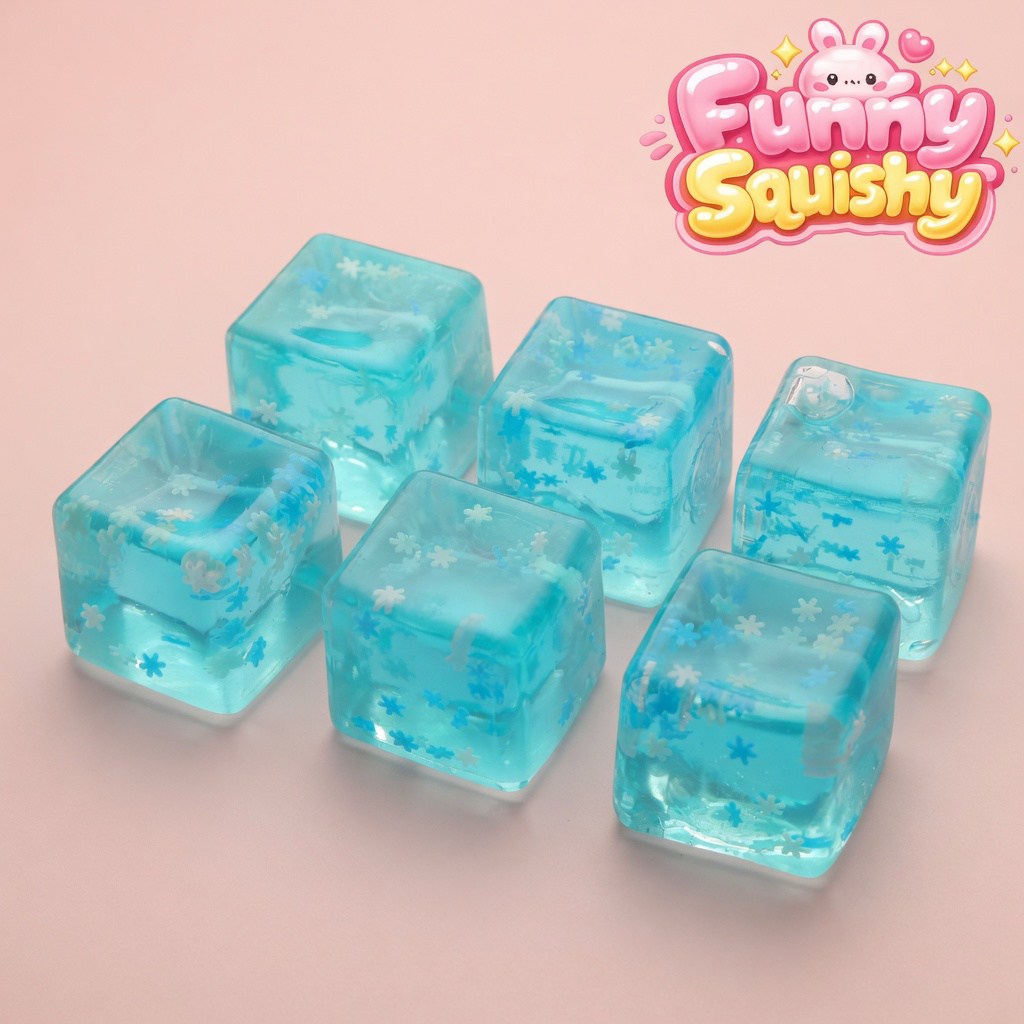
Snowflake ice cube squishy in natural light
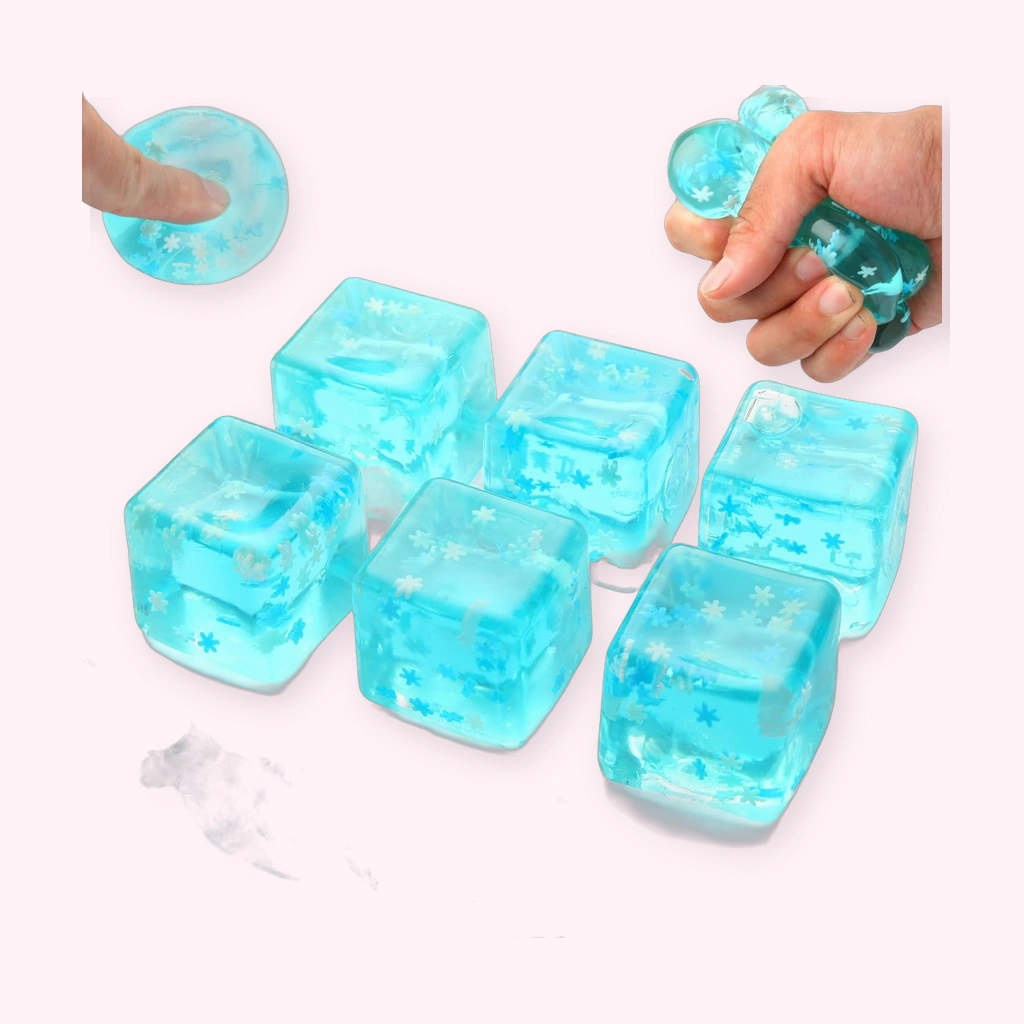
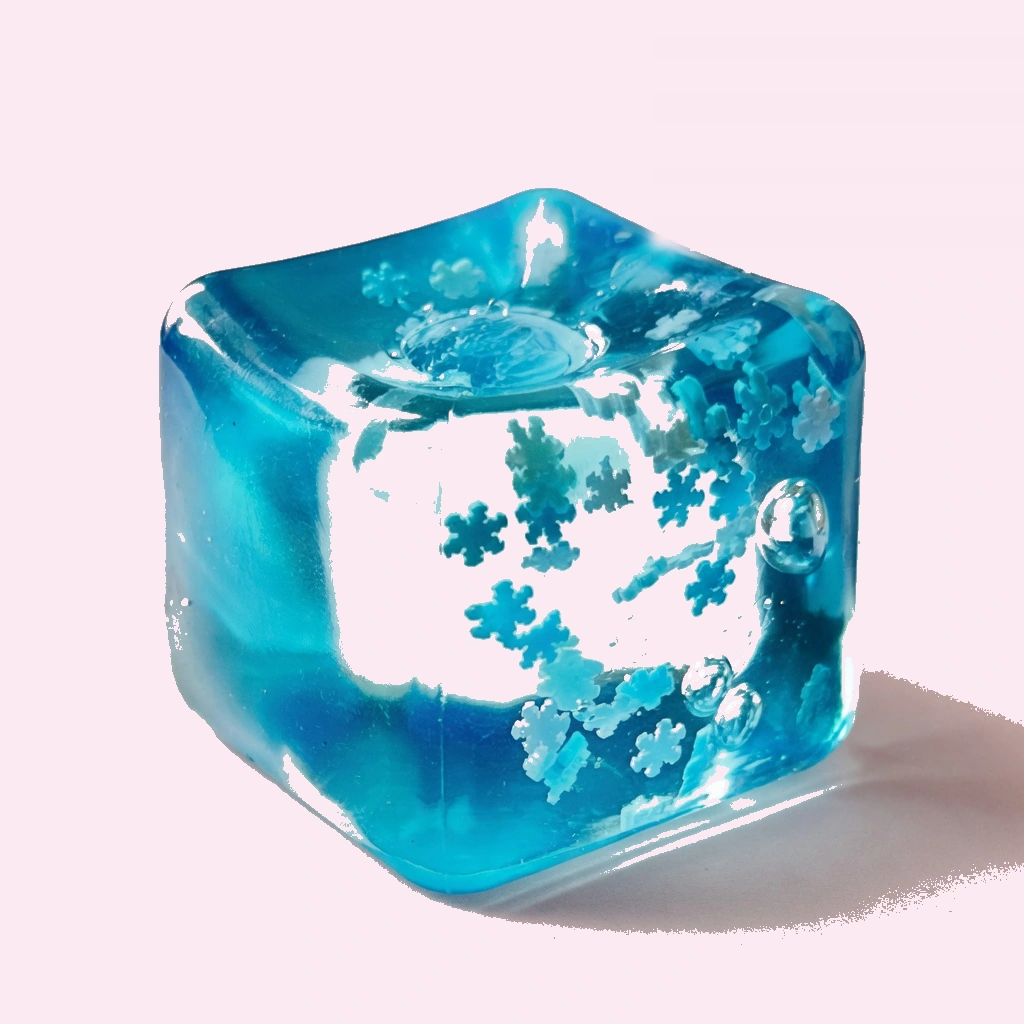
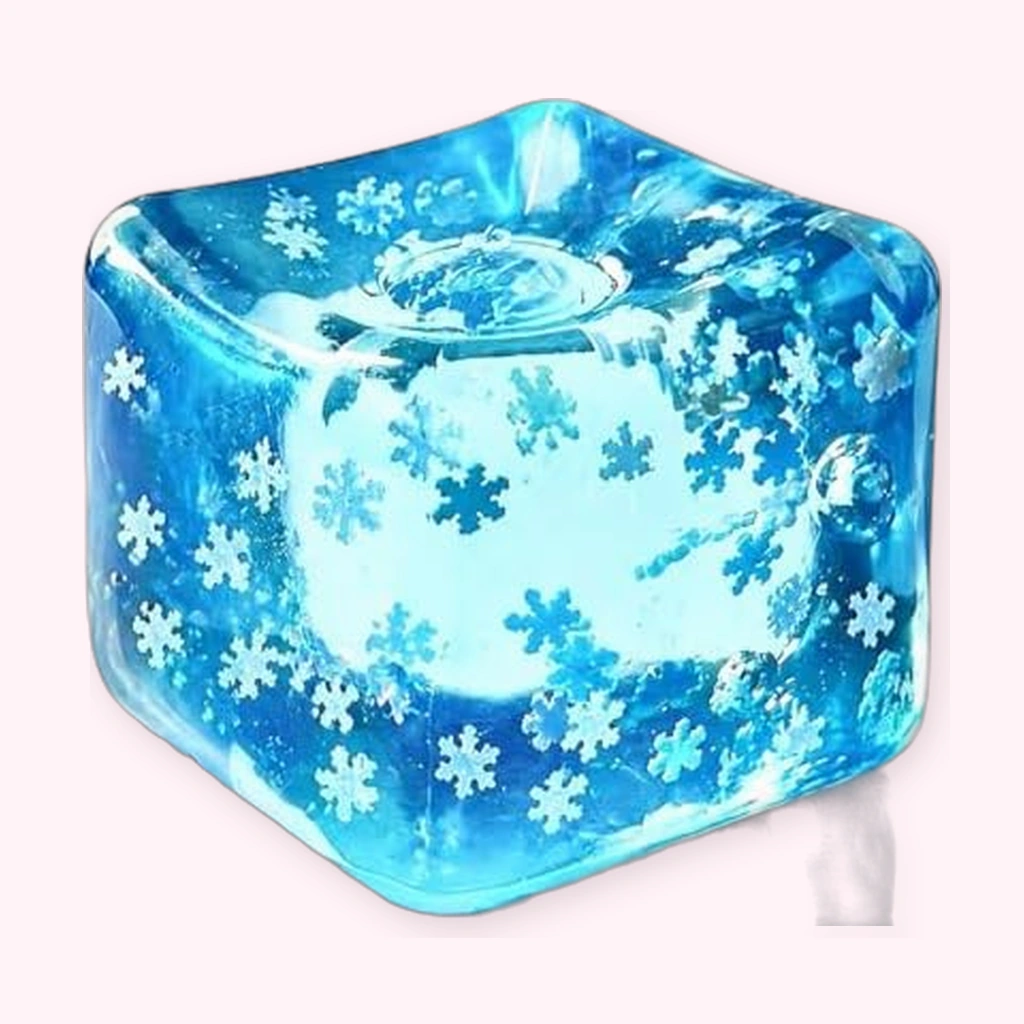
At a glance, the ice cube squishy is a cube of soft, semi-transparent jelly designed to mimic a melting block of ice. The body is usually a cool blue or near-clear tint, and suspended inside are small white particles that read as snowflakes. Hold it up to a window and light passes through it the way it would through a real ice cube.
What sets it apart from the foam squishies most people grew up with is the material. Instead of slow-rebound polyurethane foam wrapped in a printed skin, this is a soft TPR (thermoplastic rubber) or similar jelly polymer, often with a fluid-like or gel core that lets the snowflakes move. The result feels less like a marshmallow and more like a water balloon's smarter cousin.
The Feel: Texture, Resistance, and Rebound
When you first pick it up, it's surprisingly dense — a pleasant heft, a full feeling in the hand rather than the airy lightness of foam. Press into it and you get moderate, even resistance. It's not a stress ball you can crush flat, and it's not a rigid gel you can barely dent. It sits in the satisfying middle: enough give to feel responsive, enough push-back to feel substantial.
Release it, and it rebounds slowly and smoothly back to a cube. That unhurried return is a big part of why it's calming. The surface has a faintly tacky, smooth finish that grips your fingers without being sticky, and squeezing it repeatedly settles into an easy, almost meditative rhythm.
The Floating Snowflake Effect, Explained
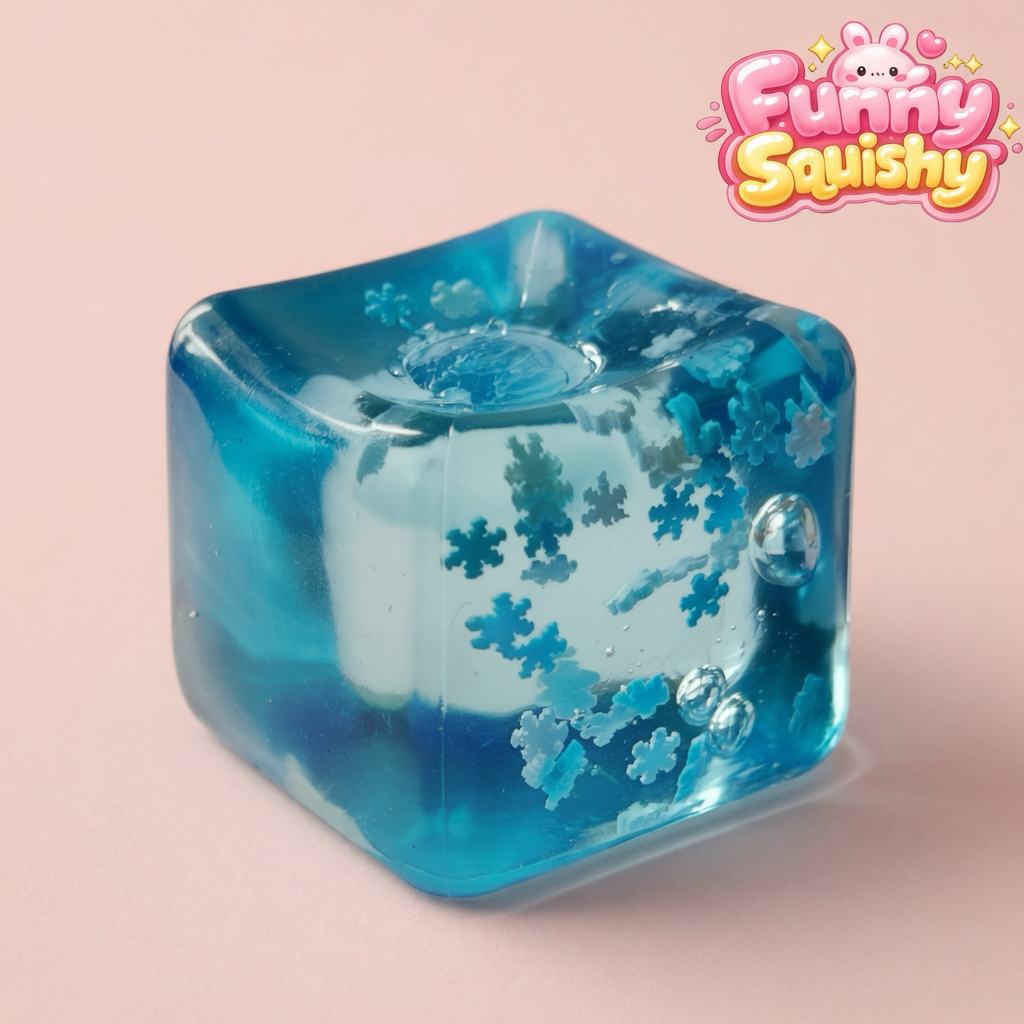
Activating the floating snowflake effect
Inside the cube is a clear, slightly viscous gel medium, and the white flakes are denser than they look but light enough to drift. Give the cube a gentle shake or a slow squeeze and the flakes lift, swirl, and settle — a miniature snow globe you can also squish. The internal fluid is thickened just enough to slow the flakes' descent, so they hang and tumble for several seconds before resettling. It adds a second sensory channel: most fidget toys are purely tactile, but this one stacks visual feedback on top of the squeeze.
Who It's Actually For
- Autistic kids and adults: the combination of steady tactile pressure and predictable visual motion can be grounding, and the slow rebound and silent operation are gentle rather than overstimulating.
- ADHD and restlessness: it gives hands something repetitive to do, which can help some people focus during lectures, calls, or reading.
- Anxiety and everyday stress: the squeeze-and-watch loop is a small, portable reset.
- Classroom use: silent and discreet, so it won't disrupt a room.
- Gifting: cheap, novel, and photogenic — ideal for party-bag fillers and stocking stuffers.
Durability and the Leak Question
The shell is a soft, stretchy TPR, and its weak point is the seam. Under normal squeezing it holds up fine over weeks of daily use. The risk comes from abuse: digging in with fingernails, stretching it aggressively, biting it, or puncturing it. Because there's fluid inside, a tear means a one-way leak. So: durable enough for ordinary fidgeting, fragile in the hands of a determined toddler or a nail-picker. Given the low price, buying two isn't a bad idea.
Size, Portability, and Noise
It's palm-sized — roughly a 5–6 cm cube — light enough to forget in a pocket but big enough that it won't get lost in a bag. On noise, it's effectively silent: no clicking, squelching, or popping, which is a genuine advantage over poppers in classrooms, libraries, and quiet meetings.
How It Compares to a Firm Jelly Cube Fidget
- Firm jelly cube fidget: firmer, bouncier, more uniform jelly. Extremely durable, no internal fluid, no visual gimmick — the reliable workhorse.
- Snowflake ice cube squishy: softer and squishier, with the floating-snow visual a plain jelly cube can't match. More engaging to look at, slightly more delicate.
If you want maximum toughness, go with a plain firm jelly cube. If you want the sensory-plus-visual experience and the frosty aesthetic, the snowflake version wins.
FAQ
Is it safe for young children?
The cube is too large to swallow whole, but it's best for ages 3+ and under supervision, since the internal fluid would leak if the shell is bitten through.
Does it really stay cold like ice?
No — the ice look is purely visual. It sits at room temperature unless you briefly chill it.
Will the snowflakes stop floating over time?
Under normal use, no — the flakes keep drifting as long as the cube stays sealed.
Is it quiet enough for a classroom?
Yes — it makes essentially no noise, making it one of the better discreet fidget options.
The snowflake ice cube squishy nails a small but real niche: a calm, silent, nice-to-watch fidget that works for sensory needs and looks good doing it. Handle it with a bit of care and it's one of the more charming additions to a fidget collection — a tiny snowstorm you can keep in your pocket.
Get the Snowflake Ice Cube Squishy
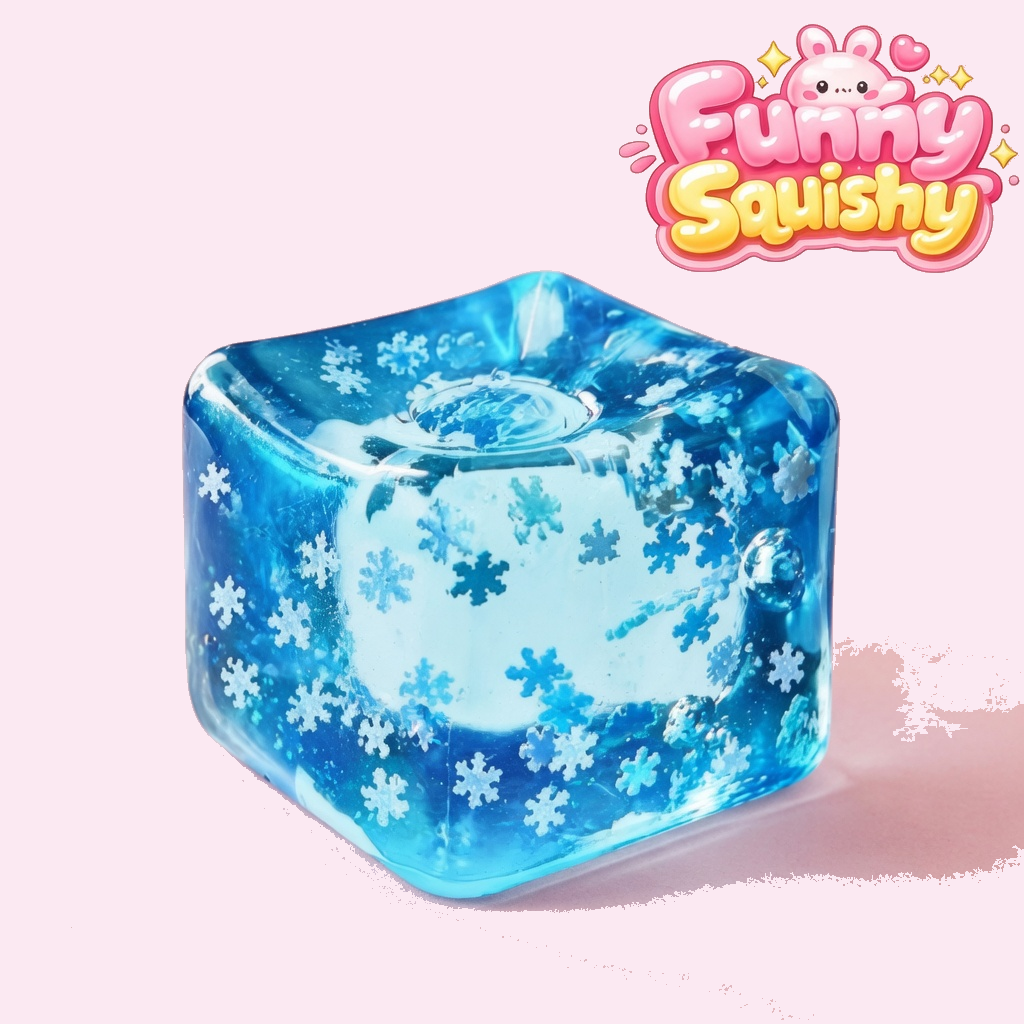
Ready to squeeze? Shop the Snowflake Ice Cube Squishy, or browse more calming fidgets in our Squishies collection and Novelty Squishy collection.