


Three things go wrong with squeeze toys often enough that they deserve a straight answer. A stress ball yellow where it used to be white, one that has turned tacky to the touch, and one that has gone stiff are three separate processes with three different causes — and knowing which one you are looking at tells you immediately whether it is worth trying to fix.
Why a Stress Ball Yellow Patch Is Light Damage, Not Dirt
Pale polymers yellow because ultraviolet light and oxygen break chemical bonds at the surface, and the fragments that form absorb blue light. The material is not dirty; it has changed.
Three things accelerate it. Direct sunlight is by far the strongest — a toy on a windowsill can visibly yellow in a season while an identical one in a drawer stays white for years. Heat is second. Skin oils are third, which is why the yellowing on a handled toy is usually uneven and concentrated where your fingers go.
It is not reversible. Household bleaching methods either do nothing or damage the surface, and the widely circulated peroxide treatments used on old electronics are not suitable for soft foams, which absorb the solution and then stay damp inside.
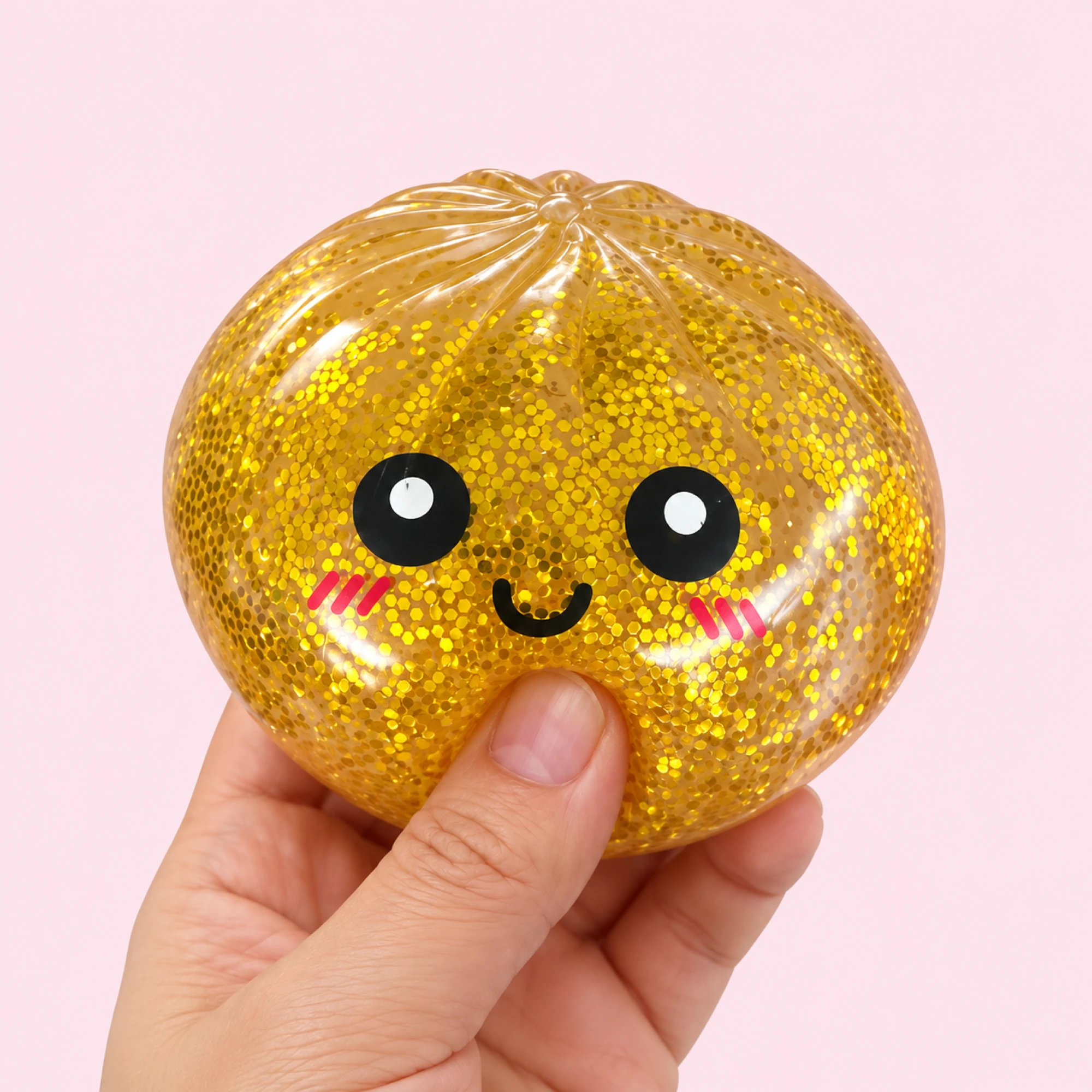
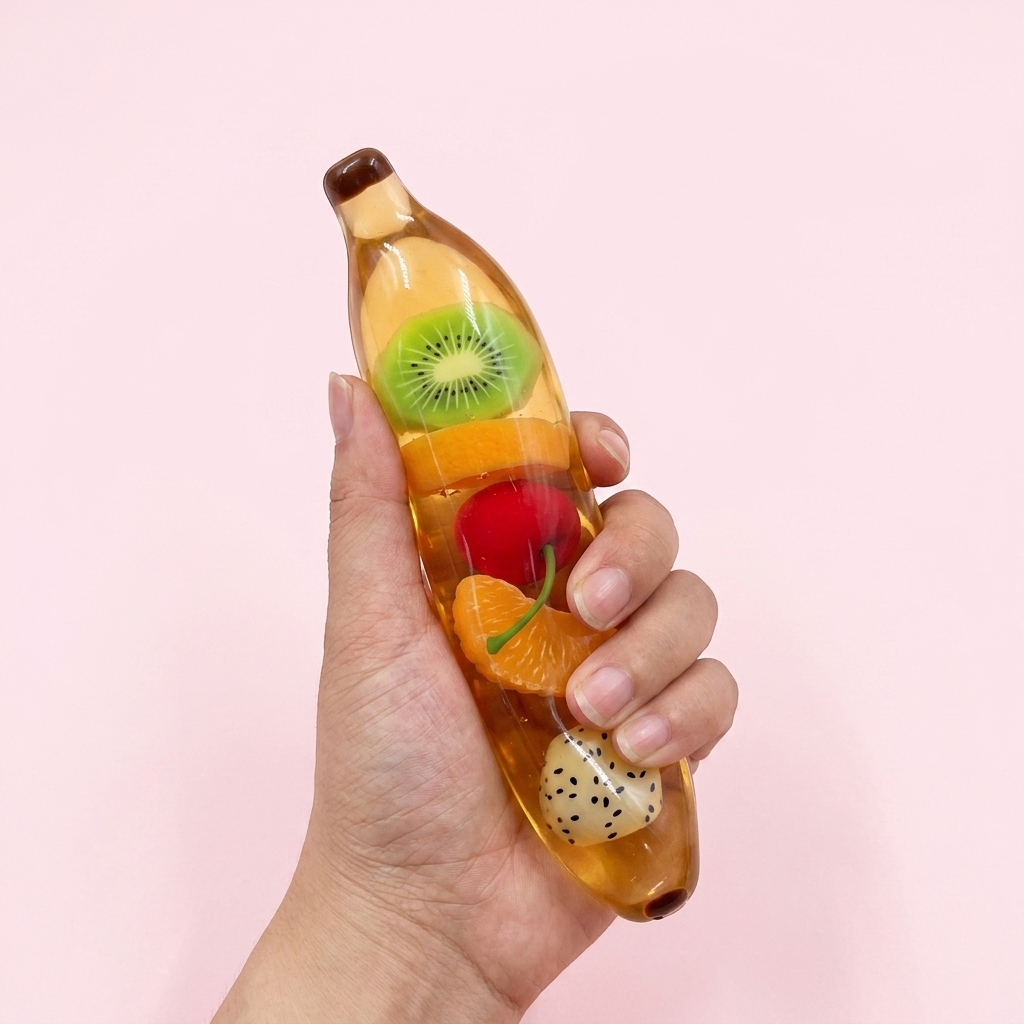
What helps is prevention: store it out of light. That single habit is worth more than any cleaning routine, and it applies to every pale or clear toy you own, including the clear-skinned glitter constructions discussed in what’s actually suspended inside.
Tackiness: Plasticiser Migration
A soft toy that has become sticky is usually not covered in something — it is leaking something.
Flexible polymers contain plasticisers, the additives that make them soft rather than rigid. Over time, and much faster when warm, those additives migrate to the surface. The result is a slightly greasy, tacky skin that attracts dust and then feels worse.
This is the one problem that responds to treatment, at least partially. Wash the surface with lukewarm water and a small amount of plain washing-up liquid, rinse thoroughly, and dry it completely. That removes what has already migrated. It does not stop more from arriving, so a badly affected toy will feel tacky again in weeks rather than months.
Two things make it worse and are worth avoiding. Storing soft toys touching each other, because migrated plasticiser transfers and can fuse surfaces together. And storing them in sealed plastic bags, which traps everything that comes out.
Heat is the accelerator here as well. A toy left in a car is the classic case.
Hardening: The Opposite Problem
A toy that has gone stiff has lost something rather than gained it.
In closed-cell foam, the cell walls gradually become brittle and some collapse, so the material compresses less and springs back less. In open-cell slow-rising foam, the same process shows up as a slower, less complete rise — the toy no longer fills the dent back out. In gel-filled bodies, the fluid can thicken as lighter components evaporate through the skin over years.
None of it reverses. Warming a stiff toy makes it temporarily softer and speeds up the underlying ageing, which is a poor trade.
The useful part is that hardening is slow and predictable, so a toy that stiffened quickly was probably kept somewhere hot. The construction-by-construction breakdown of how each interior ages is in what is in a stress ball.
The Complaint That Is Not Ageing
Sometimes a toy simply arrives firmer or softer than expected, and people read that as a defect.
Firmness varies between batches of the same product, because foam density is a process variable rather than a fixed number. It also varies with temperature: the same toy is noticeably firmer in a cold room. If a new toy feels wrong, let it reach room temperature before judging it, and match it against the firmness bands in best stress ball by resistance.
Storage, Which Solves Most of This
Out of sunlight. A drawer, a tin, an opaque box — anywhere light does not reach.
Not in a car, not on a radiator, not on a sunny desk. Heat drives all three processes.
Not sealed in plastic, and not touching other soft toys. A tray with dividers, or simply some space, is enough.
Clean occasionally with water and a little washing-up liquid, then dry fully. Skip alcohol, solvent wipes and hand sanitiser, all of which attack clear skins and accelerate surface damage on everything else.
When to Replace Rather Than Treat
Replace when the skin has split, when a bead fill has gone soft in one area, or when a slow-rising body no longer returns at all.
Treat when it is only tacky, since that is the one reversible complaint.
And accept that a squeeze toy is a consumable in a way that a metal fidget is not. If you want something that looks the same in five years, the hard-goods end of the range is the honest answer, which is what the durability comparison in what holds up after a month on a desk is built around.
Three That Age Slowly
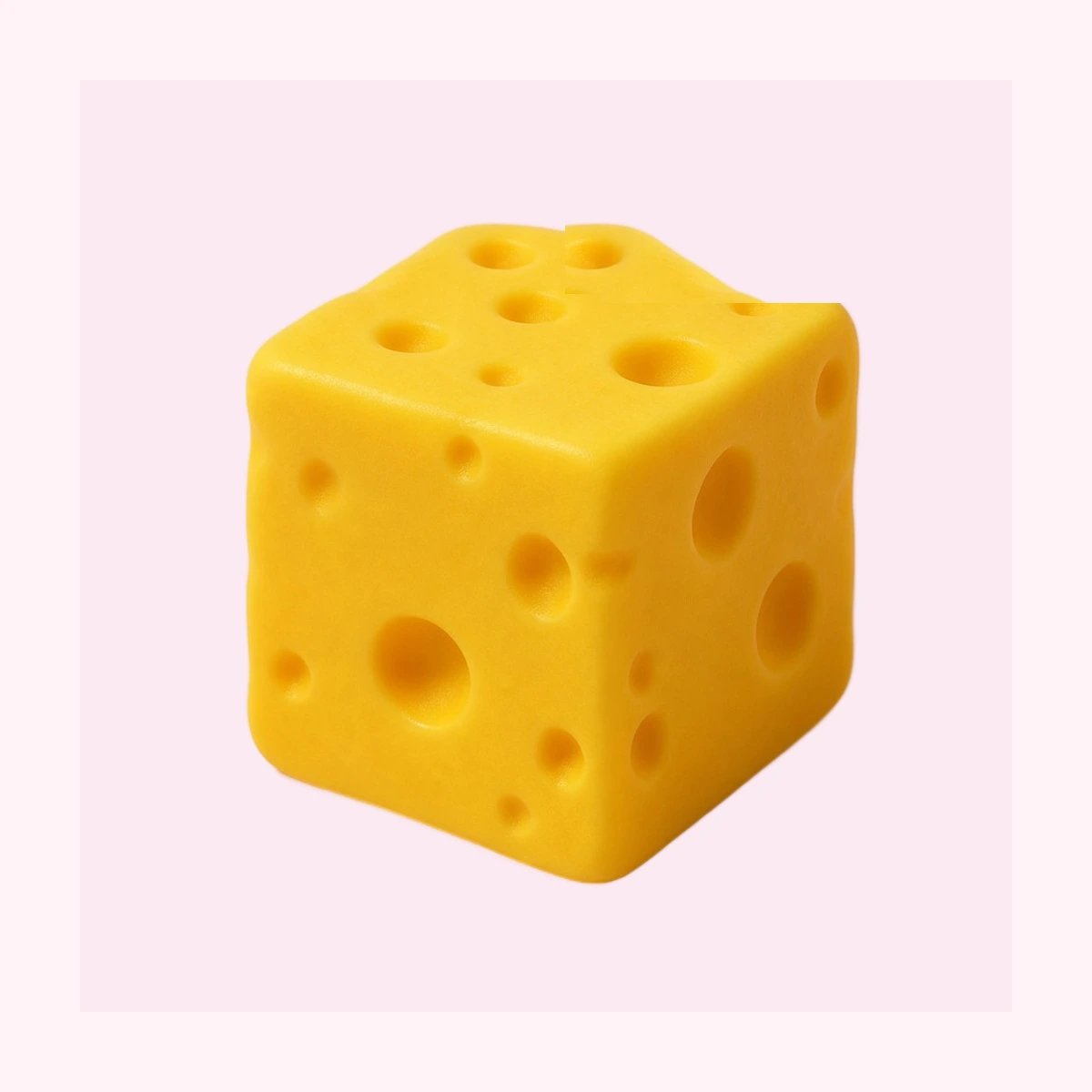
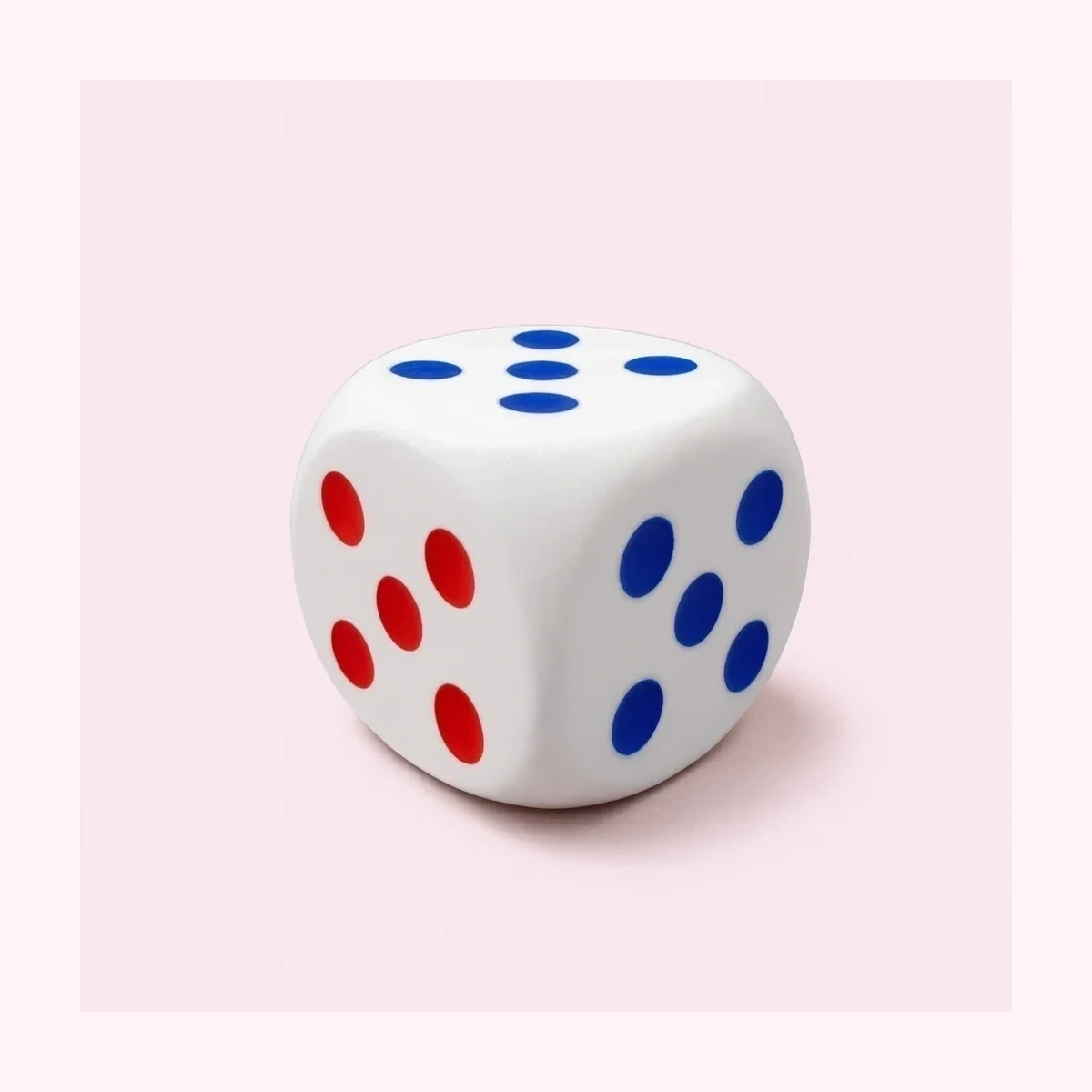
3-inch Foam Dice Stress Ball — solid closed-cell foam with no skin and no filling, so there is nothing to leak and nothing to split.
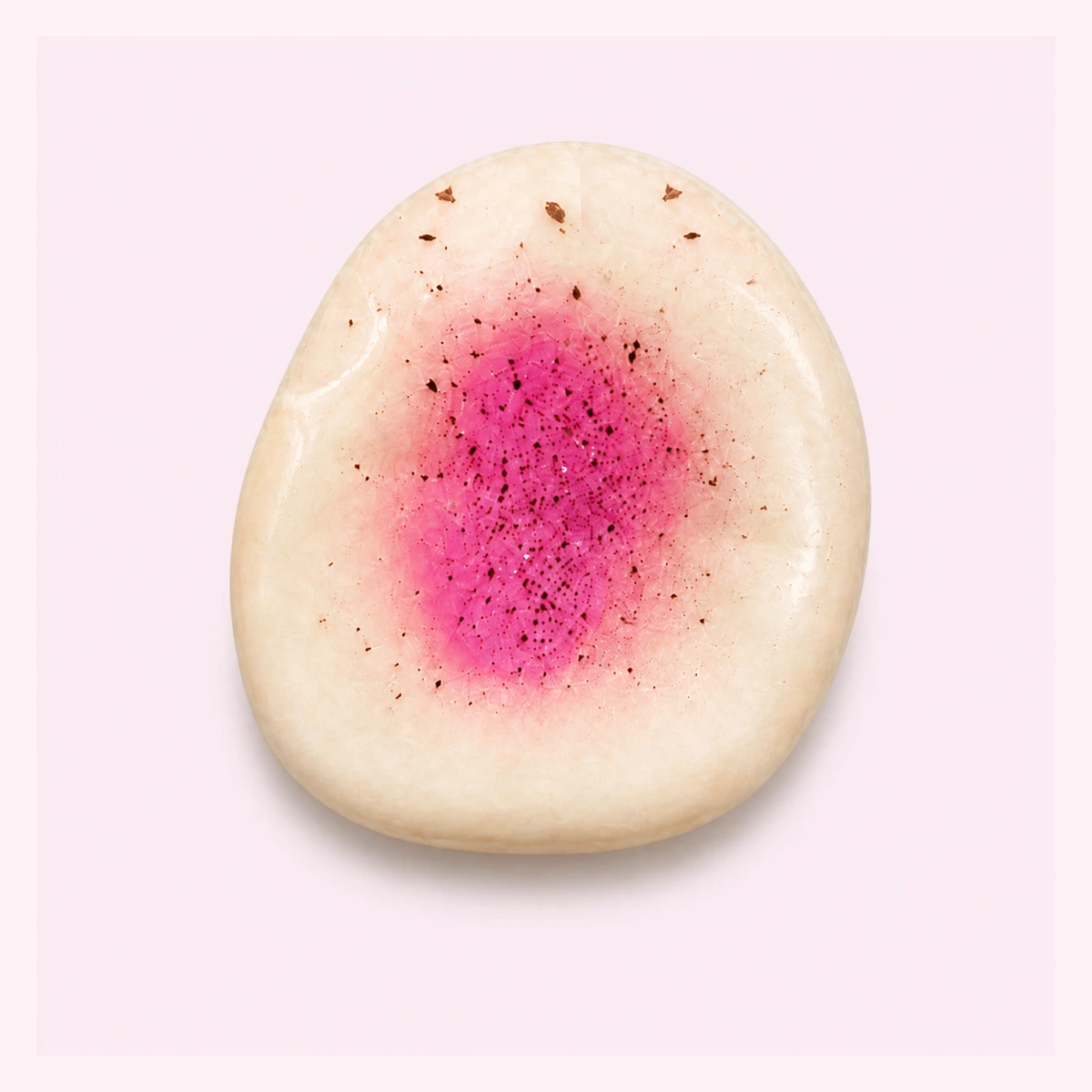
Silicone Sensory Stones — silicone does not use the same plasticisers as soft PVC, so tackiness is not the failure mode here.
Orange Yellow Press and Spin Fidget Ball — a hard 3 × 3 × 3 inch body at 90 grams, where none of the three processes above applies at all.
Browse the fidget balls range, or see all fidget toys if you want something that does not age like a soft toy.