

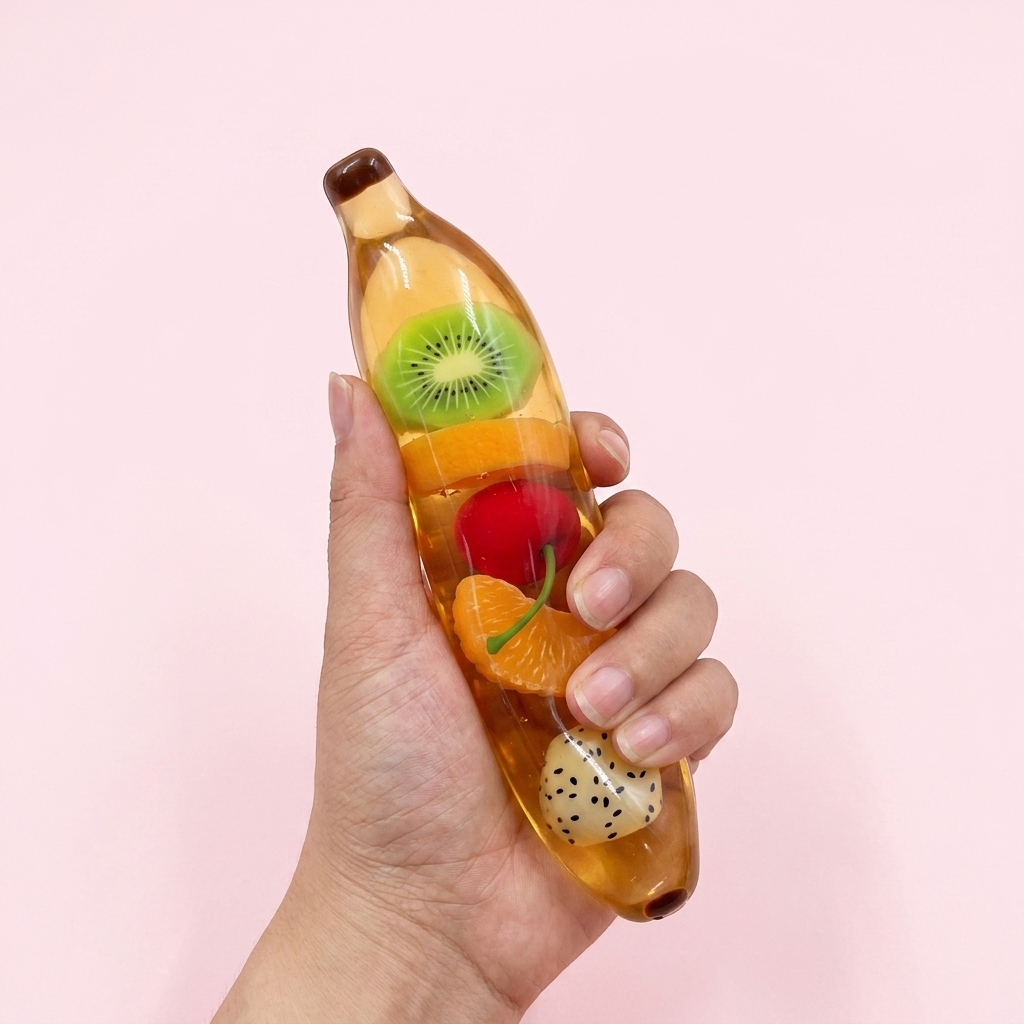

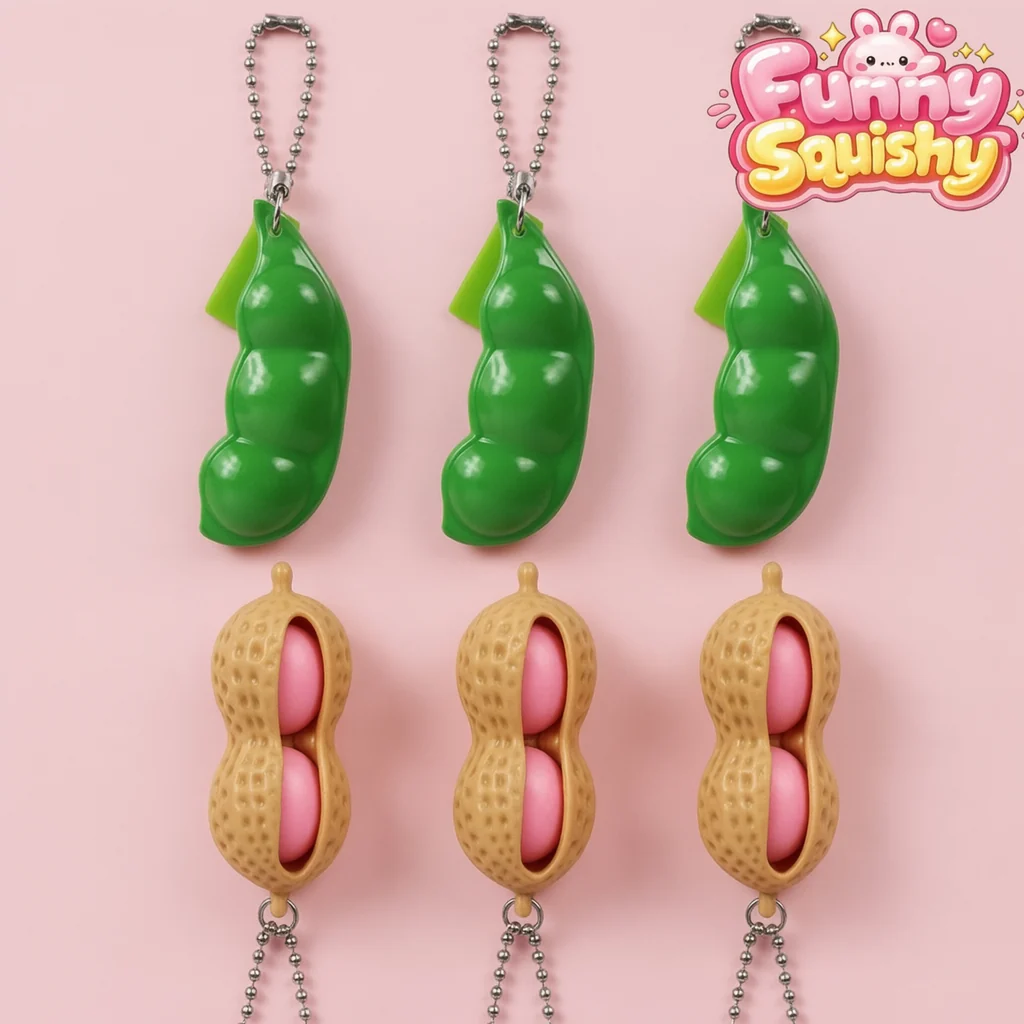
Tangle toys and squishies fix two different kinds of restless. A tangle fidget toy feeds finger energy — twisting linked segments around themselves in an endless loop. A squishy feeds palm energy: the whole-hand squeeze and the slow push back. Figure out which restlessness you actually have, and the choice between them mostly makes itself.
What a Tangle Fidget Toy Actually Does
A tangle is a chain of short, curved segments that rotate against each other, closed into a loop with no start and no finish. Your fingers twist it, fold it, re-shape it, and it never arrives anywhere — which is precisely the appeal. There’s no puzzle to solve, so your hands can orbit while your brain does the actual work.
The motion is fingertip-scale: small rotations, constant micro-adjustments, the occasional faint click from the joints. Most versions are pocket-sized hard plastic, so it survives keys and commutes. It’s the natural upgrade for people who twist rings, wind hair, and destroy paperclips in meetings.
Watch someone use one on a train and you’ll see the pattern: eyes on a book or a window, hands running the loop at idle speed, completely unsupervised. That’s the tangle’s trick — it costs so little attention that it never competes with the main task. It just soaks up the spare motion.
What a Full-Palm Squeeze Does Instead
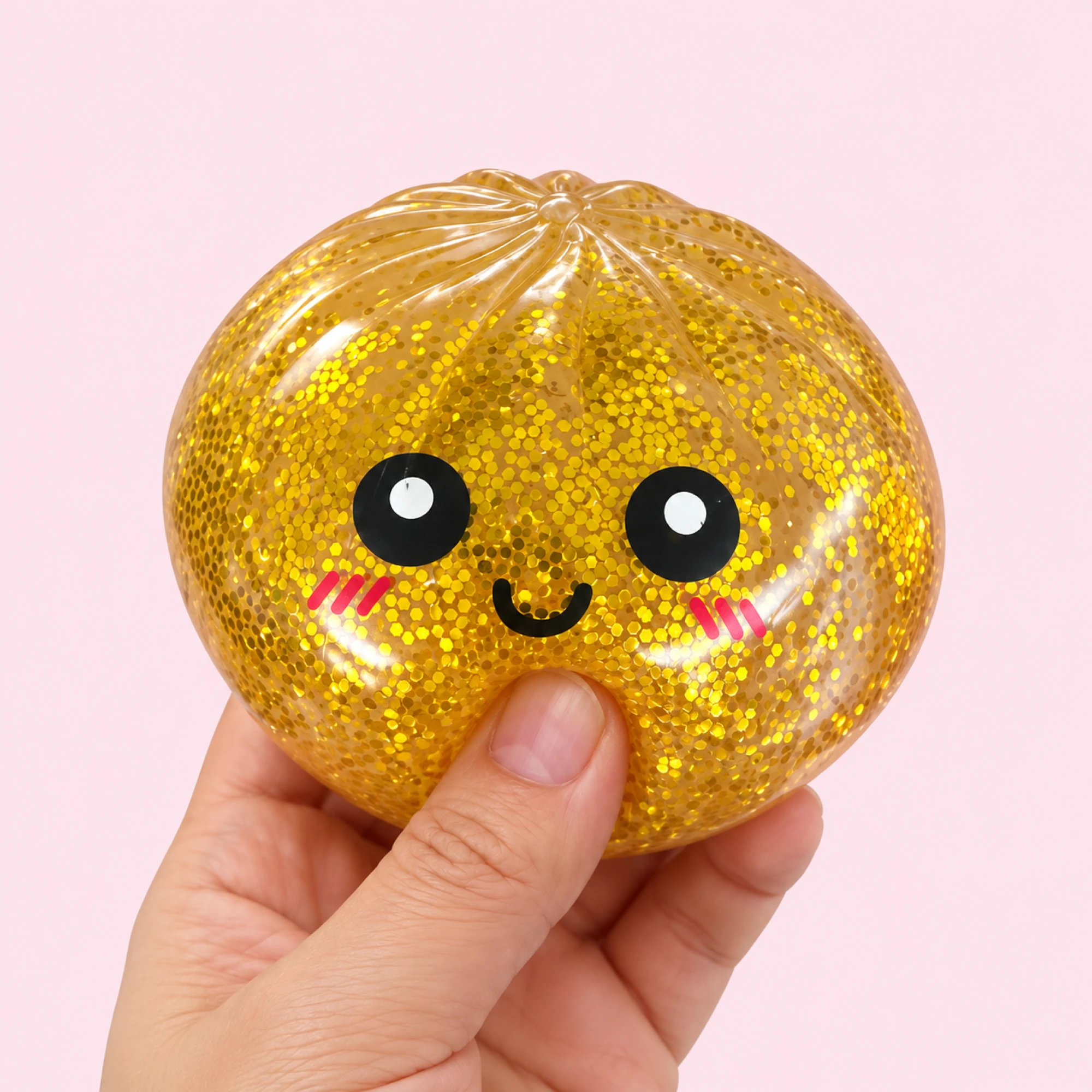
Squishies recruit the whole hand. A dense, slow-rising squishy compresses under your grip, resists in the middle of the press, then re-inflates slowly enough to watch. Where the tangle is motion, the squeeze is pressure — a physical release for tension you’ve been storing in fists, jaw, and shoulders.
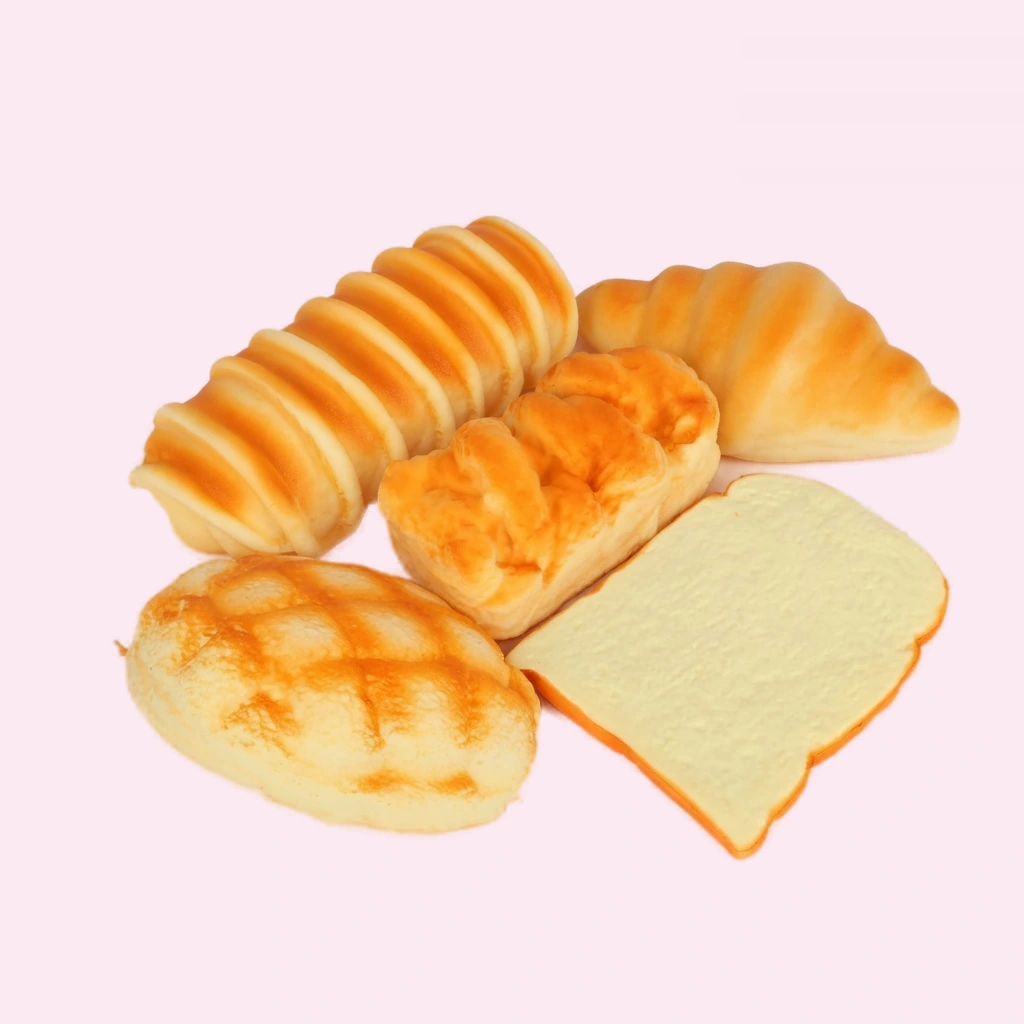
Butter-style foam does this best: a smooth coated surface, a deep sink, and a lazy rebound that sets the pace for you. One squeeze has a beginning and an end, so it works in slow, deliberate reps rather than a continuous fiddle. It’s less “keep my hands busy” and more “let some pressure out of the system.”
The pacing is the other half. Because the foam takes its time re-rising, you physically can’t rapid-fire squeezes the way you can twist a tangle — the toy enforces a slower rhythm, and your breathing tends to drift down to match it. It’s a fidget with opinions about your tempo.
Finger Energy or Palm Energy? A 30-Second Self-Check
No quiz app required — read both lists and count the winces.
Signs you run on finger energy:
- You spin pens, rings, or bottle caps without noticing
- Label corners and sticker edges do not survive you
- You twist hair, cords, or hoodie strings
- Your fingers drum on every surface at typing speed
Signs you run on palm energy:
- You catch your fists clenched during emails
- Jaw tight, shoulders parked somewhere near your ears
- You grip your phone like it owes you money
- Stress makes you want to crush something soft, immediately
Ticked boxes in both lists? Congratulations — you need a fidget for restless hands and a pressure valve for tense ones. You’re a two-toy person. Most of us are.
Side by Side: Noise, Pockets, Focus
| Tangle toy | Slow-rising squishy | |
|---|---|---|
| Motion | Continuous twisting | Squeeze and release |
| Muscles used | Fingers and wrists | The whole hand |
| Sound | Usually quiet, faint clicks | Silent |
| Pocket rating | Excellent | Good — minis are excellent |
| Mood it fits | Wandering attention | Built-up tension |
| Wear and tear | Hard plastic, long-lived | Foam, years with care |
Building the Two-Fidget Rotation
If the self-check split you down the middle, run both and give each a territory. The tangle takes transit: pockets, commutes, podcast walks, waiting rooms. The squishy takes the stations where tension accumulates — desk, couch arm, nightstand.
If you only remember one placement rule, make it this: the tangle goes where you wait, the squishy goes where you work. Waiting rooms generate finger energy; deadlines generate palm energy.
Stocking the squeeze stations is one order: the Halloween Butter Squishy assorted bulk set spreads dense slow-rising foam across three or four spots, and a single orange trick-or-treat butter squishy can shadow the tangle in your coat pocket for squeeze emergencies. The wider foam universe lives in the squishies collection.
For the bigger picture on hands that never sit still, our guide to fidget toys for adults with busy hands sorts options by the itch they scratch, and do fidget squishies help focus tackles the “is this helping or just fun” question honestly.
FAQ
Are tangle toys quiet enough for class or meetings? Mostly. The segments click faintly as they rotate — quieter than a pen click, louder than foam. In truly silent rooms, a squishy is the safer social bet.
Which is better for restless hands, a tangle or a squishy? Match the restlessness. Fingertip fiddling — twisting, picking, drumming — points to the tangle. Whole-hand tension — clenching, gripping, crushing urges — points to the squishy.
Can one toy cover both jobs? Partially. A mini squishy can be rolled between fingertips in a pinch, but a tangle can’t be squeezed for pressure at all. If you can only carry one, carry for your dominant restlessness and park the other type at home.
Do tangles or squishies last longer? The tangle, typically — hard plastic shrugs off abuse. A foam squishy holds up for years when it stays clean, dry, and out of the sun, but it trades some toughness for that slow, dense feel.
Twist for the wandering days, squeeze for the clenched ones — and keep one of each within reach for everything in between.