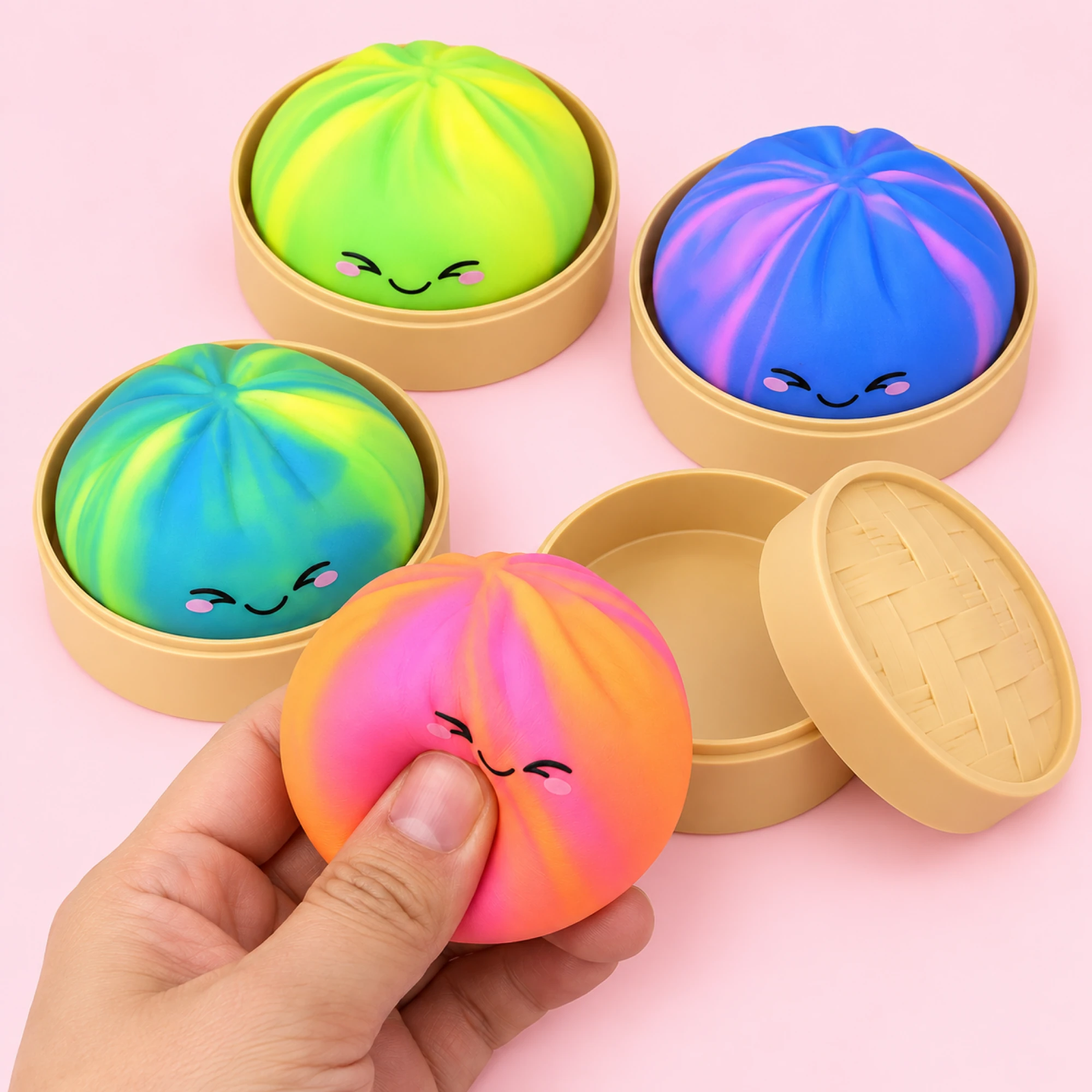



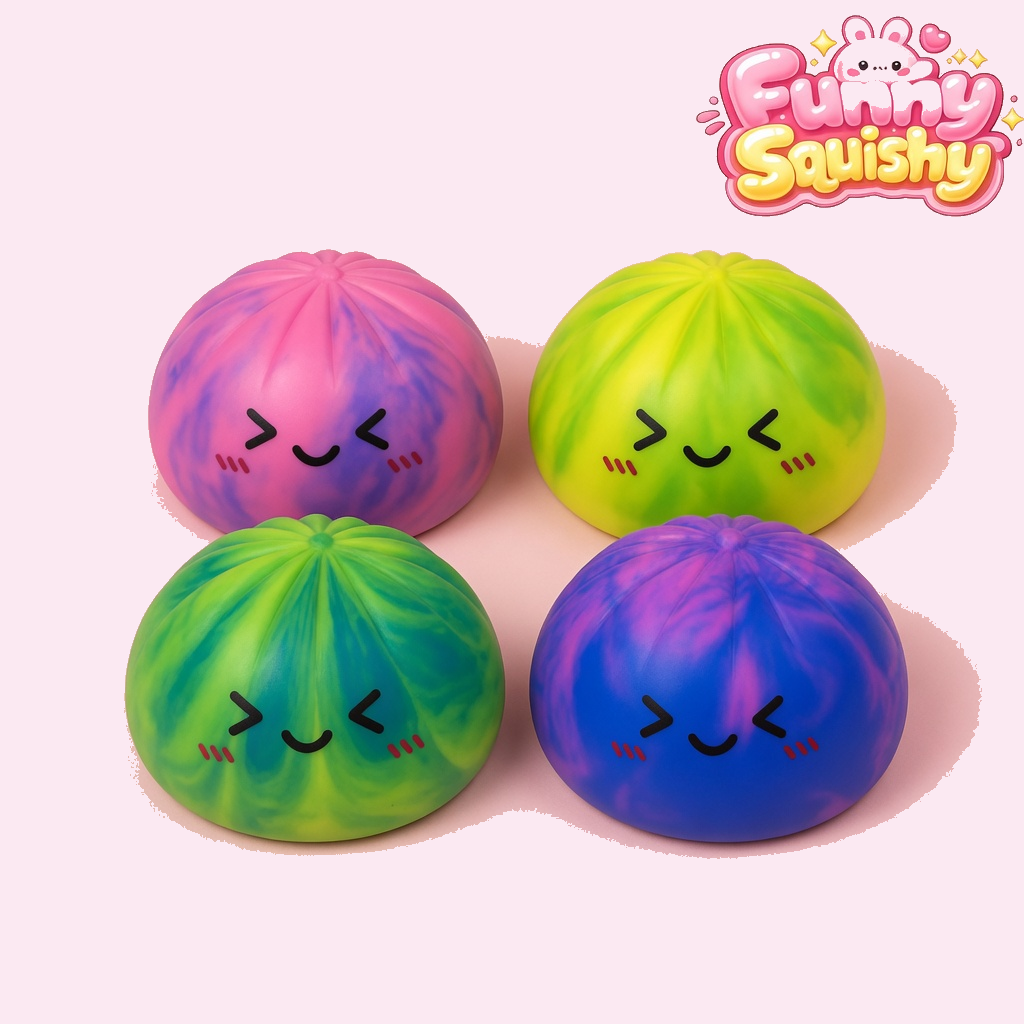
Tie-dye jumped from summer-camp t-shirts to slow-rise foam, and honestly, it might look better on a toy. A tie dye dumpling squishy gets its swirls from pigment worked through the surface rather than a printed pattern, so every piece carries a one-off design. Same soft rise, same doughy squish — the color story is what you’re paying attention to. Here’s how the swirls happen and which styles photograph best.
Hand-Swirled vs. Printed: A Difference You Can See
The tie-dye effect on a squishy typically comes from color applied in motion — pigments swirled, dipped, or folded across the piece so they bleed into each other with soft edges. That’s the opposite of a printed graphic, which is a fixed design laid onto the surface, identical across the entire production run.
You can spot the difference at arm’s length. Swirled color wraps the whole shape and never quite lines up with itself; printed patterns repeat, mirror, or stop awkwardly at seams. On a swirled piece the color transitions look like weather; on a printed one they look like wallpaper.
Neither is “wrong,” but they’re different purchases. One is a design; the other is an event that happened to your specific toy. And to be clear, neither method changes the squish or the safety — this is purely an aesthetics-and-uniqueness distinction.
What a Tie-Dye Dumpling Squishy Feels Like
The honest answer: like every other dumpling, and that’s a compliment. You get the dense, doughy core, the matte skin with a little drag under the thumb, and the patient slow rise that makes bun shapes so hard to put down. Color doesn’t change the recipe.
What changes is what you watch. Squeeze a solid bun and the show is the refill; squeeze a swirled one and the pattern stretches, folds, and warps across the surface as the foam moves. It’s a lava lamp you can grip. People who claim they’ll “just squish it once” are lying to themselves in a new and colorful way.
No Two Swirls Match
Because the color work happens per piece, your swirl is a one-off — same logic that makes marbled galaxy pulls collectible, but in daylight colors. Picking one from a restock becomes a tiny personality test: some people chase the rainbow spread, some want two colors barely touching, and someone always wants the chaotic one that looks like a melted sunset.
There’s a small ritual to it, too. People photograph their pick before the first squeeze — the pattern never looks quite that crisp again once the toy starts living its life, and the before shot becomes the baby photo.
Collectors compare pieces side by side and genuinely never find twins. If that idea hooks you, the same one-of-one appeal runs through the dumpling squishy collection whenever swirled colorways drop, and why butter squishies went viral explains how “no two alike” fuels the posting loop that keeps these selling out.
Swirl Energy Across the Shelf
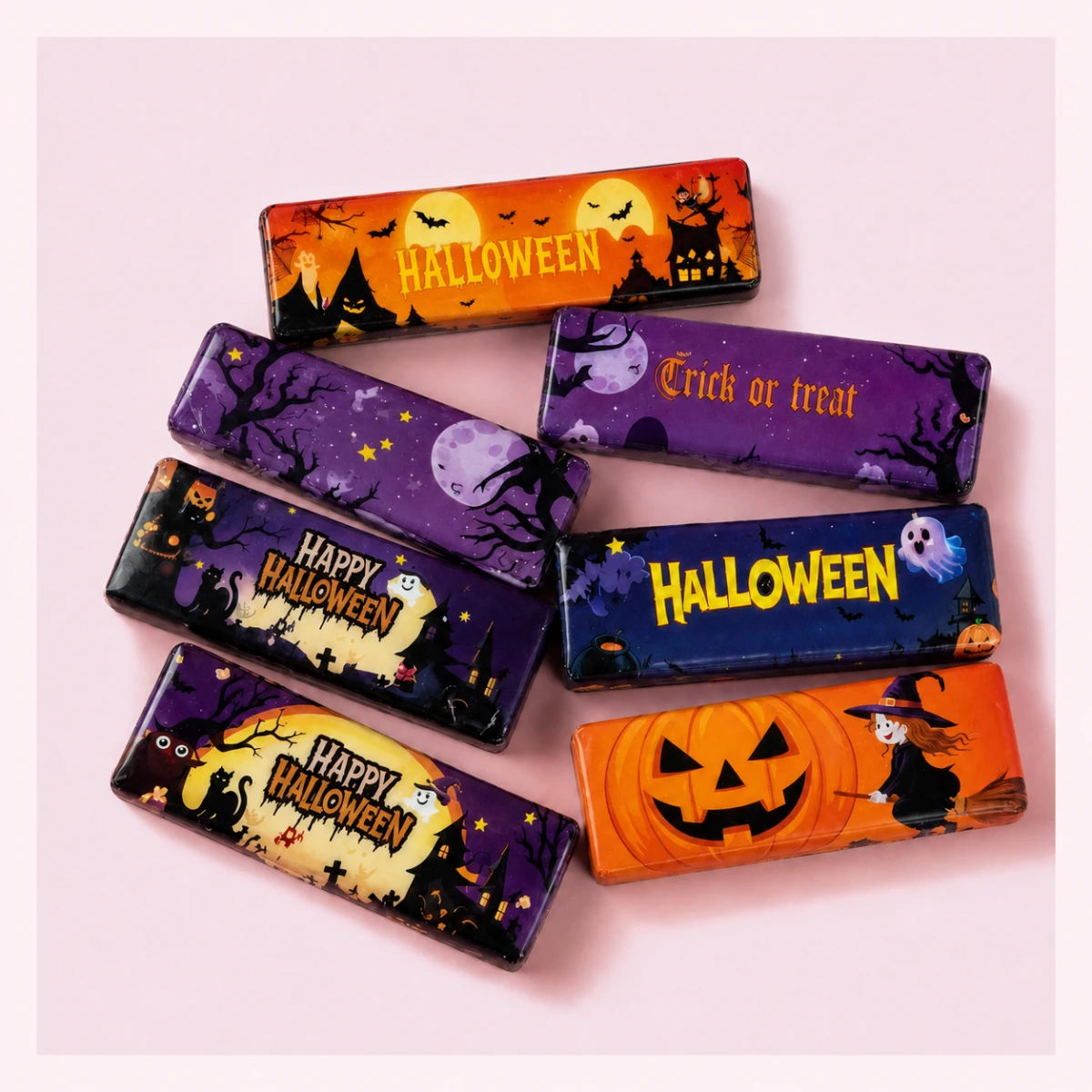
Tie-dye stopped being a dumpling exclusive a long time ago. Multi-color chaos shows up across shapes — the Halloween Butter Squishy Assorted Set leans into it with a bulk spread of loud colorways, which is the efficient way to fill a shelf with variety in one order.
And swirl logic gets weird in the best way: the Eye Squeeze Toy is technically a swirl piece too, it’s just that the swirls are bloodshot veins. Every tie dye squishy on your desk becomes funnier with one horrified eyeball among them. For more shapes with personality baked in, the novelty squishy collection is the browsing lane.
Cross-shape collecting also solves the duplicate problem — a swirl bun and a swirl butter never compete for the same shelf slot, so the collection grows without repeating itself.
Getting the Swirl on Camera
Swirled color is the most photogenic finish in the category, and a few habits get the most out of it. Soft window light beats harsh overhead light — glare flattens color transitions. A plain background makes the swirl the loudest thing in frame, which is the point.
The money shot is mid-squeeze: dents warp the pattern and prove the toy is soft, which a static photo never quite does. Video does even better, since the slow rise animates the colors.
A quick shot list that never misses:
- Flat lay on a plain background, best swirl side up
- Mid-squeeze close-up with the pattern warping
- Slow-rise video in real time, no cuts
- The lineup shot: all your swirls side by side, zero twins And keep the piece clean — grime dulls a swirl fast, and our how to clean a squishy guide covers the wipe-down that keeps colors loud.
FAQ
Do tie-dye squishies fade faster than solid colors? No faster than any other colorway — sunlight is the main enemy across the board. Swirled color typically sits in the material rather than on top, so normal squeezing won’t wear it away.
What’s the difference between tie-dye and galaxy? Palette and mood: tie-dye runs bright, warm, and playful, while galaxy leans dark blues and purples with a cosmic vibe. The underlying one-off swirl logic is the same.
Are swirled pieces collectible? Increasingly, yes — one-of-one patterns give collectors something to compare, favor, and trade. Two people can own the “same” colorway and still argue about whose swirl is better.
How do I clean one without dulling the colors? A quick wipe with a barely damp cloth, then a full air dry — no soaking, no scrubbing. Clean hands before squeezing prevents most of the dulling in the first place.