
Vomiting Egg Yolk & Pop-Up Cup Squishies: Suction Mechanics vs Open-Cell PU Foam
At first glance, a vomiting egg squishy that slurps up yellow slime and a pop-up cup toy where a little squirrel or bear shoots out of a tree stump look like completely unrelated novelties. Yet under the surface, both toys are miniature pneumatic pumps, relying on air displacement and elastic wall recovery to create motion.
Understanding how negative-pressure suction bulbs and positive-pressure pop-up cups work, and how both differ from the millions of microscopic air channels inside open-cell polyurethane (PU) memory foam, explains why some fidgets make loud slurping noises or lose air pressure over time while solid memory foam blocks rise silently for years.
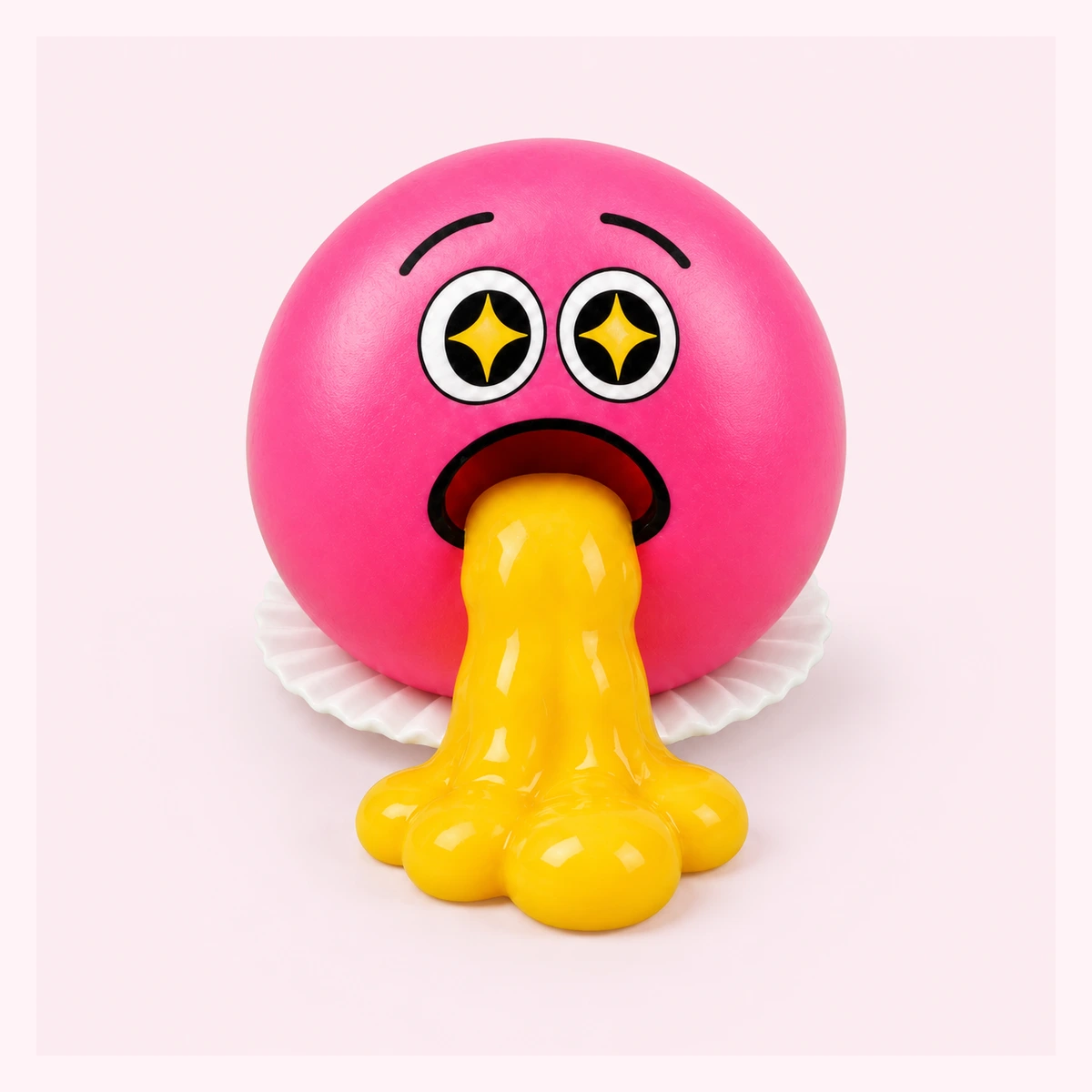
Negative-Pressure Suction Physics: How a Vomiting Egg Squishy Pipette Works
A vomiting egg squishy functions exactly like a rubber laboratory pipette bulb, cycling through three mechanical stages:
- Positive-Pressure Air Purge: The hollow egg shell is molded from thick-walled, flexible polyvinyl chloride (PVC) with a narrow mouth slit. Squeezing the walls together forces internal air out through the mouth opening.
- Fluid Seal at the Mouth Aperture: Before releasing your fingers, you press the open mouth directly into the puddle of polyvinyl alcohol (PVA) yolk slime so external room air cannot re-enter the cavity.
- Elastic Wall Rebound and Vacuum Intake: As the thick PVC walls spring back to their round molded shape, the expanding interior volume drops below atmospheric pressure, creating a partial vacuum that sucks the viscous yolk gel backward through the narrow mouth slot.
Positive-Pressure Air Displacement: How Pop-Up Cup Squishies Elevate Characters
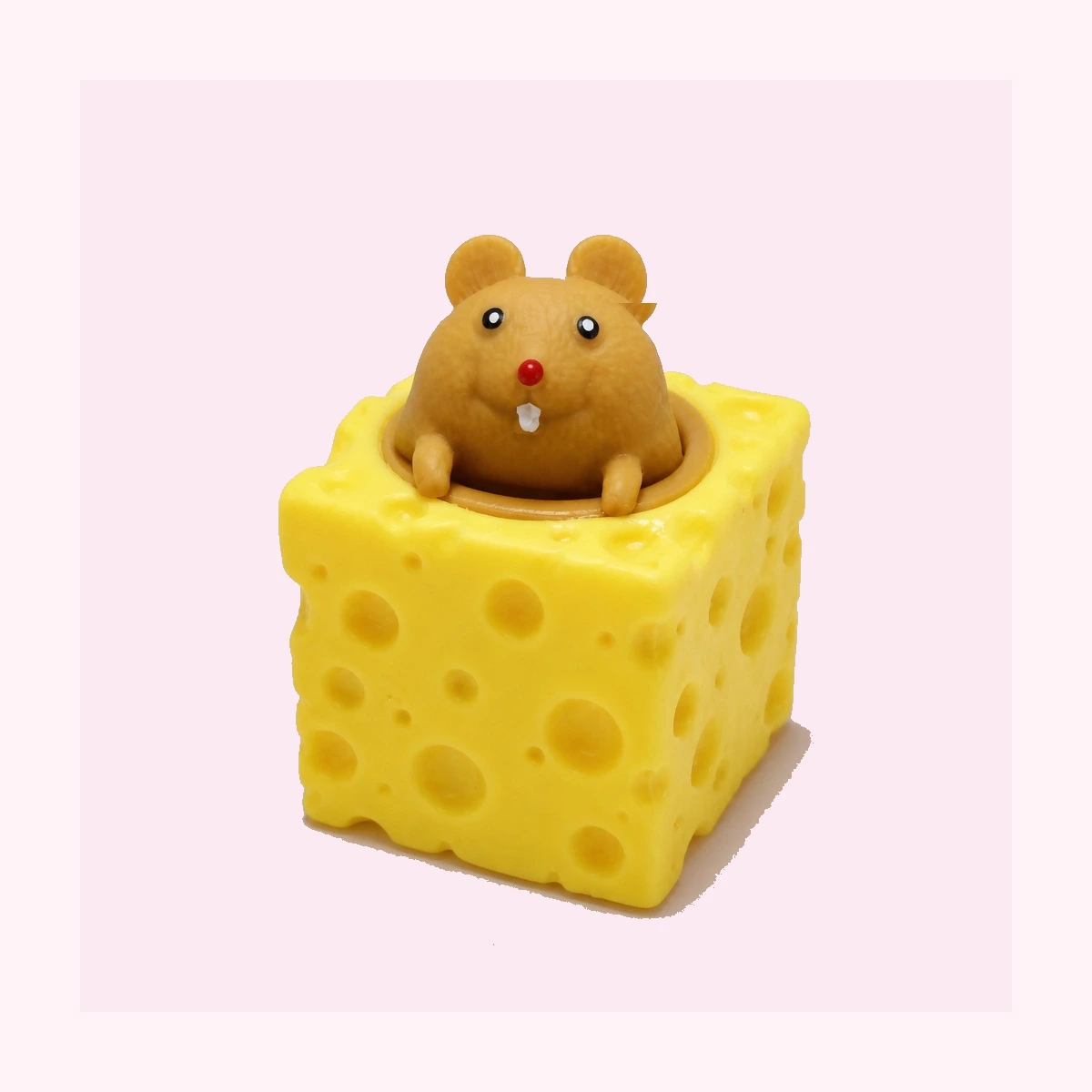
Unlike an open-mouth vomiting egg, a pop-up cup squishy (such as a tree stump squirrel or cheese-cup mouse) is a closed pneumatic piston system:
- Sealed Outer Compression Cylinder: The outer cup is a semi-rigid TPR or PVC cylinder filled with trapped air at atmospheric pressure.
- Rolling Elastomeric Diaphragm: The hidden character sits on a thin, inverted rubber neck sealed around the top rim of the cup.
- Positive-Pressure Piston Lift: When you squeeze the sides of the cup, the internal volume shrinks and air pressure spikes, pushing upward against the inverted membrane until the character pops upright, where it stays until you release your grip and internal suction pulls it back down.
Pneumatic Suction & Pop-Up Toys vs Open-Cell PU Foam: 5-Row Engineering Matrix
The table below compares five pneumatic and cellular squishy mechanisms across pressure physics, acoustic profile, primary failure point, and hand operation:
| Squishy Mechanism Type | Air Pressure Physics | Acoustic Sound Profile | Primary Mechanical Failure Point | Hand Operation |
|---|---|---|---|---|
| Vomiting Egg Suction Bulb | Open-aperture negative vacuum | Loud slurping & air burps | Slime dries out or clogs mouth slit | Two-hand dip & vacuum reset |
| Pop-Up Cup Character Toy | Closed-bladder positive piston | Soft air whoosh or pop | Pin-hole air leak kills pop height | One-hand squeeze; instant drop |
| Thin-Skin Maltose TPR Cube | Viscous hydraulic syrup flow | Silent | Outer seam tear from fingernails | Two-hand pull or palm press |
| Dense Yellow PU Butter Stick | Micro-cellular open airflow | 100% silent airflow | None (no valve or liquid bladder) | One-hand press; 8-15 sec rise |
| Wide Blue PU Butter Brick | High-volume cellular airflow | 100% silent airflow | None (no valve or liquid bladder) | Full-hand flat fold; slow rise |
Comparing these five systems shows why open-cell PU memory foam is the most mechanically reliable architecture for silent desk fidgeting: instead of relying on a single rubber air bladder that fails if punctured, a PU foam block distributes air movement across millions of interconnected microscopic pores.
Micro-Cellular Airflow in Action: FunnySquishy Open-Cell PU Foam Butter Blocks
If you appreciate the physics of air-metered recovery, watching a compressed block slowly draw air back through its cellular matrix without noisy suction slits, sticky slime, or leaky pop-up valves, the FunnySquishy catalog features four verified open-cell PU foam butter sets:
For a single dense yellow block engineered for smooth, slow-rising cellular recovery in one hand, The FS-BUTTER-005 description says it is a soft, slow-rising stick-of-butter toy made from dense premium foam, and the spec table names Material/Fill as Dense premium PU foam, size Palm-sized, and age Kids 3+ and adults. The same description gives a supplier reference weight of approx. 45 g and says weight may vary.
FS-BUTTER-005 is listed at 1299 cents, which is 12.99 US dollars, with a compare price of 2449 cents, which is 24.49 US dollars.
If you want two matching yellow butter sticks so you can keep one on your study desk and carry a backup in your bag, FS-BUTTER-011 is a 2-pack at 1999 cents, which is 19.99 US dollars, with compareCents 3249, which is 32.49 US dollars. The spec table says Material/Fill Soft foam, size Palm-sized, shape Stick of butter, and age Kids 3+ and adults.
For collectors or households who want three matching yellow butter sticks in a single value set, FS-BUTTER-007 is a set of three butter-stick-shaped toys at 2299 cents, which is 22.99 US dollars, with compareCents 3749, which is 37.49 US dollars.
And if you want a larger cellular volume that takes a deep full-hand compression, folds completely flat, and meters air back in on a slow, steady schedule, FS-BRICK-P006 is the Blue Butter Brick Squishy 2 Pack at 1999 cents, which is 19.99 US dollars, with compareCents 3749, which is 37.49 US dollars. The description says it takes a full-hand squeeze, folds flat, rises on its own slow schedule, and includes two sticks, for desk, car, and classroom.
Troubleshooting Air-Lock, Valve Leaks, and Foam Recovery
Depending on which pneumatic or cellular squishy sits on your desk, use these three mechanical care tips to keep its recovery cycle working properly:
- Clear Clogged Vomiting Egg Mouth Slits with Warm Water: If dried PVA slime crusts inside the narrow mouth aperture of a vomiting egg bulb, soak the empty PVC shell in warm water for five minutes so the slit can seal properly during vacuum intake.
- Check Pop-Up Cup Base Plugs for Air Leaks: If a pop-up squirrel or mouse stops rising to full height when you squeeze the cup, inspect the bottom molded plug or neck seam, where escaping air prevents positive pressure from building.
- Let Open-Cell PU Foam Blocks Breathe Between Deep Folds: Because open-cell PU foam (like FS-BUTTER-005 and FS-BRICK-P006) recovers by drawing ambient air back through its breathable outer skin, store your butter blocks uncompressed on a flat shelf rather than wedged under heavy textbooks.
Frequently Asked Questions
What is the mechanical difference between a vomiting egg squishy and a pop-up cup fidget?
A vomiting egg squishy is an open pneumatic pipette bulb that expels air on the squeeze and uses negative vacuum pressure on the release to suck external slime inward, whereas a pop-up cup fidget is a closed air chamber that uses positive air pressure during the squeeze to push an inverted rubber character upward.
Why do pop-up cup squishies stop popping up over time?
Pop-up cup squishies lose their lifting power when a tiny pinhole or seam crack develops in the thin rolling rubber neck or base plug, allowing air to escape when you squeeze the cup instead of building enough positive pressure to push the inner figure up.
How do FunnySquishy PU foam butter blocks rise back without an air bladder?
FunnySquishy butter blocks, including the single stick FS-BUTTER-005 ($12.99 USD / 1299 cents), the 2-pack FS-BUTTER-011 ($19.99 USD / 1999 cents), the 3-pack FS-BUTTER-007 ($22.99 USD / 2299 cents), and the Blue Butter Brick 2-pack FS-BRICK-P006 ($19.99 USD / 1999 cents), use open-cell polyurethane memory foam whose interconnected microscopic pores release air under palm pressure and slowly draw air back in as the polymer struts unbend.