





Search for silent options and every list hands you foam. That is a fair answer and an incomplete one, because plenty of people want a mechanism rather than a squeeze — something with travel, resistance and an end-stop — and assume that rules out quiet. It does not. The quietest fidget toys in the hard-goods category are quiet for structural reasons, and once you know what those reasons are you can predict how any mechanism will behave before you buy it.
Where the Noise Actually Comes From
Hard fidgets make sound in four ways, and only one of them is obvious.
Impact. Two rigid parts meeting: a cap seating, a panel closing, a button bottoming out. This is the loud one, it is sharp, and it carries across a room.
Rolling. Bearings and moving balls produce a continuous whirr rather than a click. It is quiet at a metre and it is exactly the kind of steady mid-frequency sound that a microphone picks up and a human ear stops noticing.
Friction. Surfaces sliding across each other. Almost inaudible unless something is gritty, and grit is a maintenance problem rather than a design one.
Resonance. The sleeper category. A hollow body amplifies whatever the mechanism does, which is why two toys with identical actions can differ enormously. A solid or filled body is quieter than a hollow one of the same material, every time.
Material sits underneath all four. Silicone against silicone is near-silent because the material damps rather than rings. Hard plastic against hard plastic is the worst combination in every category. Metal against metal is loud but usually brief.
The Quietest Fidget Toys by Mechanism
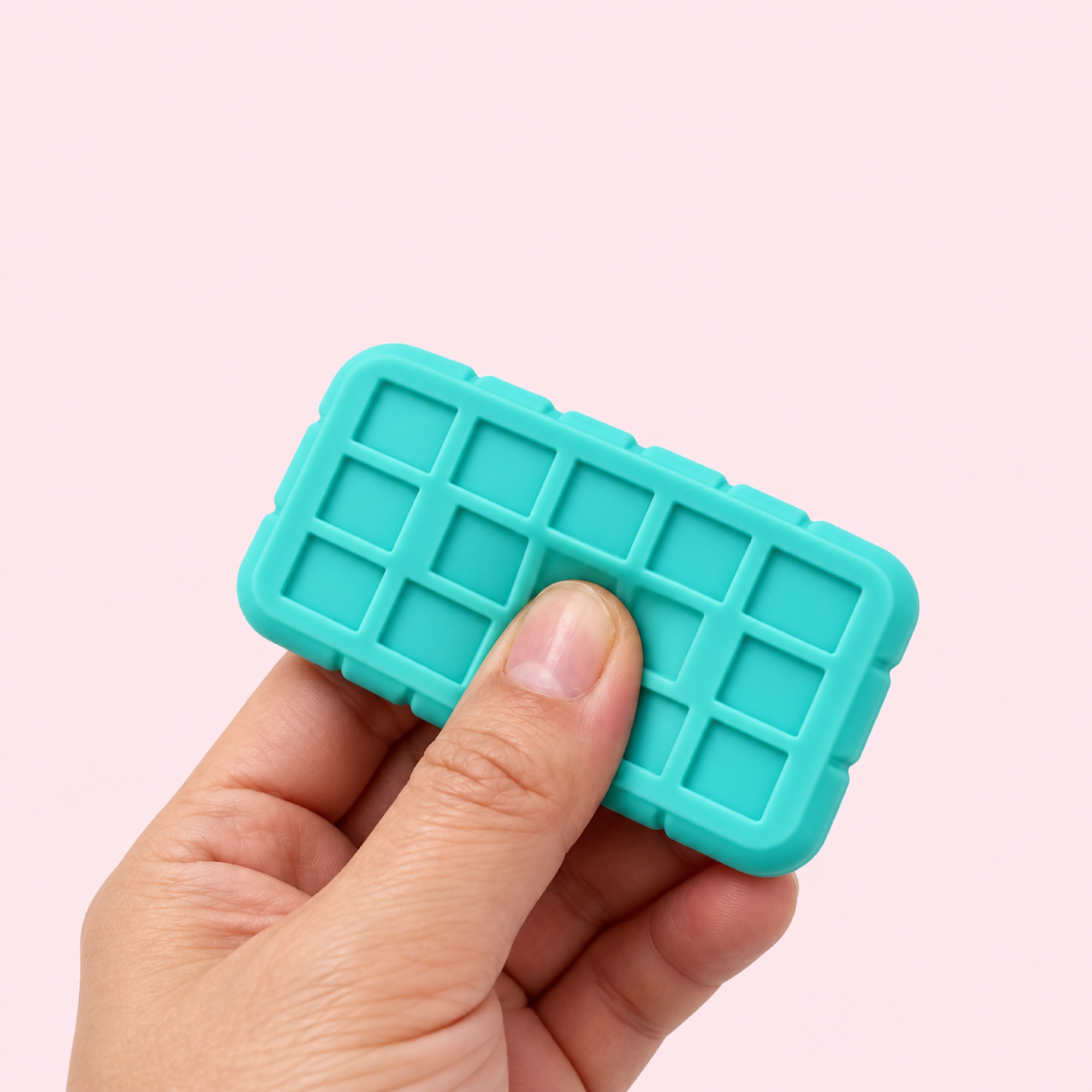
Sliders with damped end-stops. A carrier running along a track, arrested by a magnet rather than by a hard stop. The magnetic catch means the parts arrive under control instead of colliding, and a silicone face absorbs what is left. The Magnetic Silicone Slider is this construction — ridged silicone over a smooth base — and it is the quietest mechanism we stock that still gives you real travel.
Textured solids. No mechanism at all, so nothing to make noise. Shapes you push, roll and press between your fingers work on surface texture alone. The Silicone Sensory Stones are the type: soft, solid, silent, and they pass for desk objects rather than toys.
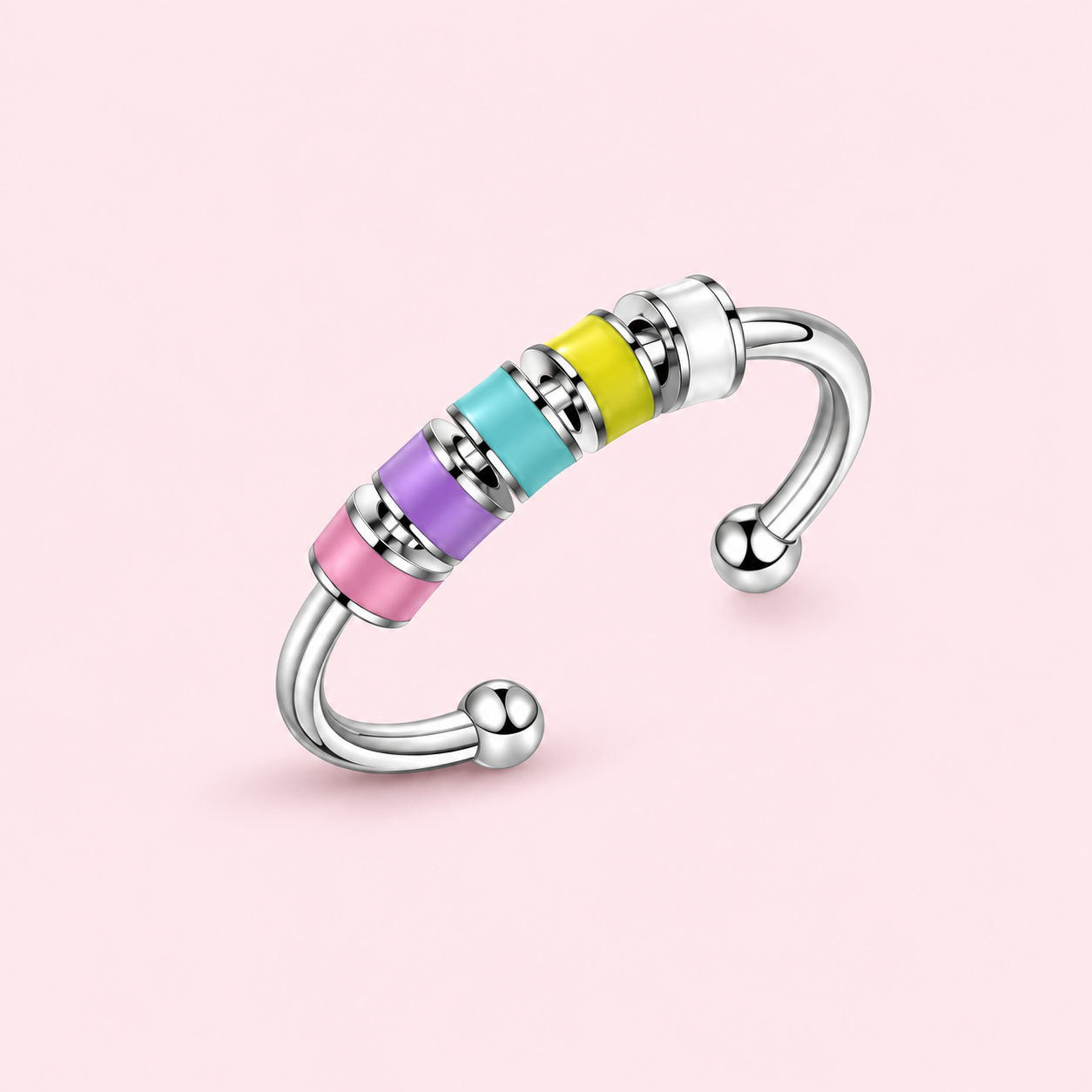
Worn fidgets. A ring is damped by the hand wearing it, and the moving surface is small. The Black Mechanical Fidget Ring has a layered scale texture under the thumb, and the sound has nowhere to go because your own fingers are wrapped around the source.
Stretch and tangle toys. Flexible segments rotating against each other produce friction noise only, which is the quietest of the four sources. They are also the only quiet mechanism that offers two hands’ worth of activity.
The Ones That Are Louder Than People Expect
Spinners are quiet in absolute terms and fail in shared rooms anyway, because the problem is visible rotation in a neighbour’s peripheral vision rather than sound. Worth knowing before buying one for an open-plan desk, and covered in what survives a shared office.
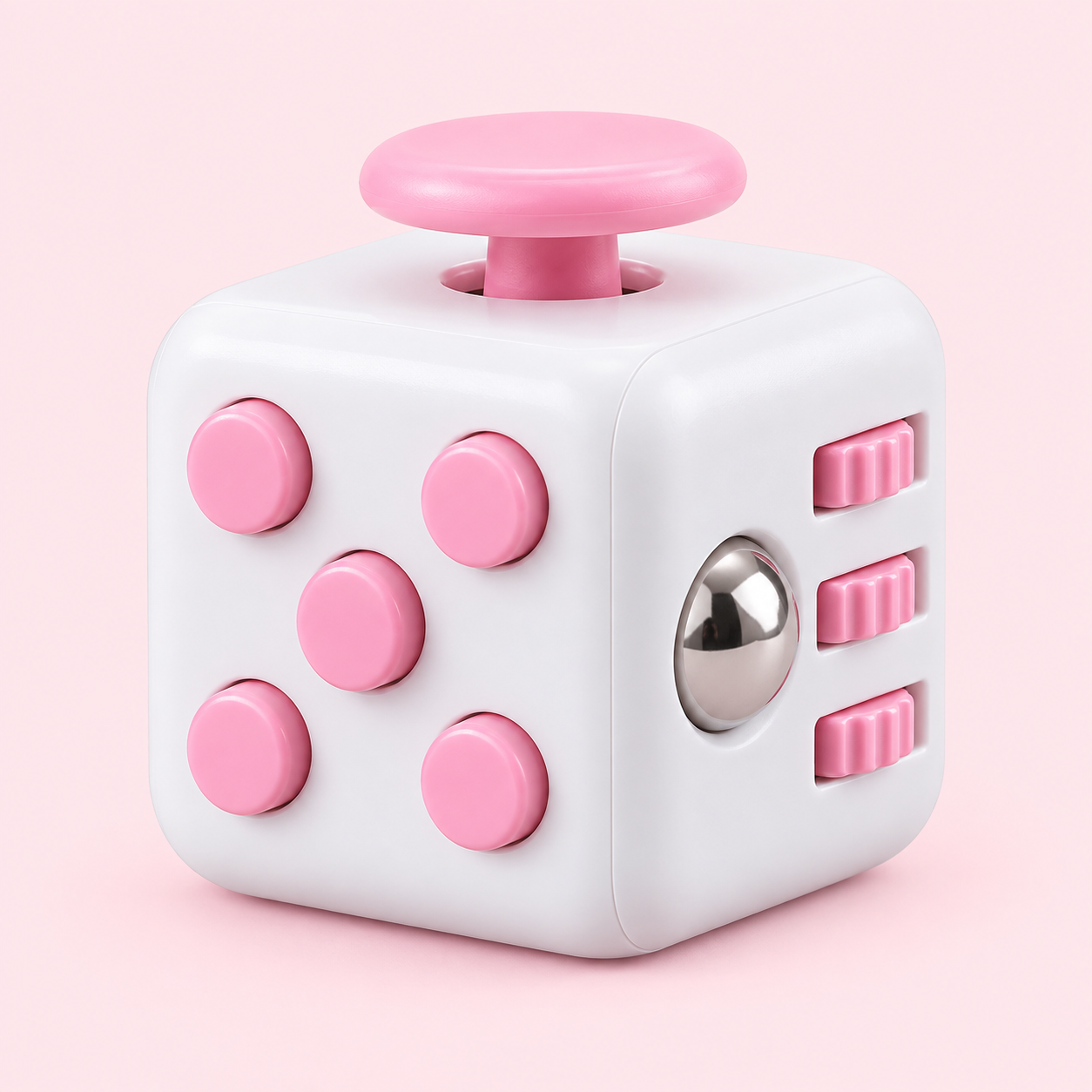
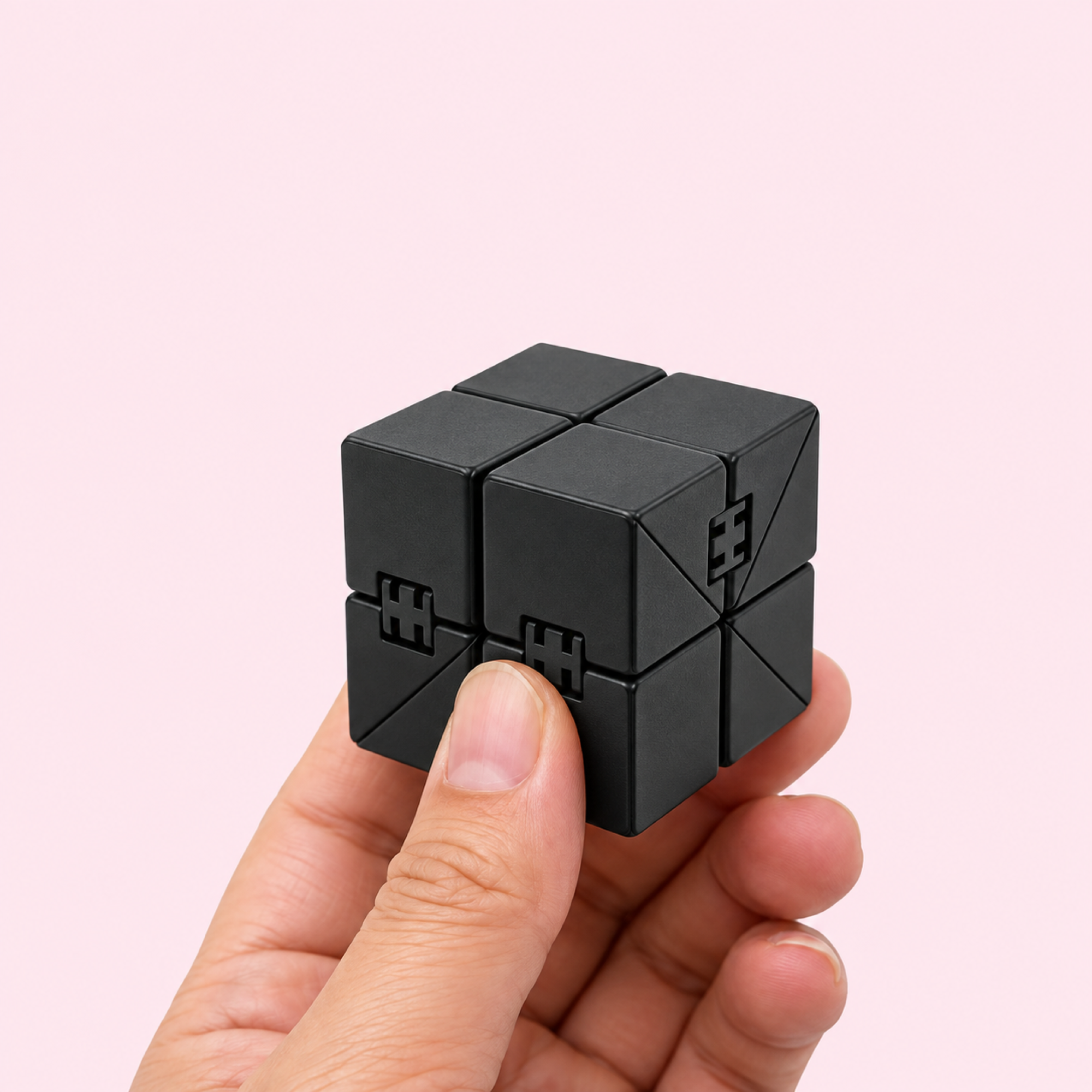
Panel and cube mechanisms depend entirely on whether the body is hollow. A cube that echoes when you tap it will echo when you use it.
Bead-filled squeeze toys are audible by design — the crunch is the appeal. That is a location decision rather than a fault, and the constructions are compared in what the filling changes.
Clickers are the honest opposite of this article. If the click is what you want, the question becomes which clicks carry furthest, which is a different piece of work: meeting-safe clicks.
How to Test One Before You Rely on It
Hold it to your ear and use it slowly. Slow operation exposes grit and rattle that fast operation hides.
Then do the opposite: use it at full speed with your arm extended, and have someone two metres away tell you what they hear. Your own hand conducts sound to your ear through bone, so you are the worst possible judge of your own fidget’s volume.
Tap the body with a fingernail. A ring or a hollow knock means resonance, and resonance means the toy will be louder in use than the mechanism alone would suggest.
Finally, drop it onto a desk from a few centimetres. The sound a fidget makes when it lands is the sound your colleagues will actually hear most often, and it is the one nobody tests.
Choosing for the Room You Are In
A quiet home office can take anything except a hollow clicker. An open-plan bench wants flat, damped and visually still. A library, a lecture theatre or a quiet carriage wants a worn fidget or a textured solid — something with no mechanism to fail silently.
And if the answer really is soft foam after all, our quiet squishies guide covers that end of the range in detail. The two articles are deliberately complementary: this one is for people who want a mechanism, that one is for people who want a squeeze.
Three Silent Picks
Magnetic Silicone Slider — ridged silicone face, magnetic end-stops, flat base. Real travel with almost no sound.
Silicone Sensory Stones — solid textured shapes, no mechanism, nothing to rattle.
Black Mechanical Fidget Ring — worn rather than parked, damped by your own hand.
Browse the desk and everyday-carry range, or see all fidget toys to compare quiet mechanisms against the audible ones.