



A rainbow slug fidget toy belongs to a format worth understanding on its own terms: a chain of rigid segments joined by ball-and-socket links, printed or moulded in a colour run, that bends in any direction and stays where you put it. It is neither a squeeze toy nor a mechanism toy, and the thing that decides whether one is satisfying is the joint rather than the shape.
What the Joints Actually Do
Each segment ends in a ball that sits inside the socket of the next. The fit decides everything.
Too loose and the body flops — it will not hold a shape, and the whole appeal of these is that they stay bent where you leave them.
Too tight and it will not articulate smoothly, so bending it feels like forcing something rather than shaping it.
The correct fit gives light resistance through the whole range and a faint click as segments pass each other, which is where the characteristic sound comes from. That sound is quiet but continuous, which matters in a shared room.
Why the Rainbow Finish Is Usually Durable
Colour on these comes from the material rather than from a coating, because each segment is moulded or printed in its own colour before assembly.
That means scratches expose the same colour underneath, which is the durability test that separates lasting colour from surface colour — the version of this argument for spinners is in why yellow is hard to find.
The exception is a body sprayed after assembly. Those look glossier in photographs and wear at every joint, because the joints are exactly where the material rubs.
If a listing shows a high-gloss uniform finish across a multi-colour body, that is paint. A slightly matte finish with crisp colour boundaries at the segment lines is moulded.
Where They Break
A popped socket. The commonest failure by a wide margin. One segment is pulled straight rather than bent and the ball leaves the socket. Most can be pressed back; some sockets split on the way out and those cannot.
The end segments. The head and tail take the most leverage because they are held while the rest is bent, so they loosen first.
Grit inside the joints. These live in bags and pockets, and grit in a socket turns smooth articulation into a grinding one. Rinse and dry rather than lubricate — oil holds more grit than it saves.
Never the colour, on a moulded body, which is the format’s real strength.
How It Compares With Other Formats
Against a stretch toy, an articulated body holds its shape and a stretch toy returns to its own. Completely different sensation from a superficially similar object.
Against a chain or a linked fidget, the slug type bends in three dimensions rather than folding along fixed hinges — an infinity cube folds one way forever, and this bends any way once. The folding side is covered in what an infinity cube is.
Against a ring or a slider, it is the least discreet of the group. It is large, visible and slightly audible, which makes it a home-and-desk object rather than a meeting one — the room-by-room sort is in the quietest fidget toys.
What to Check on a Rainbow Slug Fidget Toy Before Buying
Bend one fully and let go. It should stay bent. A body that slowly relaxes has loose sockets.
Twist two adjacent segments against each other. Smooth resistance is right; a catch at one point means a moulding flaw in that socket.
Count the segments and look at the length. Short ones are fidgets, long ones are desk objects, and the listing photograph rarely makes the scale clear.
Check the colour boundaries at the segment lines. Crisp edges mean moulded colour; blurred or overlapping edges mean it was sprayed.
Sizes, and Who Each Suits
Length is the specification that changes the object most, and it is the one listings hide behind a close-up photograph.
Short, around a hand span. A genuine fidget: bendable one-handed, fits a bag, and the segments are small enough to work with a thumb.
Medium, forearm length. The common size, and a two-handed object. It shapes well and sits on a desk, but it will not go anywhere with you.
Long, over half a metre. A display piece that is fun once. The joints at that length carry too much leverage and the end segments loosen quickly.
Segment diameter matters as much as length. Thin segments articulate more finely and break more easily; thick ones are durable and coarse. For daily handling, medium segments in a short body outlast both extremes.
Where It Fits in a Set
This format covers a bending-and-shaping action that nothing else in a normal fidget set does — pressing, rotating, compressing and tracking a texture are all different things.
So it is a genuine addition rather than a duplicate, which is the test worth applying to any new fidget and is set out in building a small set that covers everything.
What it is not is a carry object. It is too large for a pocket and too visible for most shared rooms, so it belongs wherever you sit rather than wherever you go.
Multi-Segment Fidgets in Stock
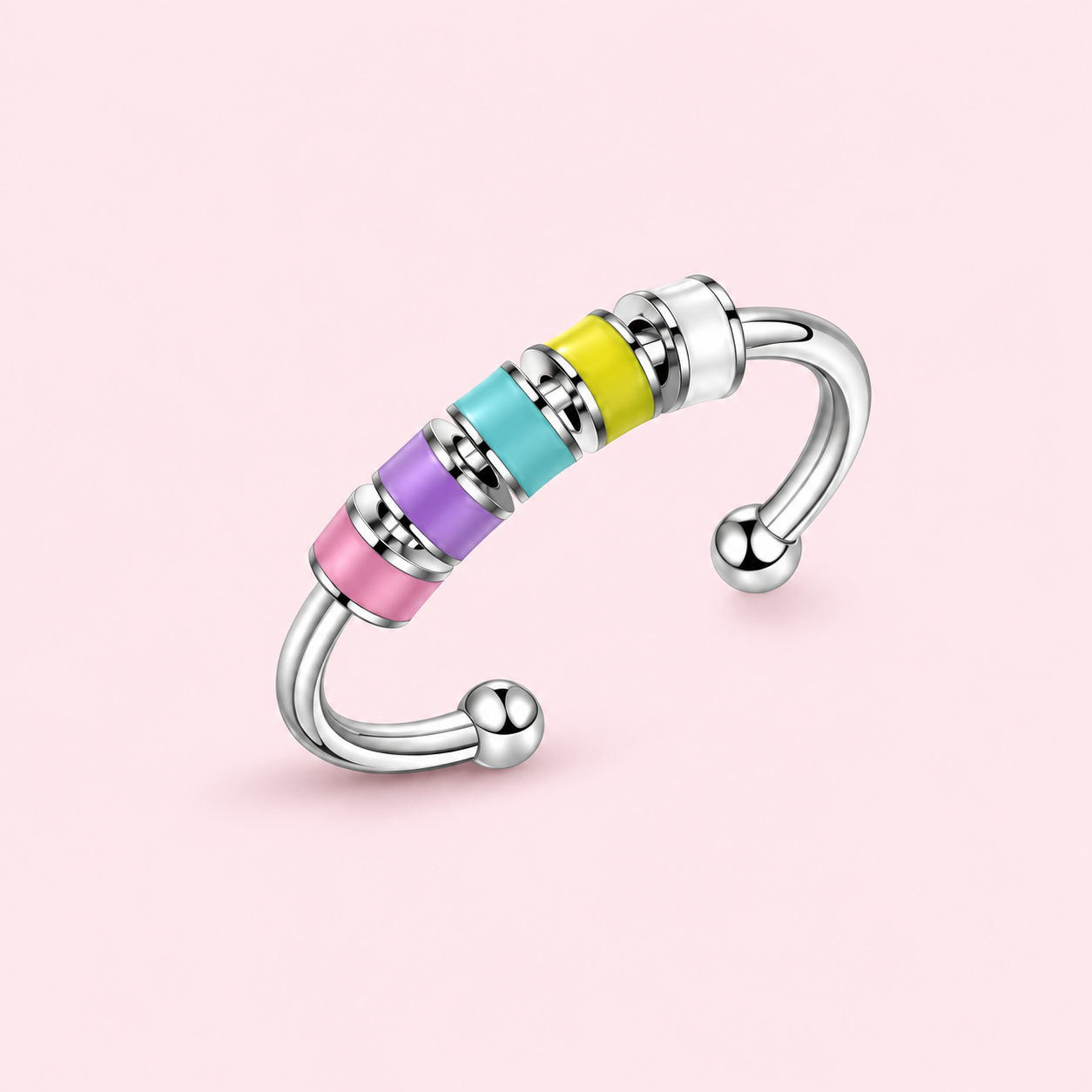
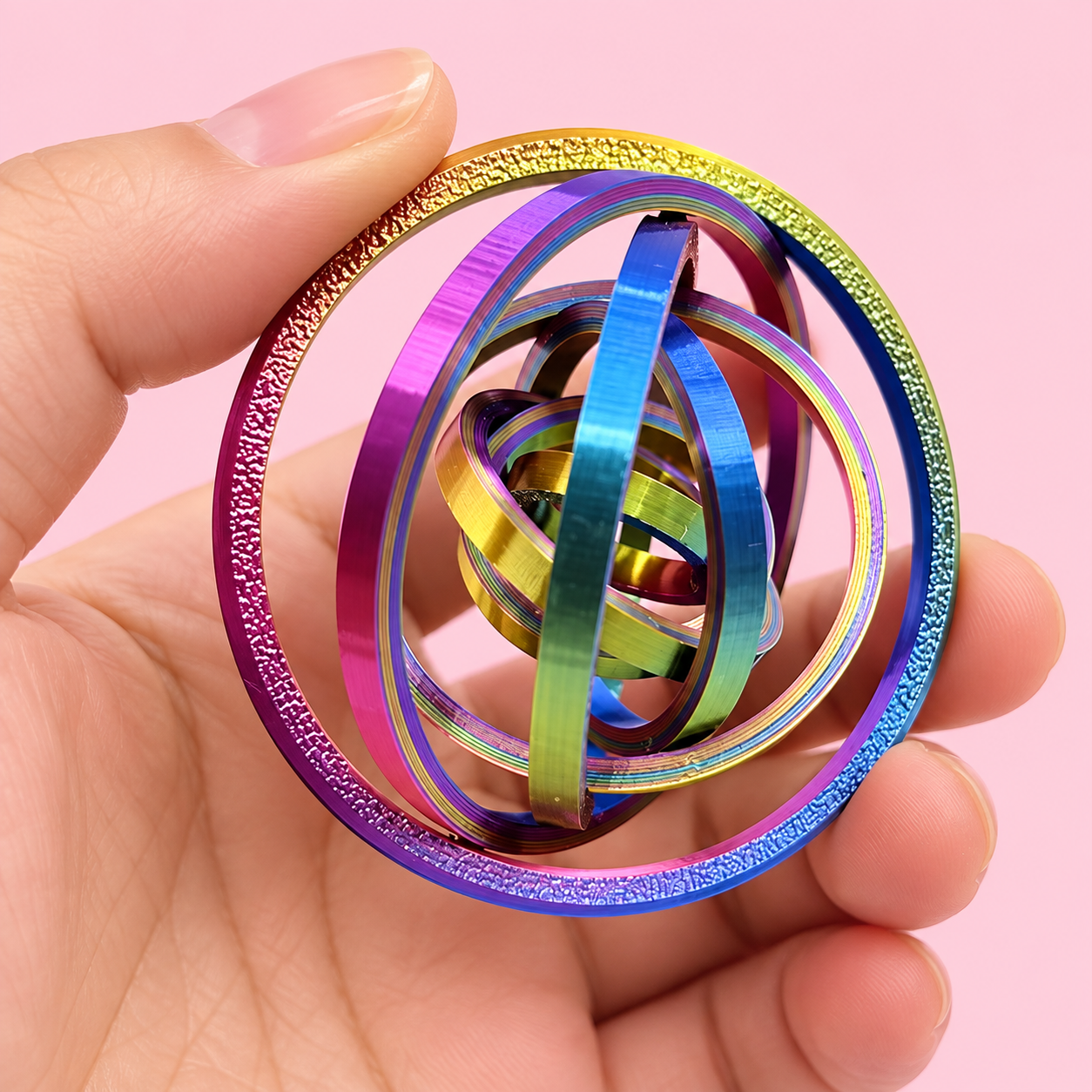
The articulated slug format is not one we currently stock. The nearest thing in the range is the Rainbow Multi-Ring Fidget, which is multi-segment and multi-colour but rotates rather than bends.
If bending and holding a shape is the action you want, the closest available sensation is a magnetic build object such as the Magnetic Fidget Box, where the parts reposition and stay put.
Browse all fidget toys for the other actions, or the fidget boxes and packs range for multi-part objects.