

Sensory Fidget Toy Guide: Compare Finger Motion, Noise & Resistance
Choosing the right sensory fidget toy for a study desk, conference room, or home workspace requires looking beyond visual novelty. While mechanical clickers, silicone poppers, and viscoelastic foam blocks all occupy the same desktop category, their biomechanical hand demands and acoustic profiles differ dramatically during extended work sessions.
Evaluating sensory and fidget tools across a three-axis framework of finger motion mechanics, decibel output, and tactile compression resistance allows students, remote professionals, and collectors to select calming desk companions that support focus without distracting nearby colleagues.
The 3-Axis Framework for Evaluating Sensory Fidget Toys
To match a handheld tool to your specific environment and sensory preference, evaluate every candidate across three physical dimensions:
- Axis 1 (Finger Motion Mechanics): Fine-motor fidgets rely on rapid, repetitive thumb or index-finger articulation such as flicking switches, spinning bearings, or sliding magnets. By contrast, gross-motor sensory squishies engage the entire palm and flexor tendons in slow, sustained isometric squeezes.
- Axis 2 (Acoustic Decibel Profile): Mechanical plastic switches, metal bearings, and snap-bubble membranes generate sharp acoustic transients that easily register on laptop microphones. Open-cell polyurethane foam and sealed gel pouches operate at near-zero decibels by venting air silently through microscopic pores.
- Axis 3 (Tactile Resistance and Recovery): High-tension elastomer balls bounce back immediately against the fingers, whereas viscoelastic slow-rising foam absorbs palm force and recovers gradually over 8 to 15 seconds, setting a slower, rhythmic pace for hand movement.
Balancing these three axes ensures that a desk toy relieves restless hand tension rather than adding auditory clutter or finger fatigue.
Acoustic Decibels and Workplace Etiquette: Silent Foam vs Mechanical Clickers
In shared offices, libraries, and live video meetings, acoustic output is the primary factor separating usable desk tools from distracting novelties:
Mechanical fidget cubes and magnetic sliders produce high-frequency clicks between 45 and 60 dB at close range. Because modern voice-conferencing software amplifies crisp mid-to-high frequencies near the keyboard, repetitive clicking or silicone popping quickly becomes audible to meeting participants and adjacent deskmates.
Slow-rising polyurethane squishies eliminate impact noise entirely. Compressing a dense foam block displaces internal air softly without snapping membranes or colliding hard surfaces, allowing continuous one-handed use right beside an open microphone.
Sensory and Fidget Toy Comparison Matrix: Motion, Noise, and Resistance
To help buyers compare common desktop tools across all three ergonomic axes, the matrix below summarizes their operational traits:
| Fidget / Sensory Category | Primary Hand Motion | Acoustic Profile | Resistance & Rebound | Ideal Desk Environment |
|---|---|---|---|---|
| Slow-Rising PU Foam Block | Full-palm isometric squeeze | Completely silent (0 dB click) | Plush drag, 8 to 15 s rise | Video calls, quiet offices, study halls |
| Mechanical Switch Cube | Rapid thumb flicking & rolling | Audible clicks (45 to 60 dB) | Crisp mechanical snap | Solo rooms, casual home gaming |
| Silicone Bubble Popper | Repetitive fingertip poking | Moderate pop sound | Light membrane tension | Travel breaks, casual play spaces |
| Dense Gel / Maltose Ball | Heavy finger kneading & pull | Silent internal shear | High-viscosity dough drag | Deep tension relief, solo reading |
Selecting a category from this matrix prevents buyer mismatch and keeps both your hands and your surrounding workspace comfortable.
FunnySquishy Catalog Options for Silent Slow-Rising Desk Relief
For shoppers prioritizing silent operation and sustained palm resistance, the FunnySquishy catalog maintains verified slow-rising butter block listings:
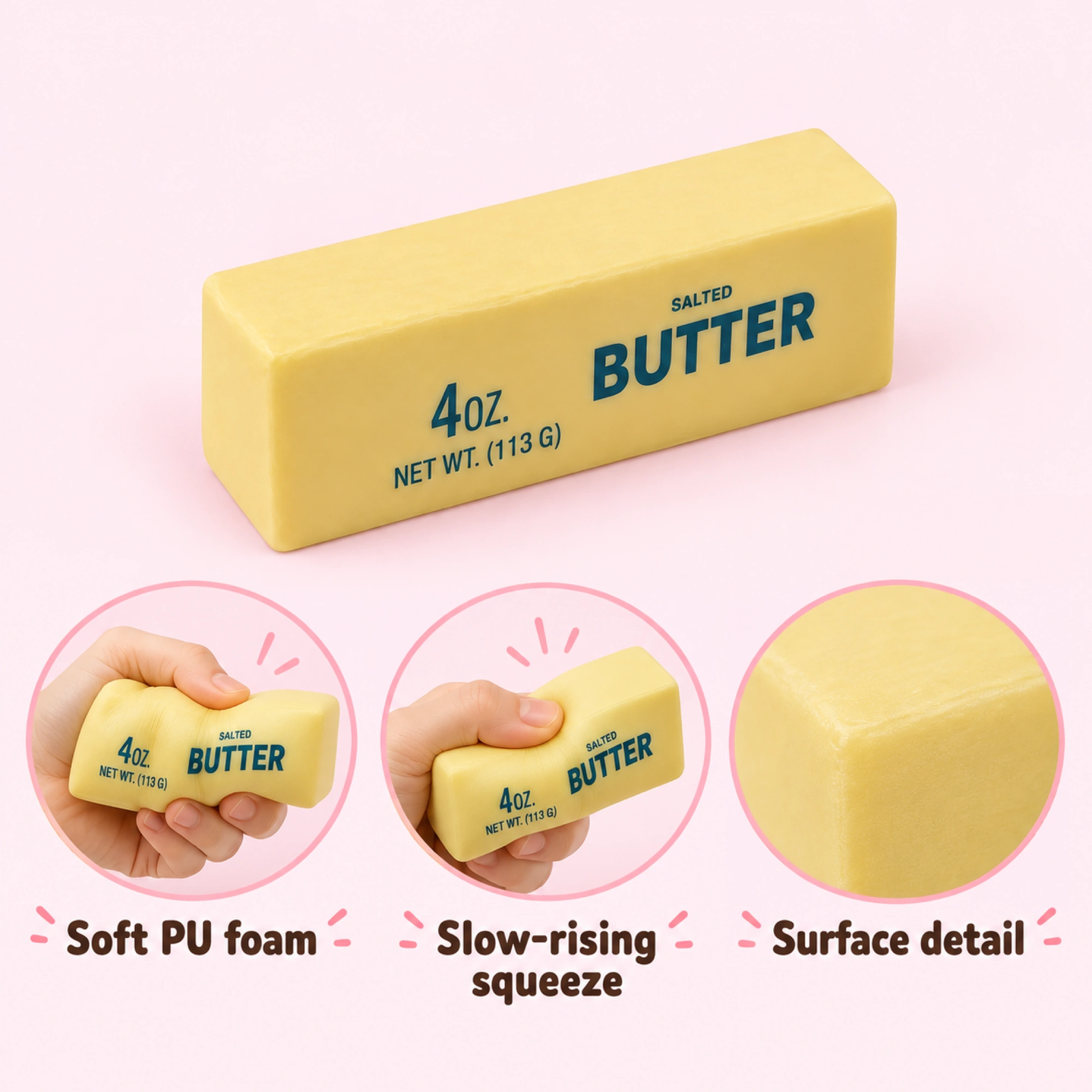
The FunnySquishy catalog lists FS-BUTTER-005 as the PU Foam Butter Squishy, featuring palm-sized proportions, dense foam construction, and a gentle buttery drag priced at $12.99 USD.
For users who want a backup block for both home and office bags, the FunnySquishy catalog lists FS-BUTTER-011 as the 2-Pack Butter Squishy Slow-Rising Stress Relief Fidget Toy priced at $16.99 USD.
For families, classrooms, or multi-desk setups, the catalog lists FS-BUTTER-007 as the 3-Pack Butter Squishy Slow-Rising Stress Relief Fidget Toy Set priced at $24.99 USD.
Additionally, for collectors seeking a cool-toned visual variation on their desk mat, the FunnySquishy catalog lists FS-BRICK-P006 as the Blue Butter Brick Squishy 2-Pack Squeezy Stress Relief Block priced at $14.99 USD.
Care Habits, Surface Cleaning, and Foam Longevity
Maintaining the smooth tactile drag and clean appearance of slow-rising polyurethane fidgets requires simple daily habits:
- Broad Palm Compression: Squeeze rectangular foam blocks using the flat of your palm and fingers rather than digging in with sharp fingernails, which can crease or tear outer painted membranes.
- Dry or Lightly Damp Microfiber Wiping: Wipe away desk dust and natural hand oils with a soft microfiber cloth rather than submerging open-cell polyurethane foam under running water.
- Pouch Storage Away from Direct Sun: Return foam blocks to their protective zip pouches when not in use to prevent dust accumulation and shield yellow or blue pigments from UV fading.
Following these straightforward care practices keeps your silent desktop sensory tools responsive and visually tidy across months of daily work.
Frequently Asked Questions
What is the main difference between a mechanical fidget and a sensory squishy toy?
Mechanical fidgets focus on rapid fine-motor finger movements like clicking or spinning, whereas sensory squishies engage the whole palm in slow, rhythmic compression and tactile feedback.
Which sensory fidget toys are completely silent for classrooms and Zoom calls?
Slow-rising open-cell polyurethane foam blocks, such as the FS-BUTTER-005 PU Foam Butter Squishy, operate with zero clicking or popping noise, making them ideal near open microphones.
How do you clean and maintain a slow-rising polyurethane foam fidget?
Wipe the surface gently with a dry or barely damp microfiber cloth, avoid soaking the open-cell foam in water, and store the toy in its resealable pouch away from sharp desk tools.