How to Create a Stress Ball: 4 DIY Fillings vs PU Foam Compared
Quick Takeaway: Creating a DIY stress ball at home involves choosing the right core material to match your desired hand resistance and securing it within a double-balloon membrane. Dense dry flour provides clay-like sculptability; cornstarch Oobleck delivers velocity-dependent shear thickening; hydrated water beads create granular tactile feedback; and dried rice offers firm, textured resistance. However, every balloon-based craft carries an inherent puncture risk. For a leak-proof desk tool that delivers consistent rebound kinetics without rubber degradation, factory-molded slow-rising polyurethane (PU) foam squishies offer an enduring alternative.
Every week, thousands of makers, students, and parents look up instructions on how to create a stress ball at home. The appeal is immediate: using common household staples and a few colorful latex balloons, you can craft a customized sensory fidget in under ten minutes.
Yet anyone who has squeezed a homemade stress ball for more than a few days has likely encountered the classic DIY failure: thin latex stretching until it turns translucent, a seam micro-tear near the knot, or an unexpected rupture that coats a computer keyboard, carpet, or study desk in fine white powder.
To build a stress ball that actually lasts—and to decide whether a homemade craft or a molded PU foam squishy better fits your daily routine—you need to understand the physics of different filling materials, how to reinforce balloon membranes, and where factory-molded foam solves mechanical durability issues.
4 DIY Stress Ball Fillings Compared: Flour, Cornstarch, Water Beads & Rice
When people ask what to fill a stress ball with, tutorials often recommend whatever happens to be in the pantry. But different materials produce vastly different tactile resistances, acoustic profiles, and cleanup liabilities under repetitive compression.
| Core Filling Material | Tactile Feel & Rebound Kinetics | Burst & Leak Risk Profile | Average Usable Lifespan | Ideal Sensory Use Case |
|---|---|---|---|---|
| All-Purpose Flour | Heavy, doughy, and highly moldable; holds thumbprints with zero bounce-back | High mess if ruptured; powder puffs out instantly under pressure | 3 to 6 weeks | Isometric hand-grip exercises and deep muscular grounding |
| Cornstarch Paste (Oobleck) | Non-Newtonian shear-thickening; yields under slow squeezes, hardens on impact | Moderate leak risk; liquid slowly separates and dries out over time | 1 to 3 weeks | Dynamic sensory stimulation and variable-pressure finger fidgeting |
| Hydrated Water Beads | Bumpy, slippery, and fluid; beads slide past one another inside the skin | High puncture hazard; concentrated bead pressure stresses thin seams | 2 to 4 weeks | Visual focus and tactile stimming (requires gentle handling) |
| Dry Long-Grain Rice | Firm, crunchy, and textured; solid resistance with subtle acoustic rustle | Low moisture mess; granules can cause internal abrasive wear on latex | 2 to 3 months | Firm palm massage, acupressure-style stimulation, and quiet focus |
1. Dry All-Purpose Flour: The Classic Sculptable Core
Flour remains the most popular DIY filling because its fine particulate structure creates a satisfying, dead-weight kneading feel. When compacted inside a balloon, dry flour particles lock together under friction. Pressing your thumb into a flour-filled ball leaves a deep crater that holds its shape until you roll the ball smooth again. For best results, use unbleached all-purpose flour rather than self-rising flour, which can react to ambient humidity and cause minor gas buildup inside the balloon.
2. Cornstarch Paste (Oobleck): Non-Newtonian Physics
Mixing cornstarch with water (approximately two parts starch to one part water) produces Oobleck, a non-Newtonian suspension that responds dynamically to shear force. Squeeze slowly and smoothly, and the mixture flows like thick cream under your fingers. Clench your fist abruptly, and the starch particles jam together, causing the ball to feel suddenly rigid. While fascinating to manipulate, Oobleck-filled stress balls have a shorter shelf life because water gradually evaporates through permeable latex membranes, leaving behind a hard, chalky puck.
3. Hydrated Water Beads: Fluid Texture and Visual Feedback
Water beads (superabsorbent polyacrylate polymers) expand in water into squishy, translucent spheres. Packed inside a clear or translucent balloon, water beads slide over each other with minimal friction, creating a distinctive jelly-like sensation. However, individual water beads exert concentrated outward point-loads against the balloon wall during hard squeezes. Over time, these point-pressures accelerate latex fatigue, making water bead stress balls the most prone to sudden ruptures.
4. Dried Rice or Small Lentils: Firm Massage and Audible Crunch
If you prefer firm resistance that exercises hand muscles without any liquid or fine powder risk, dried white rice or small split lentils work remarkably well. A rice stress ball does not compress flat; instead, the hard grains shift under your palm with a mild tactile crunch that provides gentle acupressure. Rice is also chemically inert and completely dry, giving it the longest lifespan among kitchen fillings.
Step-by-Step: How to Create a Stress Ball With the Double-Balloon Method
The primary reason single-layer homemade stress balls burst is localized membrane thinning. As you squeeze, the filling pushes outward against the equator of the balloon, stretching the latex wall down to microscopic thickness.
The double-balloon method solves this problem by nesting two thick balloons in opposing orientations, creating a reinforced dual-layer skin and concealing the knot.
Equipment & Materials Checklist
- Two 12-inch heavy-duty latex balloons (punch-ball balloons or thick helium-grade party balloons work best)
- Chosen filling (approx. 1/2 cup to 3/4 cup of flour, cornstarch, or rice)
- Wide-mouth funnel (or an empty, dry plastic water bottle cut in half)
- Wooden chopstick, pencil, or spoon handle (for packing powder through the funnel)
- Sharp craft scissors
- Clean dry towel
Phase 1: Pre-Stretch the Inner Balloon
Blow up the first balloon to roughly half its capacity. Hold the air inside for ten seconds to relax the elastomer polymers, then let the air deflate completely. Pre-stretching softens the rubber, allowing the bulb to expand evenly as filling enters rather than resisting and backing up into the funnel.
Phase 2: Funnel Loading
Stretch the rolled lip of the deflated balloon over the narrow neck of your funnel or cut plastic bottle. Spoon your filling in small increments. If using flour or cornstarch, gently probe the funnel spout with a chopstick to break up clogs and tap the funnel rim against your hand. Continue filling until the bulb measures roughly 2.5 to 3 inches in diameter. Overfilling stretches the wall too thin, leaving it vulnerable to tearing.
Phase 3: Burp Trapped Air and Knot
Pinch the base of the balloon neck firmly just above the filling line. Before tying, gently squeeze the bulb upward to expel any trapped air pockets. Trapped air creates weak, puffy blisters that pop prematurely. Tie a tight overhand knot as close to the filling surface as possible, then snip off the excess rolled neck about 0.5 cm above the knot.
Phase 4: Apply the Opposing Outer Skin
Take your second balloon and use scissors to snip off its narrow neck right where it begins to widen into the spherical bulb. Stretch this wide opening over the knotted end of your filled balloon, sliding it all the way around so the inner knot sits safely at the bottom of the outer shell. The two layers now reinforce each other in opposite directions, providing double puncture protection and a smooth, seamless outer surface.
How to Make Stress Balls Without Balloons
If you have a latex allergy, or if you simply want a zero-latex solution for an office or classroom, several durable household alternatives eliminate balloons entirely:
- Silicone Travel Bottle Fidget: Clean and dry a flexible food-grade silicone travel squeeze bottle (such as a 3 oz lotion tube). Pack the chamber with shredded memory foam scraps, craft poly-pellets, or dried rice, then thread the screw cap securely shut. The thick silicone body provides substantial squish and is virtually tear-proof.
- Sewn Lycra or Microfiber Pouch: Cut two 4-inch circles of four-way stretch athletic fabric (spandex or Lycra). Sew around the edge using a tight zigzag stitch, leaving a 1-inch gap. Invert the pouch, fill with plastic weighted poly-pellets or clean memory foam crumbs, and hand-stitch the opening closed with a ladder stitch. Fabric pouches are quiet, washable, and completely tear-resistant.
- Modified Vinyl Exercise Ball or Sock Layer: Double-bagging a plastic ziplock bag filled with flour inside a thick cotton crew sock and tying a secure knot at the cuff creates a soft, tactile squeeze ball that is safe for children and washable.
DIY Latex Balloons vs Factory-Molded PU Foam
While building a DIY balloon stress ball is a fun craft, everyday desk use exposes fundamental limitations in latex membrane construction:
- Surface Friction & Nail Nicks: Repeatedly pinching latex with fingernails or carrying it in a bag with pens creates micro-scratches that fail under pressure.
- Air Oxidation & Brittleness: Natural latex rubber oxidizes when exposed to indoor air, ultraviolet light, and hand oils, gradually turning brittle and chalky within 4 to 8 weeks.
- Mess Consequences: When a DIY flour or water bead ball ruptures during a work meeting or while sitting beside a laptop keyboard, the cleanup requires vacuuming or mopping.
This is why many fidgeters and professionals transition from homemade balloon bladders to solid, factory-molded polyurethane (PU) foam squishies.
The Material Advantage of Open-Cell PU Foam
Unlike a thin balloon containing loose powder or liquid, a molded PU foam stress toy consists of a solid matrix of interconnected open-cell micro-cavities. When compressed:
- Air is gently pushed out of the cellular matrix through microscopic surface pores.
- The polymer struts deform under hand pressure without localized shear fatigue.
- Upon release, the elastic memory of the polyurethane gradually draws ambient air back in, creating the distinctive “slow-rising” rebound that defines premium desk squishies.
- Even if pierced with a pen or cut with scissors, a solid foam squishy will not burst, leak liquid, or spill powder.
Verified Catalog Focus: PU Foam Butter Squishy (FS-BUTTER-005)
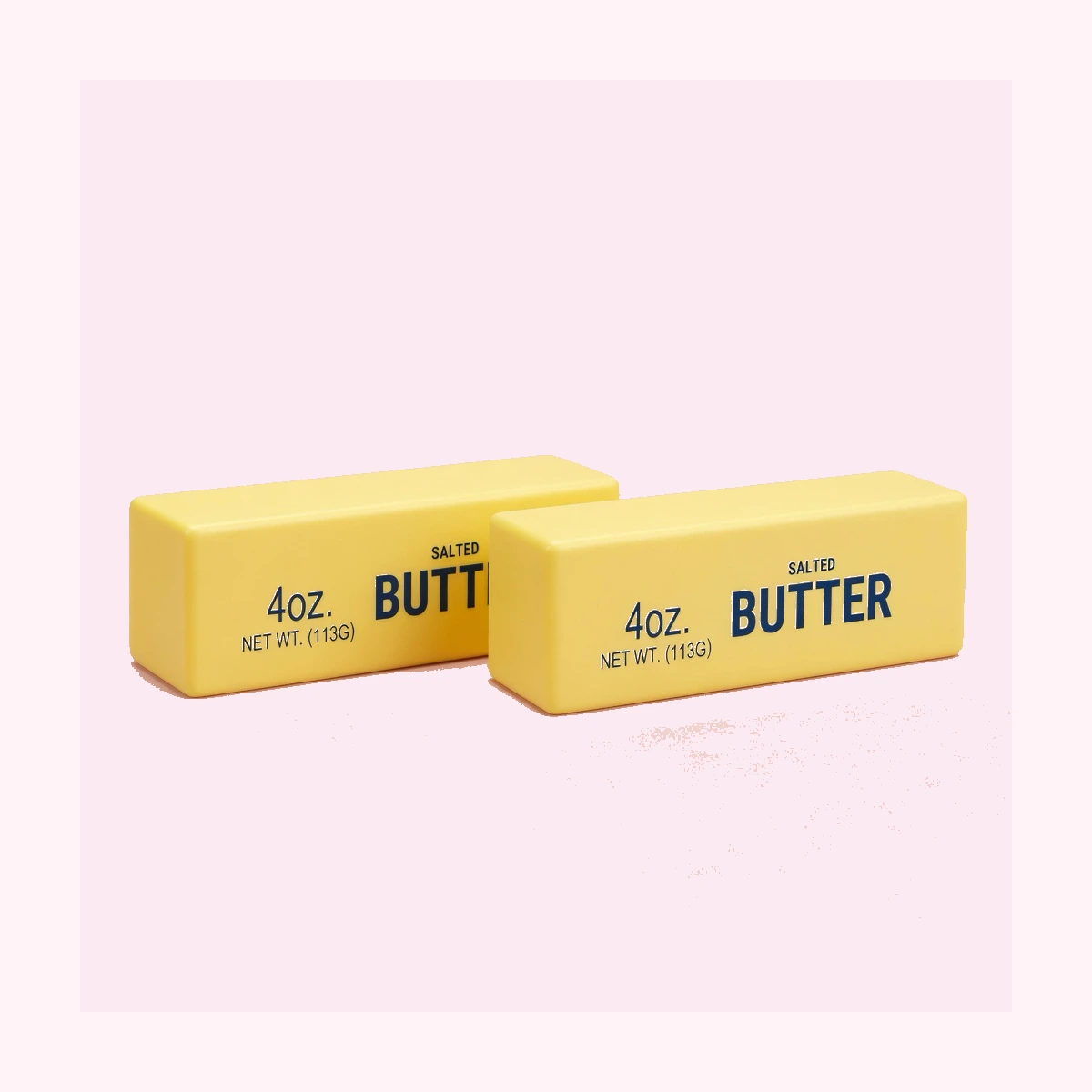
In the FunnySquishy catalog, the PU Foam Butter Squishy — That Buttery Slow Squeeze (FS-BUTTER-005, $12.99 USD) represents this molded foam construction.
The PU foam butter squishy is a soft, slow-rising stick-of-butter squishy toy made from dense premium foam that molds under your fingers and slowly springs back. It feels pillowy yet substantial, with a satisfying buttery drag on every squeeze. Great for kids 3+ and adults, it is built for stress relief, quiet fidgeting, and calming sensory play.
Unlike quick-snap stress balls, this dense premium-foam butter squishy delivers a slow, buttery rise that makes every squeeze feel unhurried and genuinely calming.
Verified Product Specifications (FS-BUTTER-005)
- Product Name: PU Foam Butter Squishy — That Buttery Slow Squeeze
- SKU: FS-BUTTER-005
- Price: $12.99 USD (Compare at $24.49 USD)
- Material / Structure: Dense premium PU foam (polyurethane memory foam)
- Form Factor: Stick of butter (palm-sized food novelty)
- Supplier Reference Weight: Approximately 45 g (weight may vary slightly by batch)
- Tactile Sensation: Soft, pillowy compression with slow-rising buttery drag
- Safety & Age Range: Designed for ages 3+ and adults; novelty toy, not real food, do not ingest
Care and Longevity: Keeping Stress Relievers Clean
Whether you use a homemade double-balloon stress ball or a molded PU foam squishy, proper maintenance prevents premature wear:
- Avoid Direct Sunlight: Ultraviolet rays break down both latex polymers and polyurethane foam, causing discoloration and loss of elasticity. Store your stress toys inside a desk drawer or carrying pouch.
- Dusting Powder for Latex: If your double-balloon stress ball feels tacky after washing with mild soap and water, lightly dust the surface with cornstarch or baby powder to restore a smooth, matte finish.
- Cleaning Foam Squishies: Wipe PU foam gently with a damp microfiber cloth. Do not soak open-cell foam submerged in water, as trapped moisture inside the core requires extended drying time.
- Repurposing Aging Foam: When an older PU foam toy eventually shows surface creasing after years of heavy squeezing, it can be repurposed cleanly as protective padding inside storage boxes, an ergonomic wrist cushion, or a novelty display piece.
Frequently Asked Questions
Can you make a squishy stress ball with flour?
Yes, all-purpose baking flour is the most popular filling for homemade stress balls. It creates a dense, dough-like hand feel that easily molds under thumb pressure and holds its shape until kneaded. Always use a double-balloon technique and squeeze out excess air before knotting to prevent sudden powder bursts.
What is the best filling to put in a DIY stress ball?
The best filling depends on your sensory goal:
- For moldable, clay-like dead weight: dry all-purpose flour.
- For velocity-dependent resistance: cornstarch and water (Oobleck).
- For a firm, textured grip with zero liquid or powder mess: dried long-grain rice.
- For slow-rising, leak-free desk compression: shredded memory foam scraps (or a factory-molded PU foam squishy).
How do you prevent DIY balloon stress balls from popping?
To prevent bursts:
- Pre-stretch your balloon before funnel filling to reduce wall tension.
- Expel all trapped air bubbles before tying the knot.
- Apply a second, cut balloon in reverse over the inner knotted balloon to double the skin thickness.
- Avoid playing with sharp fingernails or rings that could pierce the rubber membrane.
How does a PU foam squishy compare to a homemade balloon stress ball?
Homemade balloon stress balls rely on a thin rubber skin holding loose dry powder or liquid, which makes them susceptible to seam fatigue, punctures, and messy spills. Molded PU foam squishies are made from a solid, monolithic block of open-cell memory foam that breathes air in and out through micro-pores. Solid foam squishies never leak, burst, or require dusting powder, making them significantly safer around laptops and office equipment.