


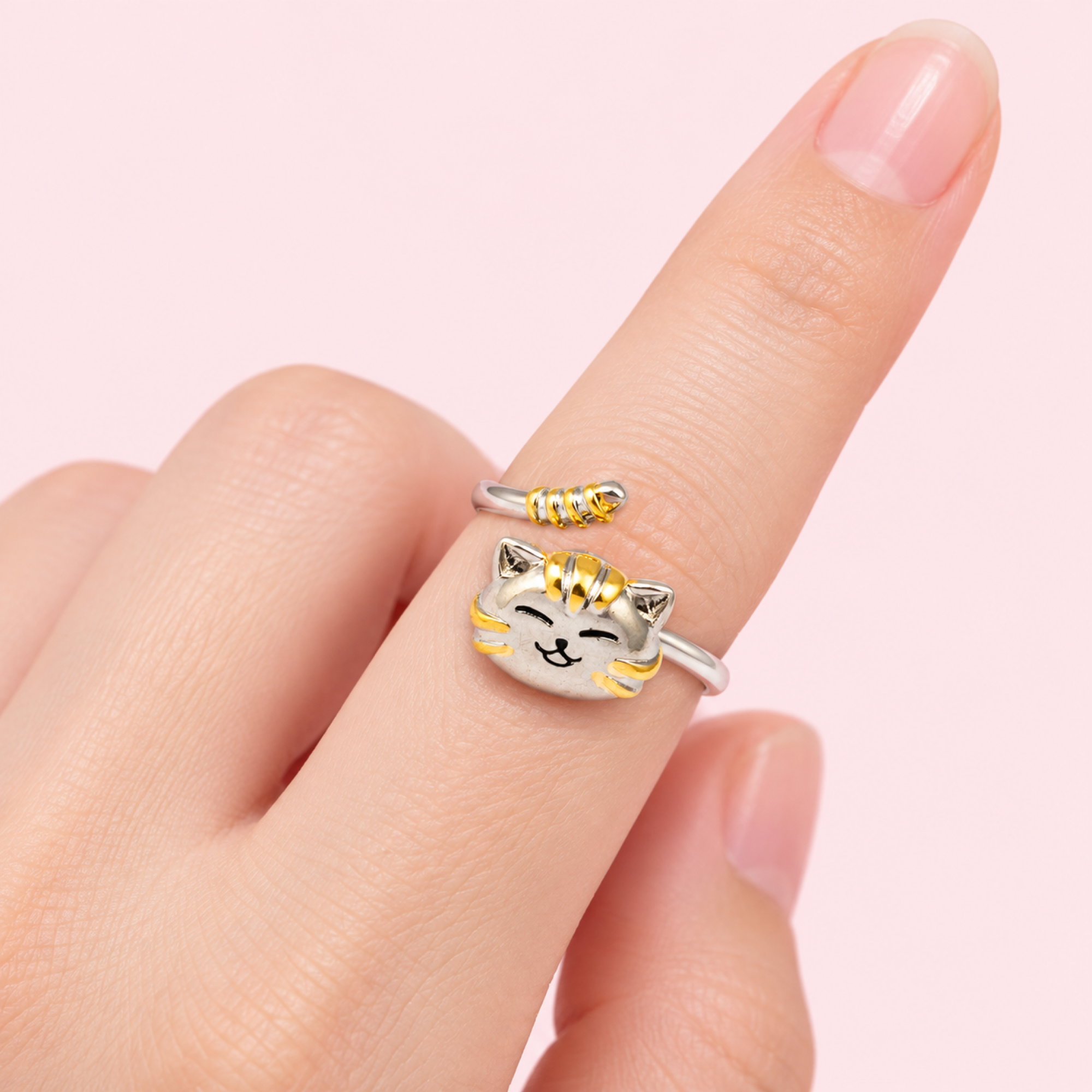
A ring is the only fidget that is on your hand in every situation where reaching into a bag would be conspicuous, which makes it the highest-availability object in the whole category. It is also the one most likely to be bought for how it looks and abandoned for how it works. The best fidget rings are the ones where the motion is still interesting in week four, and that comes down to three properties you can assess before ordering.
What the Best Fidget Rings Get Right: Three Properties
Which motion it offers. A spinning band gives continuous rotation under the thumb. Rolling beads give discrete, granular feedback. A textured surface gives no mechanism at all, just a pattern to track. These feel entirely different, and preference is strong — most people like one and are indifferent to the other two.
Whether it is sized or adjustable. A fixed-size ring is the better object and the riskier purchase. An adjustable or open band fits regardless and is slightly less refined. For a first fidget ring, adjustable is almost always the right call — the Cat Spinner Fidget Ring is adjustable, which removes the single most common reason these get returned.
Whether the working surface is also the visible surface. On a spinner ring, the outer band is both the thing you turn and the thing people see. That means wear appears exactly where the design is, so plated colours on a spinning band will brighten at the high points within months.
The Sizing Trap
Fidget rings run thicker than plain bands, because a spinning design is two bands stacked. Thickness changes fit: a wide ring needs roughly half a size more than a narrow one to pass the knuckle comfortably.
Two further complications. Fingers change through the day and with temperature, and a ring you are actively spinning is one you can throw off your hand — so aim for snug enough that it needs a small twist to remove. And the ring has to be reachable by the opposite thumb, which in practice means an index or middle finger of the non-dominant hand. Wearing it on a thumb looks obvious and makes it harder to operate, not easier.
The full sizing and materials detail is in the stainless steel fidget ring guide.
Judging the Motion From a Listing
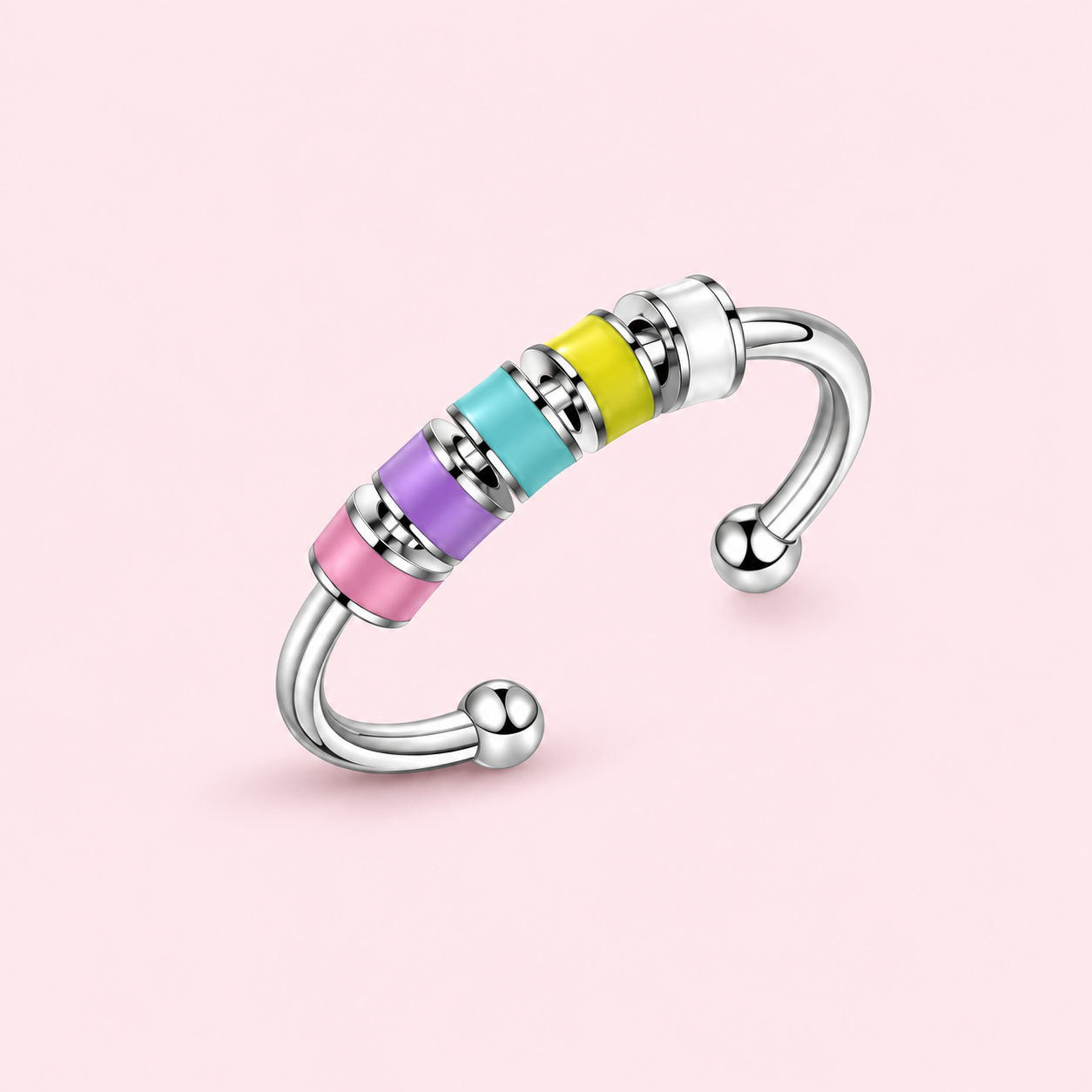
Look at the gap. A spinner ring with a visible gap between inner and outer bands will turn freely; one where the bands look flush is more likely to bind once skin oil gets in.
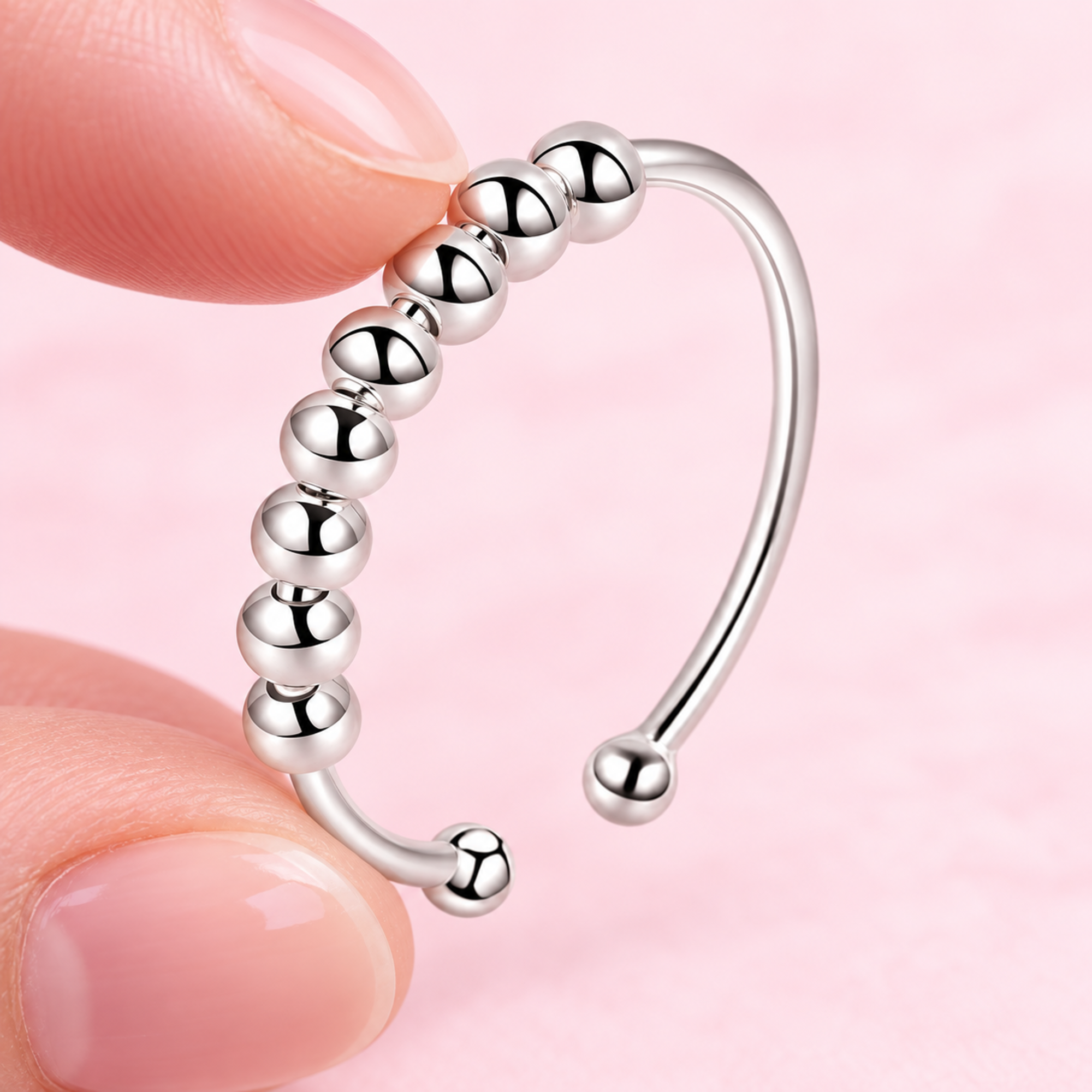
Look at the bead count. More beads mean finer, more frequent feedback; fewer, larger beads mean a more pronounced individual roll. Both are good, and they are different.
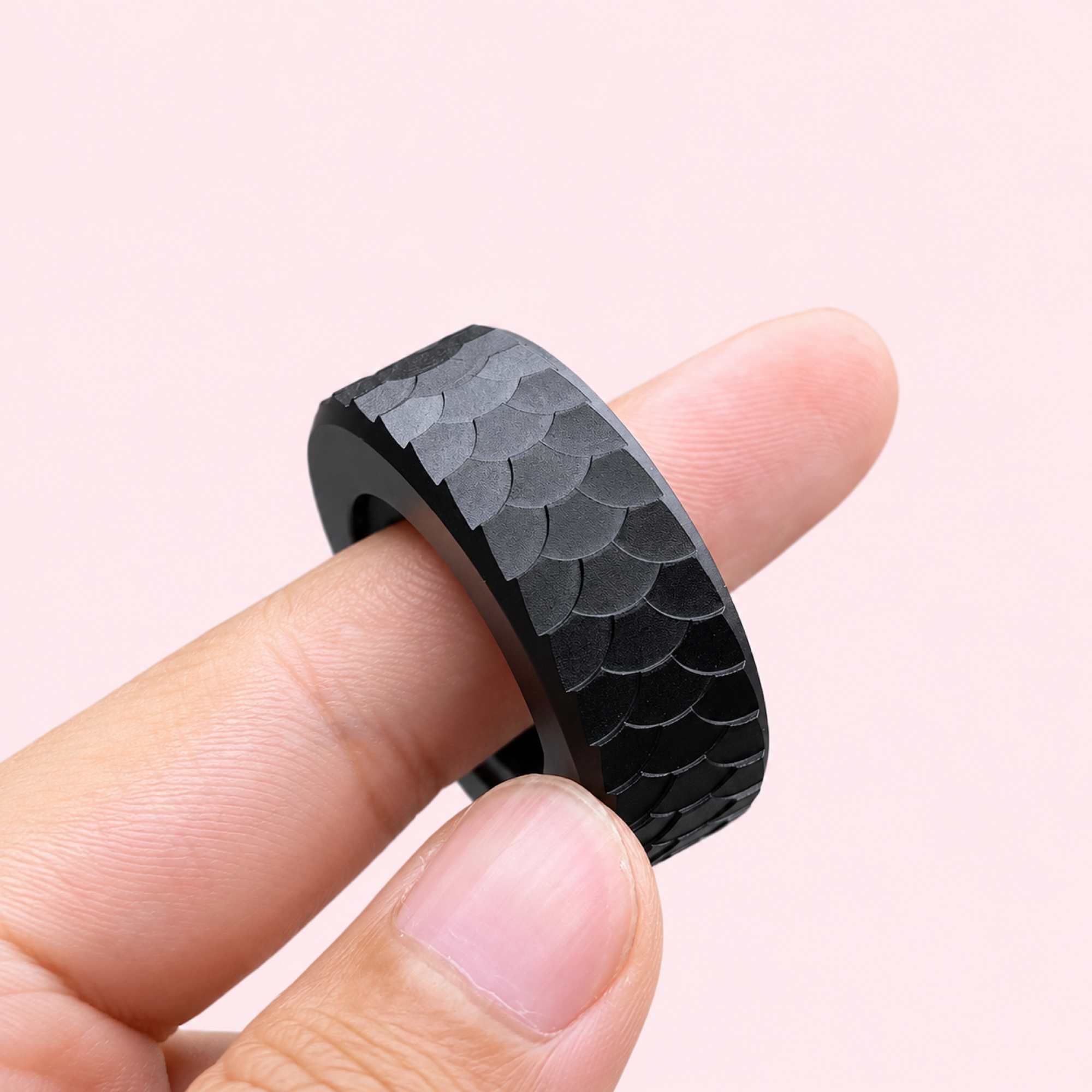
Look at the texture depth on a plain band. Shallow etching disappears under a thumb within seconds of use — the pattern has to be deep enough to feel, not just to photograph. The Black Mechanical Fidget Ring uses a layered scale texture for exactly this reason.
Look for whether silicone is an option. A Blue Silicone Sensory Spinner Ring flexes, so sizing is forgiving, it is warm in winter, and it cannot scratch anything. It is the easiest first purchase and the least durable of the three materials.
Where a Fidget Ring Wins and Loses
It wins on availability and discretion. Nobody can tell you are using it, it makes no sound your own hand does not damp, and it is never in the wrong bag. That is why it is the first recommendation in the everyday-carry shortlist.
It loses on depth. One motion, repeated, and after a few weeks it becomes a habit rather than a tool. That is not a fault — it is the trade you make for an object that is always there — but it does mean a ring works best paired with something with more mechanism at a desk.
What Wears, and What That Looks Like
Bare steel takes fine scratches that blend into a soft satin, so it looks essentially the same after years.
Plated colours brighten at the contact points. On a spinning band that means a bright line where your thumb runs.
The mechanism, not the metal, is what actually stops working. Skin oil and fibres collect between the bands and turn a smooth spin gritty. Rinse it in warm water while working the mechanism, dry it fully, and most rings come back. That single habit is the whole maintenance routine.
Beads in a channel can seize after an impact, and that one is not recoverable.
Choosing in One Line
Want continuous motion and a forgiving fit: an adjustable spinner ring.
Want discrete feedback and an easy fit: an open band with rolling beads.
Want something indestructible that never seizes: a textured band with no moving parts.
Wearing Two
Worth mentioning because it solves the depth problem without adding a desk object.
A spinner on one finger and a textured band on another gives you two different motions permanently available, and they do not compete the way two desk fidgets do — your thumb simply reaches for whichever one it wants. It also spreads the wear, since neither is being used constantly.
The constraint is that both need to be on the same hand for the opposite thumb to reach them, and that hand should be the non-dominant one. Two rings on a writing hand get in the way of writing, which is the fastest route to taking both off and losing them.
Three Rings, Three Motions
Cat Spinner Fidget Ring — adjustable spinner, continuous rotation, no sizing gamble.
Silver Rolling Bead Fidget Ring — open band with rolling beads, discrete tactile feedback and an easy fit.
Black Mechanical Fidget Ring — layered scale texture, no mechanism, nothing to seize or collect.
New to the format? Start with what a fidget ring is, which covers the four motions, which finger to wear one on and how long one lasts, then come back here to choose.
Browse the fidget rings range, or see all fidget toys if a worn fidget is not what you are after.