




A vehicle is the most restrictive place anyone tries to use a fidget, and almost no buying advice accounts for it. Car fidgets have to work with one hand at most, survive being dropped into a footwell, make no sound the driver has to interpret, and never become something loose in a cabin. That rules out most of the category before comfort or preference enters the conversation.
The obvious caveat first: anything that takes a driver’s attention off the road does not belong in a driver’s hands while the car is moving. What follows is about passengers, parked cars, and the specific case of a worn fidget that needs no attention at all.
The Four Rules a Car Applies
Nothing loose. Anything unsecured in a cabin moves under braking. A small hard object on a dashboard or seat is a projectile in a sudden stop, and that alone disqualifies most desk fidgets for use anywhere but a footwell-free pocket.
One hand, at most. Passengers have a hand free; drivers do not. Two-handed mechanisms — folding cubes, stretch toys, boards — are not car objects.
Nothing that rolls. A dropped round object goes under a seat and stays there. Flat, clipped or worn wins; spherical loses.
No ambiguous sounds. A sharp click in a quiet cabin reads as something breaking, and it will get commented on every single time. Silence is the only safe setting.
Car Fidgets That Actually Work in a Cabin
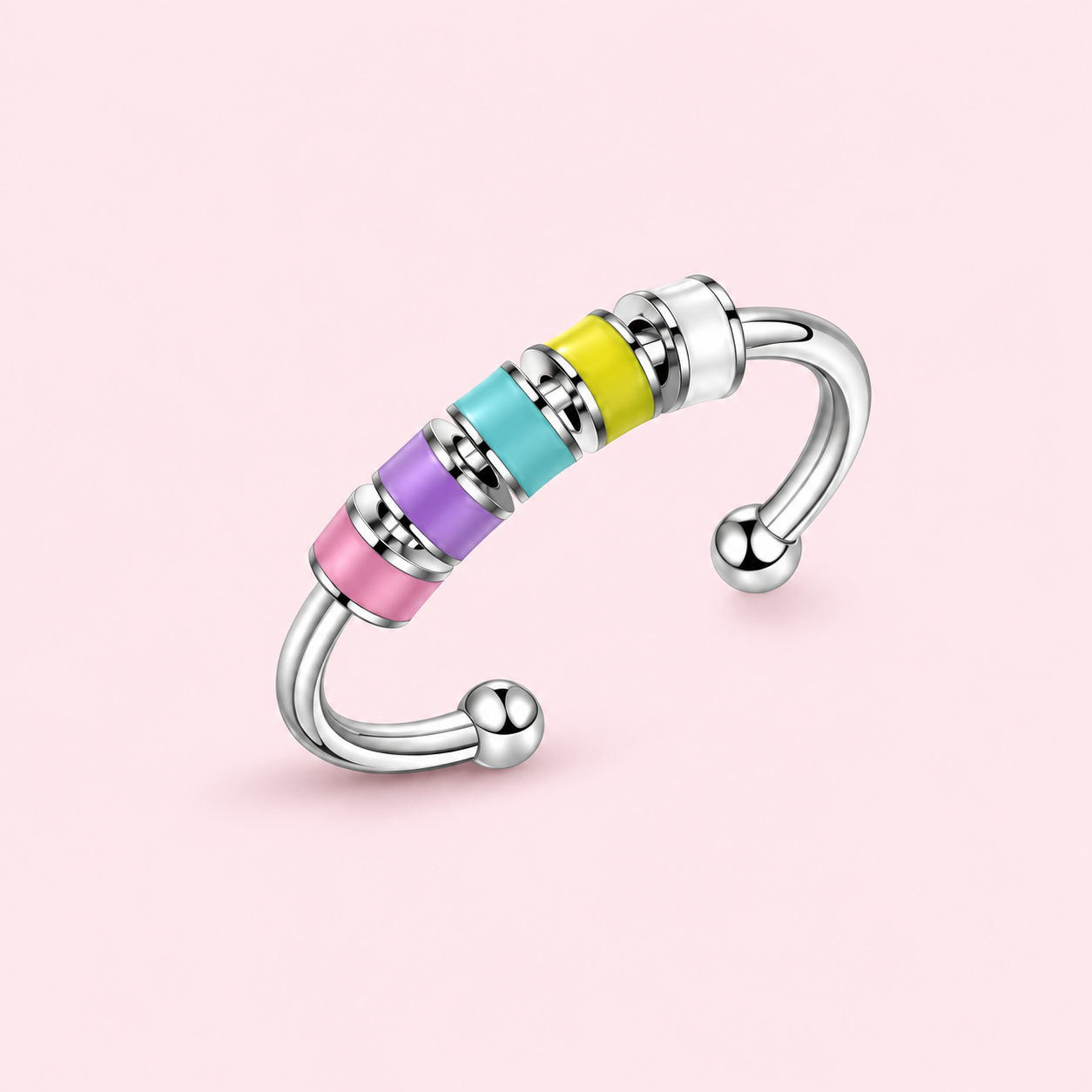
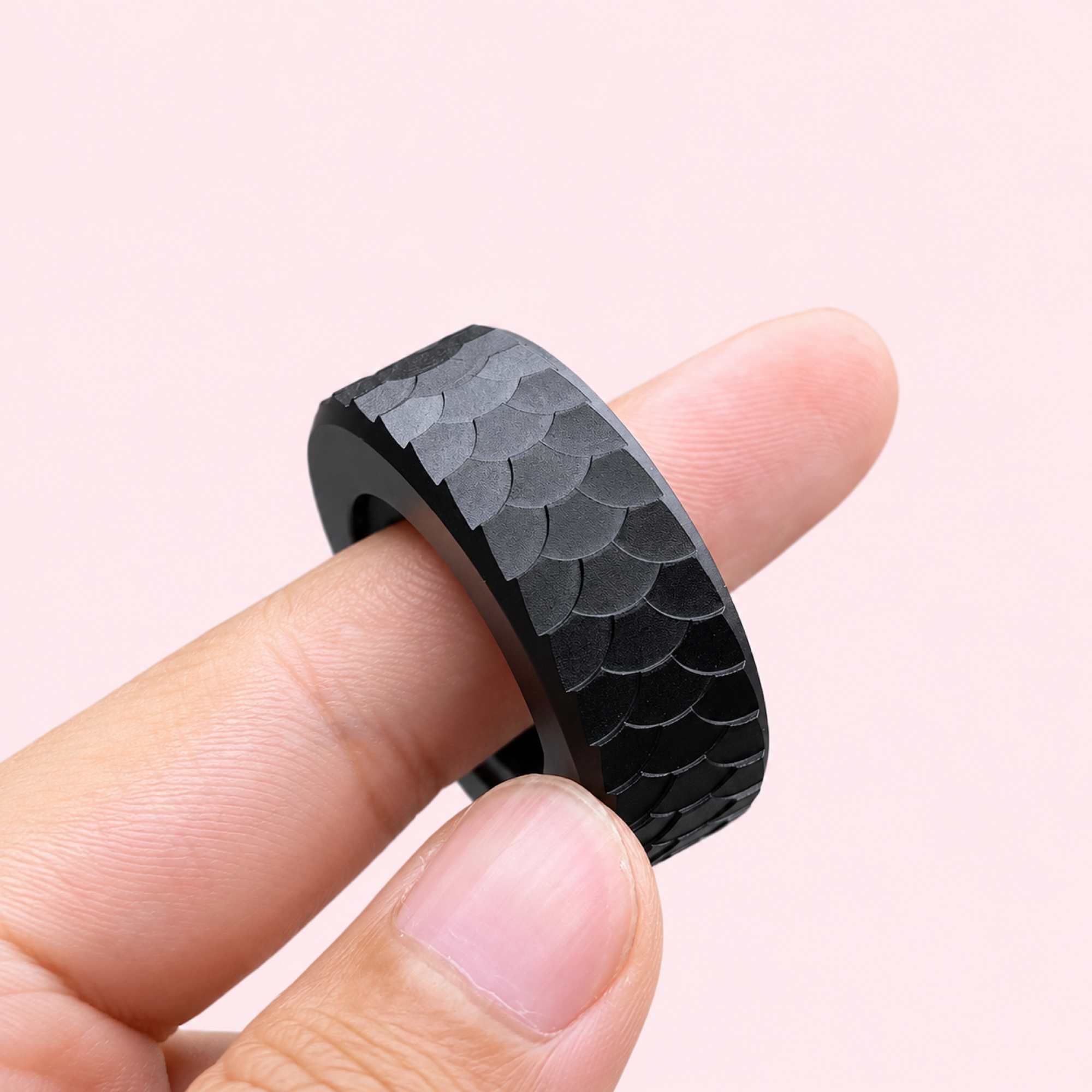
Worn fidgets. A ring is the only one of the car fidget toys on sale that meets all four rules without compromise. It cannot be dropped, cannot roll away, cannot become loose, and is damped by the hand wearing it. The Black Mechanical Fidget Ring is a textured band with no mechanism to fail, and it is available at a red light and invisible the rest of the time.
Flat sliders, clipped or pocketed. A thin object with a magnetic stop is silent and stays flat in a door pocket rather than rolling. The Magnetic Silicone Slider has a ridged face you can track by feel without looking down.
Soft compression toys, for passengers. A foam ball is silent, cannot damage anything if dropped, and needs no attention. It is the best passenger option and a poor driver option, since it occupies a whole hand.
Textured solids. Small, silent, no mechanism, and they live in a cup holder without consequence — the Silicone Sensory Stones are the type.
What to Leave at Home
Spinners. Visually distracting in a mirror’s field of view, and a dropped metal spinner in a footwell is both loud and irretrievable while driving.
Clickers of any kind. The sound is the problem, not the mechanism, and the room-by-room judgement is set out in which clicks are meeting-safe.
Bead-filled squeeze toys, for the same reason — the crunch is audible by design, as compared in what the filling changes.
Anything with loose parts. A magnetic segmented pen will shed a segment into a seat gap on the first sharp corner, which is described in how a magnetic fidget pen works.
Heat Is the Real Enemy
The single biggest difference between a car and any other environment, and it destroys soft fidgets rather than merely inconveniencing them.
A parked car in summer reaches temperatures that permanently stiffen slow-rising foam, soften gel skins until they deform, and weaken the adhesive holding magnets in their recesses. A toy left on a dashboard through one hot afternoon can come back changed — the ageing processes are set out in yellow, sticky or hard.
Sunlight adds to it. Dashboards receive direct, prolonged sun, which yellows pale and clear materials faster than anywhere else in ordinary use.
The practical answer is a glovebox or a door pocket rather than a dashboard or a cup holder, and accepting that anything kept permanently in a car is a consumable.
Where to Keep Them
A door pocket is the best place: shallow, reachable, and objects do not migrate far.
A glovebox protects from heat and sun but puts the fidget out of reach, which in practice means it stops being used.
A cup holder is the worst of both — hot, sunny, and the object ends up sticky.
Clip anything clippable to a bag or a keyring so it leaves the car with you rather than living in it.
For Longer Journeys
Two objects rather than one, with different actions, because a single sensation on a five-hour drive stops registering after the first hour — the same rotation logic that applies to a desk setup in what holds up after a month on a desk.
Both should be silent. On a long drive with other people in the cabin, noise is the thing that gets a fidget confiscated.
The Passenger Case Is Different
Everything above tightens for a driver and loosens considerably for a passenger, and it is worth separating the two rather than applying one rule.
A passenger has both hands, a lap to catch things in, and no obligation to look anywhere in particular. That opens up the deeper mechanisms — folding cubes, stretch toys, anything two-handed — which are genuinely good for long journeys precisely because they absorb attention.
The constraints that remain are heat, noise and loose parts. A passenger can use a folding cube happily; they still should not use a clicker in a shared cabin, and they still should not leave anything soft on the parcel shelf in August.
This piece is about hard fidgets in an adult’s hands. If the cabin problem you actually have is a back seat full of children and four hours to fill, the packing list is a different one, and it is in road trip toys that keep the backseat quiet — soft, drop-proof, and chosen for a car seat rather than a pocket.
Three That Suit a Cabin
Black Mechanical Fidget Ring — worn, silent, cannot be dropped or lost under a seat.
Magnetic Silicone Slider — flat, silent, stays put in a door pocket and works by feel.
Silicone Sensory Stones — soft solids with nothing to break, ideal for a passenger.
Browse the desk and everyday-carry range, or all fidget toys to check any candidate against the four rules above.