


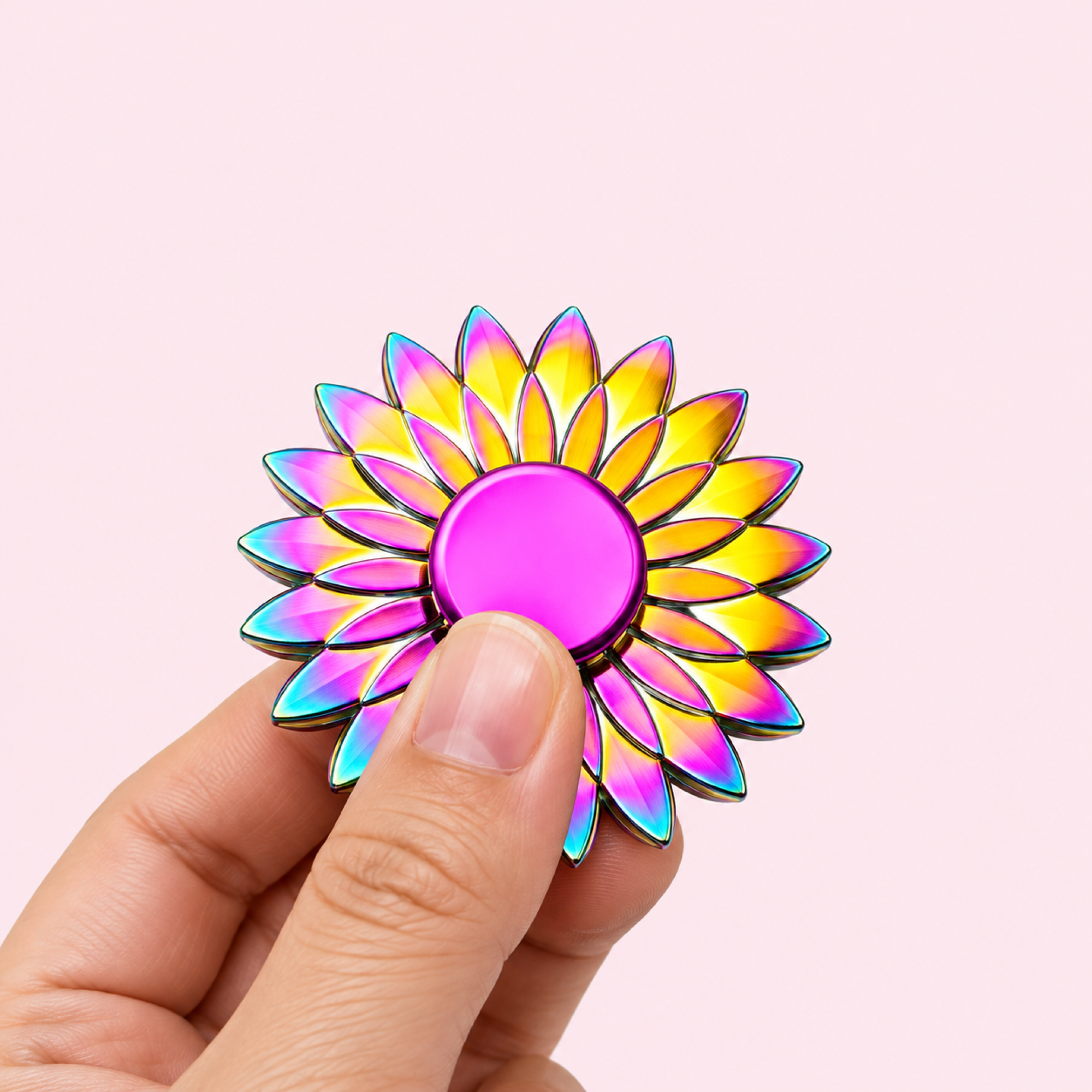
Ask which material wins and the honest answer is that they are solving different problems. A metal fidget spinner is a desk object that happens to be portable; an acrylic or plastic one is a pocket object that happens to spin. Everything people argue about — spin duration, noise, how good it feels at the moment of release — follows from three variables, and material only directly controls one of them.
The Three Variables That Decide How a Spinner Behaves
Mass, and where the mass sits. Spin duration is governed by rotational inertia, and inertia depends far more on how far the mass sits from the centre than on how much mass there is. A heavy hub spins no longer than a light one. A modest amount of metal concentrated in three outer arms spins considerably longer than the same weight spread evenly through a disc. This is why two spinners of identical weight can behave completely differently, and why “heavier spins longer” is only true when the extra weight lands at the rim.
The bearing. The bearing determines both how long the spin decays and what you hear while it does. It is also the part that is almost never specified on a product page, and the part that varies most between units. A smooth bearing is nearly silent; a rough one produces a fine whirr that rises with speed.
The grip geometry. Whether the spinner sits comfortably pinched between finger and thumb decides how much energy you can put in on the flick. A wide, flat body with a low profile takes a cleaner flick than a thick one, which means it starts faster regardless of material.
Material shapes the first variable and constrains the third. It does not determine the second at all.
What a Metal Fidget Spinner Is Actually Better At
Longer spins, for the reason above: metal puts mass at the rim without the arms becoming bulky. A three-arm metal body is the classic shape because it is the most efficient way to move weight outward while staying pinchable.
More momentum in the hand. There is a distinct gyroscopic resistance when you tilt a heavy spinner while it runs, and that sensation is most of the appeal for people who prefer metal. Plastic bodies simply do not have the mass to produce it.
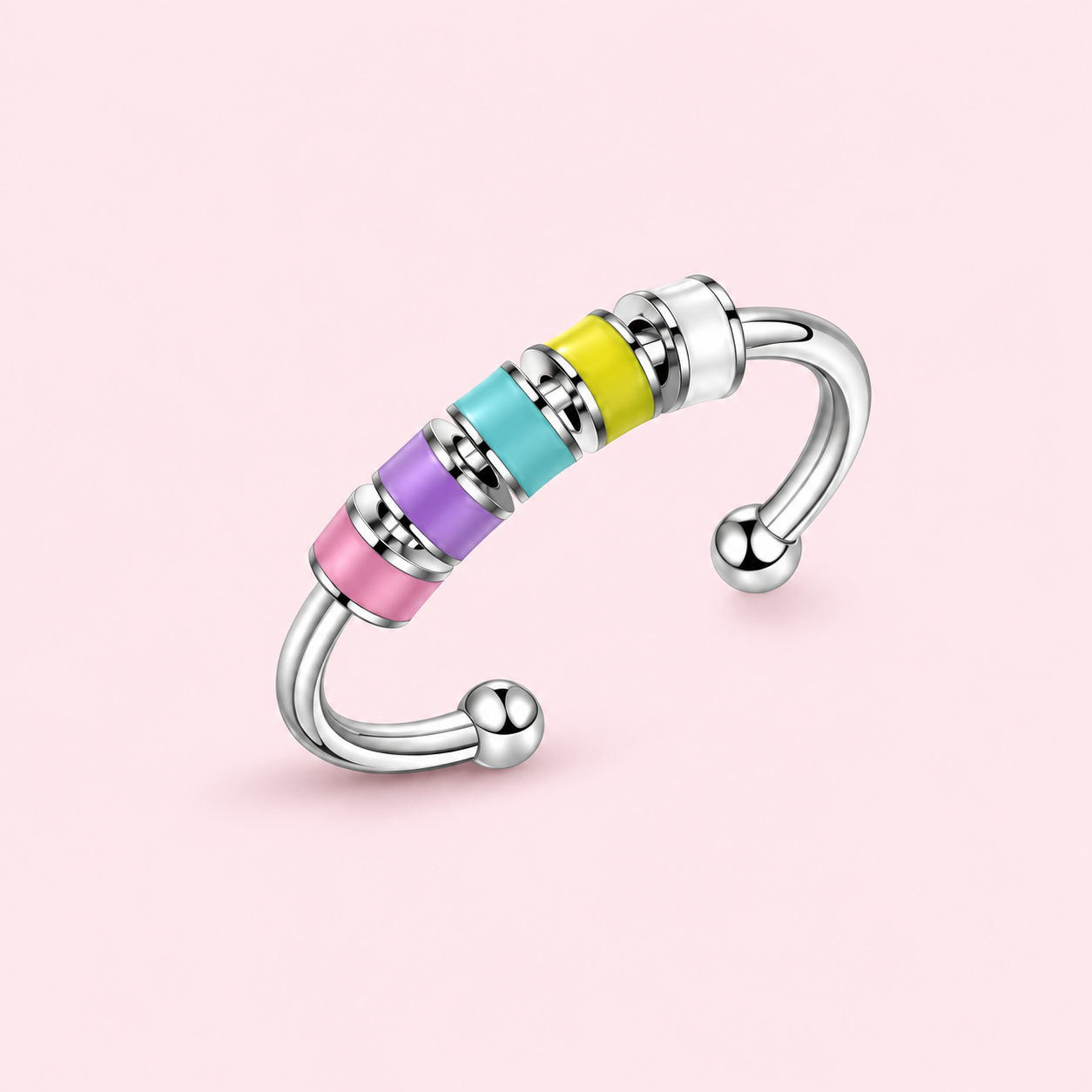
Better surface longevity. Anodised and plated finishes scuff rather than crack. The Rainbow Metal Fidget Spinner shows a rainbow finish with a visible pink centre cap, and finishes like these mark over time in a way that reads as wear rather than damage — the same way a metal keyring does.
The costs are equally real. Metal is heavier in a pocket, it is louder if it hits a hard floor, and a dropped metal spinner marks a laminate desk. Anyone who fidgets standing up, in a lecture theatre or on transport should weigh that seriously.
What Plastic and Acrylic Are Actually Better At
Disappearing. The Purple Cat Acrylic Fidget Spinner is 3 × 3 × 0.5 inches and 35 grams — a genuine fingertip object, thin enough to live in a shirt pocket and light enough that you stop noticing it. That is a different product category from a desk spinner, not a cheaper version of one.
Being visible while it runs. Transparent acrylic is the only material where the artwork stays legible at speed, which is why a design like the three purple cats on that model still reads as cats at speed. Metal gives you a blur.
Surviving drops onto the floor rather than the floor surviving them. Acrylic can chip at a corner; it will not dent a desk or a foot.
The trade-off is spin duration. A 35-gram body has a fraction of the rotational inertia of a metal one, so it slows perceptibly sooner. Whether that matters depends entirely on whether you watch the spin or just feel the flick.
Which to Buy, Decided in One Question
Do you spin it and watch it, or spin it and keep working?
Watchers should buy metal. The long decay is the whole experience, and the extra weight is not a penalty because the spinner lives on a desk. Two metal bodies with different arm shapes — the Metallic Purple Blue Fidget Spinner alongside the rainbow model — will feel more different from each other than either does from a third of the same shape, because arm geometry drives the difference more than finish does.
Workers should buy light and thin. If the spinner runs for eight seconds instead of ninety, it does not matter; what matters is that it is in your hand before you consciously decided to pick it up, which only happens with something you carry without noticing.
Anyone buying for a shared room should consider that neither is truly silent once the bearing wears, and that the noise a spinner makes when it is dropped is louder than the noise it makes when it runs. Our office etiquette guide to metal and magnetic fidgets covers that end of the problem, including what a hot microphone does with bearing whirr.
Care, and the Part That Fails
Bearings collect pocket lint and skin oil, and both show up as a shorter, rougher spin rather than as an obvious fault. A dry bearing spun with grit in it wears fast. Blowing it out and leaving it dry is better than adding household oil, which thickens and collects more dust than it displaces.
Centre caps are the other failure point on both materials: they are usually press-fit or threaded, and a cap that works loose will rattle at speed long before it falls off. If a spinner has become buzzy for no clear reason, check the caps before blaming the bearing.
Arms themselves almost never fail. In practice a spinner is retired because the bearing got tired or because it stopped getting picked up, which is the pattern across every fidget category we stock.
Three to Compare Directly
Rainbow Metal Fidget Spinner — metal body, rainbow finish, visible pink centre cap. The desk-spinner profile: mass at the rim, long decay, best used somewhere it will not be dropped.
Metallic Purple Blue Fidget Spinner — three-arm metallic body in purple-blue. Same category as the rainbow model with different arm geometry, which is where the real difference in feel comes from.
Purple Cat Acrylic Fidget Spinner — transparent acrylic, three purple cat illustrations, blue bearing centre, 3 × 3 × 0.5 in and 35 g. The carry-everywhere option, and the only one whose artwork survives being spun.
See the full fidget spinners range, or read what actually holds up after a month on a desk if you are choosing between a spinner and something else entirely.