



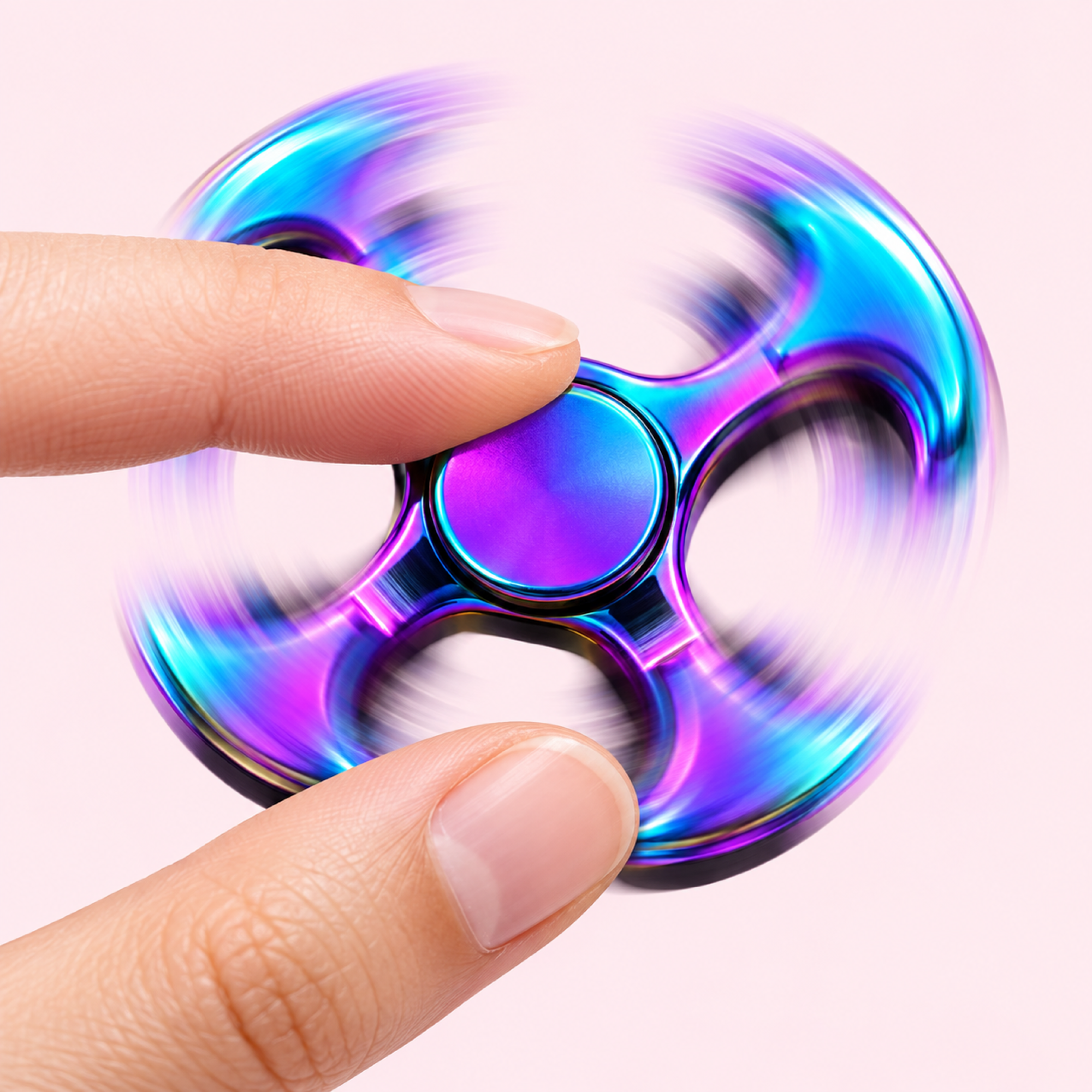
There is no such thing as a noiseless fidget spinner in the absolute sense, but there is a large gap between one you can use in a quiet room and one you cannot, and the difference is rarely the part people blame. A spinner produces four separate sounds with four separate causes. Three of them are fixable in about a minute; the fourth decides whether the object belongs in a shared room at all.
The Four Sounds
Bearing whirr. A continuous hiss or whine from the centre while the spinner runs. This is the one everybody blames and it is usually the quietest of the four.
Cap rattle. A small, irregular tick that comes and goes as the spin decays. Caused by a cap that has worked loose, and it is the single most common source of unwanted noise.
Body resonance. A low hum you hear in metal three-arm bodies when the arms act as a sounding surface. It scales with mass, which is why heavy spinners sound louder even with an identical bearing.
Surface contact. The loudest sound by a wide margin — a spinner set down on a hard desk while still running, or dropped. Nothing about the spinner fixes this.
What You Can Fix in a Minute
Tighten the caps. Hold the centre and check whether either cap moves under a thumbnail. Most rattle disappears here, and it recurs, so it is worth rechecking monthly.
Clean the bearing. Lint in the race raises the whirr and shortens the spin at the same time. Blow it out dry rather than adding lubricant — a bearing that has been oiled runs quieter for a week and then collects far more dust than it started with.
Never set it down running. Stop the spin in your hand. This one habit removes more noise than any hardware change.
What You Cannot Fix
Mass. A 120-gram brass body will resonate and a 35-gram acrylic body will not, and no amount of adjustment changes that. If quiet matters more than spin time, the material choice is the decision, and the full trade is set out in metal against plastic.
Bearing grade. A worn or low-grade bearing whines, and replacing it is usually more effort than the spinner is worth — the component itself is explained in what the bearing decides.
Visible motion. This is the one that actually gets a spinner confiscated. A spinner is silent to a microphone and extremely loud to a person sitting across from you, because a rotating object in peripheral vision is impossible to ignore. That is a different problem from sound and it does not have a hardware fix.
Which Formats Are a Noiseless Fidget Spinner by Construction
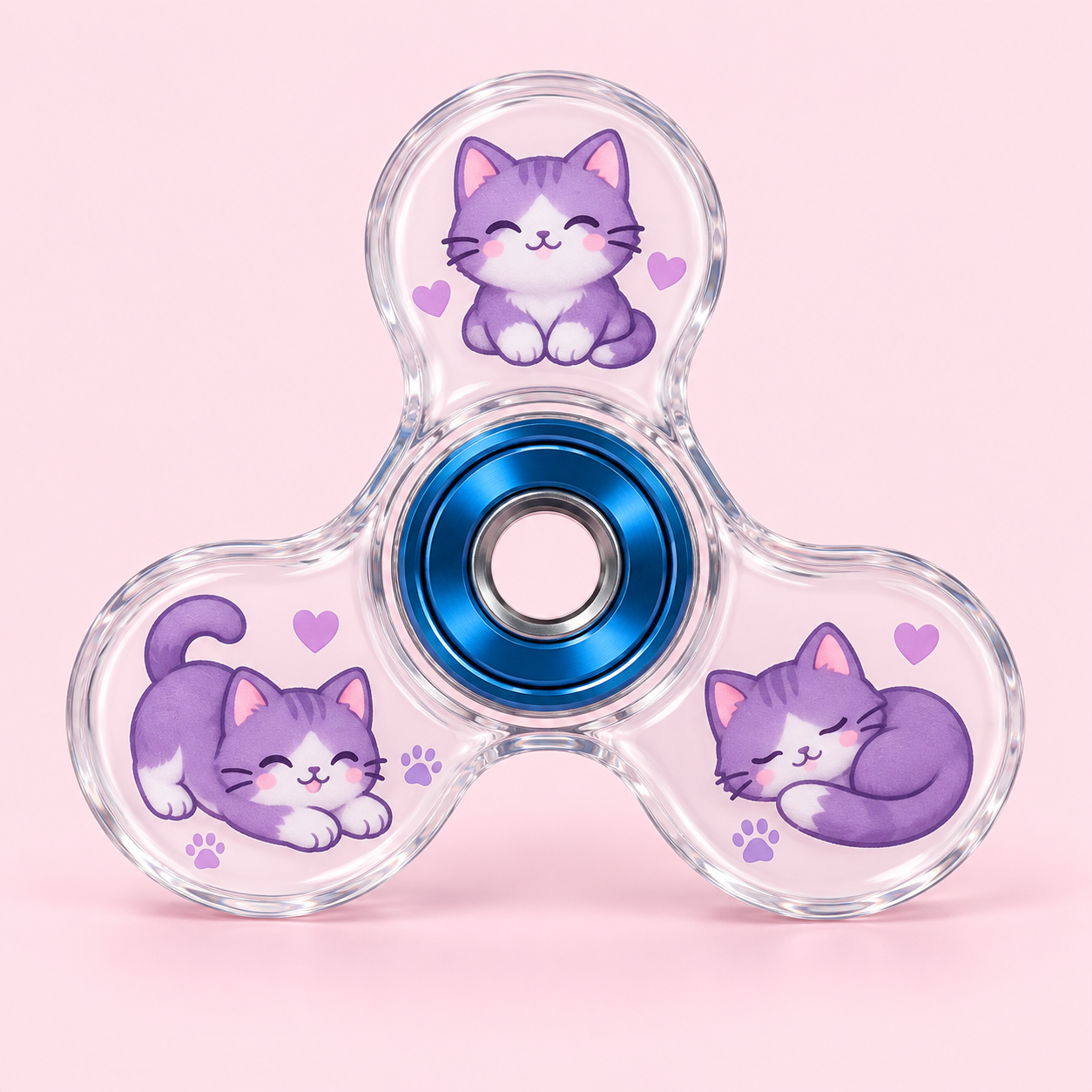
Light acrylic bodies. Low mass means no resonance, and a small bearing at low speed produces very little whirr. The Purple Cat Acrylic Fidget Spinner at 35 grams is the quiet end of the category.
Compact finger spinners. Less radius, less speed, less of everything including noise. The Pink Petal Glitter Spinner is this format.
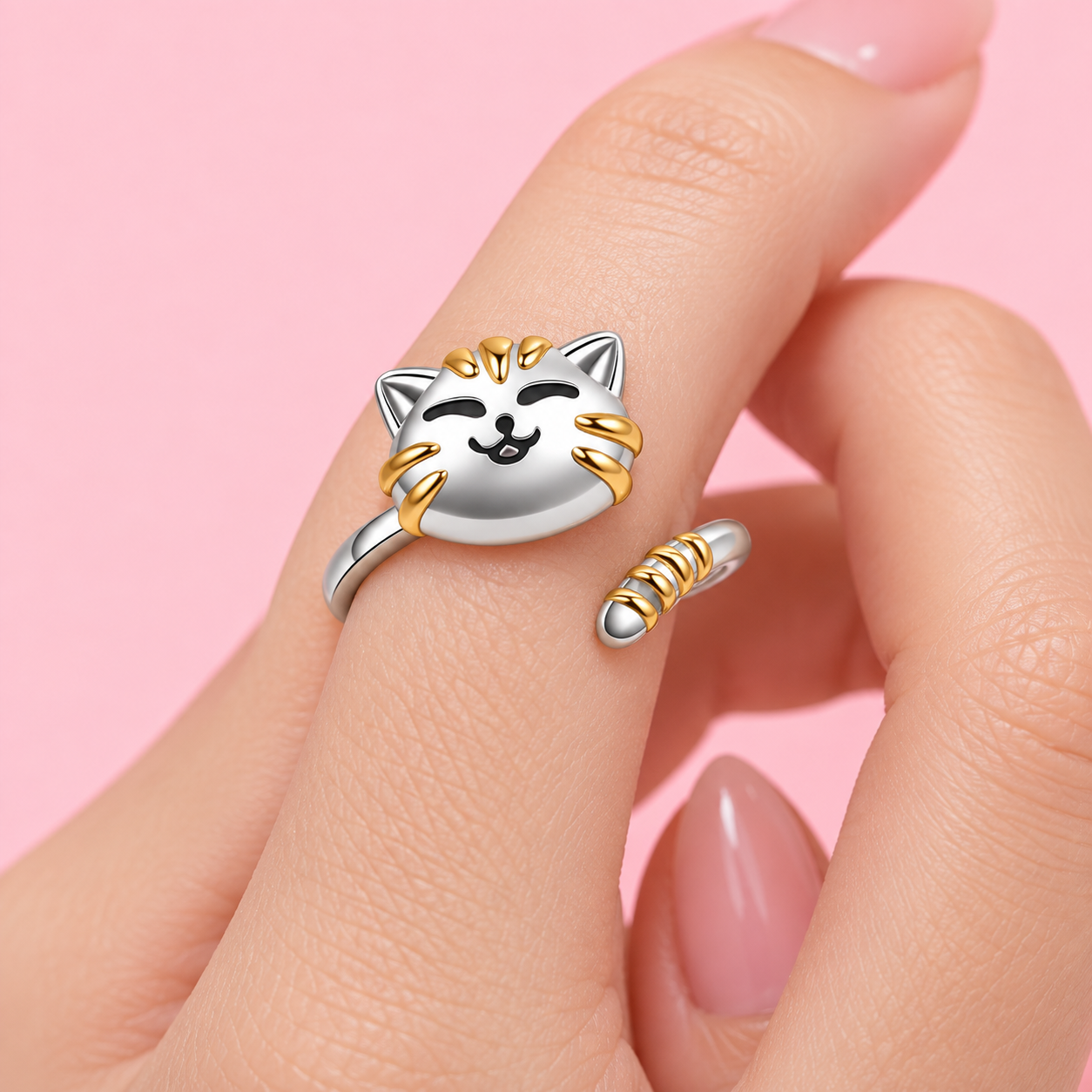
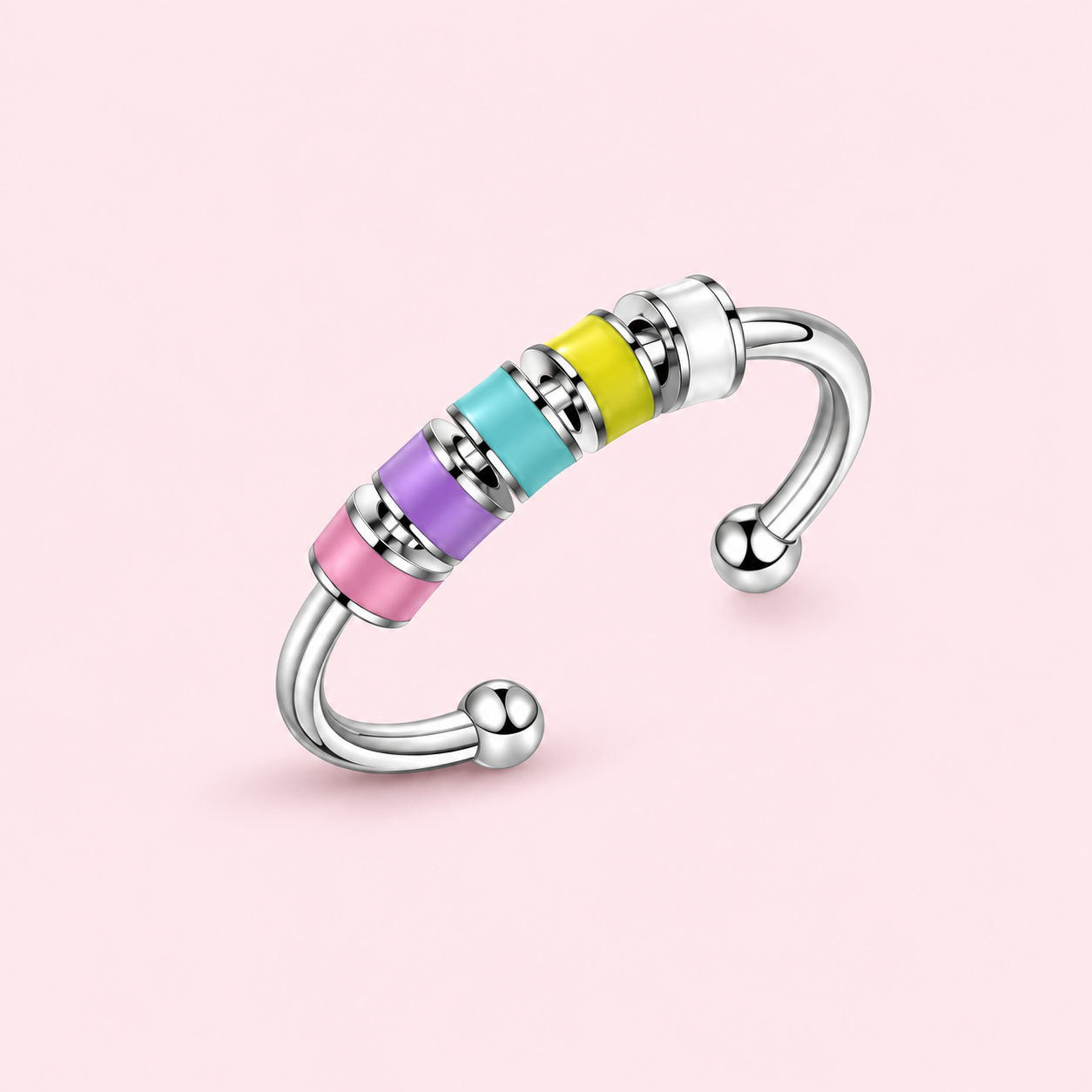
Ring spinners. The quietest rotation available, because the moving part is small, damped by the finger it sits on, and never set down on a desk. The Sunburst Spinner Ring is the example.
Sealed or shielded bearings in any body, since the shield keeps the lint out that causes most whirr in the first place.
A Quiet Fidget Spinner Is Not Always the Right Answer
If the room you are worried about is a meeting or a classroom, the honest answer is that no spinner solves it, because the problem is the visible motion rather than the sound.
Rotation asks to be watched. That is what it is for, and it is why a spinner works at a desk you sit at alone and fails in a room where people face each other.
The formats that survive a shared room are the ones that hide inside a closed hand — a worn ring, a flat slider, a soft solid. The full sort is in the quietest fidget toys, which covers the hard-goods end, and the room-by-room judgement on clicks is in meeting-safe clicks.
How to Make a Spinner Quieter, in Order
Start with the caps, because loose caps cause most of the noise people attribute to the bearing and cost nothing to fix.
Then clean the bearing dry. Compressed air or a firm blow, no solvent unless you intend to re-pack it, and no oil — the spin-time cost of a dry bearing is real but small, and the dust penalty of an oiled one compounds.
Then change how you use it. Stopping the spin in your hand rather than on the desk eliminates the loudest sound the object makes.
Only then consider the spinner itself. If it still bothers the room after those three steps, the body is too heavy for the room and no adjustment will change that.
The Ten-Second Check Before You Buy
Spin it and listen for a tick that changes with each rotation. That is cap rattle and it is fixable.
A steady hiss that stays constant is the bearing, and it is what it is.
A low hum that you feel as much as hear is the body, and it means the object is heavy — which you may want for other reasons.
Silence followed by a crack is the sound of a spinner meeting a desk, and that is a habit rather than a product fault.
Three Quiet Formats
Purple Cat Acrylic Fidget Spinner — 35 g, 3 × 3 × 0.5 in, too light to resonate.
Pink Petal Glitter Spinner — compact finger format, low speed and low noise.
Sunburst Spinner Ring — worn rotation, damped by the hand, never touches a desk.
Browse the fidget spinners range, or all fidget toys if visible motion is the problem rather than sound.