


Cut one open and the answer is less mysterious than the marketing suggests. What is in a stress ball depends entirely on which of four constructions it uses, and each construction has an interior that behaves according to fairly simple physics. Knowing what is happening inside explains almost everything about how one feels — the resistance curve, the speed it recovers, whether it makes a sound, and how it eventually stops working.
What Is in a Stress Ball: The Four Interiors
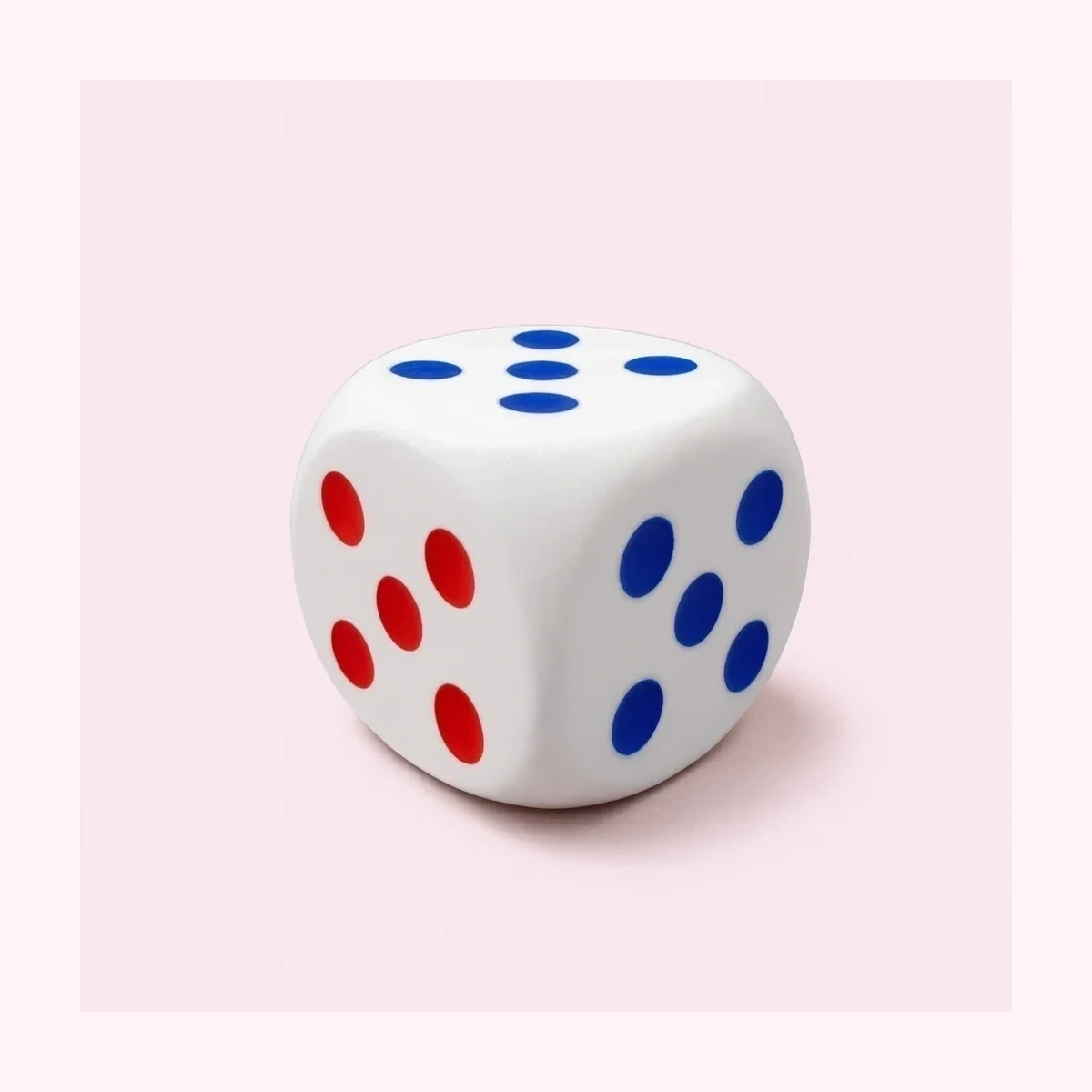
Solid closed-cell foam: gas in sealed pockets. The most common build, and the one where there is no separate filling at all. A moulded polymer containing millions of tiny sealed bubbles. Squeeze it and you are compressing the gas inside those bubbles; release and the gas expands and pushes the structure back. Because every cell is sealed, nothing can leak, which is why this is the most durable interior. A 3-inch foam dice is one solid piece of this.
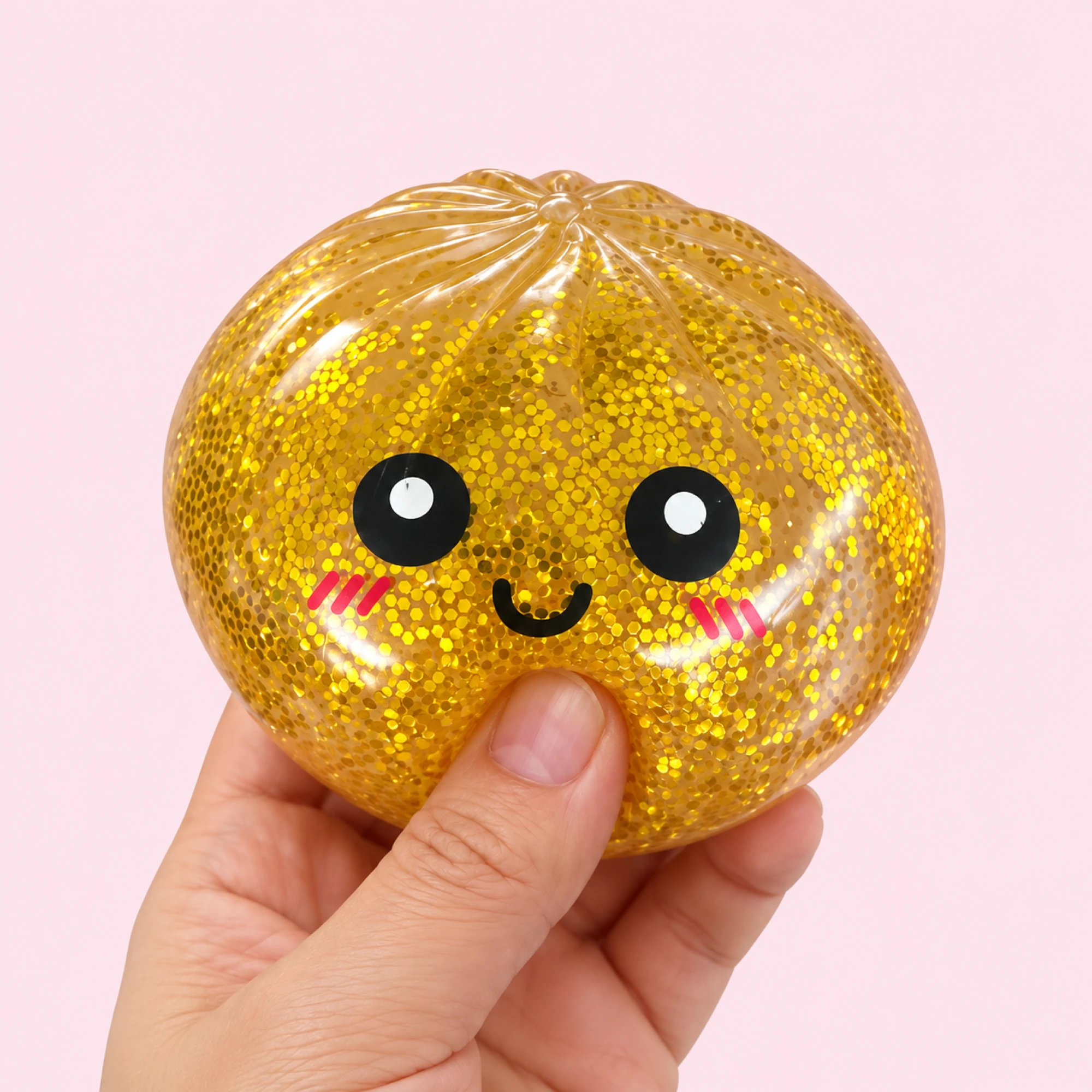
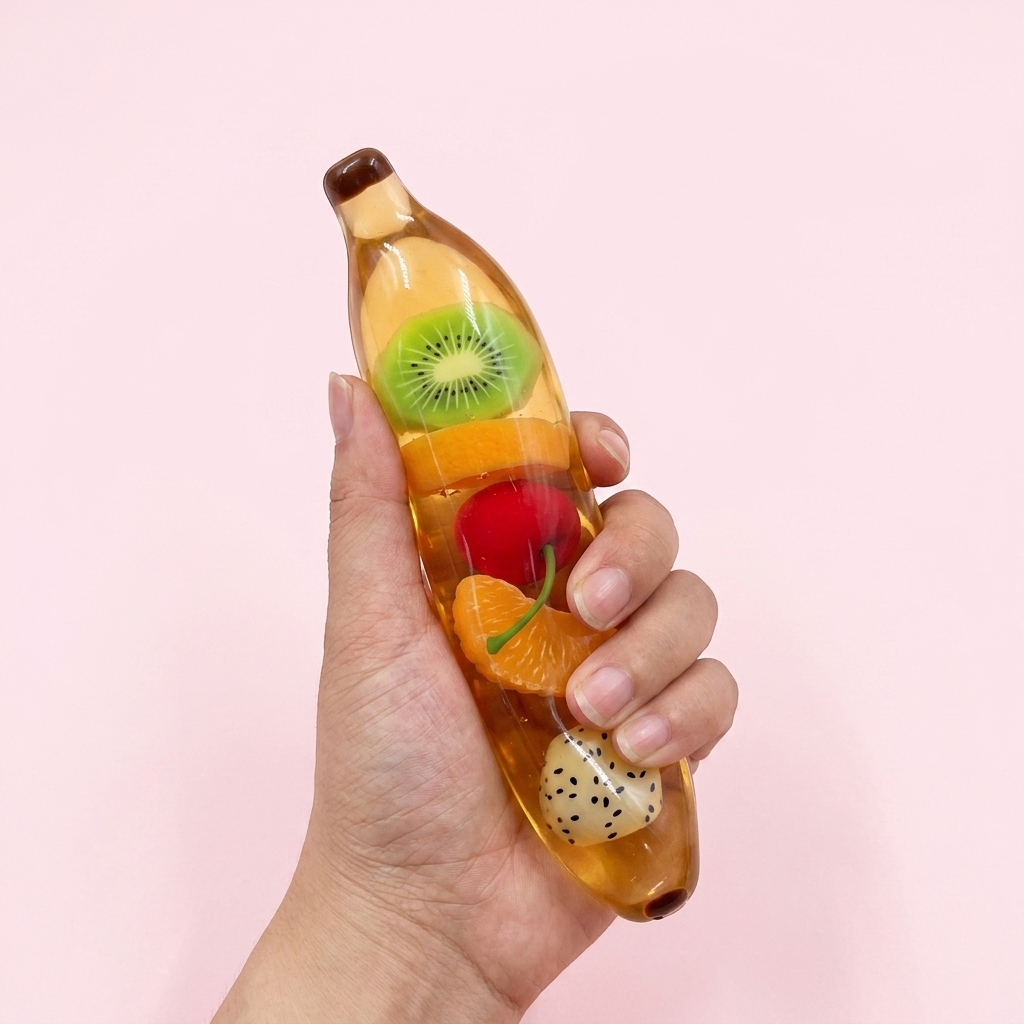
Gel and viscous fluid: a skin holding a liquid. A thin elastic outer layer with a thick fluid inside. Squeezing does not compress the fluid — liquids barely compress — it displaces it, which is why the resistance is low until the fluid runs out of room and then rises abruptly. The slow return happens because the fluid has to flow back through itself. The fluid-filled watermelon is a 6 cm example of this build.
Beads and water beads: many small solids in a skin. Resistance comes from the beads jamming against each other rather than from compression, and the audible crunch is thousands of tiny contacts shifting at once. Water beads are a superabsorbent polymer that has taken up water, which is why they are heavier and squishier than plastic beads.
Open-cell slow-rising foam: gas that has to move. This is the interior behind the slow-rise sensation. The cells are interconnected rather than sealed, so squeezing pushes air from cell to cell and out, and recovery takes seconds because the air has to work its way back in through the same narrow paths. It is the same physics as a memory-foam pillow.
Why Each One Feels the Way It Does
The resistance curve follows directly from the interior.
Closed-cell foam gives a steady, linear-feeling build-up because you are compressing gas the whole way.
Gel gives a soft start and a hard wall, because displacement is easy until there is nowhere left for the fluid to go.
Beads give a granular, slightly unpredictable resistance, because the jamming point depends on how the beads happen to be arranged at that moment.
Open-cell foam gives almost no resistance and almost no rebound speed, which reads as “slow” rather than “soft”.
Which one suits you comes down to whether you want to work against something or sink into it, and that choice is laid out against the buying decision in what the filling changes.
What Is Not Inside
Worth stating because the question comes up. None of these interiors is food, and none should be opened deliberately. Gel and bead fills are not edible, they are not intended to be handled outside the skin, and a split toy should be thrown away rather than played with.
That is a practical statement rather than a claim about any specific product: whatever the filling, a stress ball is designed to be squeezed intact.
How Each Interior Fails
Closed-cell foam tears at the surface, slowly and visibly, usually at whichever point your thumb favours.
Gel skins thin where they stretch most and eventually split, which is abrupt rather than gradual.
Bead fills fail at the seam, and they warn you: the ball goes soft in one area as beads migrate away from the weak point.
Open-cell foam gradually loses its rebound as the cell walls break down, so a slow-rising toy that has been used for a year rises slower and less completely than it did.
Only the first of those is genuinely a slow, predictable decline, which is the main practical argument for solid foam if you intend to use something daily.
The Two Things That Age All of Them
Ultraviolet light, which yellows and embrittles clear and pale materials from the outside in. A ball on a windowsill ages several times faster than one in a drawer.
Heat, which softens everything and permanently changes slow-rising foam in particular. A car in summer is the worst place to leave any of these.
Neither is avoidable in use; both are avoidable in storage, and storage is where a stress ball spends most of its life.
Telling Them Apart Without Cutting One Open
Three quick checks identify any of the four in a few seconds.
Press a dent and count. If it springs back instantly, it is closed-cell foam. If it takes several seconds, it is open-cell slow-rising foam. If it returns at a medium pace with a fluid feel, it is gel.
Listen while you squeeze. A crunch means beads. Silence means foam or gel.
Roll it between your palms. A gel body has a detectable slosh and a shifting centre of mass; a foam body feels the same in every orientation. Beads feel granular and shift with a sound.
Those three checks also work on a toy you already own and have never thought about, which is usually more informative than reading a listing.
Three Interiors to Compare Directly
3-inch Foam Dice Stress Ball — solid closed-cell foam. Nothing inside to leak, steady resistance, quick complete rebound.
Fluid-Filled Watermelon Squishy — 6 cm gel body. Soft start, hard wall, slow return.
Bead-Filled Eyeball Squishy — granular resistance and an audible crunch from thousands of small contacts.
Browse the fidget balls range, or see all fidget toys if compression is not the action you are looking for.