


Ask which is the best stress ball and the useful answer is a question back: how hard do you want to squeeze? Firmness is the variable that determines whether a squeeze toy becomes a daily habit or a desk ornament, it varies enormously between products that look identical, and no listing states it in any comparable way. Everything else — colour, shape, scent, filling — matters less than getting this one thing right.
The Best Stress Ball Firmness Band for You, in Three Options
Soft enough to bottom out. Your hand closes almost completely before meeting real resistance. This is the band most slow-rising foam and moldable bodies sit in. It suits absent-minded use while reading or on a call, because it asks nothing of you, and it suits people who want the sensation rather than the effort.
Medium, where the resistance builds. You can close your hand most of the way, working against increasing pressure the whole time. Closed-cell foam and most bead fills land here, and this is the band that suits repeated deliberate squeezing — a hundred times over an hour without your forearm tiring.
Firm enough to resist a full grip. Your hand cannot close. Dense rubber and tightly packed fills behave this way, and they turn the toy into hand exercise rather than fidgeting. The narrower use case is covered in our grip strength guide.
Most disappointment comes from buying across bands without realising it: someone who wanted band two buying band one finds it “mushy and pointless”, and the toy is not defective.
How to Read Firmness From a Listing
Nobody publishes a number, but four signals are usually visible.
Construction. Solid closed-cell foam is medium by default. Gel and fluid fills are soft at first and stiffen abruptly at the end. Bead fills are medium and granular. Open-cell slow-rising foam is the softest. That mapping is reliable, and the full breakdown is in what the filling changes.
Size relative to your palm. Larger bodies of the same material feel softer, because the same material over a longer compression distance gives way more easily. This catches people out constantly — going bigger to get “more” usually gets you less resistance, as discussed in what changes when a squeeze toy gets big.
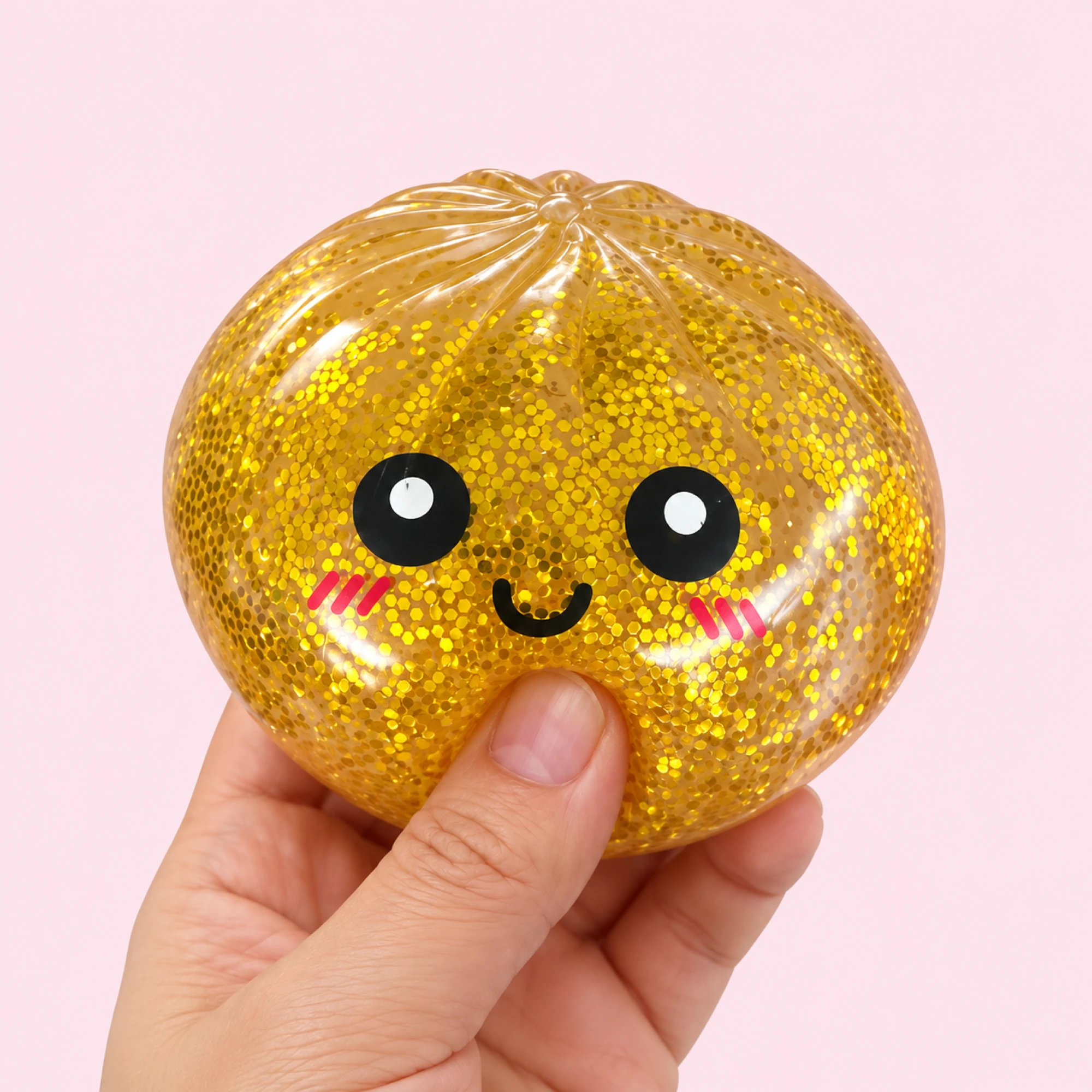
Photographs of it being held. A product photo where a hand is squeezing tells you a lot: how far the fingers have sunk in tells you the band.
Rebound language. “Slow rising” and “slow rebound” always mean soft. “Bounce back” and “quick return” mean medium or firmer.
Matching Firmness to Use
For background use during calls and reading, soft to medium. Anything firmer demands attention you were planning to spend elsewhere.
For deliberate tension release, medium. This is the band where you feel you have done something without it becoming exercise.
For hand and forearm work, firm — and treat it as training rather than fidgeting, with the pacing that implies.
For a shared desk, the firmness matters less than the noise: bead fills crunch, foam is silent, and that decides usability more than resistance does. The wider room-by-room version of that judgement is in the quietest fidget toys that aren’t squishies.
The Test to Run on What You Already Own
Squeeze whatever is nearest — a rolled sock, a tennis ball, a bread roll, the arm of a chair — and notice which one you would happily do a hundred times.
That is your band. People are surprisingly consistent about it, and surprisingly bad at predicting it without trying.
Then notice whether you wanted your whole hand to close or not. Wanting full closure means soft; wanting to be stopped partway means medium or firm. Those two observations pick the product more reliably than any review.
What Firmness Does Over Time
Every construction softens with use, so buy slightly firmer than your ideal if you intend to use it daily.
Foam softens as the cell walls break down, gradually and predictably. Bead fills soften as beads migrate and the packing loosens. Gel stays consistent until the skin fails, which is abrupt.
Cold makes everything firmer and heat makes everything softer, which is why a ball left in a car feels wrong in both directions depending on the season.
Shape Changes Perceived Firmness
Two bodies of identical material can feel different because of geometry, and this is worth knowing before blaming the filling.
A sphere resists evenly from any direction, so it feels consistent and slightly firmer than its material suggests — your fingers are working against curvature as well as material.
A cube or a flat-sided body gives way faster at the faces and resists at the corners, which reads as softer overall with defined hard points. This is why a foam cube of the same density as a foam ball feels easier to compress.
Elongated bodies are the softest-feeling of all, because you are never compressing the full cross-section at once.
If something felt right in a shop and wrong at home, geometry is the usual culprit rather than a different batch.
Three Across the Bands
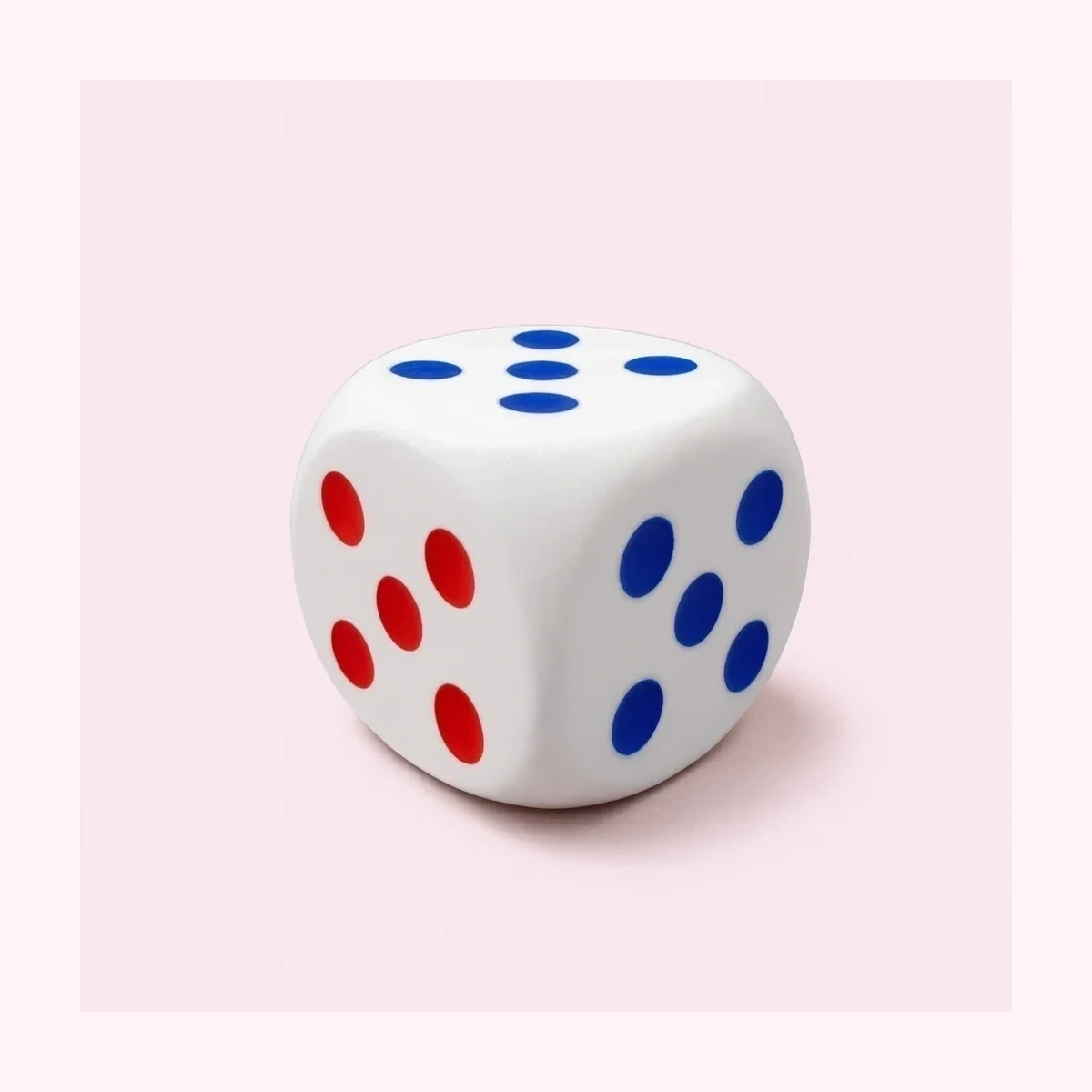
3-inch Foam Dice Stress Ball — solid closed-cell foam, medium band, quick complete rebound. The safest default if you do not know your preference.
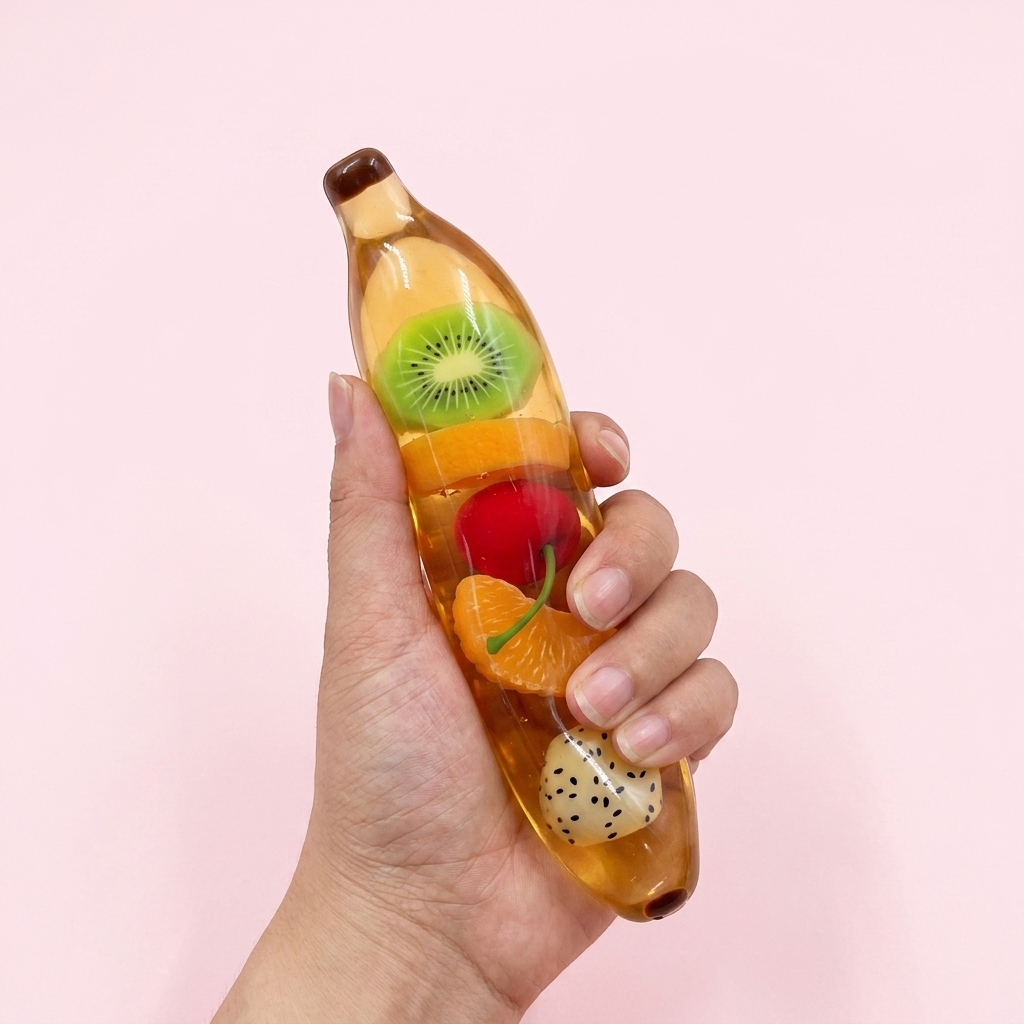
Fluid-Filled Watermelon Squishy — 6 cm gel body, soft start with a hard wall at the end. The band-one option with a defined stop.
Bead-Filled Eyeball Squishy — granular medium resistance, audible, for people who want texture with the squeeze.
Browse the fidget balls range, or see all fidget toys if compression is not the action you keep reaching for.