



Most fidget toy ideas are lists of things to buy, and most people who own twenty fidgets are less well served than someone who owns four chosen deliberately. The reason is that a collection tends to duplicate one sensation and leave three uncovered, and no amount of buying fixes that if the buying is unplanned.
Cover Actions, Not Categories
Your hand can do a small number of distinct things: press, roll or rotate, stretch or compress, and track a texture. Almost every fidget on sale is one of those four wearing different clothing.
Owning three clickers is owning one action three times. It feels like variety in a drawer and it is not variety in a hand.
So the first move is an audit rather than a purchase. Lay out what you own, name the action each performs, and the gaps are immediately obvious — the full eight-way sort is in types of fidget toys by hand action.
The Four-Object Set
One compression object. Soft, silent, no mechanism, the thing you reach for without deciding. Silicone Sensory Stones are the type.
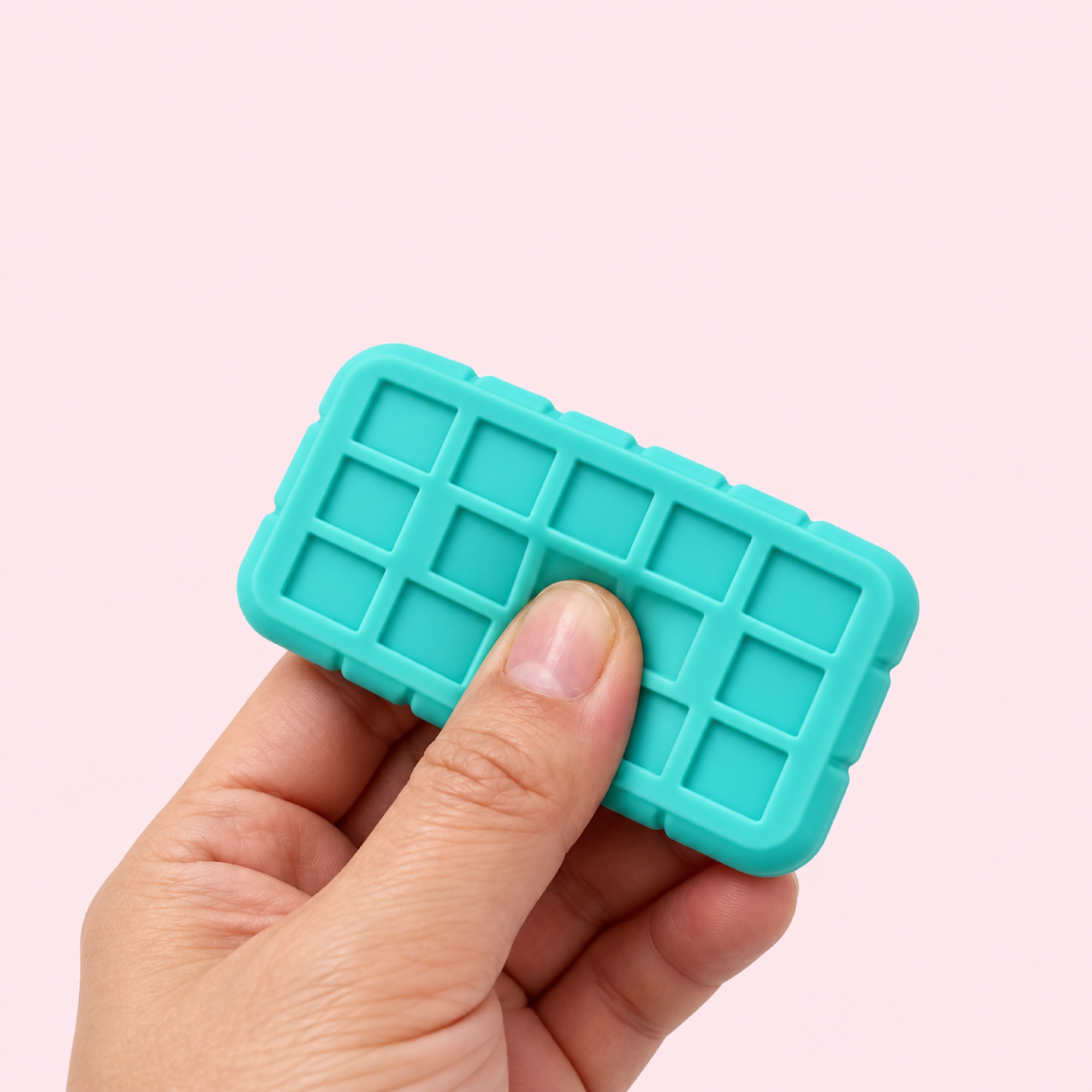
One tracked texture. Something the thumb sweeps rather than presses, which is the action that works while your eyes are busy — the Magnetic Silicone Slider does this.
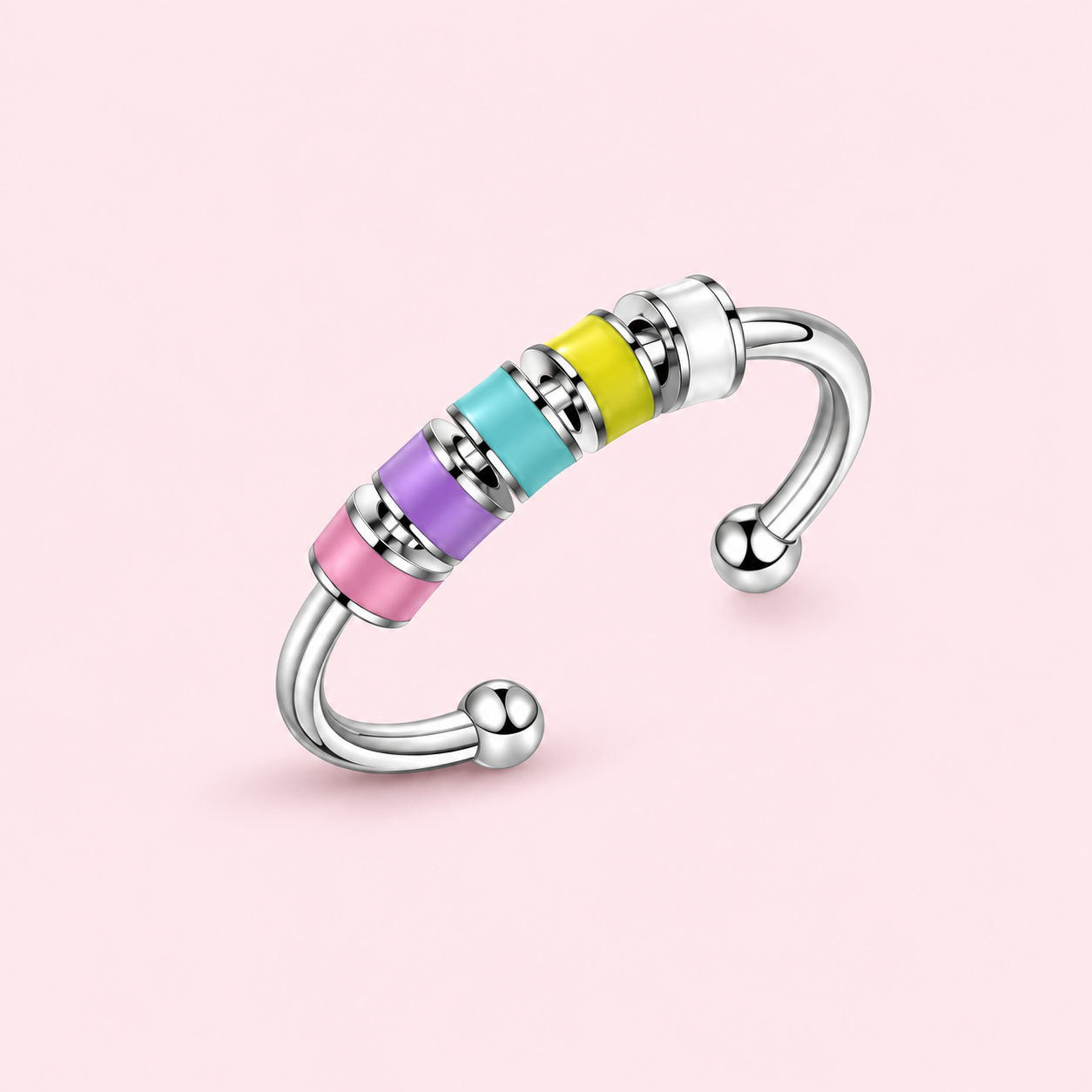
One worn object. The only fidget that is present by default, which makes it the one that gets used most. A Black Mechanical Fidget Ring has no mechanism to fail.
One mechanism object. The satisfying one, with clicks and moving parts, for when you actually want to pay attention to it — a White & Pink Six-Sided Fidget Cube covers several at once.
Four objects, four actions, no duplication. Everything beyond this is preference rather than coverage.
Place Matters More Than Quantity
A fidget is only used where it is. That single fact explains most abandoned collections.
The desk. Whatever lives here should be silent if you share the room, and it should sit beside the keyboard on the non-dominant side rather than behind the monitor.
The bag or pocket. Small, attached, and impossible to lose — anything unattached migrates to the bottom and stops existing.
The body. A ring, which is the only category that solves presence completely.
Three places, three objects, and the fourth stays wherever you tend to sit in the evening. Duplicating a place is far more useful than duplicating an action.
Rotate, Because Sensation Fades
Every fidget stops registering after a few weeks of constant use. This is not a quality problem and buying a better one does not fix it.
Swapping two objects between places every few weeks restores most of the novelty at no cost, which is the single cheapest idea in this article.
Keeping one object out of circulation entirely makes the rotation work better still. The desk-test version of this argument is in what holds up after a month.
Fidget Toy Ideas That Do Not Work
Buying a big variety pack to find what you like. Multi-packs are usually one action repeated in several shapes, and the padding teaches you nothing.
Keeping them all in one place. A box of fidgets is a box, not a set. Distribution is the point.
Buying a second of something you love. Tempting and almost always wrong — you already have that action covered, and the second one sits unused.
Buying for the mechanism you find most impressive. The fidget you actually use is the one that asks least of you, not the one with the most moving parts.
Building One for Someone Else
The same four-action rule makes a much better gift than a themed bundle, and it is easier than it sounds.
Ask what they already reach for. Almost everybody has one — a pen they click, a ring they turn, a corner of a notebook they fold — and that tells you which action they like without asking a single question about fidgets.
Then buy the adjacent one rather than a better version of the same thing. Someone who clicks a pen all day does not need a nicer clicker; they need the silent alternative for the rooms where clicking is a problem.
And give it attached to something if they are the kind of person who loses things. Presence beats quality every time, which is the thread running through everything above.
When to Add a Fifth
Add one when a place is uncovered rather than when an action is. A second car, a second desk, a coat you wear daily.
Add one when a specific room defeats what you have. A meeting-safe object is a legitimate fifth, and the noise sort is in the quietest fidget toys.
Do not add one because you are bored of something. Rotate first; boredom is almost always a placement problem rather than an object problem.
Four to Start With
Silicone Sensory Stones — compression, silent, nothing to break.
Magnetic Silicone Slider — tracked texture, one-handed, works unseen.
Black Mechanical Fidget Ring — worn, always present, no mechanism to seize.
White & Pink Six-Sided Fidget Cube — 2 × 2 × 2 in, several mechanisms in one pocket object.
Browse all fidget toys, or start from the action you are missing.