



Steel is the default material for fidget rings and the reason is not cost. A stainless steel fidget ring has to survive being worn constantly against skin, water, keys and desk edges, while keeping a moving part running smoothly through all of it — a harder material problem than it sounds, and one that plated brass and aluminium solve worse. What the grade and the finish do over years is what separates a ring that becomes a tool from one that turns into background jewellery inside a month.
Three Motions in the Same Form Factor
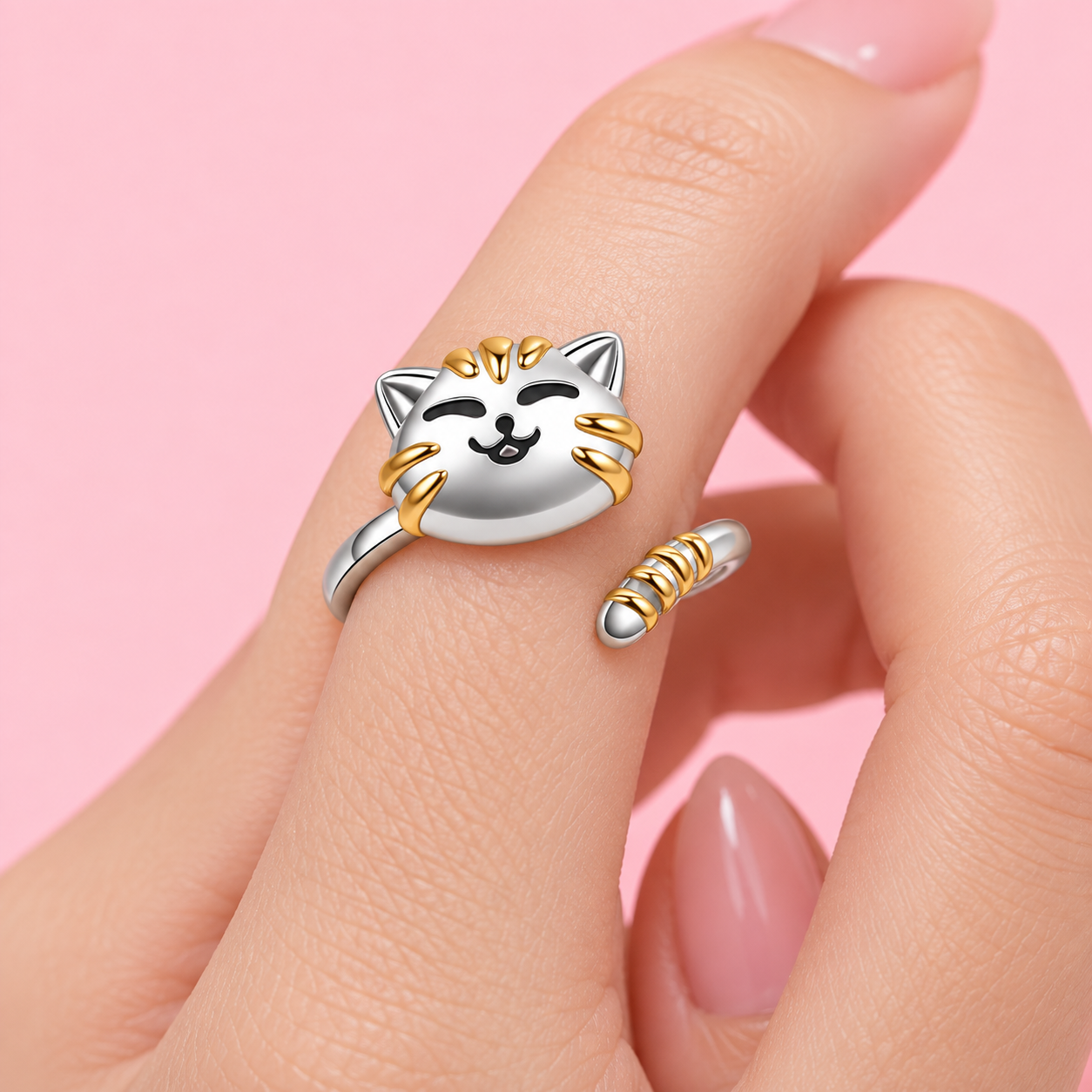
Spinning bands. An outer band rotates around a fixed inner band. The motion is continuous, silent and completely invisible — a thumb can keep it turning indefinitely while your hand rests on a table. It is the most discreet fidget that exists. The Cat Spinner Fidget Ring is an adjustable version, which sidesteps the sizing problem below.
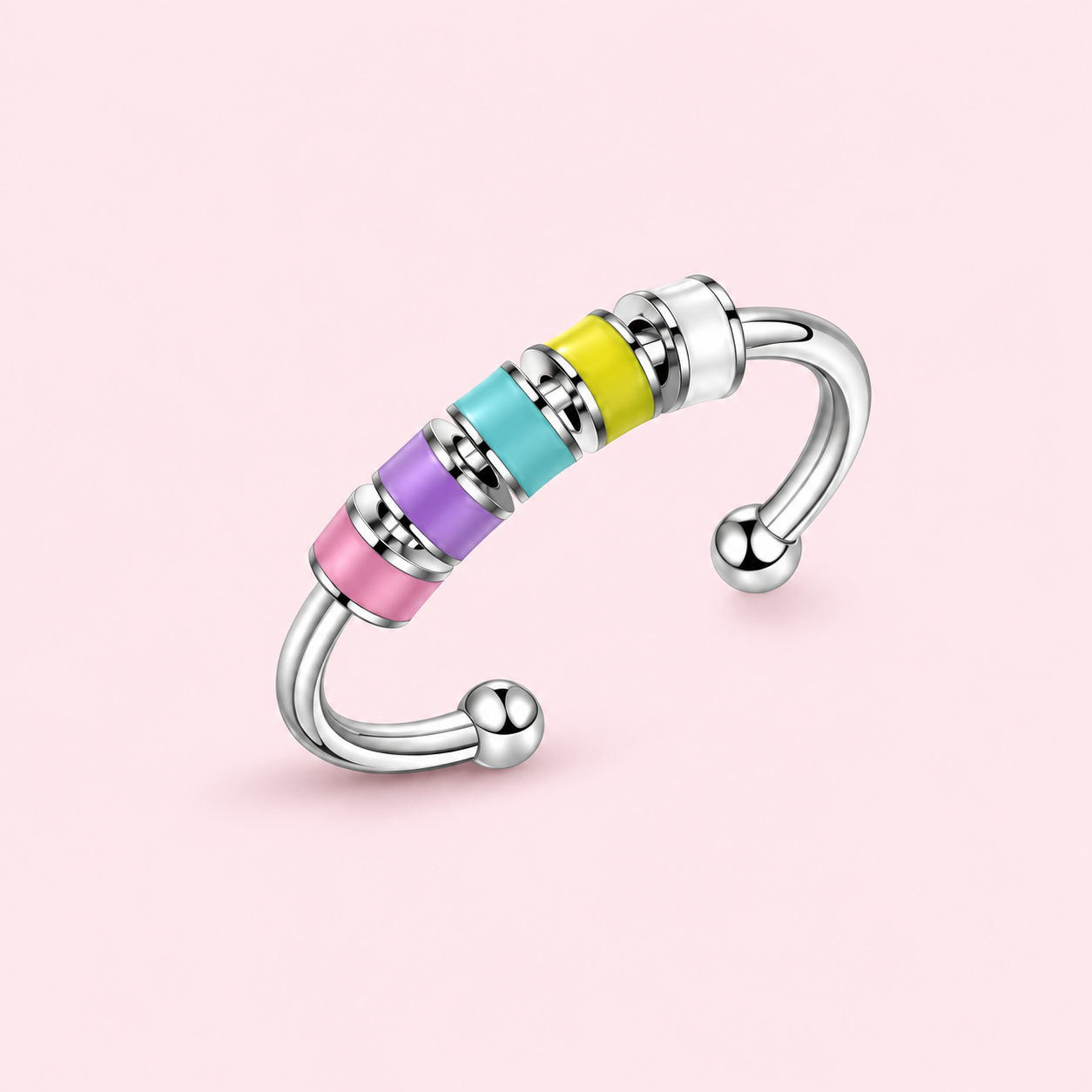
Rolling beads. Small beads set into a channel, rolled under the thumb. Different sensation entirely: discrete rather than continuous, with a faint tactile click each time a bead passes. The Silver Rolling Bead Fidget Ring is an open band with a row of beads, and open bands are considerably easier to fit than closed ones.
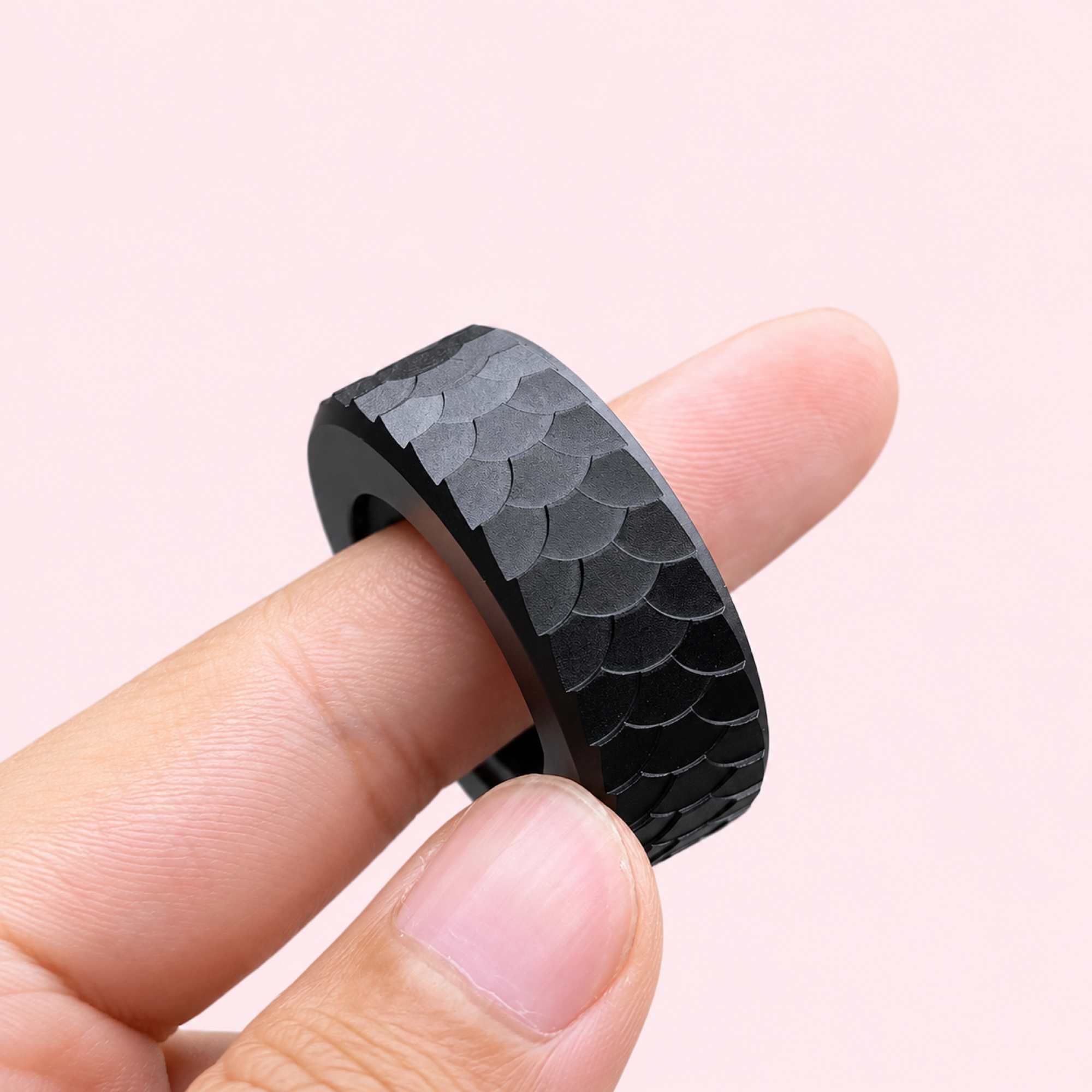
Textured surfaces. No moving parts at all — a pattern your thumb tracks across. Nothing to wear out, nothing to seize, nothing to lose. The Black Mechanical Fidget Ring uses a layered scale texture, which gives the thumb a repeating landmark without any mechanism.
The ordering by durability is the reverse of the ordering by interest: textured lasts longest and engages least, spinning engages most and has the most to go wrong.
Sizing a Stainless Steel Fidget Ring
This is where most ring purchases fail, and the reason is specific to fidget designs rather than to rings in general.
A spinning ring is two bands, so it is thicker than a plain ring of the same nominal size, and thickness changes how a ring fits. A wide band needs roughly half a size larger than a narrow one to pass the knuckle comfortably. If you already know your ring size from a plain band, size up.
Fingers change through the day and with temperature. A ring that fits perfectly at a warm desk will be loose on a cold morning, and a fidget ring you are actively spinning is one you can throw off your finger. Aim for snug enough that it needs a small twist to come off.
Adjustable and open-band designs solve all of this and are the safer first purchase. The trade-off is that adjustable bands can loosen over months of flexing, and re-tightening them repeatedly eventually fatigues the metal.
On which finger: the thumb of the opposite hand has to reach the ring comfortably, which in practice means an index or middle finger of the non-dominant hand for most people. Wearing it on a thumb makes it harder to operate, not easier.
What Steel Actually Does Over Years
Stainless steel does not tarnish, and that is the entire argument for it in something worn daily. It does take fine scratches, and those scratches accumulate into a soft satin finish rather than looking damaged — which is why steel looks essentially the same in year three as in year one.
Plated colours are a different story. Gold-tone and black finishes on steel are coatings, and a fidget ring rubs against itself every time you use it. Expect the high points to brighten first.
The mechanism, not the metal, is what fails. A spinning band collects skin oil, soap residue and fibres in the gap between the bands, and that residue is what turns a smooth spin gritty. Rinse it in warm water, work the mechanism while it is wet, and dry it fully; this restores nearly every ring that has started to feel rough.
Beads in a channel can eventually seize if the channel deforms after an impact. Drop-related damage is the one failure that is not maintainable.
Where a Ring Beats Every Other Fidget
Availability. It is on your hand in a meeting, on a train, in a queue, and in every situation where reaching into a bag would be conspicuous. No desk fidget competes with that, which is why a ring is the first recommendation in our everyday-carry shortlist.
Silence. A worn fidget is damped by the hand wearing it, and the sound has nowhere to go. It is the quietest option in the hard-goods category, which is covered more broadly in the quietest fidget toys that aren’t squishies.
Invisibility. Nobody can tell. That is worth more than any feature in a room full of people.
Where It Loses
Depth. One motion, repeated. After a few weeks the novelty is gone and it becomes a habit rather than a tool — useful, but no longer interesting. A second fidget with a different mechanism at a desk solves this, and the pairing logic is in what holds up after a month on a desk.
Sizing risk. Every other fidget fits everybody.
If You Want the Motion Without the Metal
Silicone spinner rings exist and behave differently: softer, grippier, no cold start on a winter morning, and they cannot scratch anything. The Blue Silicone Sensory Spinner Ring has raised spikes and a centre opening, and it is the easier first purchase for anyone unsure about sizing, since silicone flexes.
Three Steel Rings to Compare
Cat Spinner Fidget Ring — adjustable silver-and-gold spinner. Continuous, silent, and the adjustable band removes the sizing gamble.
Silver Rolling Bead Fidget Ring — open band with a row of rolling beads. Discrete tactile feedback, easy fit.
Black Mechanical Fidget Ring — layered scale texture, no moving parts, nothing to seize.
See the full fidget rings range, or browse all fidget toys if a worn fidget is not what you are after.