



Last updated: July 2026 · Funny Squishy team
No, you should never microwave, heat, or freeze a squishy. Squishies are made from soft foam, TPR gel, or silicone that are designed to work at room temperature. Heat can make the gel expand, warp, melt, leak, or turn dangerously hot, and cold makes foam and gel brittle so they crack or split. If your squishy is dirty or has lost some of its squish, the safe fix is a gentle wipe and air-drying, not the microwave or the freezer.
The short answer: room temperature only
Squishies are simple by design. The soft, satisfying give comes from materials that behave predictably at everyday indoor temperatures. Push them far outside that range and the material chemistry changes in ways you cannot undo. There is no benefit to heating or freezing a squishy, and both carry a real risk of ruining the toy or, in the case of heat, causing a burn.
People usually reach for extreme temperatures for one of three reasons: they think warming will make a squishy softer or "reset" it, they want to fix a squishy that feels flat, or they hope freezing will firm up a gel toy that has gone too soft. None of these actually work, and each one can wreck the squishy. Below we explain exactly what goes wrong and what to do instead.
Why you must never microwave or heat a squishy
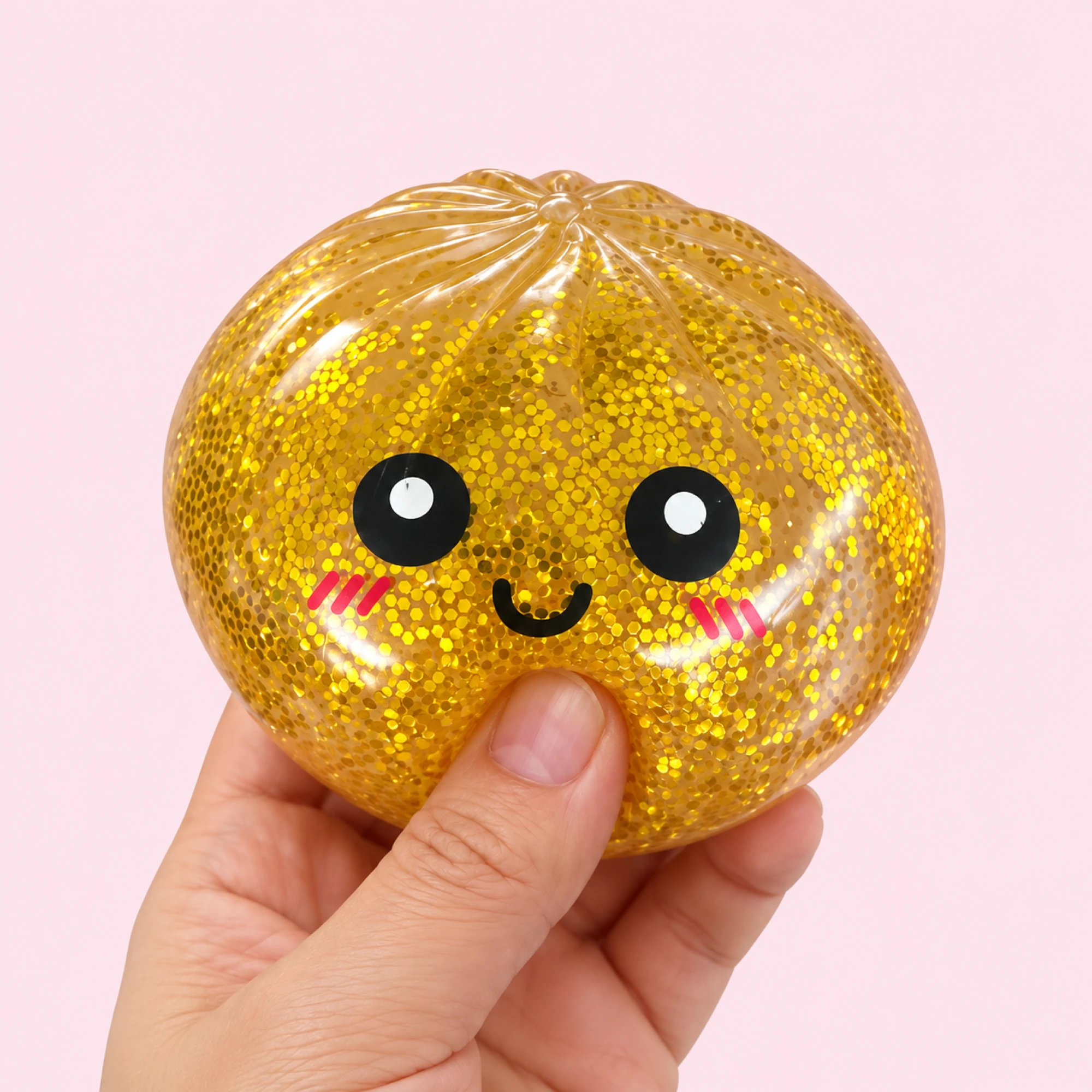
The filling inside most squishies is the problem. Gel-filled (TPR) toys like a slushy ball or gummy-bear squishy hold a semi-liquid gel that behaves like any thick liquid when heated: it expands. Trapped inside a sealed skin, that expanding gel has nowhere to go, so the squishy can swell, warp, split a seam, or burst and leak sticky filling. Even a short blast in a microwave heats unevenly, creating internal hot spots you cannot see.
PU-foam squishies (the slow-rising kind) react differently but just as badly. Heat can make foam warp, shrink, discolor, or develop a strong chemical smell as the material starts to break down. Silicone tolerates warmth better than the others, but there is still no reason to heat it and every reason not to risk it.
The bigger danger is you. A squishy that has been microwaved can come out far hotter than it looks, and a hot gel toy that leaks can scald skin. This matters most with kids. Squishies are recommended for ages 6 and up because of small parts, and a heated or split squishy adds burn and choking risks on top of that. Never microwave, boil, use a hair dryer or heat gun on, leave in a hot car, or set a squishy near a stove, radiator, or in direct summer sun.
What overheating actually does
- Gel toys: expand, warp, split seams, leak, and can get burn-hot.
- Foam toys: shrink, warp, discolor, and give off a chemical odor as they degrade.
- Any squishy: loses its shape and squish permanently — there is no way to reverse it.
Why freezing is also a bad idea
Freezing feels safer than microwaving, but it damages squishies in its own way. Cold makes soft polymers stiff and brittle. A foam squishy that is normally springy can turn hard and crumbly in the freezer, and a single squeeze while it is cold can tear or crack it. Gel-filled toys are even more vulnerable: the gel can partially solidify and expand, and squeezing a chilled gel squishy can split the skin so it leaks once it thaws.
There is also condensation. When a cold squishy warms back up, moisture forms on and sometimes inside the material, which can leave it sticky, cloudy, or prone to mildew — especially with foam, which soaks up water. Freezing does not sanitize a squishy and it will not make a flattened one bounce back. It just trades a soft toy for a brittle, damp one.
What people try — and what to do instead
Most heat-and-freeze experiments start from a fixable problem. Here is the safe alternative for each one.
| What people wrongly try | Why it fails | What to do instead |
|---|---|---|
| Microwave to "soften" or reset it | Gel expands and can burst; foam warps and smells | Just let it sit at room temperature — it is already at its intended softness |
| Freeze a too-soft gel squishy to firm it up | Gel gets brittle and can crack or split when squeezed | Let it rest; if it is a zero-bounce-back gel toy, slow settling is normal, not a defect |
| Freeze to "clean" or deodorize it | Cold does not sanitize; condensation invites mildew | Wipe gently and air-dry (see cleaning steps below) |
| Hair dryer or hot water to reshape a dented foam squishy | Heat degrades foam and can scald | Give it time — slow-rising foam recovers its shape on its own |
| Boil to disinfect after a spill | Melts and warps the material | Spot-clean the mess with mild soap and a damp cloth |
One thing worth knowing: if your squishy is a zero-bounce-back gel type, it is supposed to hold the dent and settle back slowly. That is the design, not a fault, so there is nothing to fix and no reason to reach for the freezer.
How to safely clean and refresh a squishy
- Wipe, don't soak. For foam squishies, use a cloth lightly dampened with water and a drop of mild soap. Foam absorbs water, so never submerge it.
- Rinse only if sealed. Fully sealed gel or silicone squishies can be rinsed under cool (not hot) water and patted dry.
- Skip harsh chemicals. No bleach, alcohol, or solvents — they can degrade the surface.
- Air-dry fully. Let it dry completely at room temperature, away from heaters and direct sun, before storing.
For a full walkthrough by material type, see our guide on how to clean a squishy.
How to store squishies so they last
Good storage removes the temptation to "fix" a squishy in the first place. Keep squishies out of direct sunlight, away from heat sources like radiators and hot windows, and out of very cold spots like an unheated garage in winter. A drawer, bin, or shelf indoors is ideal. Keep them clean and dry, store gel toys flat so they are not squashed under weight for months, and keep small squishies away from children under 6 and from pets that might chew them.
Frequently asked questions
Can you microwave a squishy to make it softer?
No. Squishies are already at their intended softness at room temperature, and microwaving does not improve them. The gel inside can expand and burst, foam can warp and smell, and the toy can come out hot enough to burn. If a squishy feels stiff, simply let it sit out for a while at normal indoor temperature instead.
Is it safe to freeze a squishy?
No, freezing is not safe for squishies. Cold makes foam and gel brittle, so they can crack, tear, or split when squeezed. Condensation as they thaw can also leave them sticky or prone to mildew, especially foam. Freezing will not clean, firm up, or repair a squishy, so keep them at room temperature.
What should I do if my squishy melted or cracked?
Unfortunately, heat and cold damage cannot be reversed — a melted, warped, cracked, or leaking squishy should be retired, and any leaked gel wiped up and kept away from children and pets. The good news is that undamaged squishies are inexpensive to replace, and browsing a fresh set is often easier than trying to salvage a ruined one.
How do I make a flat or dented squishy bounce back?
Give it time at room temperature. Slow-rising foam squishies naturally recover their shape over several seconds to minutes, and zero-bounce-back gel toys are designed to settle slowly, so a lingering dent is normal for them. Avoid heat or cold entirely — neither speeds recovery, and both risk permanent damage instead.
Are squishies safe for young kids?
Squishies are recommended for ages 6 and up because they can contain small parts, and younger children should be supervised. Never let a child handle a squishy that has been heated, is leaking, or has split open, since those add burn and choking risks. Keep squishies clean, dry, and stored at room temperature for safe everyday play.
The bottom line
Treat squishies like the room-temperature toys they are: no microwave, no oven, no hair dryer, no freezer. When one gets grubby or feels flat, a gentle wipe, a little patience, and air-drying will do far more than any extreme temperature ever could. For a deeper look at materials, safety, and choosing the right type, start with our squishy toy buyer's guide. Ready for a fresh, undamaged squishy to squeeze? Explore the full range of squishies and find your next favorite.