


Buy one metal object and it looks exactly like the photograph. Carry it for a year and it does not, and whether that bothers you is the only question that matters. Metal fidget toys age visibly in a way plastic and silicone do not, and the ageing is not uniform — it depends entirely on the finish, which is the specification almost nobody reads and the one that decides how the thing looks on the day you actually care.
What Each Finish Does Over a Year
Anodised aluminium. A hard oxide layer dyed through, so the colour is in the surface rather than on it. It scuffs to a lighter shade at the high points and does not flake, because there is no coating to detach. An anodised body a year into carry reads as worn rather than damaged, which is why it dominates the enthusiast end.
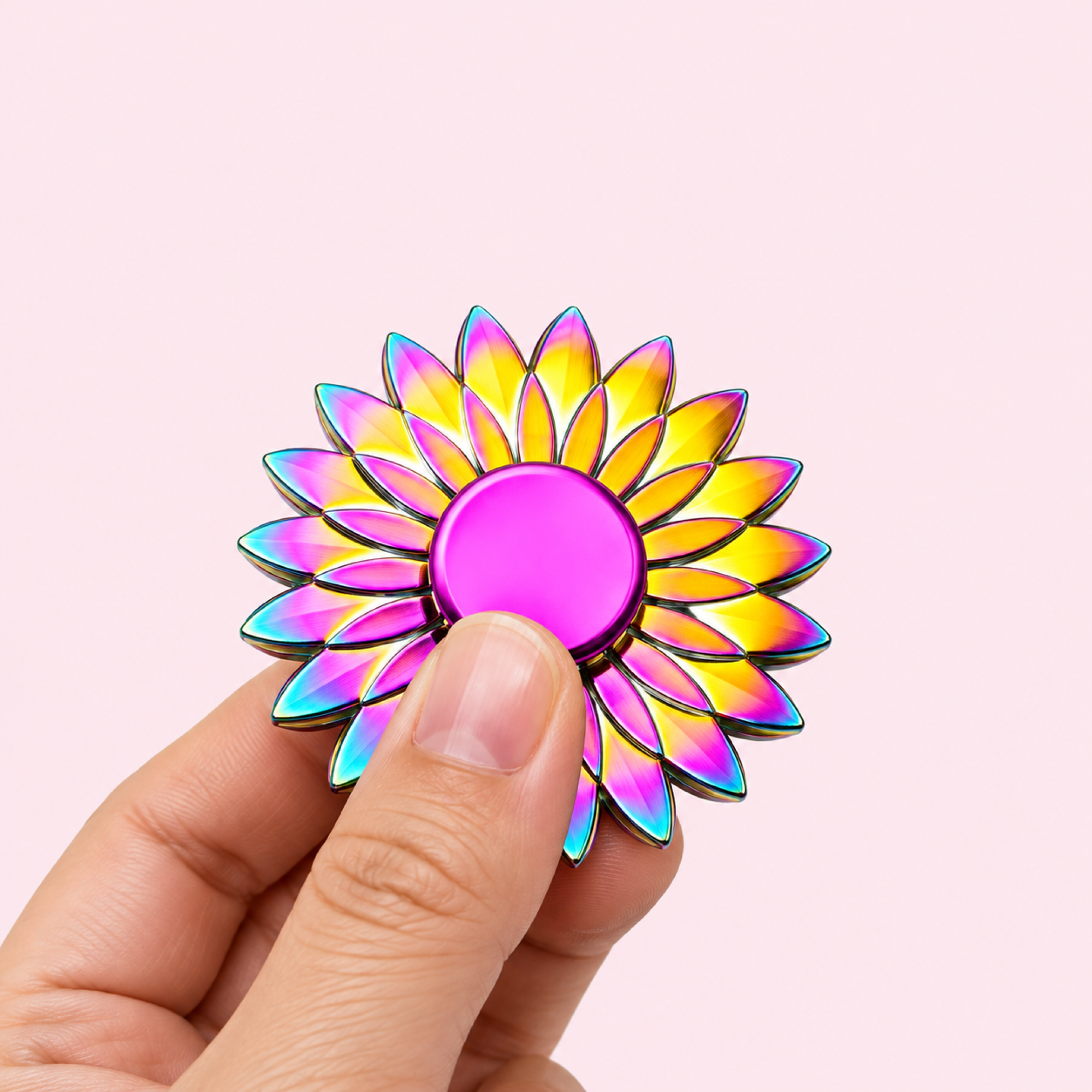
Plating. A thin metal layer deposited over a base. Rainbow and iridescent finishes are usually plated, and plating is the one finish that can fail rather than wear: once an edge chips, the exposed base is a different colour and the chip grows. It looks the best out of the box and requires the most care. The rainbow finish on the Rainbow Metal Fidget Spinner is this type — spectacular, and worth keeping away from keys.
Bare stainless steel. Nothing to wear off. It collects fingerprints, takes fine scratches that blend into a soft satin over time, and looks essentially the same in year three as in year one. The dullest choice on day one and the most durable on any longer horizon.
Brass and copper. These do not wear, they react. Skin oils and air darken them into a patina that starts as blotches and settles into an even tone. Some people polish it off; most learn to like it. If you want an object that looks used, this is the only material that does the work for you.
Painted and powder-coated. Thick, opaque, and the first to show a chip on a corner. Fine on a desk object, poor on anything carried loose.
Where Metal Fidget Toys Stop Being Worth the Weight
Mass is the reason to buy them in the first place: it produces momentum you can feel, and in a spinner it produces spin duration, because weight at the rim is what carries rotation.
It is also the reason to stop. A metal object in a trouser pocket swings against your leg when you walk, presses into you when you sit, and drags the fabric. The threshold where this becomes annoying is personal but consistent within a person — once you have found an object that crosses it, every heavier thing will too.
The practical resolution is to split by placement. Heavy metal belongs on a desk, in a bag, or in a jacket pocket where it hangs rather than presses. For trouser-pocket carry, thin and light wins even if it feels less impressive in the hand. That is the same split that decides which fidget stays out and which ends up in a drawer, set out in what holds up after a month on a desk.
The Scratch Problem Nobody Warns You About
Metal fidgets are usually harder than the things they share a pocket with, and hardness cuts both ways.
A metal fidget scratches phone screens. Not through a case, and not in a bag with compartments, but loose in the same pocket as a phone it will eventually leave a mark on the glass or the back panel.
Keys scratch metal fidgets. Key teeth are hardened steel and they will find plated surfaces first.
Two metal objects in one pocket abrade each other. If you carry a metal pen and a metal fidget, expect both to look older faster than either would alone.
The fix costs nothing: separate pockets, or a small pouch. It is the single most effective thing you can do for the appearance of a metal object, and almost nobody does it.
Which Metal Objects Are Worth It
The mechanisms where mass genuinely changes the experience are rotation and momentum. A spinner, a spinning pen, a heavy slider — these feel materially different in metal.
The mechanisms where metal adds nothing but weight are compression and texture. A metal object you squeeze does not squeeze; a textured surface works the same in silicone at a tenth of the weight.
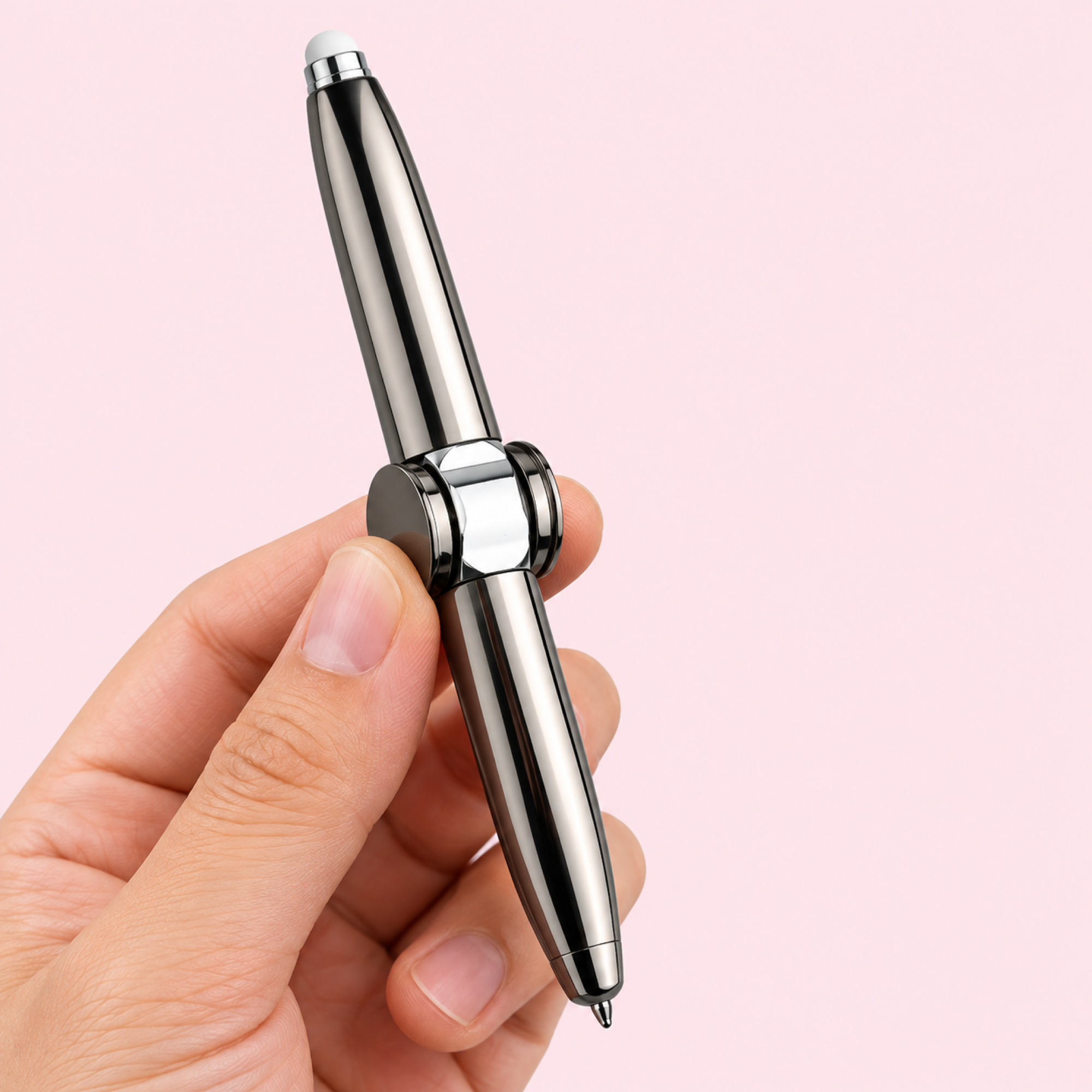
A hybrid like the Metal Spinner Pen is the most defensible metal purchase for most people, because the mass does real work when you spin it and the object has a second job when you do not. Compare that with the Metallic Purple Blue Fidget Spinner, which is all mechanism and no second job — better in the hand, worse at justifying pocket space.
For the fuller comparison against light bodies, metal fidget spinner vs plastic covers how mass and rim distribution trade against portability, and our office etiquette guide covers how metal behaves around other people.
Care, Briefly
Wipe steel and brass with a dry cloth; skip polishes unless you actively want to reset a patina. Keep plated finishes away from keys. Blow lint out of bearings rather than oiling them. That is the whole list.
Three Metal Picks
Metal Spinner Pen — silver-grey metal body that spins in one hand and writes with the other end. The most justifiable weight in the range.
Rainbow Metal Fidget Spinner — rainbow finish with a visible centre cap. The best-looking option on day one; treat the plating gently.
Metallic Purple Blue Fidget Spinner — three-arm metallic body where the arm geometry, not the finish, sets the feel.
Browse all fidget toys to compare metal against silicone and foam, or go straight to fidget spinners if rotation is the mechanism you want.