


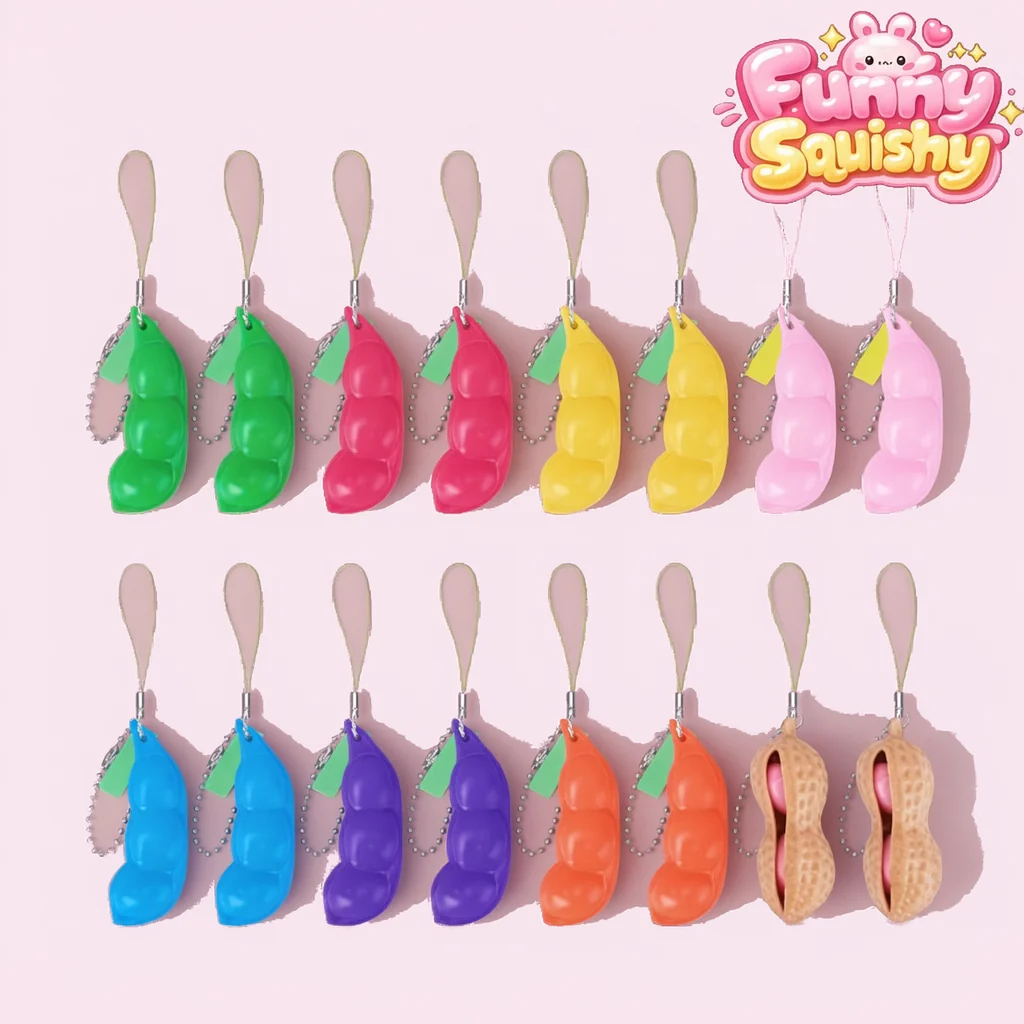
Here’s the trick a peanut squishy plays: it looks like it should crackle like a real shell, then your fingers sink into soft foam with zero crunch. That gap between what your eyes expect and what your hand gets is the entire appeal. Add a shape that rolls perfectly between the fingers, and you get one of the sneakiest little desk fidgets around.
The Peanut Squishy Texture Test
A good peanut squishy sells the shell. Real peanut shells have a specific look — a woody net of ridges, a pinched waist between the two bulbs, blunt rounded ends — and the closer the sculpt gets, the better the visual joke lands when the thing squashes like a marshmallow.
Run this quick check on any listing photo:
- The waist. There should be a proper pinch in the middle, deep enough that your thumb naturally settles into it.
- The ridge net. Look for criss-crossing raised lines, ideally irregular, since real shells aren’t symmetrical.
- The color. Sandy tan with slightly warmer shadows in the grooves reads real; flat single-tone beige reads like a packing peanut.
- The ends. Softly rounded, maybe with a tiny nub — that’s where real peanuts break open, and detail there is a sign someone cared.
The surface finish is usually matte, which helps the illusion and gives your fingertips a faint dry texture to explore mid-squeeze.
Built for the Hand: Grip and Roll
Shape-wise, the peanut is quietly one of the best fidget forms in the food aisle. The two-bulb body with a waist gives your fingers something to do besides squeeze: you can roll it end over end, spin it around your thumb, or click it back and forth between two fingers like a worry stone with a better costume.
It’s also a genuinely quiet fidget. Soft foam makes no clicks and no rattles, which is why peanut-sized squeezers fit squarely into our quiet fidgets for classrooms and offices guide — the whole point is keeping your hands busy without broadcasting it to the room. One peanut below the desk edge, meeting survived, nobody heard a thing.
The waist earns special mention as a thumb home. During long stretches of screen time, a lot of owners stop squeezing entirely and just rest a thumb in that groove, giving it an idle rub the way you’d worry a smooth stone. It’s the lowest-effort fidget posture there is, and the peanut’s anatomy is weirdly perfect for it.
The Snack Desk Gag (Use Responsibly)
Every office has a snack zone, and eventually every peanut squishy owner has the same idea: leave the fake peanut next to the real snacks and wait. As office comedy goes, watching a coworker pick up a “peanut” and feel it squish is reliably funny and completely harmless — with two caveats.
First, these are toys, and food-shaped squishies are never edible, so don’t stage the gag anywhere someone could genuinely mistake toy for food, and keep them out of actual snack bowls. Second, peanut allergies are a serious business in shared spaces; a foam toy isn’t a snack, but joke props and real allergen anxiety don’t mix well, so know your audience. Prank accordingly — ideally on the coworker who labels their yogurt.
Keychain Packs That Travel
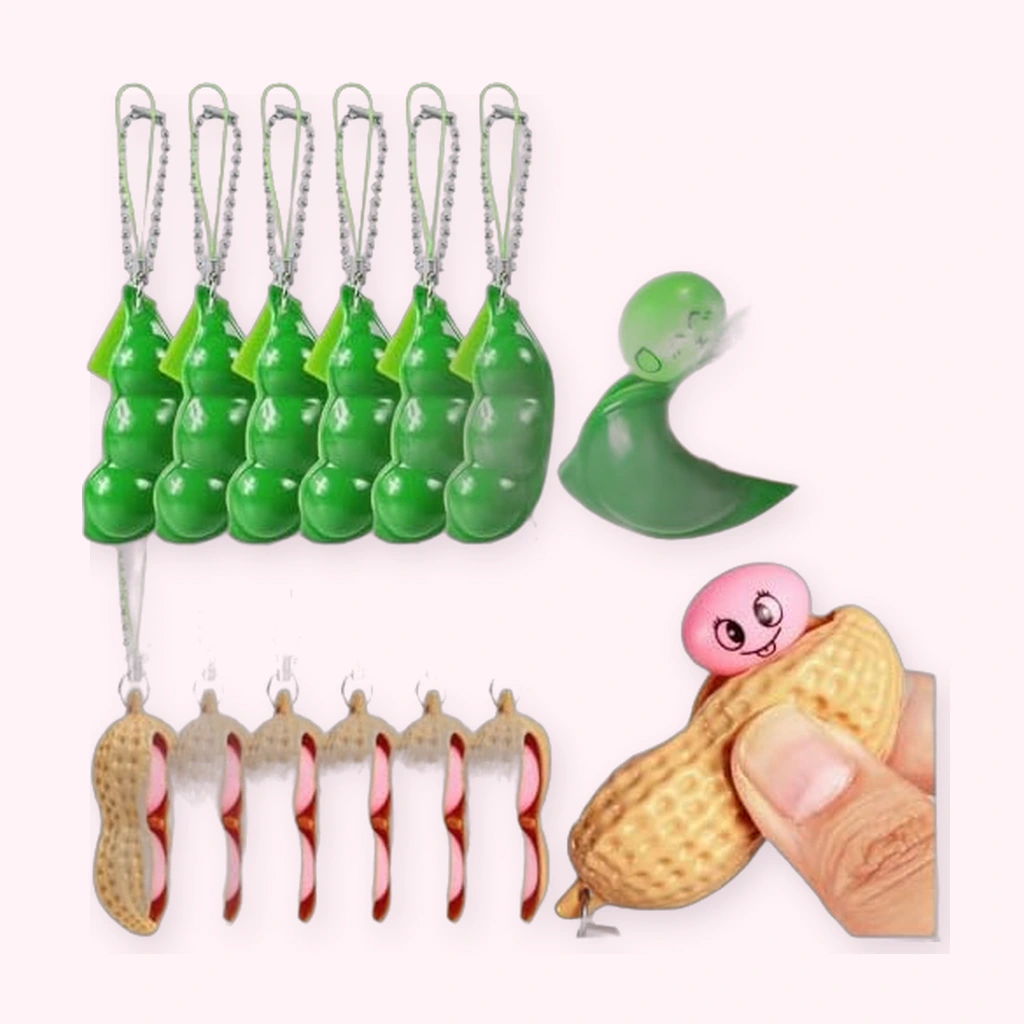
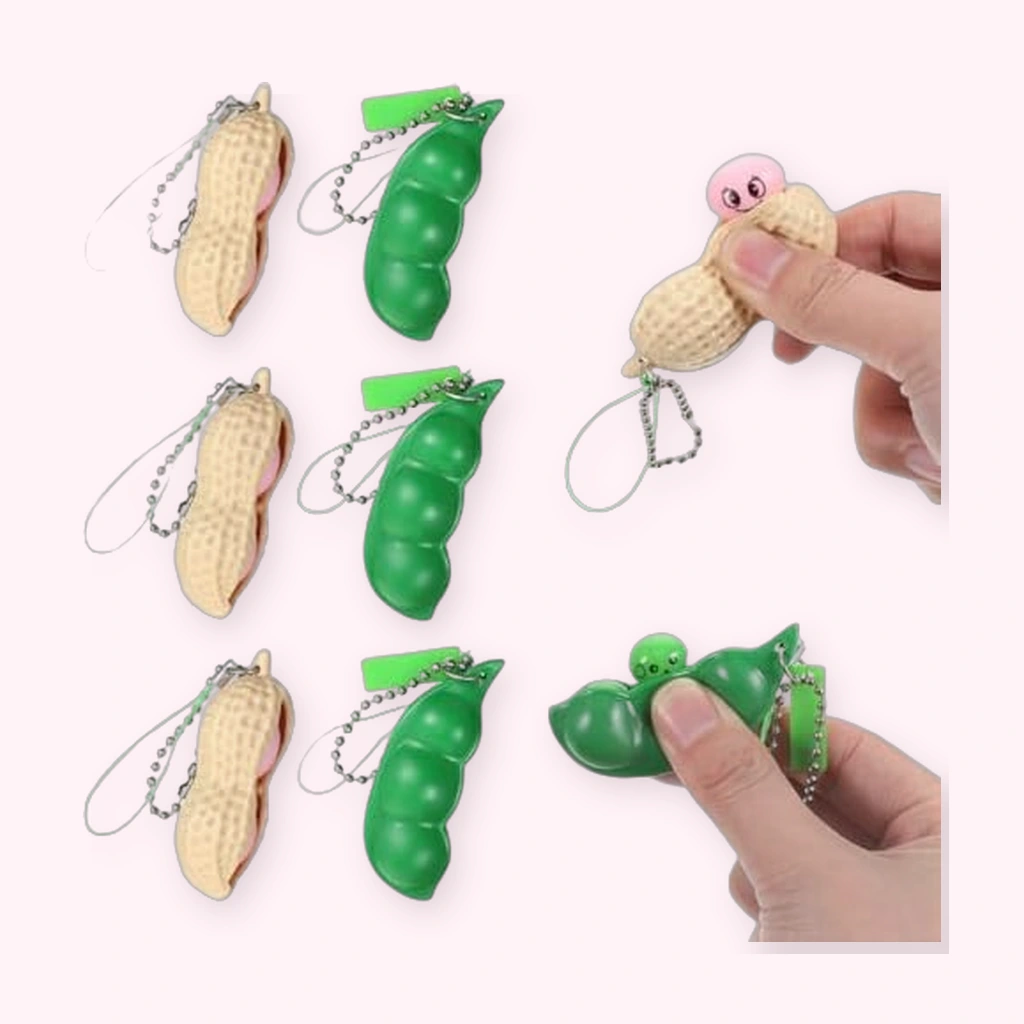
The peanut’s other career is as a keychain. Most peanut squishies sell in multi-packs alongside their legume cousins — soybean and pea pod shapes with the same squeeze-the-shell joke — clipped to a little chain so the fidget lives on your keys, backpack zipper, or badge lanyard.
The 16-pack of soybean, pea pod, and peanut keychain toys is the bulk option for classrooms, team gifts, or party bags. The 12-pack sensory set sits in the middle, and the 6-pack of pea and peanut pod fidgets covers a household without turning it into a farm. Spreading a pack across your bags means a fidget is always within reach — a cornerstone habit from our desk fidget routine for the afternoon slump.
Where They Sit in the Food Squishy Family
Peanut squishies are the character actors of food toys: never the centerpiece, always the one guests actually pick up. They pair naturally with the rest of the snack-table universe — browse the peanut squishy collection for the full legume lineup, or zoom out to the food squishy collection if you’re assembling a whole fake spread.
A tip from experience: on a desk full of squishies, the peanut is the one that goes missing, because visitors pocket-fidget it without noticing. Multi-packs solve this too.
FAQ
Do peanut squishies feel crunchy at all? No — that’s the joke. The sculpted ridges give your fingertips light texture, but the squeeze is pure soft foam with a gentle recovery. Eyes say crunch, hands say marshmallow.
Are they slow rising? The small keychain formats typically favor a quicker, springier rebound over dramatic slow rise. They’re built for fast, repeated fidgeting rather than watch-it-recover satisfaction.
Are peanut squishies okay for kids? Yes, ages 3 and up, with the usual rule for realistic food shapes: make sure kids know it’s a toy and not a snack. Keychain versions have small parts, so keep them away from under-3 siblings.
Do they contain actual peanut? They’re foam toys, not food products. Still, treat any toy shaped like an allergen with common sense in shared spaces — keep it clearly separate from real snacks so nobody gets a scare.