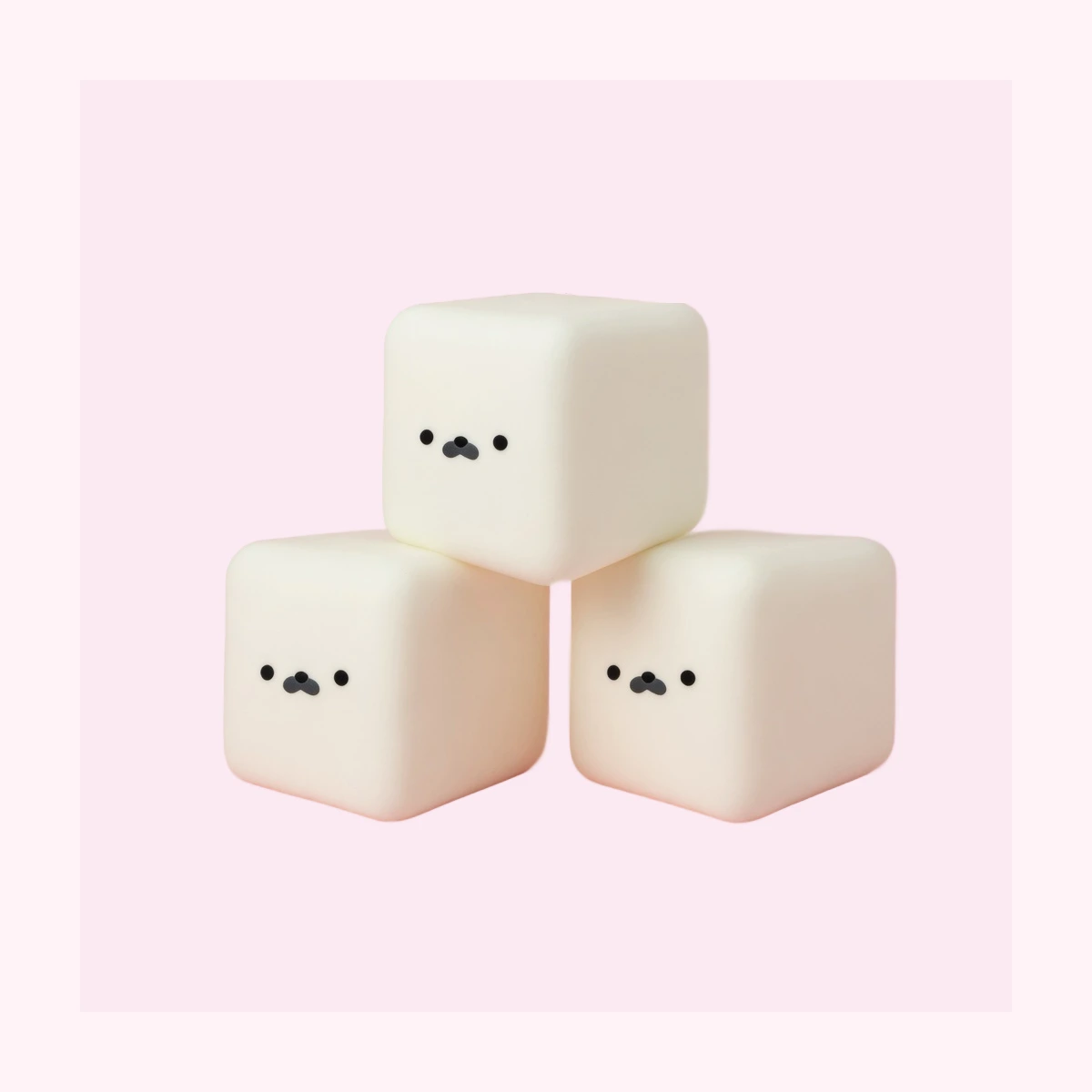



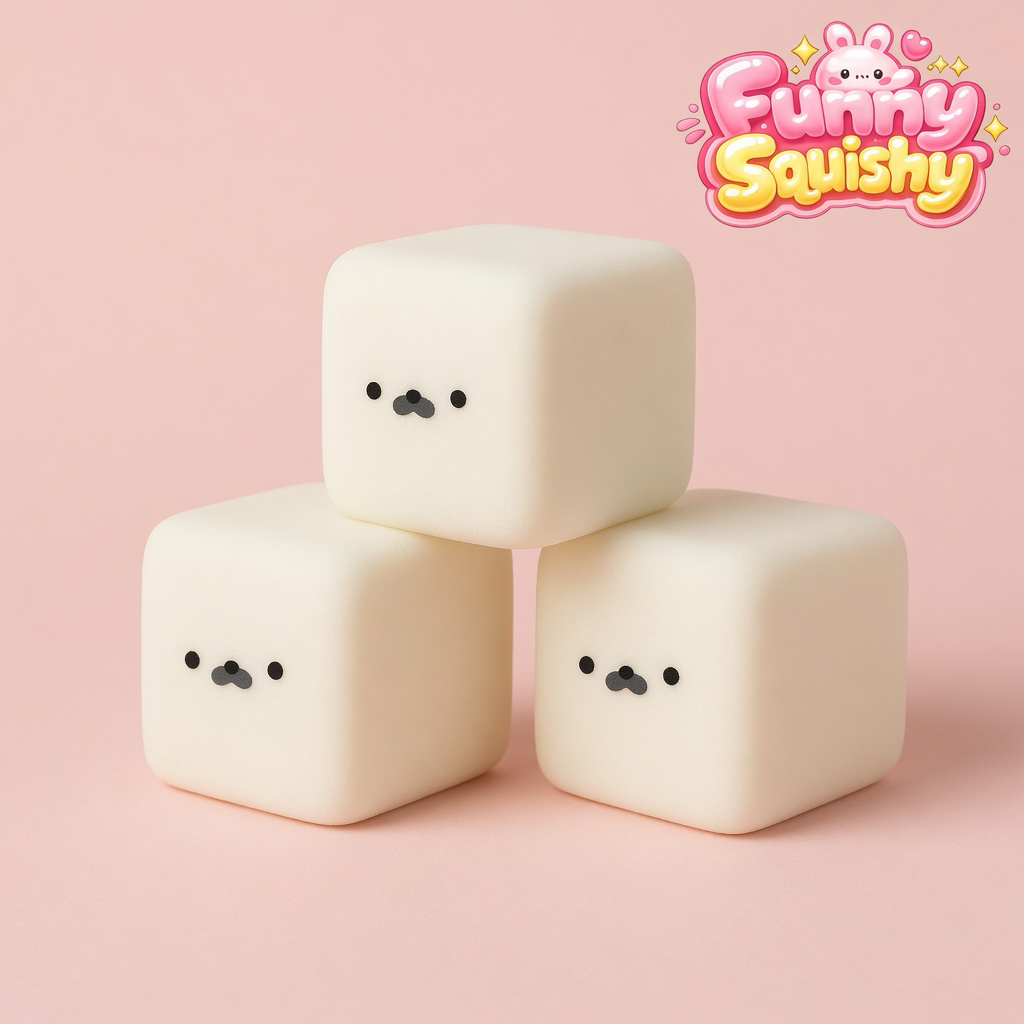
A cube has no face, no species, and no snack affiliation, which is exactly why it works. Squishy cubes strip the category down to pure feel: a tidy block that compresses flat and re-inflates in slow motion, corners last. They stack neatly, they sit square on a desk without rolling anywhere, and they film better than almost anything else in the hobby.
Jelly Cube Squishy or Foam Block: Two Personalities
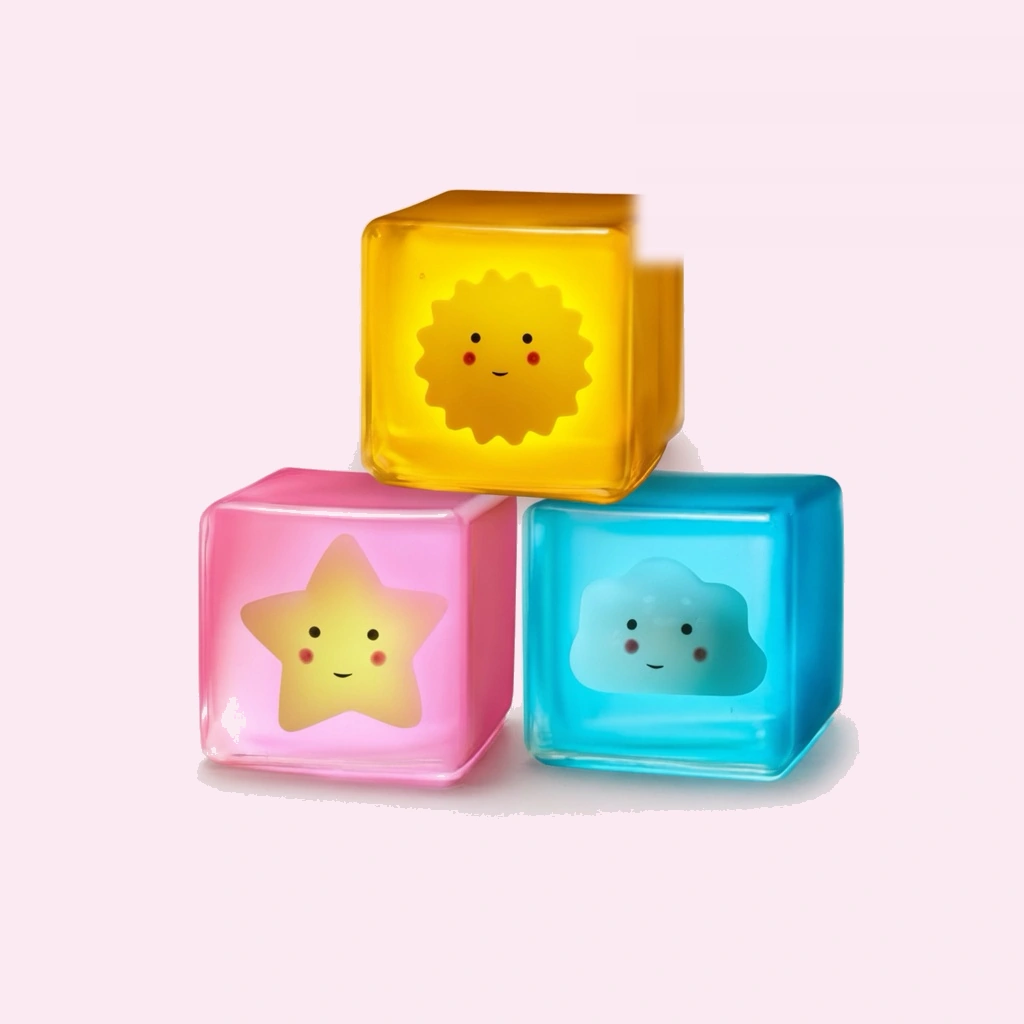
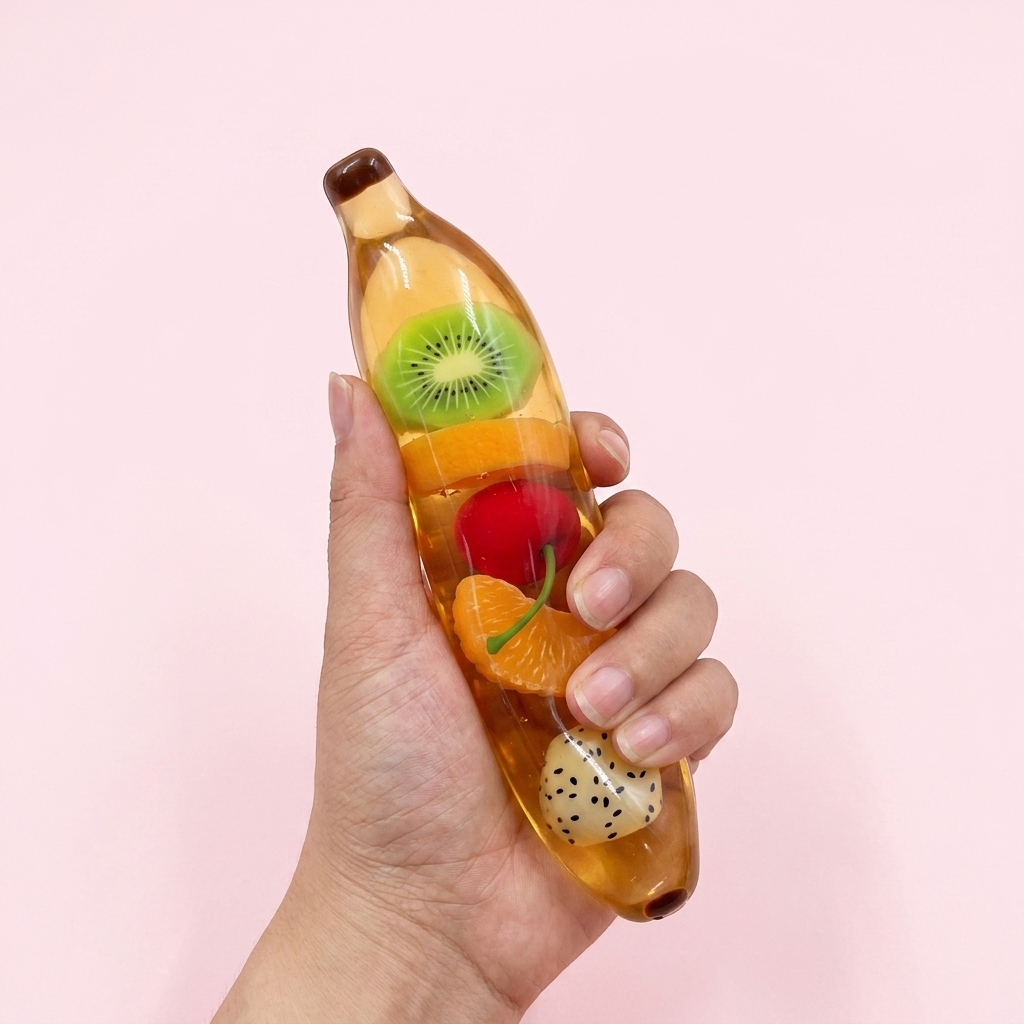
Cube builds split into two clear camps. Jelly-style cubes are translucent, cool to the touch, and firmer — squeeze one and it wobbles, flexes, and snaps back with a quick gelatin bounce. They are the fast-feedback option, closer to a dessert you shouldn’t trust than to foam.
Foam blocks are the slow camp: matte, dense, and committed to the long re-rise. A full-fist crush flattens the block into a pancake, and then the shape spends a genuinely relaxing stretch of time un-crumpling itself back to square.
Choosing between them is a personality question. Restless fingers that want constant motion tend to bond with jelly; people who squeeze to decompress almost always end up in the foam camp. Owning one of each is a common and correct outcome.
Temperature is the tiebreaker nobody mentions. Jelly builds run noticeably cool against the skin, a small private pleasure in a warm office, while foam always meets your hand at friendly room-temperature neutral.
The Slow-Motion Secret
The block shape hides the best re-inflation show in the category. A flat face compresses evenly under your palm, the edges crease like folded dough, and on release the faces fill out first while the corners pop back last — the cube visibly un-crumples in sequence.
That staged recovery is what makes cubes so watchable. Organic shapes just sort of blob back; a cube reassembles its geometry, and your eye tracks every stage of it. The mechanics behind that lazy refill are covered squeeze-by-squeeze in the slow-rising vs. fast-rising guide.
The corners are also the toy’s one etiquette rule: they take the most folding, so favor flat compression over twisting or wringing, and a block stays sharp-edged for the long haul.
Three Blocks Worth Squeezing
The current cube shortlist covers the showpiece, the snack, and the fleet:
- The fluid swirl glitter cube — marbled glitter swirls across every face, the display piece that still takes a full crush
- The cheese block squishy — a marble-swirl cheese wedge of a block, shipped as one random piece, so the swirl you get is yours alone
- The milk carton 5 pack — carton-shaped squeezes in bulk, built for sharing, desk fleets, and lineup photography
All three live among the other shape experiments in the novelty squishy collection, where the geometry-first designs congregate.
Desks Love Right Angles
Here is the quiet practical win: a cube never rolls off the desk. Spheres wander, batons drift under monitors, but a block sits square exactly where you left it — and when you own several, they stack into a small tower that reads as decor instead of clutter.
They also disappear into drawers and organizers without a fight, which makes them the tidiest fidget format for shared spaces and minimalist setups. A toy that aligns with the edge of a keyboard is a toy nobody asks you to put away.
The stacking habit sneaks up on you, fair warning. It starts as storage, becomes a between-tasks ritual, and eventually you’re rebuilding the tower after every call like a tiny site foreman. No one is immune.
Between meetings, a cube covers the micro-break beautifully: crush, hold, release, watch the corners return, resume typing. The desk fidget habits piece makes the longer case for those little reset loops beating an afternoon slump.
Why ASMR Creators Keep Cubes on Camera
Clean geometry reads on video in a way organic shapes can’t match. A cube gives the camera straight reference lines, so every crease, fold, and re-inflation registers clearly even on a small phone screen. The staged corner recovery is practically choreography.
Matte foam faces don’t glare under ring lights, and the compress itself is nearly silent, which keeps sensitive microphones happy during slow-press sequences. For the audio side of the hobby, the zero-bounce ASMR stress ball guide covers the textures built specifically for the mic.
No affiliation with any snack also means a cube never looks off-brand in a video. It is pure texture content: shape goes flat, shape comes back, viewers watch it eleven times. And if a block ever stars in your own slow-press clips, give the camera a beat after each crush — the corner-by-corner return is the shot worth waiting for.
FAQ
Are cube squishies slow rising? The foam blocks typically are, with the corners re-inflating last for a distinctly satisfying finish. Jelly-style cubes are firmer and faster, more wobble than rise.
Jelly or foam for a first cube? Foam if you squeeze to unwind, jelly if your fingers want quick feedback all day. Undecided hands should start with foam — the slow un-crumple converts most people.
Do the corners wear out? Corners fold the hardest, so they age first if a cube gets twisted like a dish towel. Stick to flat, even compression and the edges stay crisp for a long time.
Why do ASMR videos use cubes so much? Straight lines make deformation easy to see, matte faces avoid glare, and the compress is quiet enough for close mics. A cube is basically a camera-ready graph of the squeeze.