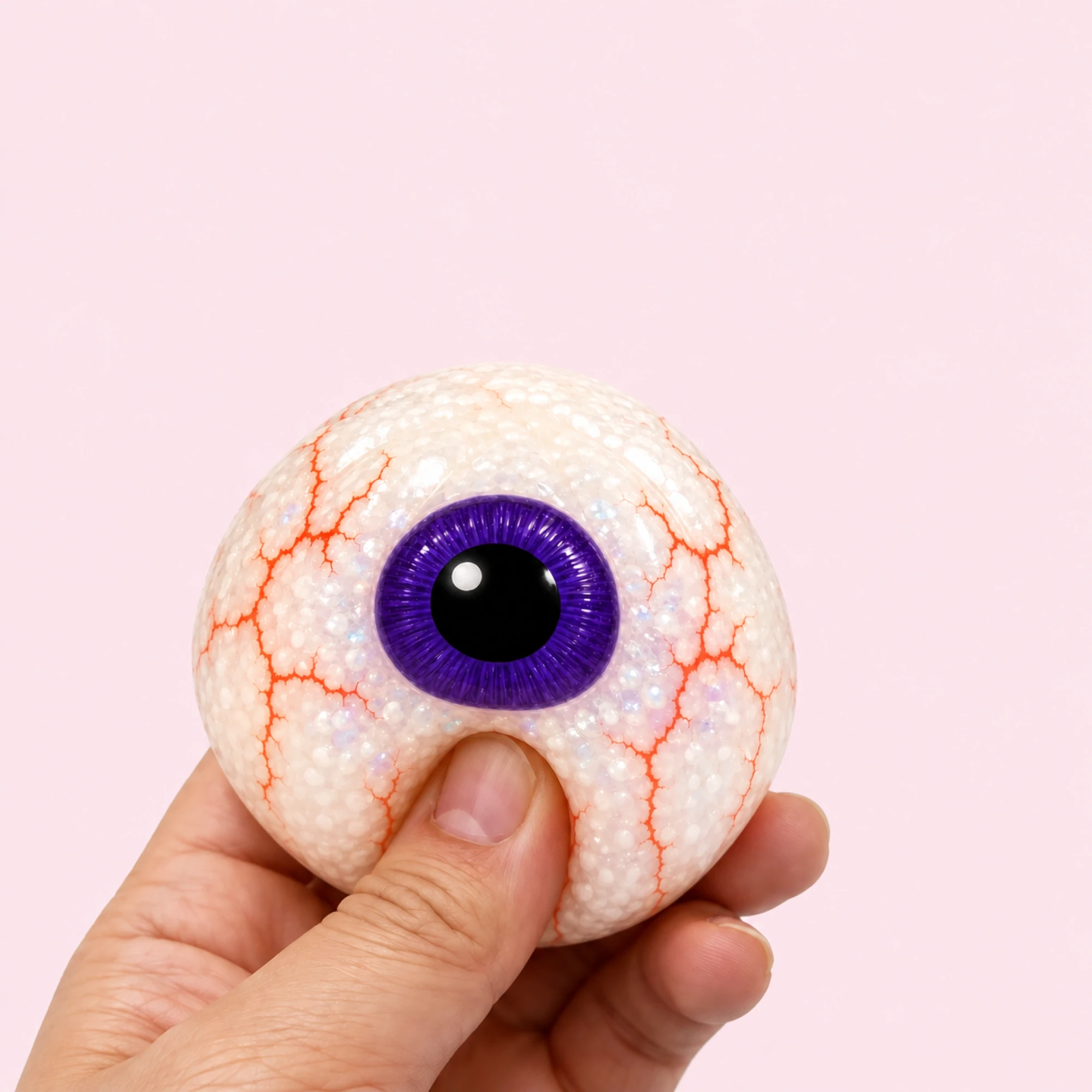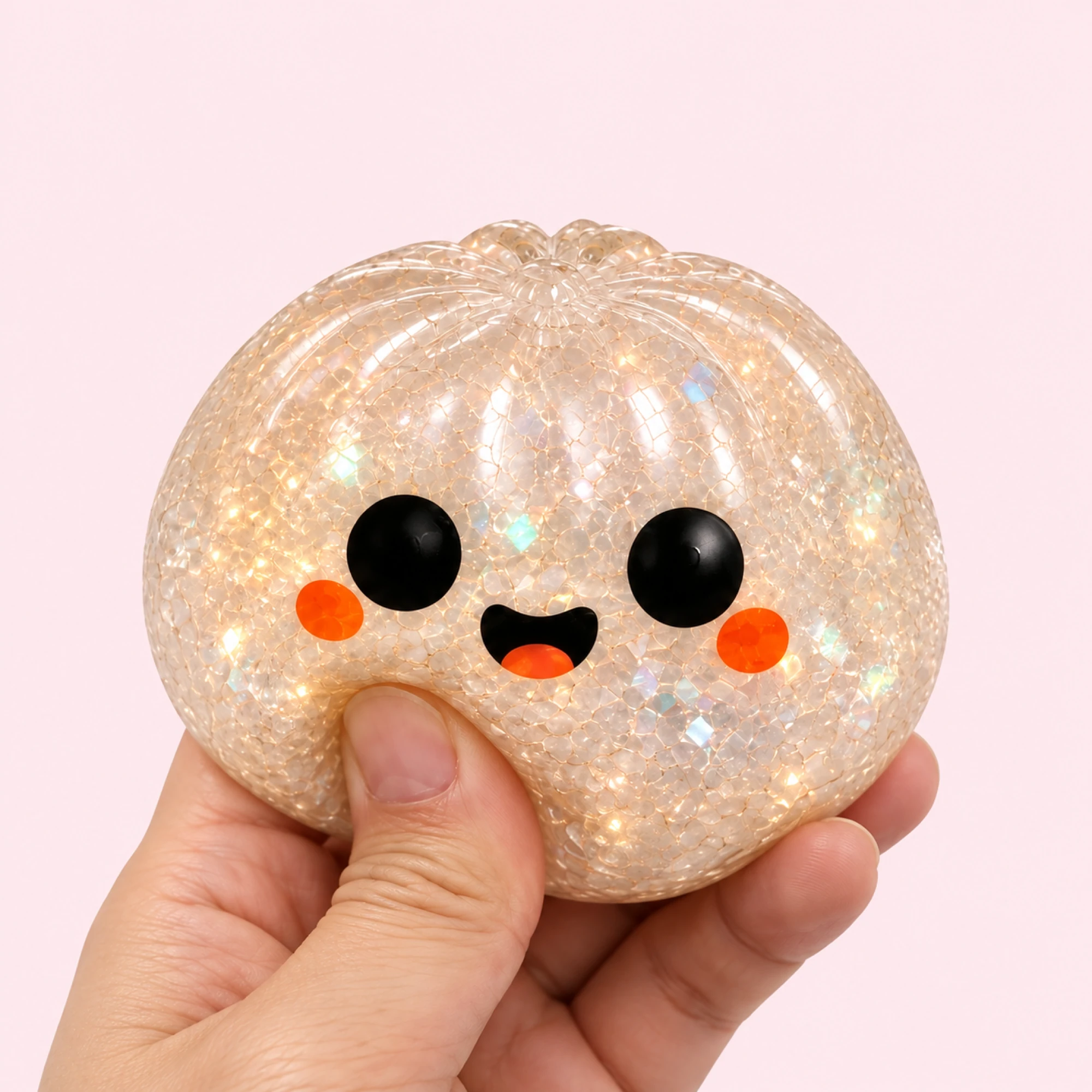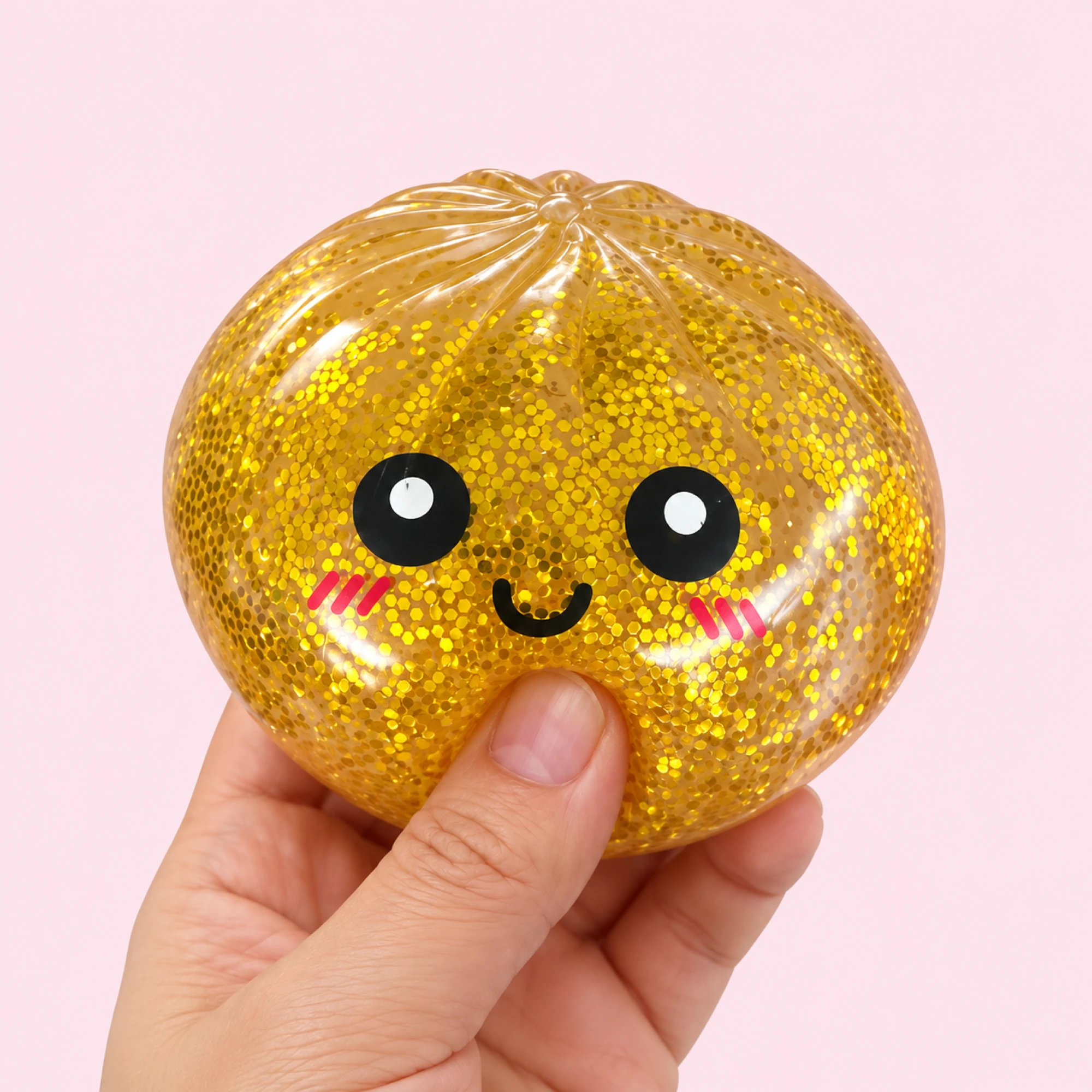


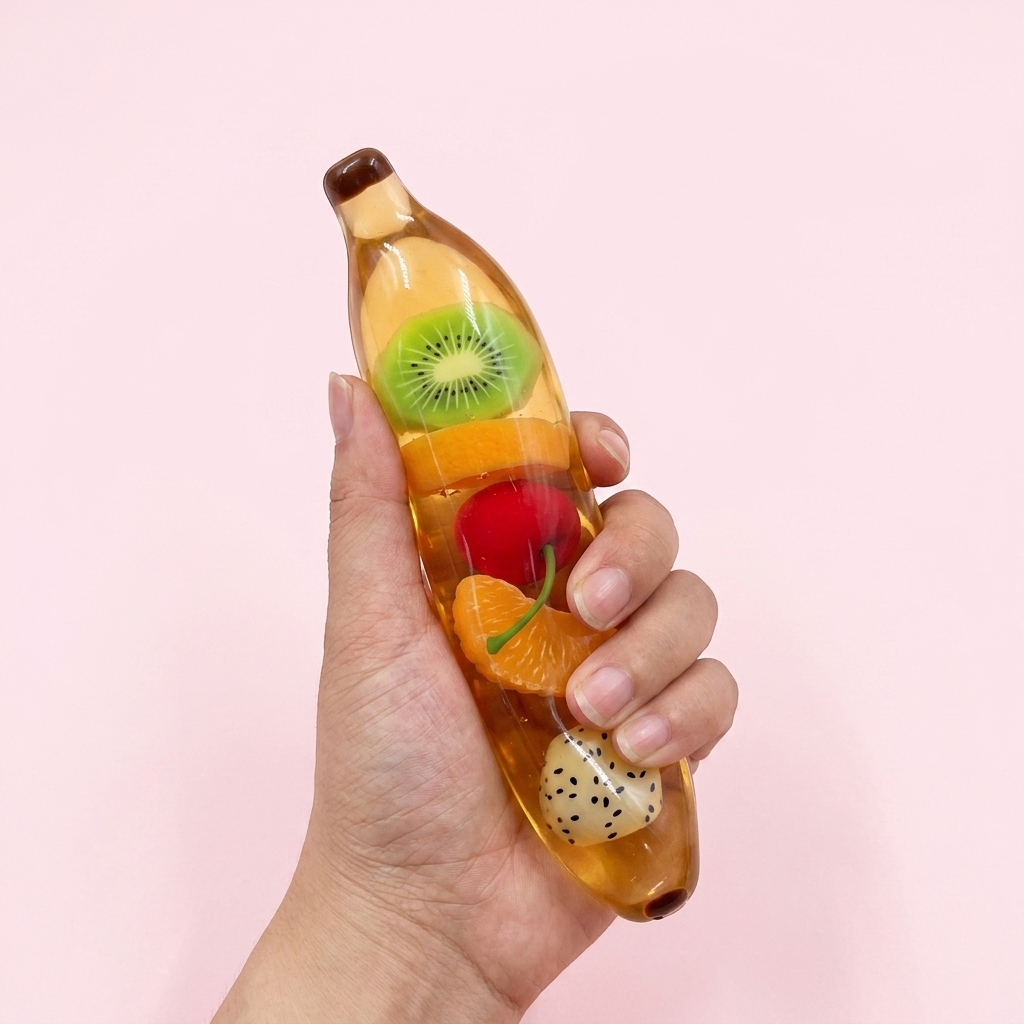

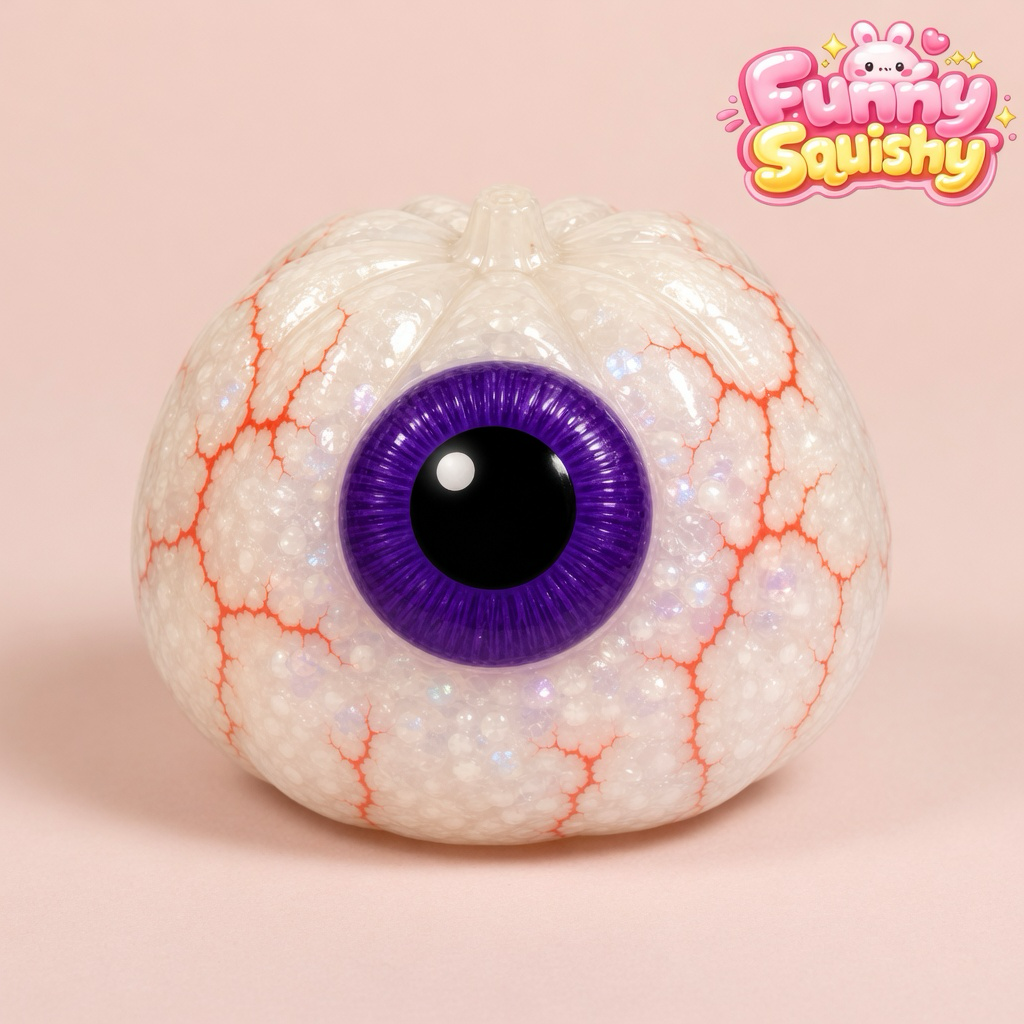
Squeeze a squishy with water inside and you’re really testing a stretchy TPR shell. The liquid can’t compress, so it shoves outward and the membrane bulges wherever your grip is weakest — that rolling, alive-in-your-hand feel foam can’t copy. It also explains the leaks: every drop of pressure lands on a seam somewhere.
How Squishies With Water Inside Are Built
The recipe has two parts: a shell and a payload.
The shell is typically TPR or a similar thermoplastic — solid, stretchy, and sealed into a closed bag. Shell thickness sets the personality: thin walls give a delicate, wobbling squish that feels one wrong fingernail from disaster; thick walls give a confident, kneadable roll.
The payload varies more than people expect. Plain water is just the starter kit. Glitter suspensions turn every squeeze into a snow globe. Bead-filled versions add tapioca-like spheres that tumble under your fingers. Gel and syrup-thick fills slow the whole motion down into something closer to lava-lamp physics — the fluid swirl cube rides that glitter-in-fluid lane. And thermochromic pigments react to warmth, which is how the color-changing fruit squishy shifts shade in a warm palm.
The Feel: Why Liquid Reads as Alive
Foam compresses; liquid relocates. That’s the entire sensory difference, and your hands know it instantly.
When you squeeze foam, the material itself gives way under your grip. When you squeeze a liquid fill, nothing gives — the same volume just rushes somewhere else, swelling against your palm on the far side. Your grip and the bulge are in constant negotiation, which is why liquid toys feel less like an object and more like a small, patient creature.
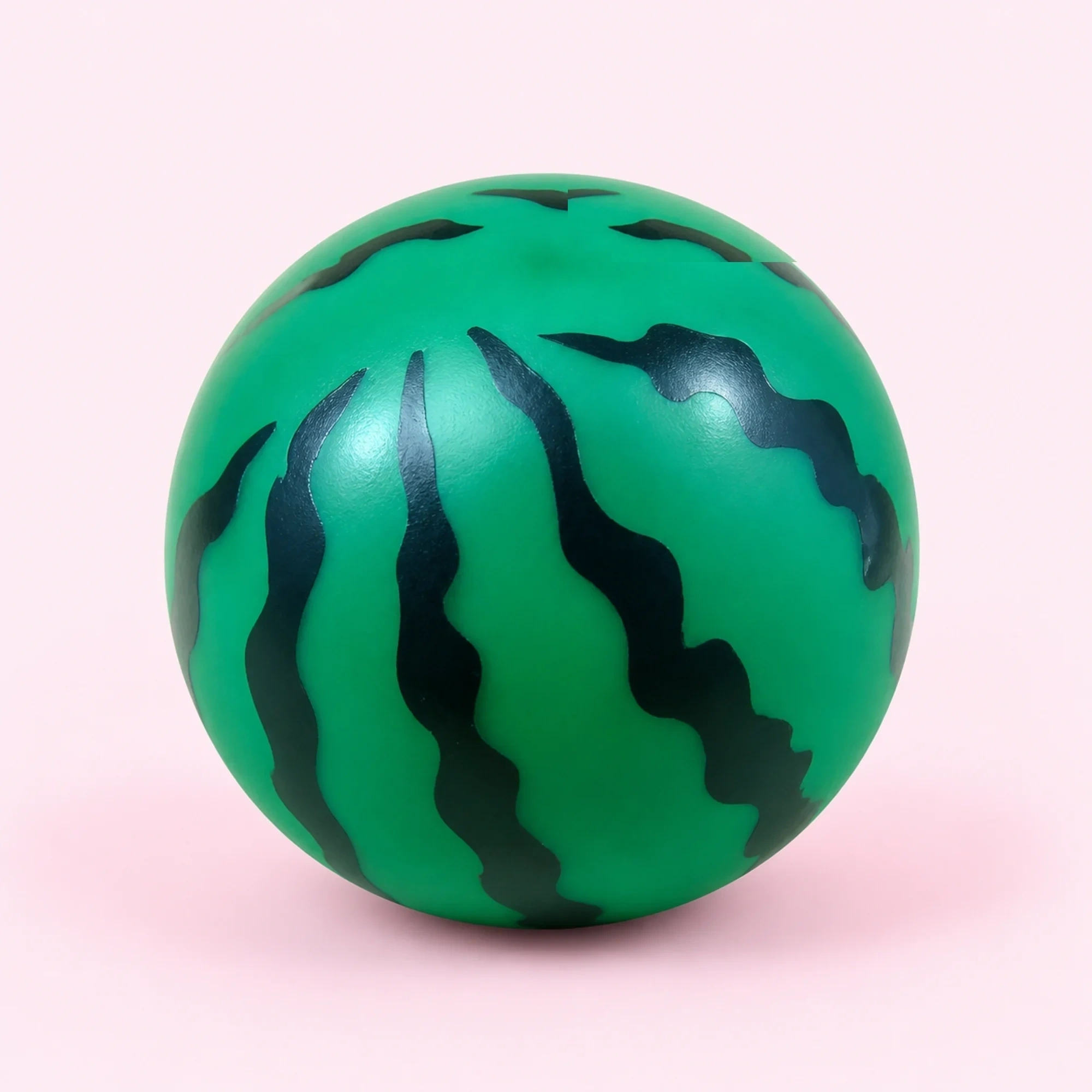
There’s a temperature bonus too. Water holds coolness longer than foam, so a liquid squishy fresh off a desk feels faintly chilled — half the appeal on a warm afternoon. The watermelon fluid-filled squishy plays both sides: fluid roll with a slow-rising surface.
Why They Leak (and Which Habits Speed It Up)
Every liquid toy is a pressure vessel with a duty cycle, and certain habits burn through it fast:
- Fingernails and rings. The number one killer. A nail dent becomes a thin spot, and a thin spot becomes a pinhole.
- The two-handed mega-squeeze. Maximum pressure finds the weakest seam. Toys that get “tested” at full grip strength retire early.
- Overbite chomps. Kids bite these; teeth are precision puncture tools. A bitten toy’s countdown has started.
- Heat and sun. Warm liquid expands and stresses the seams from inside, and sunlight ages the shell.
- Freezing. Water expands as it freezes, and the shell loses that argument overnight. Never the freezer, no matter how good the cold-squish idea sounds.
Handled kindly — clean hands, moderate squeezes, shade — the same toy lasts dramatically longer. General lifespan expectations across all squishy types are covered in how long do squishies last.
When One Leaks: Cleanup and Triage
First, the reassuring part: the fill in typical toys is water-based and the mess is small — a damp spot, sometimes glittery. Wipe it up, rinse anything sticky, done. Any surface residue on desks or fabric responds to plain soap and water, and the how to clean a squishy guide covers de-gunking survivors.
Now the triage rules. A leaking toy is done as a squeeze toy — patches and glue don’t hold on a stretching, pressurized shell, so retire it before it finishes the job on your carpet. Don’t try to refill it; the seal is the one part you can’t recreate at home. And the standing rule applies double here: fruit-shaped and food-shaped squishies are not edible, and neither is anything that comes out of one. Bin a burst toy where pets and small kids can’t investigate it, and remember these are 3+ toys.
Water-Filled or Foam? Pick by Habit
- Kneaders and rollers: liquid. The migrating bulge rewards continuous motion.
- Crush-and-watch types: foam. The slow rise is the show, and liquid shells don’t do it.
- Nail-diggers: foam, for everyone’s sake.
- Warm-hands people: liquid, for the cool-touch bonus.
- Desk aesthetes: liquid — glitter fluid catches light like nothing else on the novelty squishy shelf.
Can’t pick a side? The middle path exists: coconut oil squishies carry a soft fluid feel in a squeeze-first package, and plenty of collectors run one liquid and one foam so each mood has a toy. Orders of $49 or more ship free worldwide — pairing up is practically encouraged — and the 30-Day Squishfaction Guarantee covers both camps.
FAQ
What’s actually inside a water squishy? Typically a water-based fill: plain water, glitter suspension, soft beads, or a thicker gel, sealed inside a stretchy TPR-style shell. Some add thermochromic pigment so the color shifts with hand warmth.
Are water-filled squishies safe if they pop? The typical fill is water-based and the mess is minor, but it isn’t food — wipe up, wash hands, and throw the toy away out of reach of pets and small children. Anything with beads deserves an extra-careful sweep.
Can you refill a water squishy? Realistically, no. The factory seal is the whole engineering, and a home patch can’t survive being stretched and pressurized. Once it leaks, it has earned retirement.
Why did my squishy with water get cloudy or soft? Shells age: sunlight, heat, and thousands of squeezes slowly change the plastic’s clarity and tension. Cloudiness and thin, soft patches are the early-warning system — enjoy it gently and don’t be surprised by the eventual leak.