


There is not much to learning how to use a stress ball, but there is a wrong way, and it is the way almost everyone starts: maximum squeeze, held as long as possible, with whatever ball happened to be on the desk. That combination is how people end up with an aching forearm and a ball they stop reaching for, and all three parts of it are easy to fix.
Grip: Whole Hand, Not Fingertips
Wrap the ball so it contacts the palm and the full length of the fingers. The pressure then spreads across the whole hand.
Squeezing with fingertips alone concentrates the load on the small muscles that already do the most work in a day of typing, and it is the single most common cause of soreness.
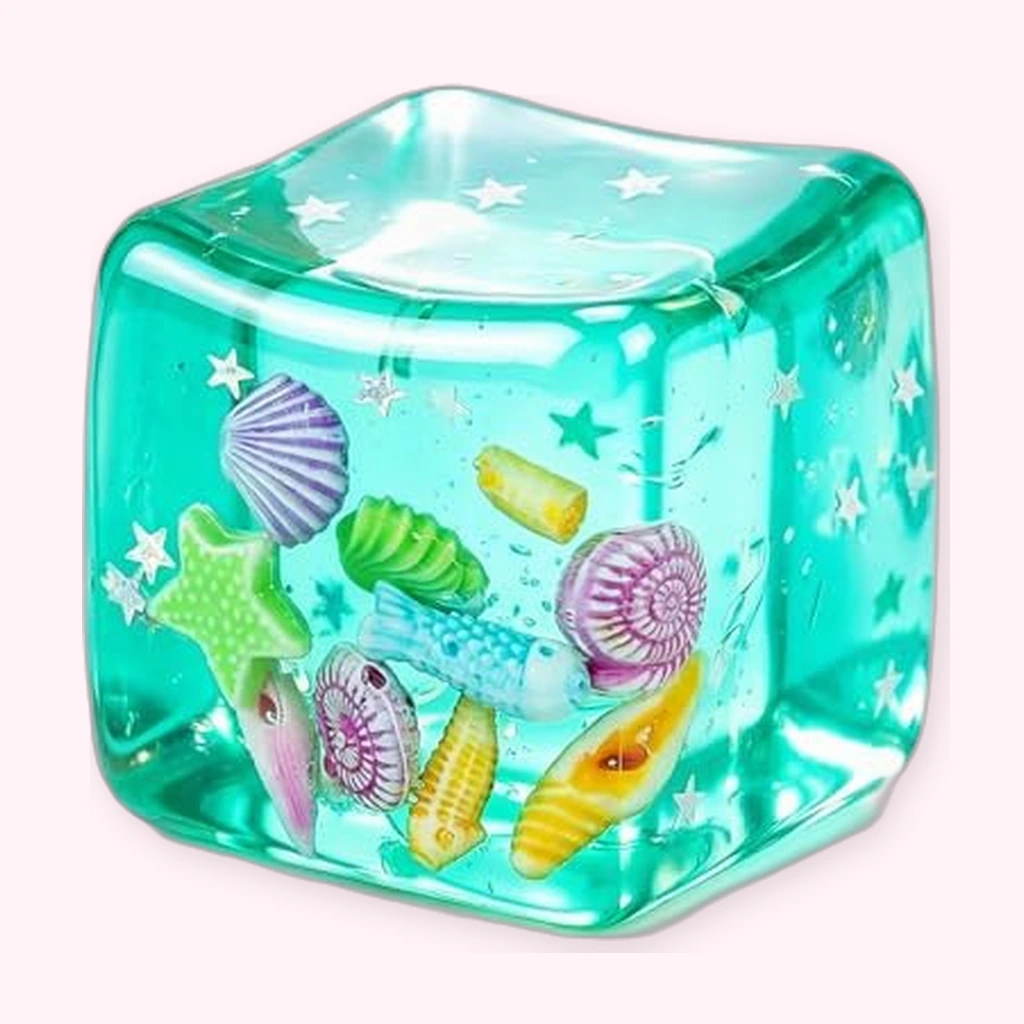
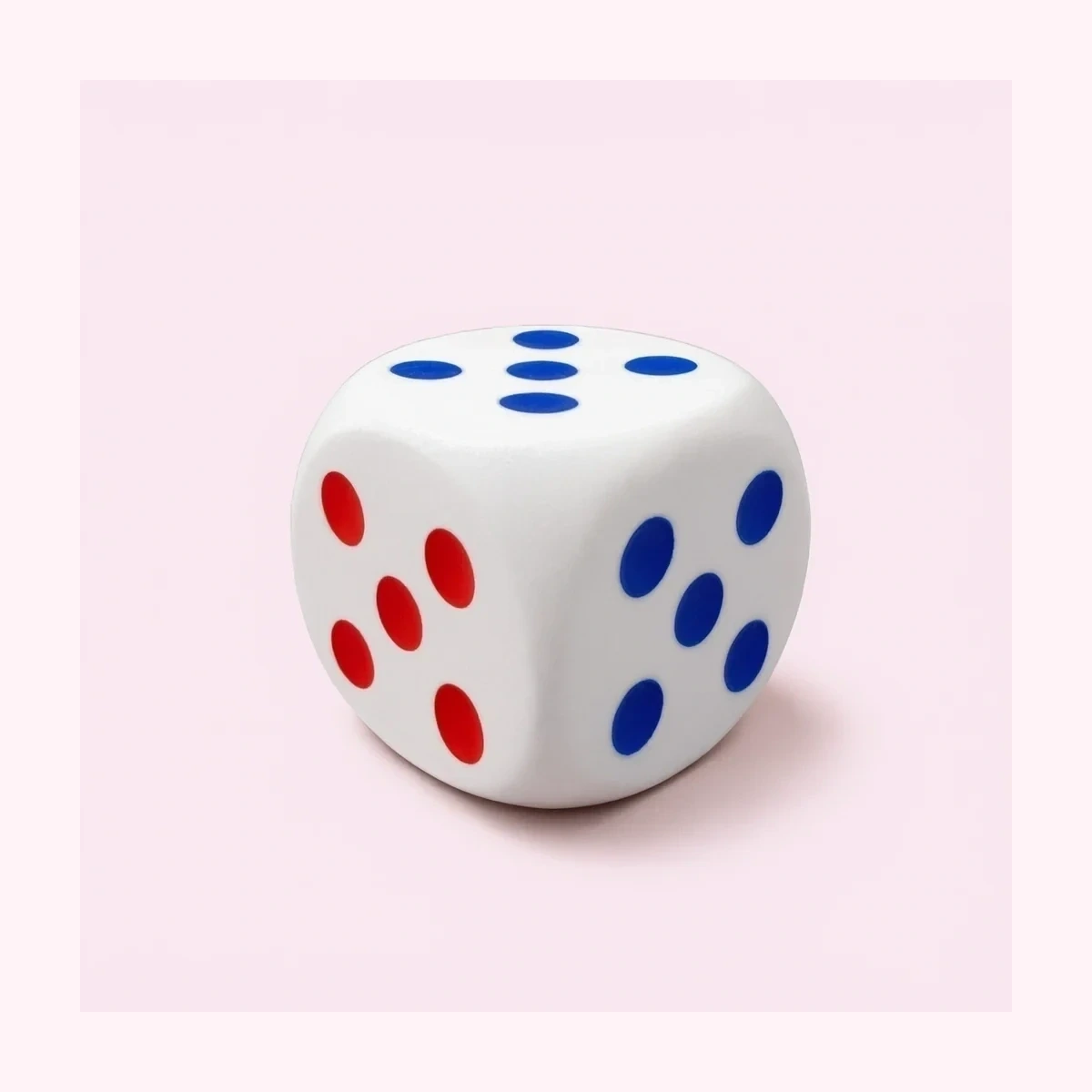
The ball should be big enough that your fingers do not meet around it. If they close completely, the ball is too small for a full-hand grip and you will default to fingertips whether you mean to or not — a 3-inch body like the Dice Squishy Stress Ball sits about right for an adult hand.
Pressure: Two Thirds, Never Maximum
Squeeze to roughly two thirds of what you could manage, not to the limit.
At maximum effort the hand is braced rather than working, the forearm takes the strain, and there is nothing pleasant about it. At two thirds the motion is repeatable for minutes rather than seconds, which is the whole point.
If the ball bottoms out — compresses fully and stops giving — it is too soft for you and you will keep reaching for maximum force just to feel something. Resistance matching is set out in full in choosing by resistance.
Rhythm: Squeeze Two, Release Four
A slow, uneven rhythm beats fast repetition.
Squeeze over about two seconds, release over about four. The release is where the hand actually relaxes, and rushing it means you never get the relaxing half.
Fast repeated squeezing is exercise, not a reset. It has its place, but it is a different activity with a different goal, and doing it absent-mindedly for twenty minutes is how the forearm complains.
Duration: Minutes, and Alternate Hands
Two to five minutes at a time is plenty. There is no benefit that accrues at twenty that you did not already have at five.
Swap hands. Most people squeeze only with the dominant hand and it is also the hand doing everything else that day.
Stop when it stops feeling like anything. Sensation fading is the signal to put it down, not to squeeze harder — and if it fades every time within a minute, the ball is too soft rather than you being unusually strong.
Three Habits That Cause Trouble
Squeezing through pain. A stress ball should never hurt. Any sharp sensation in the wrist or thumb base means stop, and it means the ball is too firm for you.
Digging in with nails. This is what splits a skin, and once a gel or fluid-filled ball splits it is finished. Flat fingers, not points.
Using it as a hand-strength programme. Hand strengthening is a real thing with real protocols, and a desk stress ball is not it. Treat them as separate activities — the difference between a reset squeeze and structured hand work is the subject of hand exercises and carpal tunnel.
How to Use a Stress Ball of Each Type
Foam. Even resistance, silent, durable, forgiving of hard squeezing. The default for repeated use at a desk.
Bead-filled. Shifting texture and a faint crunch, so the sensation changes as you work it — the Bloodshot Eyeball Squishy is this type, and the filling comparison is in foam against gel and beads.
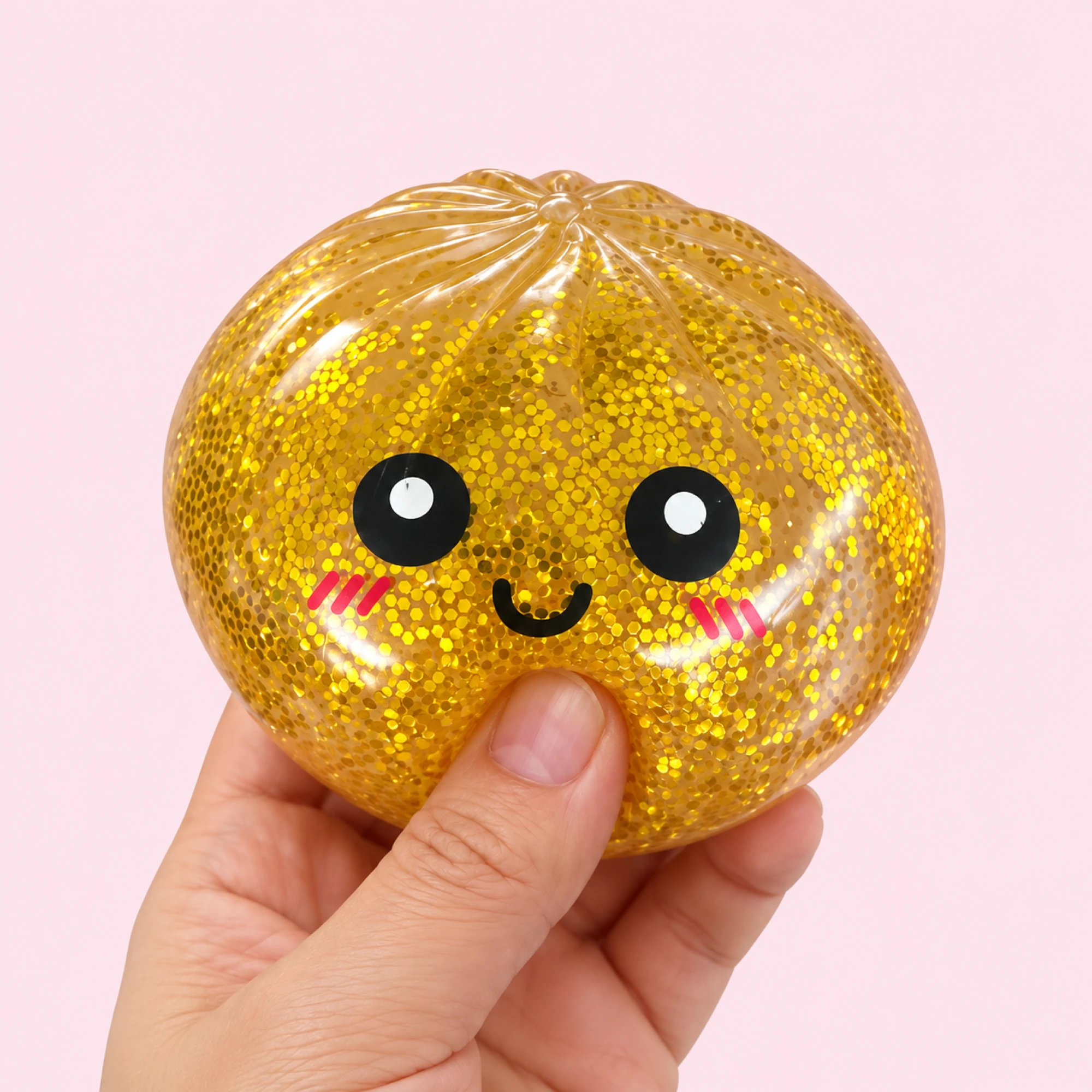
Water-bead and gel. The deepest, slowest sensation and the most fragile skin. Best for slow squeezing rather than fast repetition — the Water Bead Hedgehog Squishy is an example.
Slow-rising foam. A different activity again: you compress it and then watch it recover, so the rhythm is set by the ball rather than by you.
Does a Stress Ball Really Work
For what it claims to do — give a hand something absorbing and repetitive to do — yes, reliably, and that is the whole mechanism. Nobody needs to promise more than that.
What it will not do is anything on its own while it sits in a drawer, which is the actual failure mode of most stress balls people own.
Keep it where your hand already goes. Next to the keyboard, not in a drawer, and not on a shelf — and expect to replace it eventually, since every soft toy ages, as described in yellow, sticky or hard.
Where the Ball Should Live
The technique above is worth nothing if the ball is not within reach of the hand that needs it, and placement decides that more than anything else.
Next to the keyboard on the side of your non-dominant hand is the position that works, because it is the hand that is free while you are working.
A drawer is where stress balls go to be forgotten. So is a shelf, a bag and the far side of a monitor.
If you have more than one, put them in different rooms rather than in a row on the same desk. Two balls in one place is one ball; two balls in two places is two.
Three to Squeeze
Dice Squishy Stress Ball — 3-inch foam, the right size for a full-hand grip.
Bloodshot Eyeball Squishy — bead-filled, texture that changes as you work it.
Water Bead Hedgehog Squishy — slow, deep compression for unhurried squeezing.
Browse the fidget balls range, or all fidget toys if compression is not the action you want.