


Rotation is the one fidget action that punishes miniaturisation hardest, and the reason is arithmetic rather than build quality. A mini fidget spinner loses spin time far faster than it loses size, because the property that keeps a spinner turning depends on how far the mass sits from the centre as well as on how much mass there is — so halving the diameter costs you much more than half the performance.
Why Small Spinners Stop Sooner
Rotational inertia is what a spinner carries between your flick and the moment it stops. It scales with mass, and it scales with the square of the radius.
Shrink a spinner and both terms fall at once. A smaller body has less material, and that material sits closer to the centre where it contributes far less. The effect compounds, which is why a genuinely tiny spinner can feel like it stops almost as soon as you release it even when the bearing is perfectly good.
The bearing, meanwhile, does not shrink. Most spinners of any size use the same standard centre bearing described in the fidget spinner bearing explained, so a small body is a small amount of inertia fighting the same amount of drag. That ratio is the whole story.
What a Mini Fidget Spinner Still Does Well
Fits where a full-size one does not. A thin body in a coin pocket, on a keyring or clipped to a bag is available in situations where a desk spinner simply is not with you.
Gives you the flick without the display. If what you enjoy is the moment of release rather than watching a long decay, size costs you almost nothing — the first second feels much the same at any scale.
Survives being dropped. Less mass means less energy on impact, so a small acrylic body bounces where a heavy metal one dents the floor and chips its own finish.
Stays unobtrusive. A small spinner in a hand is far less visible than a large one, which matters because visible rotation is what makes spinners awkward in shared rooms, as covered in what survives a shared office.
Where the Floor Sits
Two limits, and the second one surprises people.
The physical limit is your pinch. A spinner needs two caps far enough apart to hold and an arm long enough to flick cleanly. Below roughly the width of two fingertips you are operating it with a nail rather than a fingertip pad, and almost all of the tactile feedback disappears.
The practical limit arrives earlier than the physical one. Long before a spinner becomes too small to hold, it becomes too short-running to be interesting — and at that point you own a small object that turns rather than a spinner.
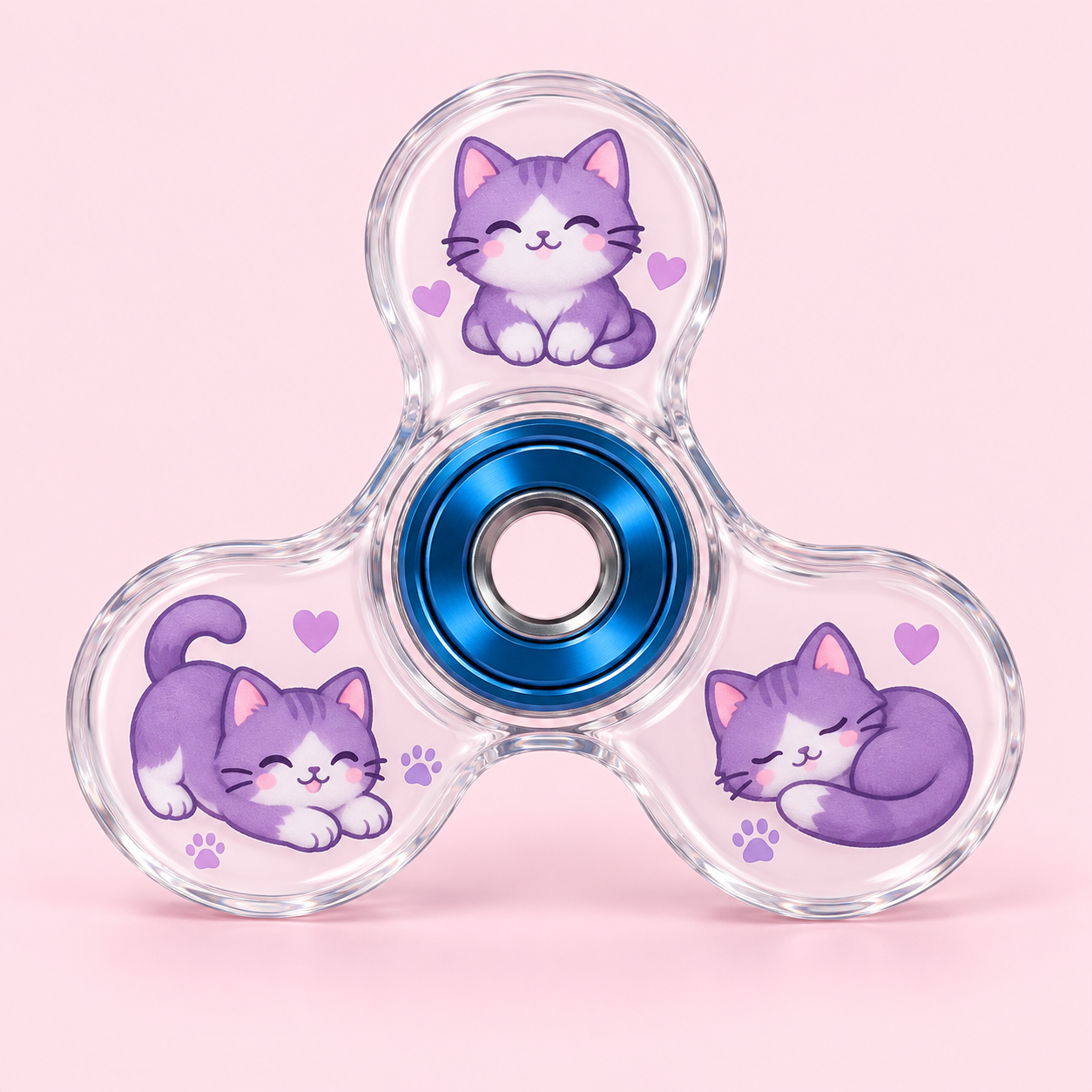
A body like the Purple Cat Acrylic Fidget Spinner at 3 × 3 × 0.5 inches and 35 grams sits at a useful point on that curve: thin enough to carry anywhere, wide enough that the pinch and the flick still work properly.
The Better Small-Format Answer
If what you want is rotation in something genuinely pocket-sized, the honest recommendation is usually not a smaller spinner. It is a different format that rotates.
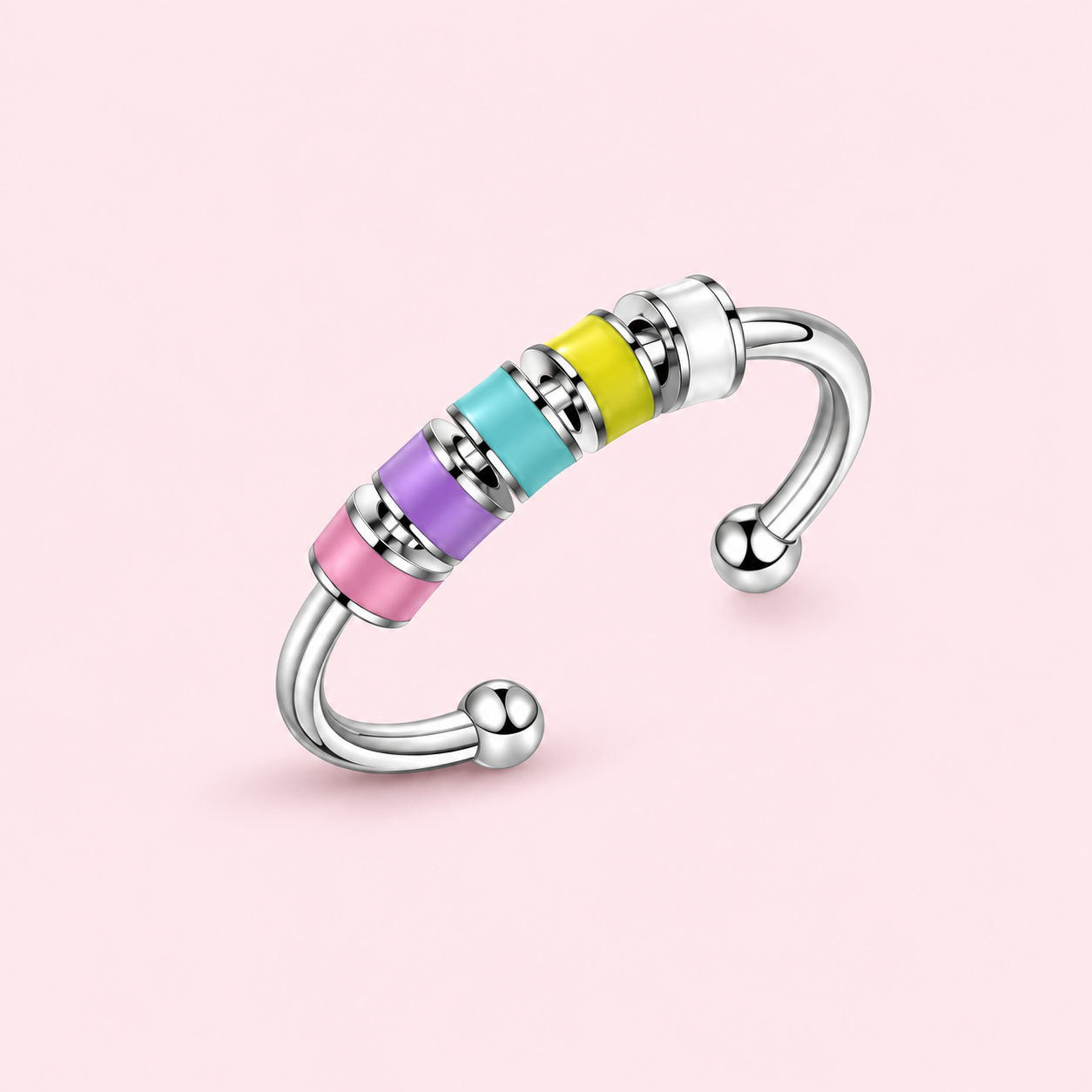
A spinner ring keeps the rotation and removes the carrying problem entirely, because it is worn. The Cat Spinner Fidget Ring is adjustable, which also sidesteps the sizing question that catches people out with rings.
A spinner pen puts rotation into an object you already carry, and the mass sits where it does some good. The Metal Spinner Pen spins one-handed and writes with the other end.
Both give you the action in a form that survives a pocket, which a shrunken three-arm body does not do especially well. The general version of that argument — which mechanisms miniaturise and which do not — is in small fidget toys.
Buying a Small One Anyway
Prefer flat over small. Thickness is what makes a pocket object annoying, not footprint.
Prefer clip-on. A small loose object in a pocket with keys will get scratched, and a small loose object in a bag is effectively lost.
Accept short spins. If you find yourself disappointed by the decay time, the problem is physics rather than the particular unit, and a larger body is the only fix.
Check the bearing anyway. A small spinner with a rough bearing has nothing to spare, so the ten-second checks in how to judge a spinner matter more here than at full size, not less.
Two-Lobe Bars, the Format Most People Miss
There is a middle option between a full three-arm body and a miniature one, and it barely gets discussed.
A two-lobe bar keeps almost all of the radius — which is the term that matters most for inertia — while removing a third of the material. The result is a body that spins nearly as long as a three-arm spinner of the same width but takes up much less pocket space, because a bar is narrow in one axis.
It also changes the flick. A bar presents two arms rather than three, so there is a longer gap between them, and the timing of a repeated table flick is different. Most people adapt within a minute.
If you have been trying to solve the pocket problem by going smaller, try going narrower instead. It is the same instinct applied to the dimension that costs you nothing.
Three Small-Format Options
Purple Cat Acrylic Fidget Spinner — 3 × 3 × 0.5 in, 35 g, transparent with three cat illustrations. Thin enough to carry, large enough to work properly.
Cat Spinner Fidget Ring — adjustable spinner ring. Rotation with no carrying problem at all.
Metal Spinner Pen — rotation inside an object that already earns its pocket space.
Browse the fidget spinners range, or see fidget keychains for other carry-sized formats.