

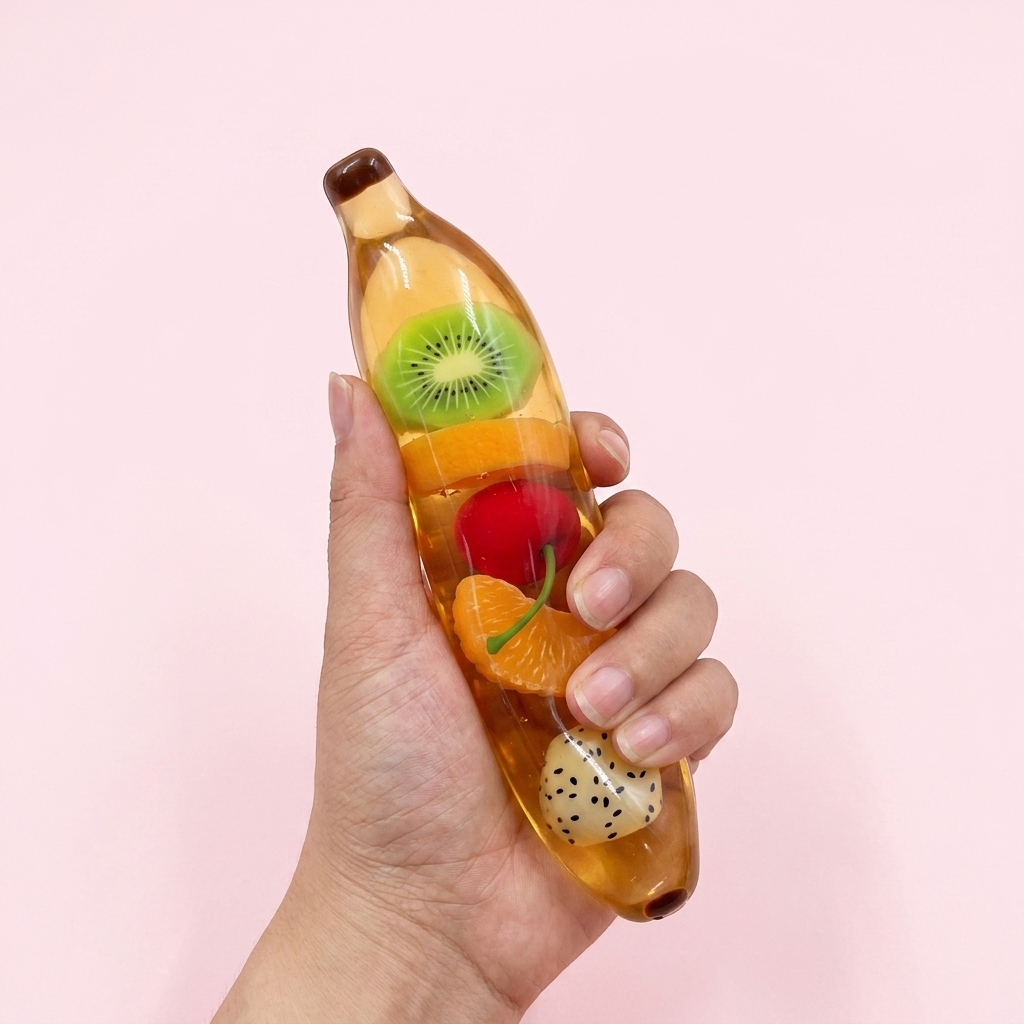

There’s a shelf above my desk holding an articulated dragon, three gear spinners, and a chain of printed links — so yes, a 3D printed fidget toy can absolutely be worth printing. The honest caveat: layer lines feel like layer lines. Prints deliver clicks, hinges, and custom shapes; they don’t deliver softness. Knowing which itch each one scratches saves you filament.
Which 3D Print Fidget Toy Designs Feel Best
After a lot of printing, the field sorts into a clear hierarchy.
Articulated flexi animals — dragons, axolotls, slugs — are the kings. Dozens of interlocking segments printed in place, so the whole creature ripples through your fingers. The segment-on-segment cascade is the print-only sensation nothing else replicates.
Gear rings and spinners come second: planetary gears you thumb around and around. When the tolerances land, the motion is silky; when they don’t, you’ve printed a small argument.
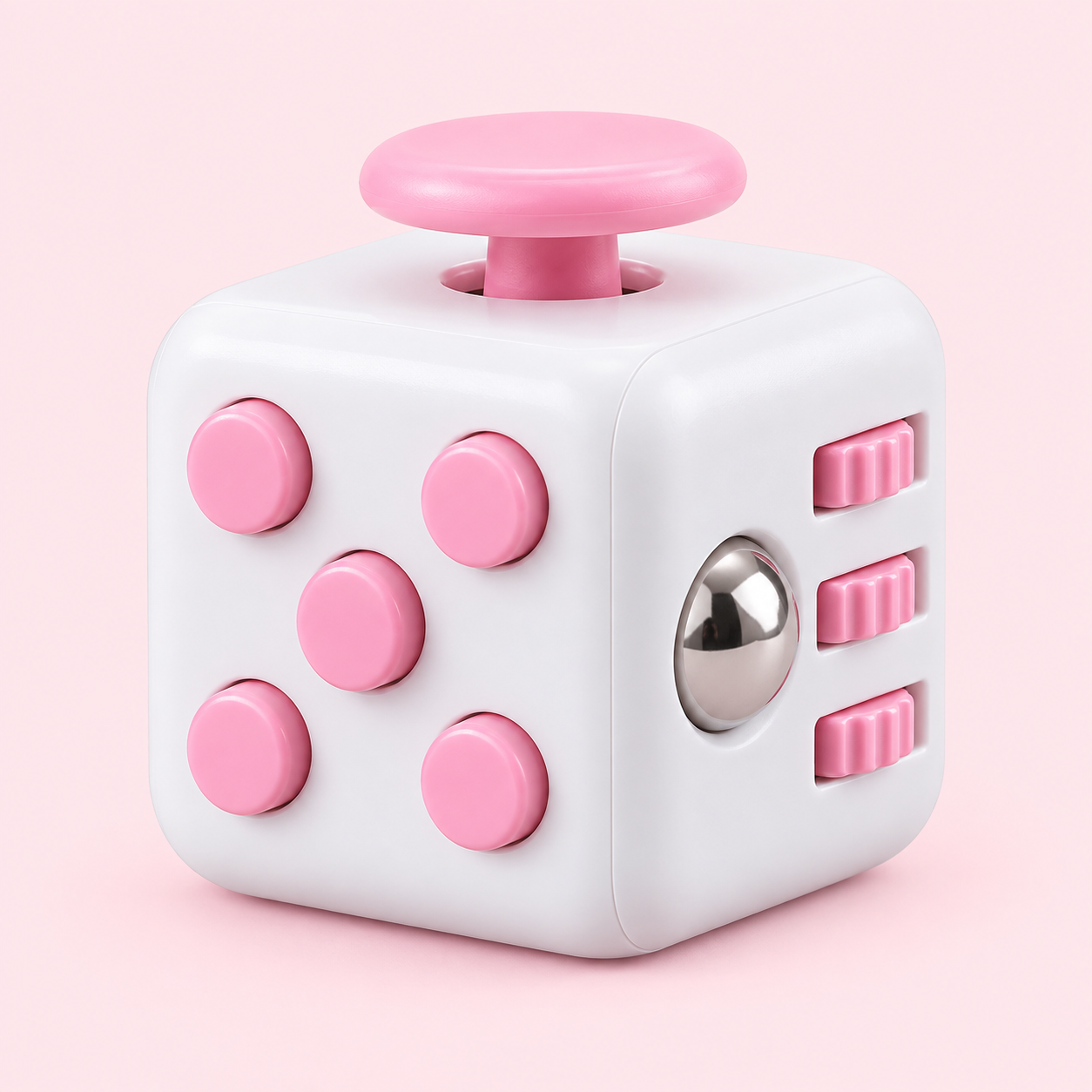
Chain links, sliders, and switch toys fill out the roster — simple mechanisms, quick prints, good pocket citizens. Fidget cubes exist as prints too, though printed buttons rarely click as crisply as injection-molded ones.
The pattern: prints excel at mechanisms. Anything whose joy is articulation, rotation, or clicking is fair game for the nozzle. Anything whose joy is give, sink, or softness will disappoint straight off the build plate, and no slicer setting rescues it.
Layer Lines vs. Soft Skin: The Texture Gap
Run a thumb across any print and you feel the topography — fine ridges where each layer fused to the next. Some people like that corduroy tick-tick under a fingernail. Others find it reads as “unfinished” forever, and no amount of sanding fully erases it.
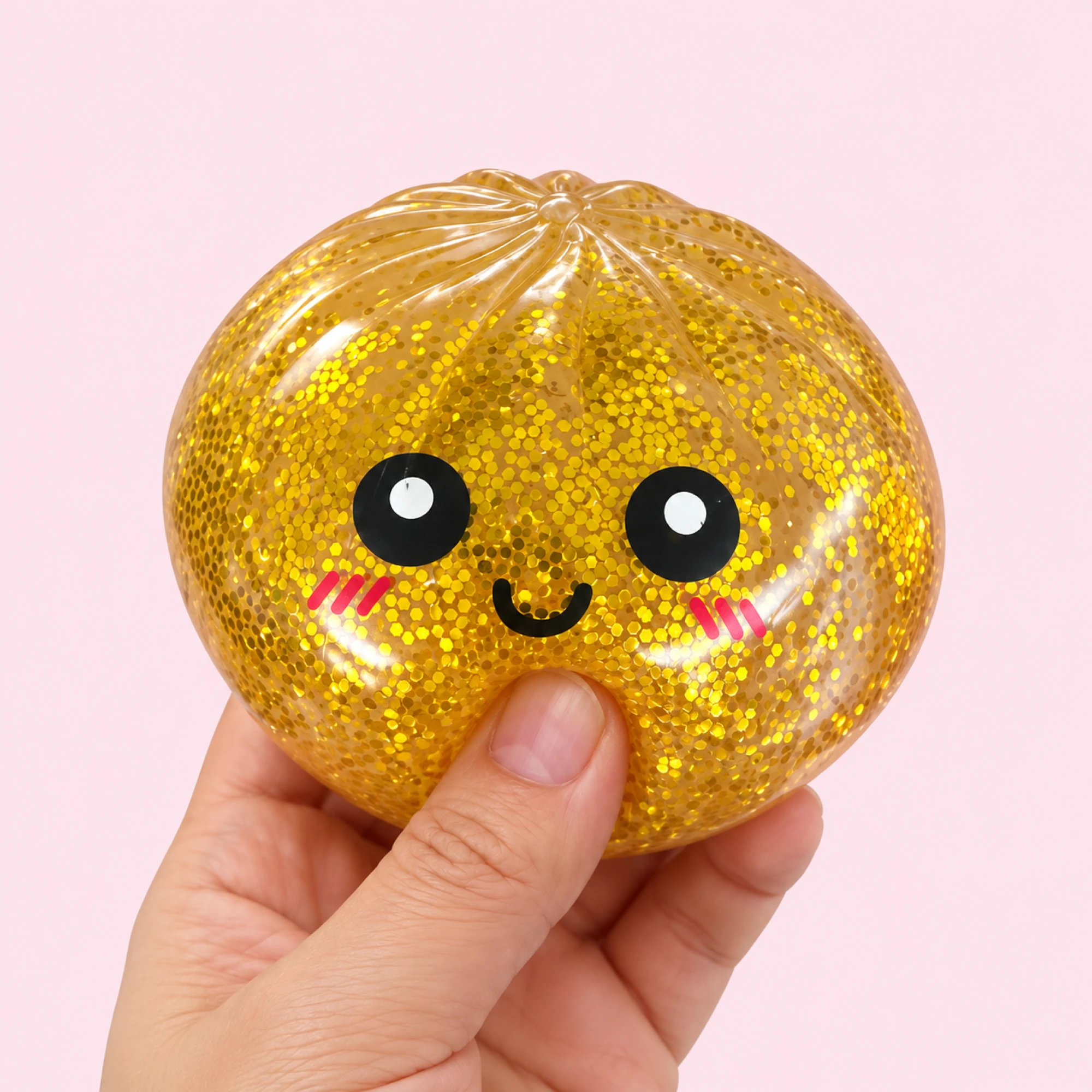
The bigger gap is give. Standard prints have none: you hold a print, but you can’t press into it. Even flexible filament prints squash like a stiff eraser, not like foam — there’s no dense sink, and definitely no slow, creeping rebound afterward. If the fidget urge in question is compression — squeeze, hold, release, watch it recover — printing is the wrong tree to bark up, and that’s precisely the sensation covered in do fidget squishies help focus.
Neither texture is wrong. They’re different food groups. My own pattern after a year of both: prints get picked up when my brain wants something to do, squishies when my hands want somewhere to go. The distinction sounds fussy until you notice yourself living it.
Material Matters: PLA, PETG, TPU
Quick filament field guide, common knowledge edition.
- PLA is the default: easy to print, rigid, crisp details. It’s also brittle — drop a PLA flexi dragon on tile and you may be printing a memorial replacement.
- PETG trades some detail crispness for toughness. Pocket toys and chain links survive longer in it.
- TPU is the flexible one — rubbery, nearly indestructible, and the closest printing gets to “squishy,” which is still not very close. It’s also the fussiest to print well.
Two practical notes. Fidgets live in hands, so filament quality and clean prints matter more than for shelf models. And prints are not toys for small children — small segments, snap-off parts, and no age testing; keep them with the big kids and adults.
Noise, Classrooms, and Other Real-World Limits
Prints are loud. Flexi segments clack, gears whir, chains rattle — lovely at your own desk, a hostile act in a quiet classroom or an open office. Squishies own the silent category outright, which is why our quiet fidgets for class and office guide is foam top to bottom.
Other limits worth knowing: layer seams are stress points, so flexi joints eventually snap at the same hinge; sweaty-hand grip softens on smooth PLA; and every print is one drop away from becoming spare parts. None of this kills the hobby — it just defines its lane.
Run a Two-Toy Rotation
The actual pro move is refusing to choose. Keep a print for the clicky, mechanical moods and a squishy for the compression moods, and rotate as the day demands.
For the soft half of the rotation, cubes are the natural partner to a printed collection — geometric enough to look at home next to a dragon. The fluid swirl cube adds glitter physics to the squeeze, the cheese block squishy brings marble-swirl slow rise, and the milk carton 5-pack stocks every desk in the house at once. The wider novelty squishy collection has stranger shapes, and the shop has everything else.
Orders of $49 or more ship free worldwide, with a 30-Day Squishfaction Guarantee on the soft half of your rotation. The printed half is between you and your printer.
FAQ
Are 3D printed fidget toys any good? Genuinely, for mechanical fidgeting — articulated flexis and gear toys deliver sensations no factory toy matches, plus infinite customization. For squeezing and compression they’re a dead end; that job belongs to foam.
What’s the best filament for fidget toys? PETG for anything that lives in a pocket, PLA for detailed display-and-play pieces, TPU when you want bend and bounce. Whatever you print, dial the printer in first — a stringy, rough fidget gets abandoned within a day.
Why do my printed fidgets break at the joints? Layers are weakest where they meet, and hinges concentrate all the stress right there. Printing joints thicker, orienting parts so stress runs along layers instead of across them, and switching to a tougher filament all extend the lifespan.
Can a print ever feel like a squishy? No — even TPU at low infill squashes like a firm eraser, without the dense sink or slow recovery of open-cell foam. The two textures complement each other; they don’t substitute.