



Ask a classroom of eight-year-olds to name a dream sensory toy and “axolotl” comes back before you finish the question. The axolotl squishy earns that loyalty honestly: pastel colors, a permanent smile framed by frilly gills, and a squeeze soft enough to knead through an entire cartoon episode. Kids recognize it instantly, and their hands genuinely do not want to put it down.
How a Salamander Took Over the Kids’ Shelf
The real axolotl is a salamander with a party trick: it never grows up. It keeps its feathery external gills and its permanent half-smile for life, which makes it look like a cartoon that escaped into an aquarium. Biologists call this staying larval; kids call it perfect.
Then video games got involved. Axolotls appeared as tameable creatures in one of the biggest games on the planet, and an entire generation learned the word overnight. Plush versions followed, then squishies, and the pink smiling face became standard kids-room furniture.
The design translates so well because the animal already looks like a toy — round head, frilly crown, tiny smile. Toy makers barely had to exaggerate a thing, which is rare and a little unfair to every other amphibian.
Axolotl Colors, Decoded
Real axolotls come in a handful of hobbyist-famous colors, and toy versions borrow the palette before adding inventions of their own:
- Leucistic pink — the famous one: pale pink body, rosy gills, the default “axolotl look”
- Wild type — mossy brown-green with speckles, the camouflage original
- Golden albino — warm yellow-gold with pale eyes
- Melanoid — deep charcoal all over, extremely dramatic
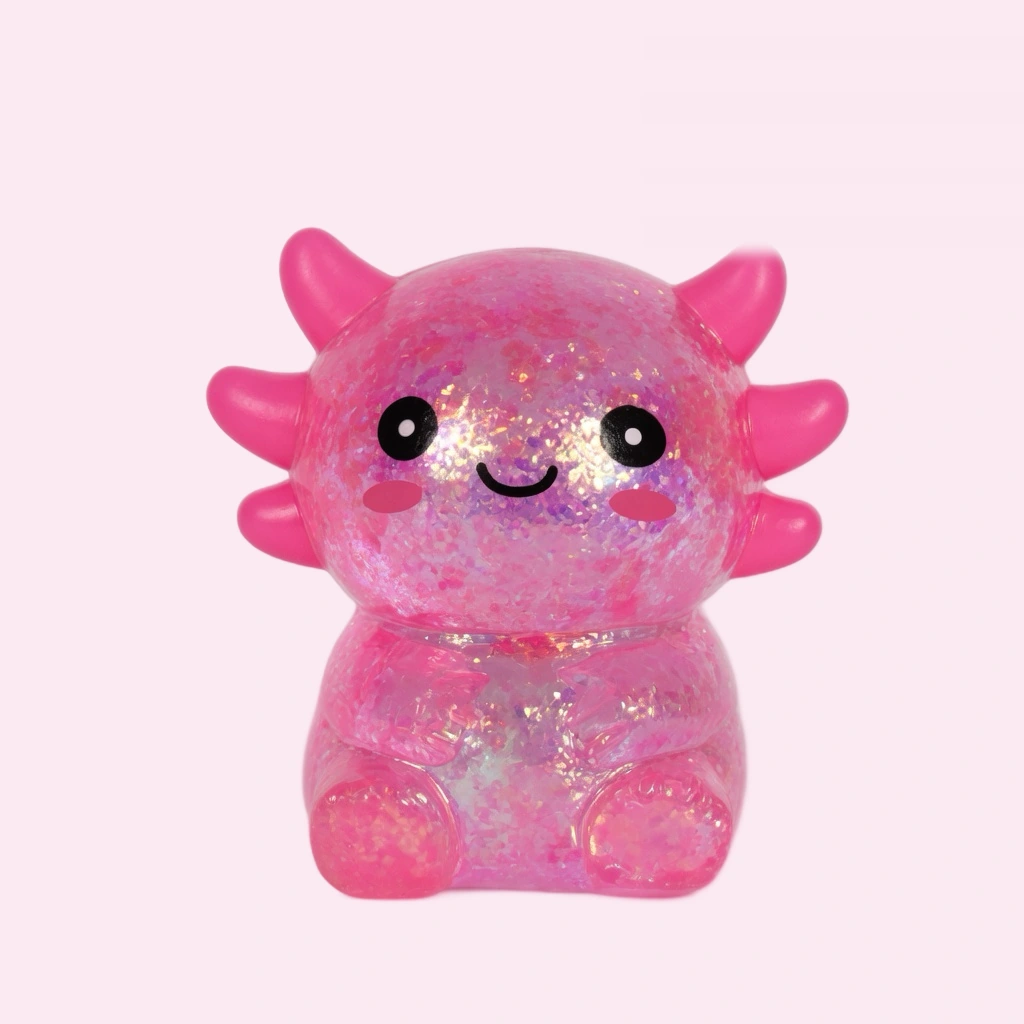
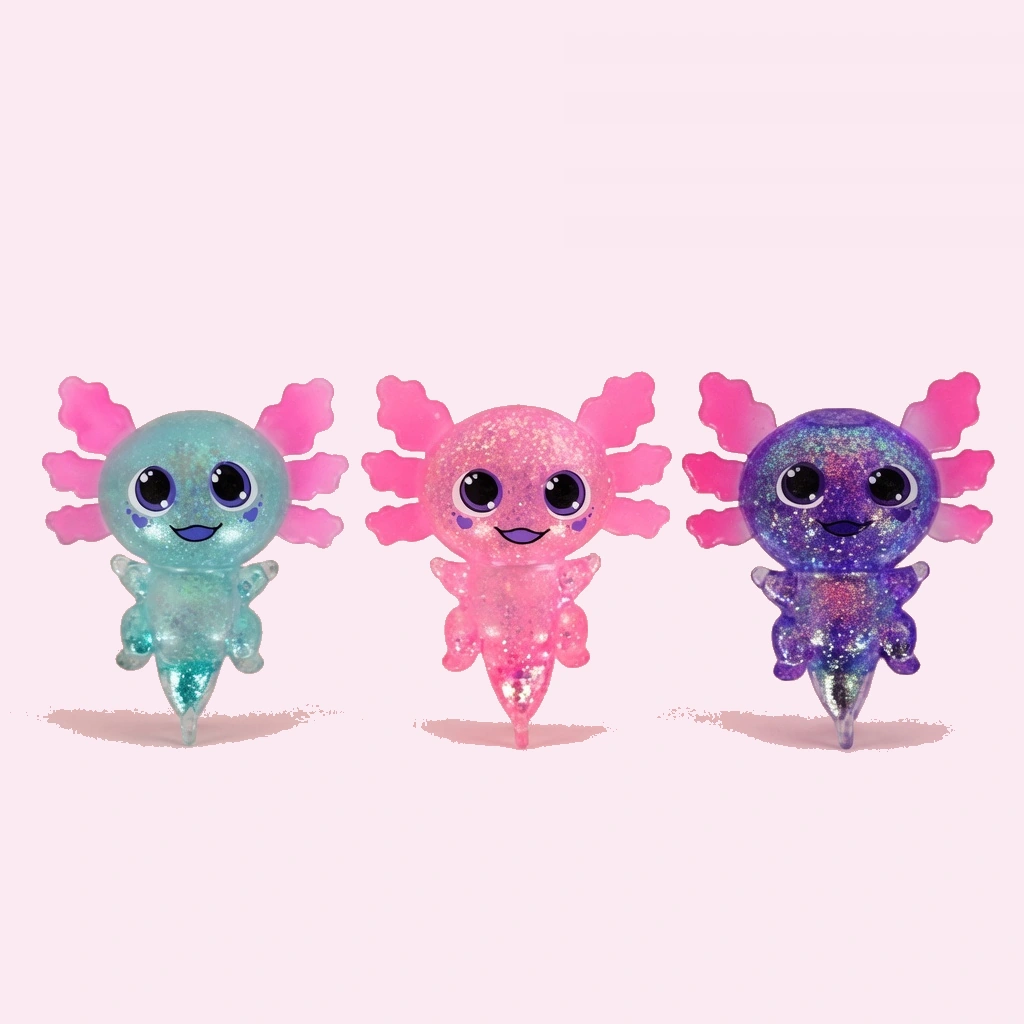
- Toy-only liberties — mint, lavender, blueberry, glitter, because the shelf demanded it
Pink dominates the toy side for the obvious reason: it photographs adorably and matches everything in a pastel bedroom. But the wild-type kids exist too, and they will tell you the brown one is scientifically correct. Color also becomes how kids tell theirs apart at playdates, which quietly prevents more disputes than you’d expect.
What Axolotl Squishies Feel Like
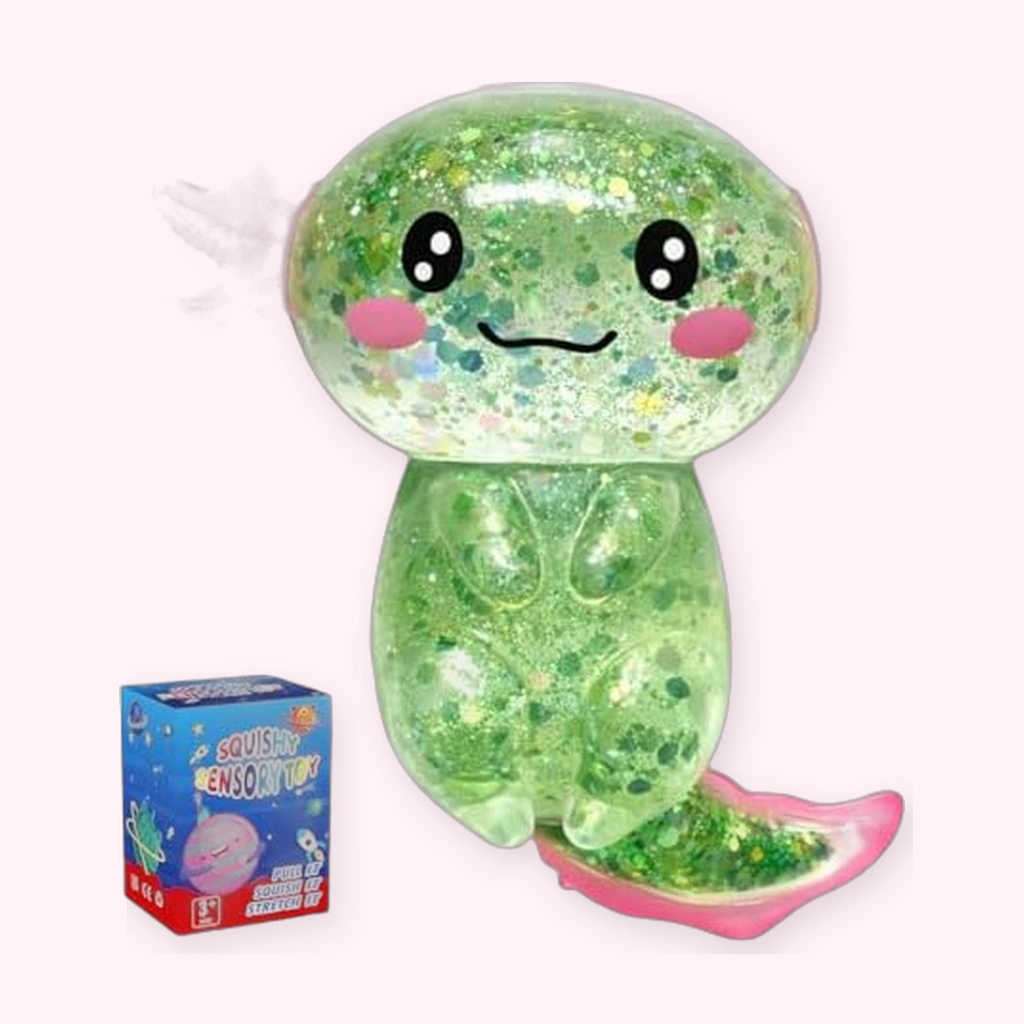
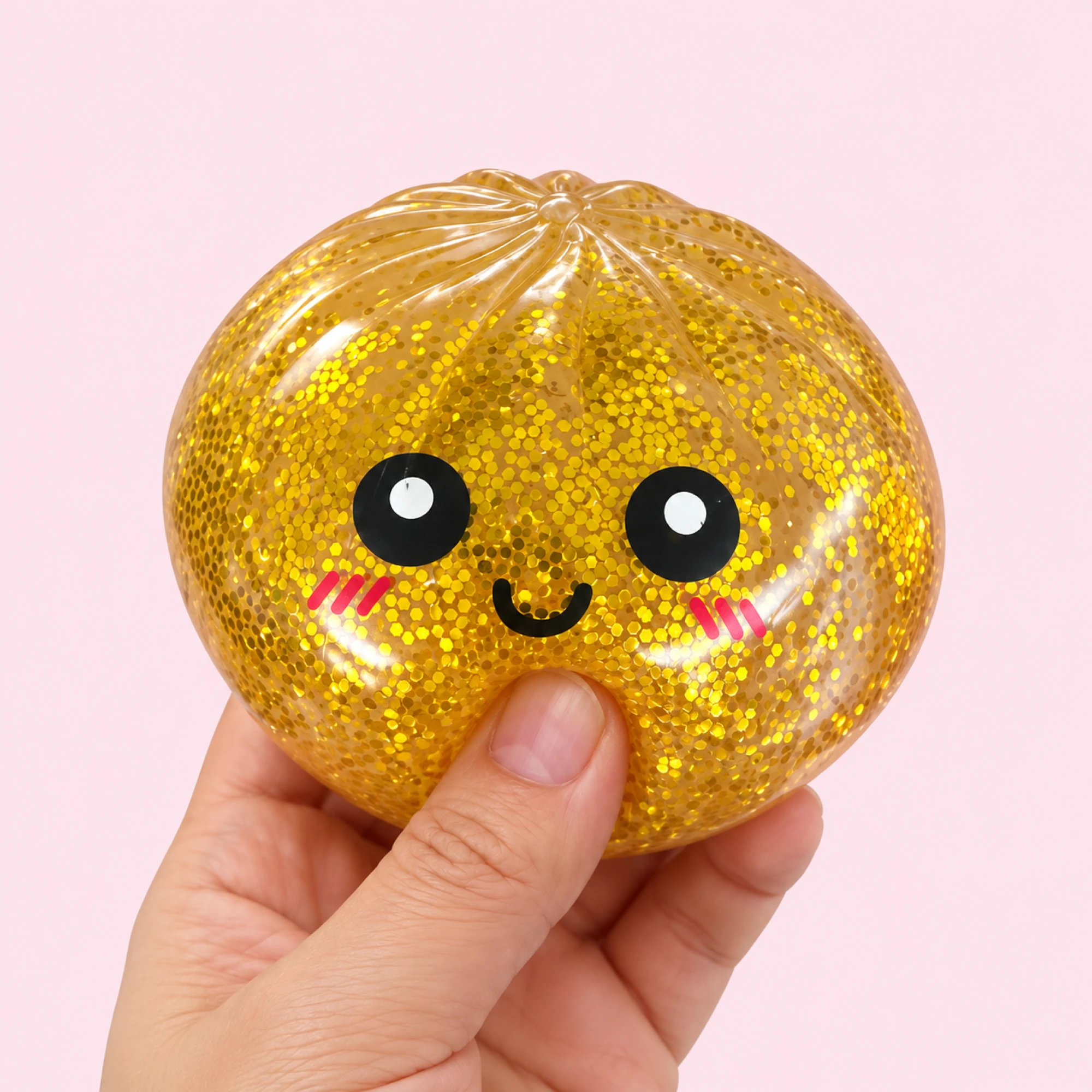
The bead-filled builds are their own sensory category. A stretchy outer skin holds a payload of soft beads, so a squeeze doesn’t compress so much as reshape — the toy squishes into whatever your grip suggests, then slowly settles back into axolotl form. It is closer to kneading dough than pressing foam.
That mold-and-release feel is why bead textures show up so often in the sensory toy guide: fingers get constant, quiet feedback without any noise or flashing lights. The green stretchy axolotl ball and the pink kawaii axolotl ball are the same idea in two moods — pond color or bedroom pastel.
Foam axolotl versions typically go the slow-rising route instead: a doughy compress and a lazy rebound. Bead builds are for kneading, foam builds are for squeezing, and plenty of households end up needing one of each. This is how collections start.
Picking One That Survives Real Play
Squishies are toys for ages 3 and up, and bead-filled ones deserve one extra house rule: retire the toy at the first sign of a tear. The beads inside are for hands, never mouths, and they should stay well away from toddlers and pets. A ten-second look-over during cleanup keeps surprises off the floor.
For the bigger safety picture — materials, smells, what actually happens if one breaks — the kids’ squishy safety guide covers it in full parent detail. And since kid hands are kid hands, how to clean a squishy handles the sticky aftermath without ruining the surface.
Durability otherwise comes down to habits: squeezing is what these are built for, while stretching the skin like a slingshot is what shortens careers. Teach the difference once and a good axolotl lasts a long time.
The Pastel Room Economy
Part of the axolotl’s staying power is that it works even when nobody is squeezing it. The colors sit perfectly on a bookshelf between the lamp and the night light, so parents get decor value out of what is technically a fidget. Very few toys pull off both jobs.
It has also become reliable birthday-party currency. An axolotl in the gift bag beats another slime kit, and the recipient never already has this exact one — the color variations quietly solve the duplicate-gift problem.
Collectors lean on that range, too. A shelf that starts with one pink axolotl tends to end with a small gradient of them, arranged by shade like a paint sample card, and nobody involved regrets how it happened.
The rest of the pastel lineup lives in the axolotl collection, and when the axolotl phase expands into a general animal phase (it will), the animal squishy collection is the next shelf over. Orders of $49 or more ship free worldwide, a threshold a serious axolotl phase reaches remarkably fast.
FAQ
Are axolotl squishies okay for young kids? They’re made for ages 3 and up, like all squishies here. For bead-filled versions, add supervision and a quick weekly check, and retire any toy with a tear.
Why do kids love axolotls so much? A permanent smile, frilly gills, and a starring role in their favorite video game. It is the rare animal that looks like it was designed by committee — a committee of seven-year-olds.
Do bead-filled and foam versions feel different? Completely. Bead builds reshape under your grip and settle back slowly, while foam builds compress and re-inflate. Kneaders prefer beads; squeezers prefer foam.
Are axolotls real animals? Very real — they’re salamanders from lake systems near Mexico City, famous for keeping their juvenile look for life. The toy version just borrows the best facts about them.