


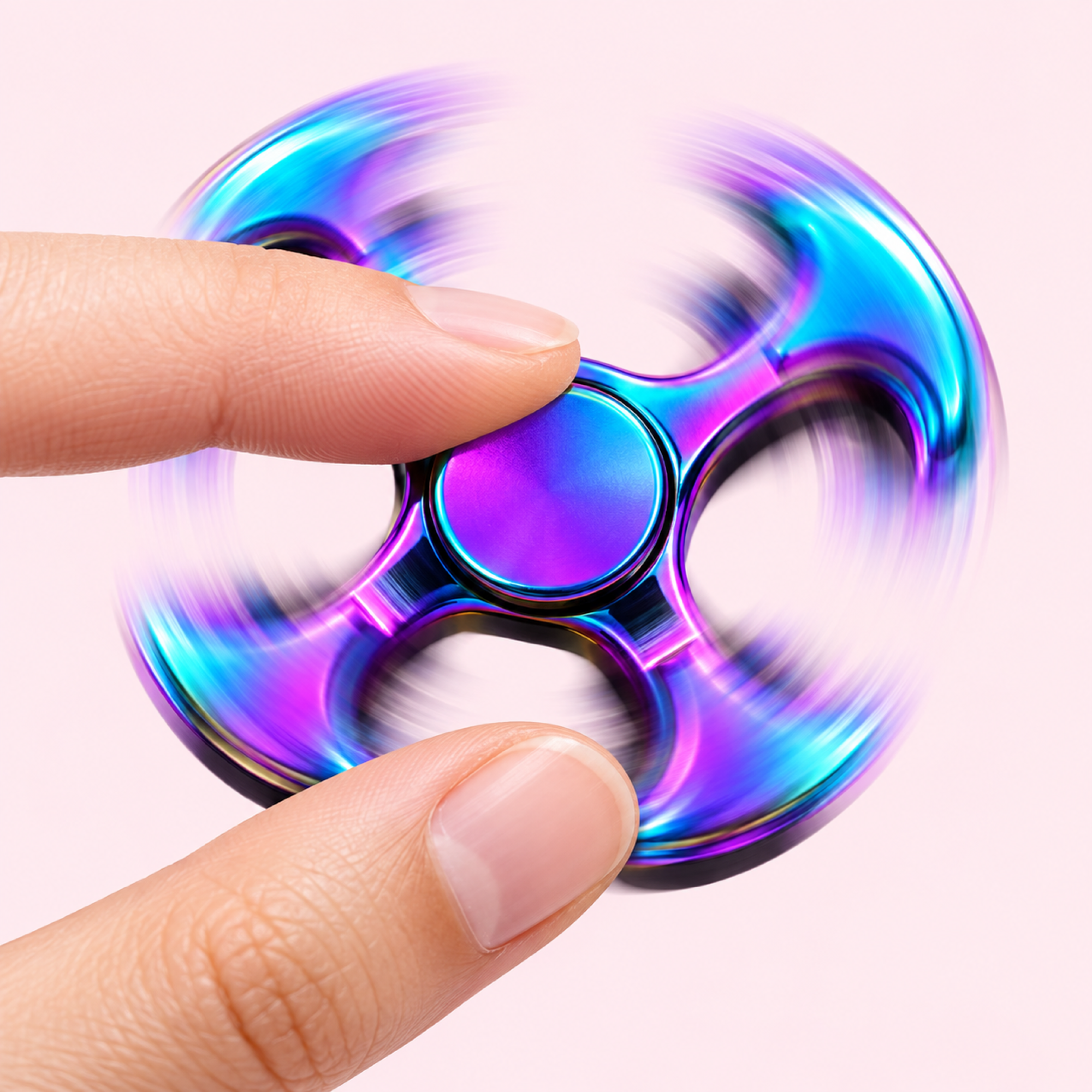
Every spinner uses the same central bearing, which means the differences between them come almost entirely from where the body puts its mass. The types of fidget spinners on sale sort into five geometries, and knowing which one you are looking at tells you how it will spin, how it will sit in a pocket and whether it will balance on a fingertip, before you have touched it.
The Five Types of Fidget Spinners
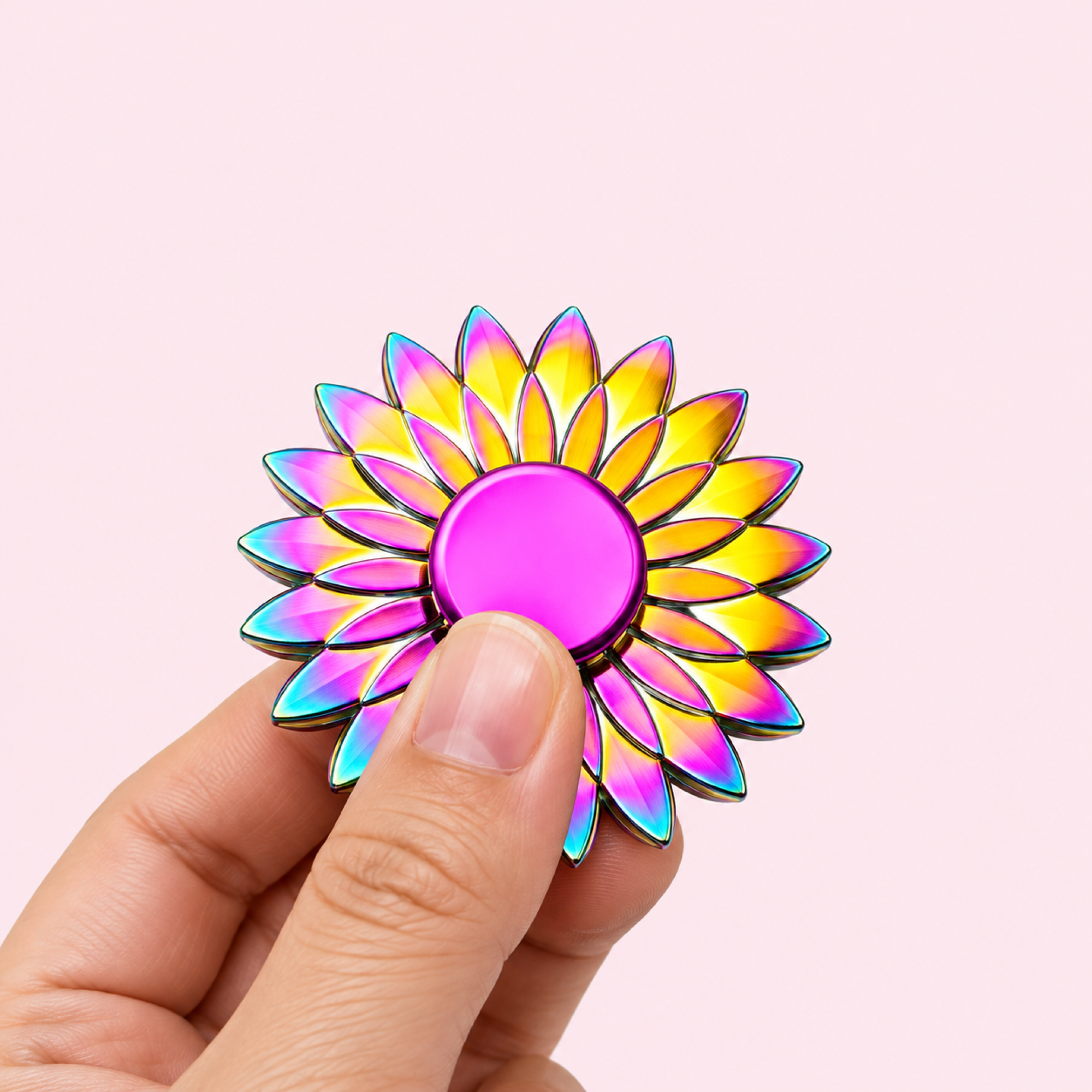
Three-arm. The classic shape, and the default for a reason: three lobes are the most efficient way to move mass outward while keeping the body pinchable and self-balancing. Long spins, obvious gyroscopic resistance, and the widest choice of finishes. The Metallic Purple Blue Fidget Spinner is this profile.
Two-lobe bar. Keeps almost the full radius — the term that matters most for spin duration — while removing a third of the material. Narrow in one axis, so it is far more pocketable than a three-arm body of the same width. The flick timing differs, because there is a longer gap between arms.
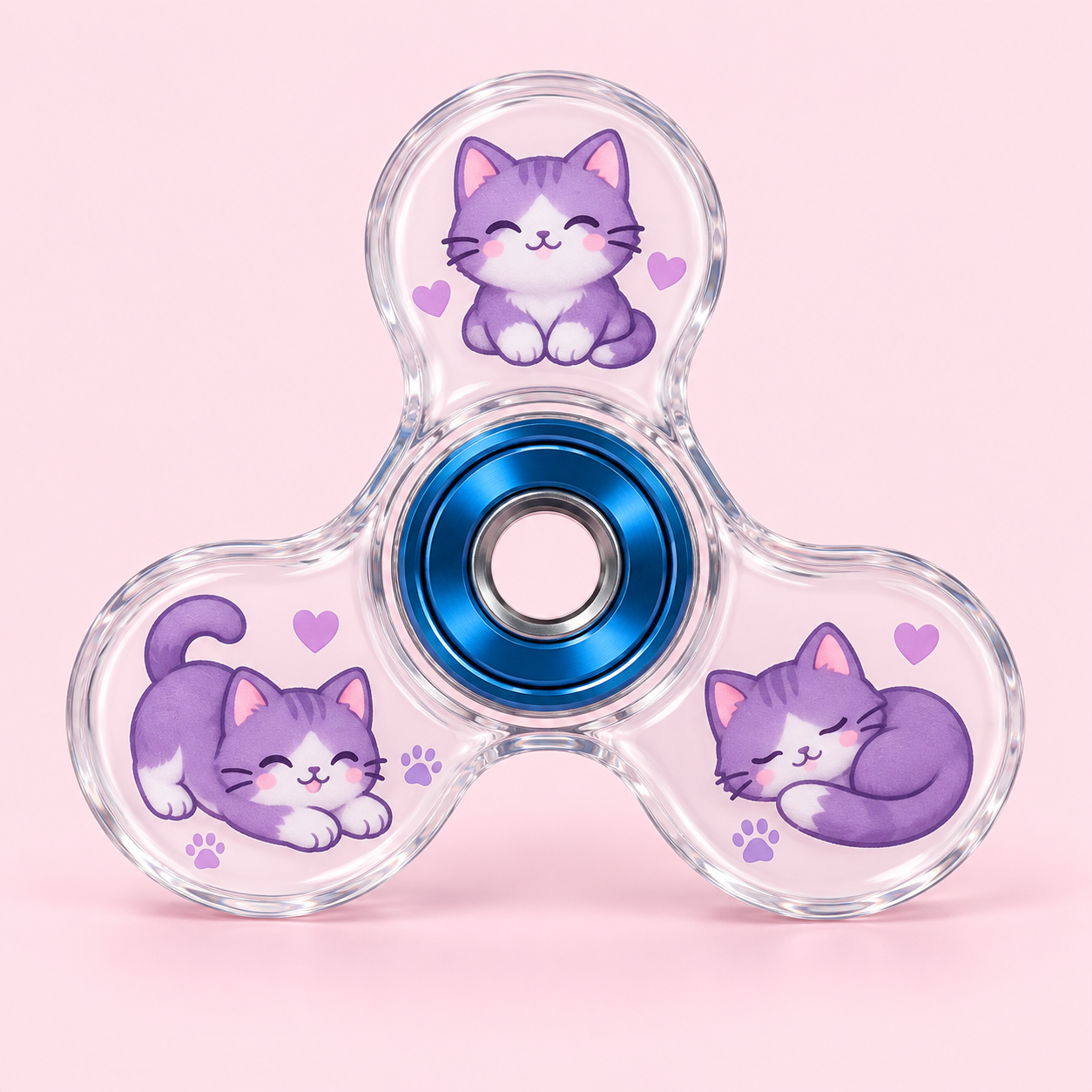
Fingertip disc. A thin flat body meant to be held between finger and thumb and spun as a disc rather than flicked by an arm. Much less mass at the rim, so spins are short, but it is the only geometry that genuinely disappears into a shirt pocket. The Purple Cat Acrylic Fidget Spinner at 3 × 3 × 0.5 inches and 35 grams is this type.
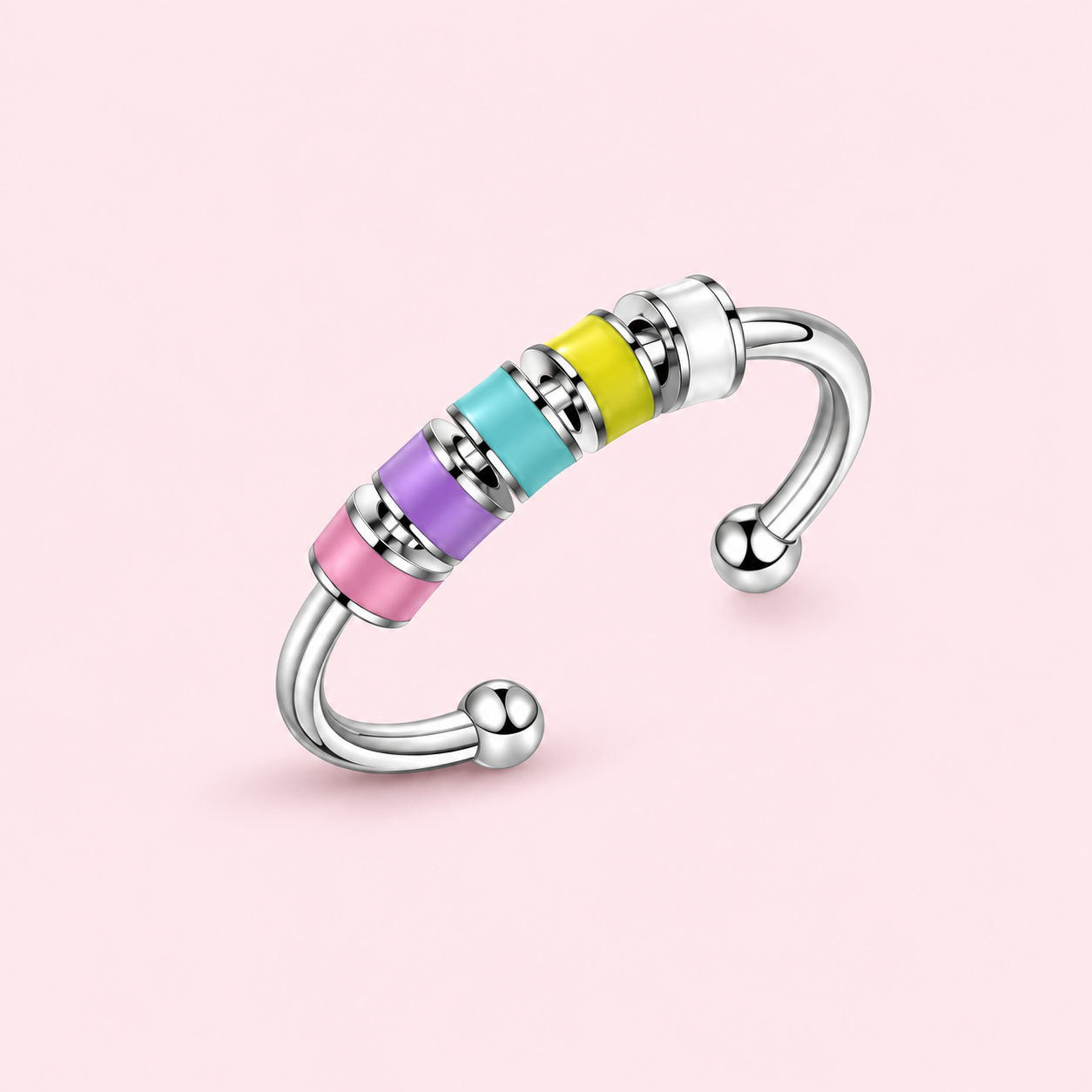
Ring spinners. The bearing moves into something worn. Rotation with no carrying problem at all, and the trade-off is that a ring has very little radius to work with, so there is no long decay — the sensation is continuous rather than ballistic.
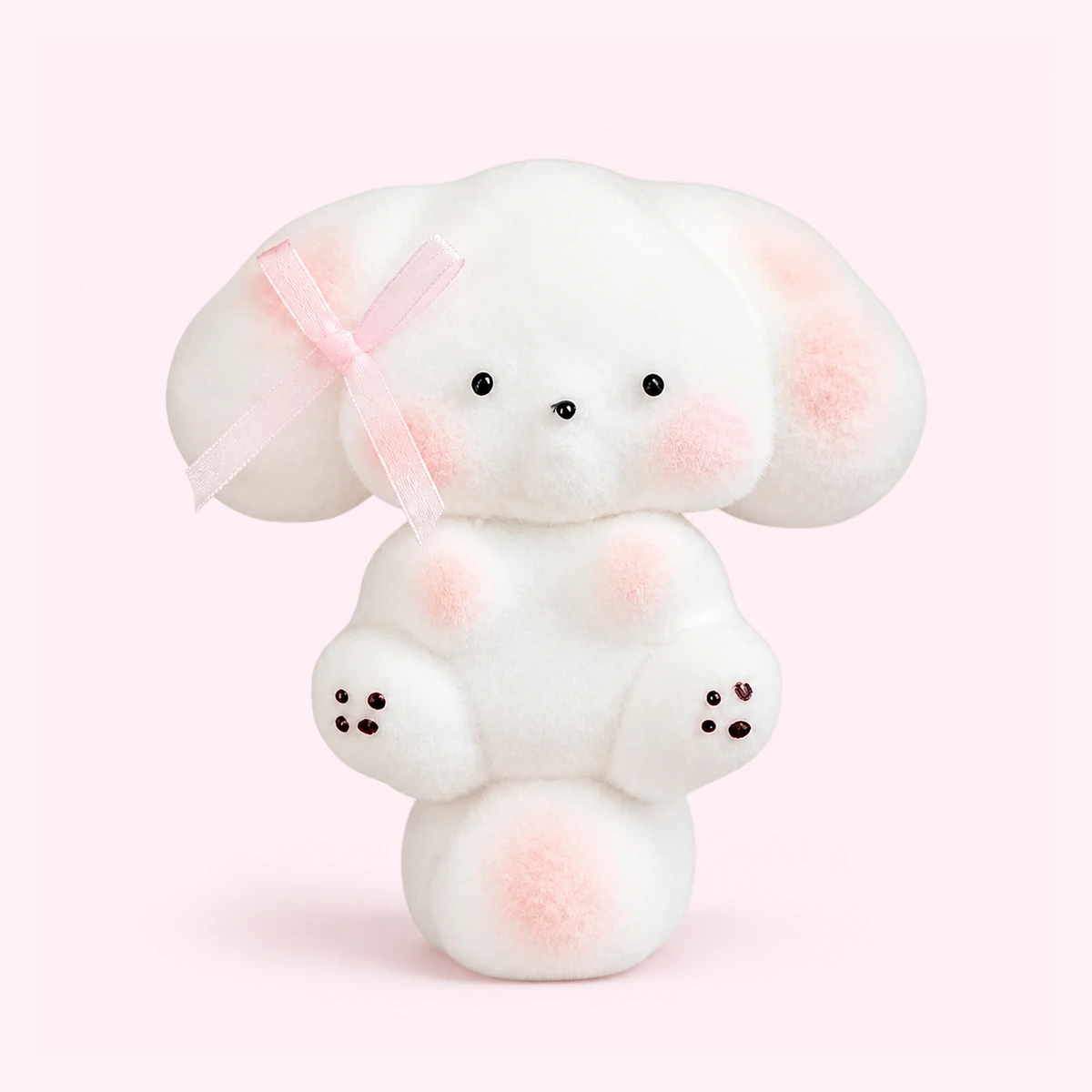
Shaped bodies. Animals, characters and novelty outlines built around the same bearing. Whether they spin properly depends entirely on whether the symmetry survived the styling, which is why a Pink Bunny Spinner with three-fold symmetry behaves like a three-arm body while a single-figure shape like a Pink Purple Dragon Finger Spinner is a fingertip object with a decorative outline.
How Geometry Changes the Feel
Spin duration tracks mass at the rim, and rim mass tracks both weight and radius. Three-arm and bar bodies win; discs and rings do not compete and are not trying to.
Gyroscopic resistance — the push-back you feel when tilting a running spinner — follows the same variable. It is the sensation metal three-arm bodies are bought for, and it is almost absent on a thin disc.
Balance depends on symmetry. Three identical arms balance by construction; a shaped body balances only if the styling is distributed evenly, which is why wobble in the last seconds of a spin is the check worth running, as set out in how to judge a spinner in ten seconds.
Pocketability runs opposite to everything else. The geometries that spin best are the ones you least want in a trouser pocket.
Which Geometry for Which Use
A desk you look at. Three-arm metal. Long decay, strong gyroscopic feel, and being heavy costs nothing when the object never moves.
A pocket you carry. Fingertip disc or two-lobe bar. Accept shorter spins; you are buying availability.
Always on you. A ring. No carrying problem, no decay to watch, continuous motion instead.
A gift or a shelf. Shaped, with the caveat that symmetry decides whether it is also usable — the general trade-off between styling and mechanism is in cute fidget toys that still work.
What Does Not Change Between Types
The bearing. Nearly every spinner of any geometry uses the same standard central bearing, so bearing quality varies between individual units rather than between shapes — the component breakdown is in the fidget spinner bearing explained.
The failure modes. Caps work loose, bearings collect lint, plating chips at arm edges. None of that is geometry-specific.
The noise profile. All are quiet when running and loud when dropped, which is why the deciding factor for a shared room is visible motion rather than sound — argued in what survives a shared office.
Weight Belongs to the Material, Not the Shape
It is easy to read the five geometries as a weight ladder, and they are not. A three-arm body can be 30 grams of acrylic or 120 grams of brass, and the difference between those two is larger than the difference between any two shapes.
So the two variables multiply rather than substitute. Geometry decides how the mass is arranged; material decides how much of it there is. A heavy disc and a light three-arm can end up spinning for a similar time by completely different routes.
This is why a shape comparison alone never settles a purchase. Pick the geometry for how you will hold and carry it, then pick the material for how much heft you want, in that order — the material half is set out in metal against plastic.
Choosing Without Overthinking It
Decide whether you watch the spin or just flick it. Watchers want three-arm mass; flickers want something thin they will actually carry.
Then check symmetry and cap seating on whatever you are considering, because those two flaws spoil any geometry equally.
And if none of the five appeals, the honest answer may be that rotation is not your action — the eight-way sort in types of fidget toys covers the alternatives.
Three Geometries to Compare
Metallic Purple Blue Fidget Spinner — three-arm metal, the long-decay desk profile.
Purple Cat Acrylic Fidget Spinner — 35 g fingertip disc, the carry profile.
Pink Bunny Spinner — a shaped body that keeps three-fold symmetry, so the styling costs nothing mechanically.
Browse the fidget spinners range, or all fidget toys if rotation is not the action you want.