


Seasonal shapes are bought for the shape and judged, a week later, by the hand. A Halloween stress ball has to solve the same problem as any other squeeze toy — a resistance curve that is satisfying several hundred times — while also being a pumpkin, a ghost or a skull, and those two goals pull against each other in ways that are predictable once you know where to look.
What a Novelty Shape Costs
Uneven wall thickness. A moulded character has thick sections and thin ones, so it does not compress evenly. You feel that as a squeeze that gives way suddenly in one place rather than resisting smoothly — and the thin sections are where it eventually splits.
Protrusions that get squeezed first. Stems, ears and pointed hats take the load before the body does. On a pumpkin the stem is the most-handled and least-supported part, which is why it is almost always the first thing to tear.
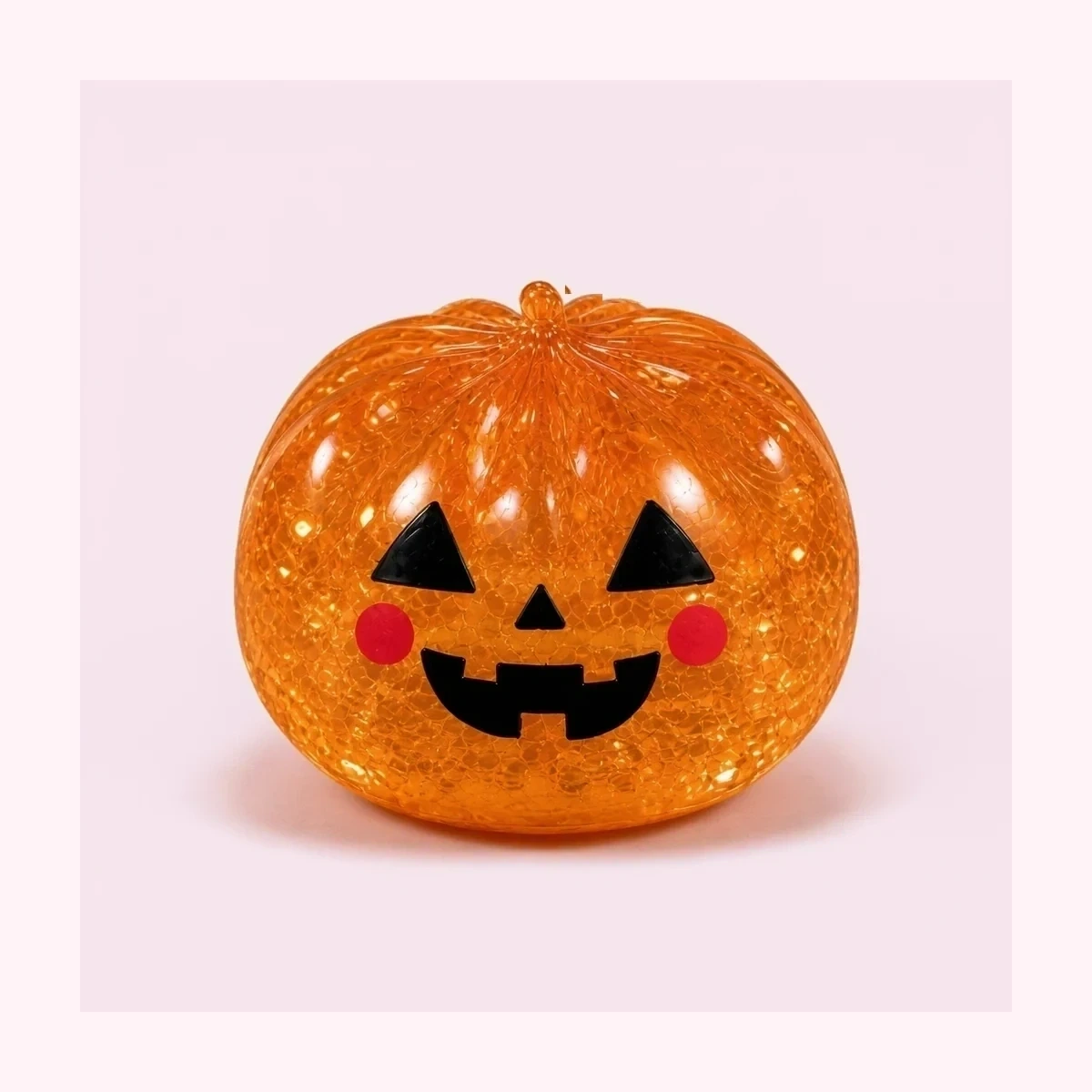
Printed faces on the working surface. A jack-o’-lantern face printed rather than moulded sits exactly where your thumb lands, so it wears off on the parts you use most.
None of that makes seasonal toys bad. It means the construction matters more than usual, and the same logic that applies to shaped fidgets generally — in cute fidget toys that still work — applies with a deadline attached.
Halloween Stress Ball Constructions That Hold Up
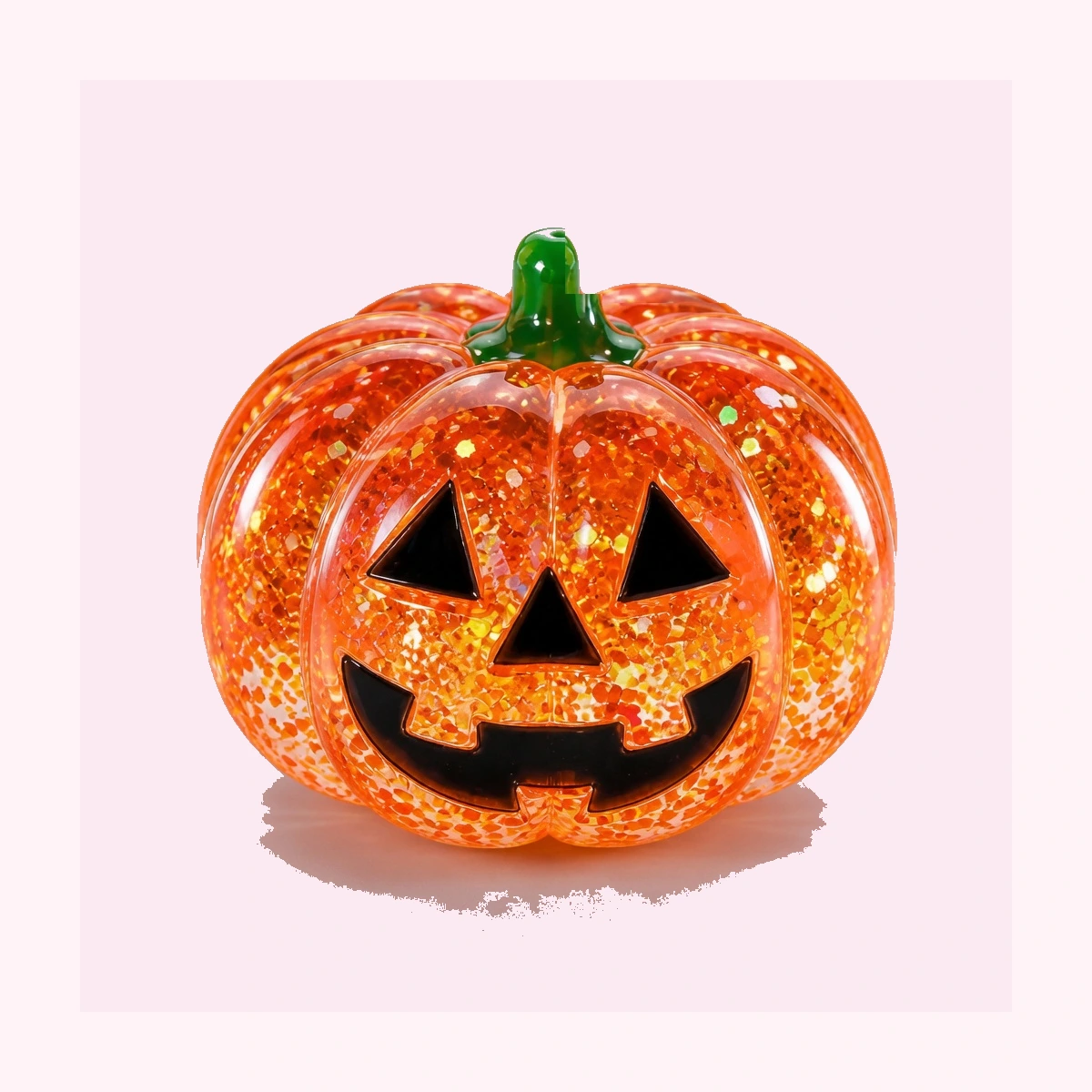
Slow-rising foam in a simple silhouette. A rounded pumpkin or ghost with no thin extremities compresses evenly and recovers fully. The Pumpkin Squishy Toy is a slow-rising jack-o’-lantern in that mould: round body, minimal protrusions.
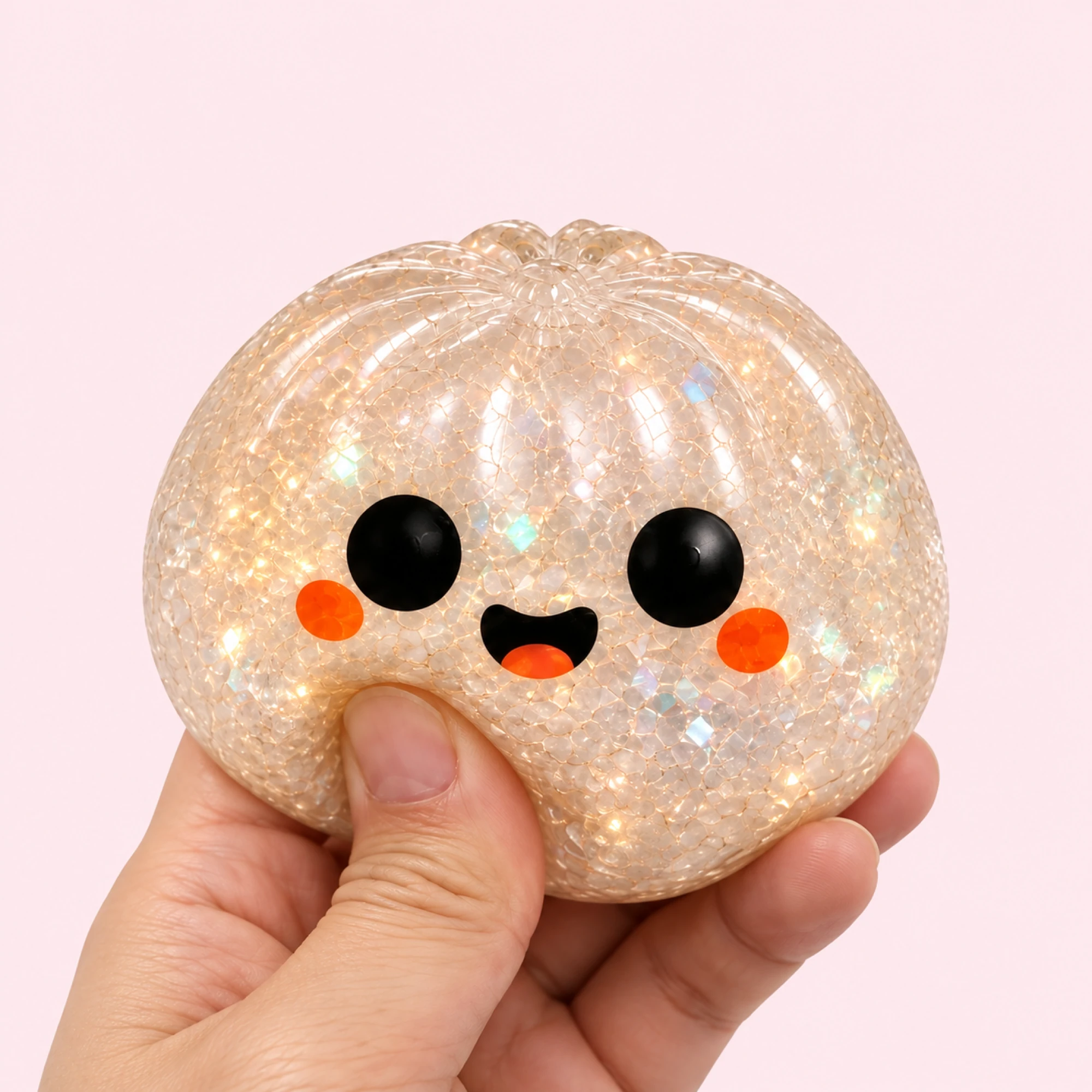
Bead-filled bodies. Granular resistance does not care about wall thickness, because the beads do the work rather than the shell. The Glitter Ghost Squishy is bead-filled, so it crunches rather than compresses — audible by design, which is a feature if you like it and a problem in a quiet room.
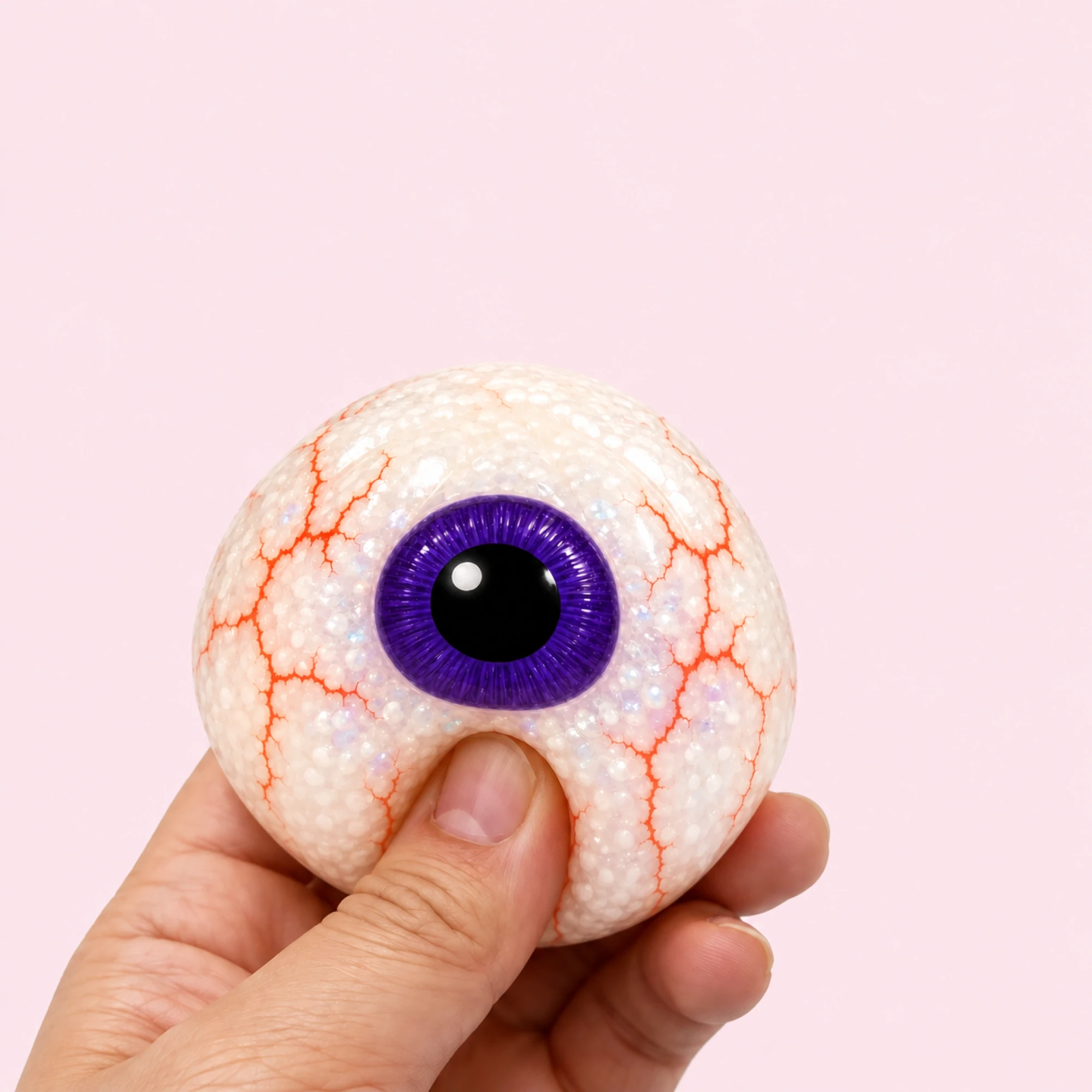
Moulded rather than printed detail. Colour and features formed in the mould cannot wear off. Worth checking in the photographs: moulded detail shows as a change in surface shape, not just in colour.
What to Buy for What
For your own desk through October. Take the simplest silhouette with the best rebound, and treat the seasonal shape as a bonus. A round body with moulded features will still be working in January, which is when a good squeeze toy earns its place.
For handing out. Durability matters less than instant appeal and quantity. A 12-pack of mini ghosts or a display box of butter squishies covers a room, and the assortment logic in bulk fidget toys applies: presses and squeezes are the actions almost everyone accepts.
For a desk you share. Avoid bead fills. The crunch carries, and a room full of them in late October is a specific kind of annoying — the mechanism-by-mechanism noise sort is in the quietest fidget toys that aren’t squishies.
Storing Seasonal Ones So They Survive to Next Year
This is where most of them are actually lost, and it takes almost no effort to avoid.
Keep them out of light. Orange and clear materials yellow fastest, and a box stored on a sunny shelf through the summer comes out looking a year older than it is.
Do not store them touching each other. Soft toys pressed together for months transfer plasticiser and can fuse at the contact points — the ageing processes are set out in yellow, sticky or hard.
Keep them out of the loft. Heat is what turns a slow-rising body stiff, and an uninsulated roof space in summer is the worst place a squeeze toy can spend six months.
A shoebox in a cupboard with a little space between items is genuinely all it takes.
Judging Rebound From a Photograph
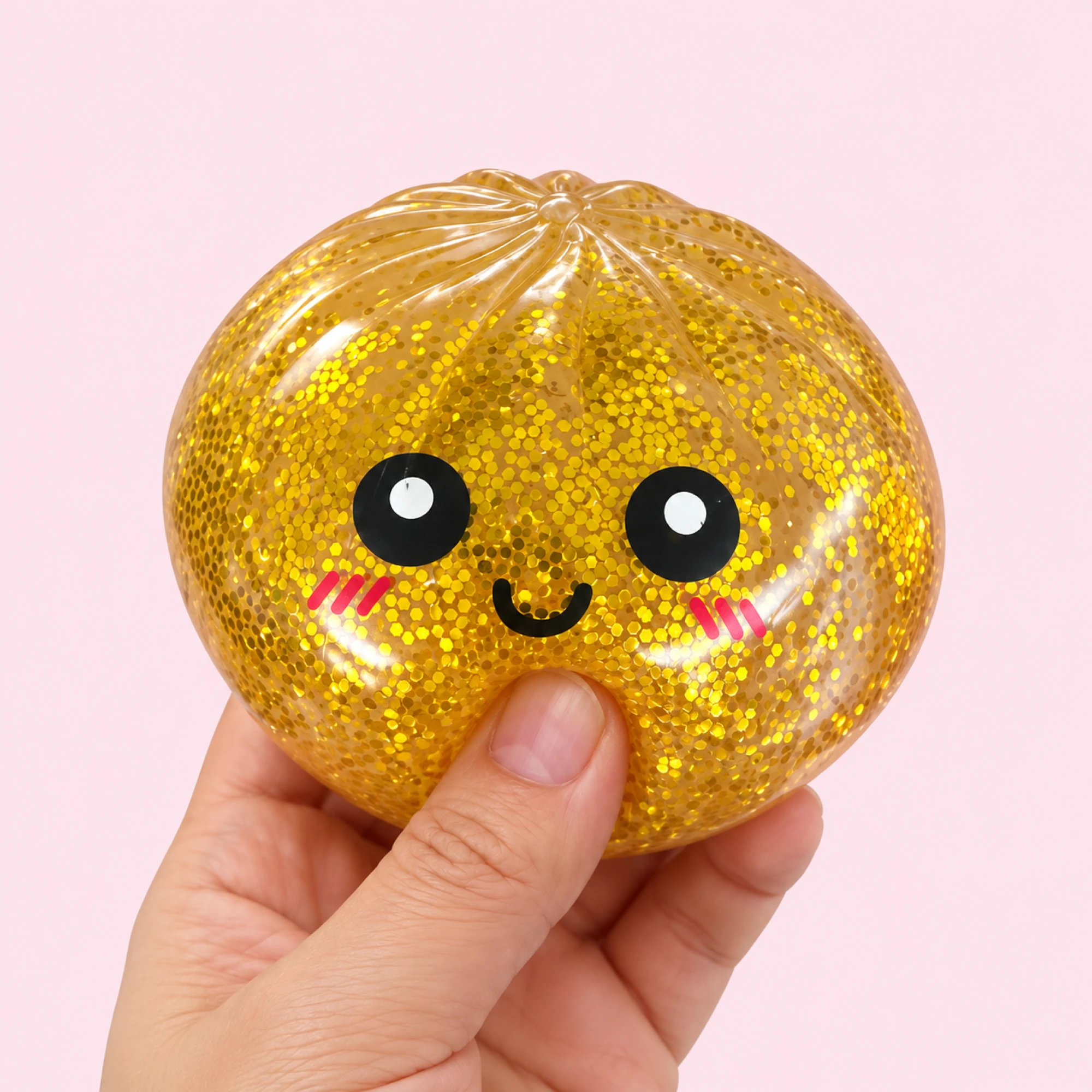
A listing that says slow rising means open-cell foam, which recovers over seconds and feels soft. A listing that mentions bounce or quick return means a denser body with a faster spring. Glitter and clear skins mean a gel or bead construction rather than solid foam.
Those three cues put any seasonal toy into one of the constructions compared in what the filling changes, which tells you how it will behave long before it arrives.
Why Seasonal Buying Goes Wrong
Two patterns account for most of the disappointment, and both are about timing rather than product.
Buying late means buying whatever is left, which in this category is usually the shapes nobody wanted — the ones with the thin stems and the printed faces. The good silhouettes go first because they also photograph best.
Buying for a date rather than for use means the toy has one job on one evening and no job afterwards. That is a legitimate purchase, but it should be a cheap multi-pack rather than a single considered object, and it should not be judged by how it feels in November.
The version that works is buying one good round-bodied squeeze toy that happens to be seasonal, plus a pack of disposable ones for the evening itself. The first stays on a desk all year; the second was never meant to.
Three Halloween Picks
Pumpkin Squishy Toy — slow-rising jack-o’-lantern with a round body and minimal protrusions. The one that still works in January.
Glitter Ghost Squishy — bead-filled with glitter through it, for granular resistance and an audible crunch.
12 Pack Ghost Squishy Set — mini squeeze toys in quantity, for handing out rather than keeping.
Browse the fidget balls range for year-round constructions, or all fidget toys if you want a mechanism rather than a squeeze.