


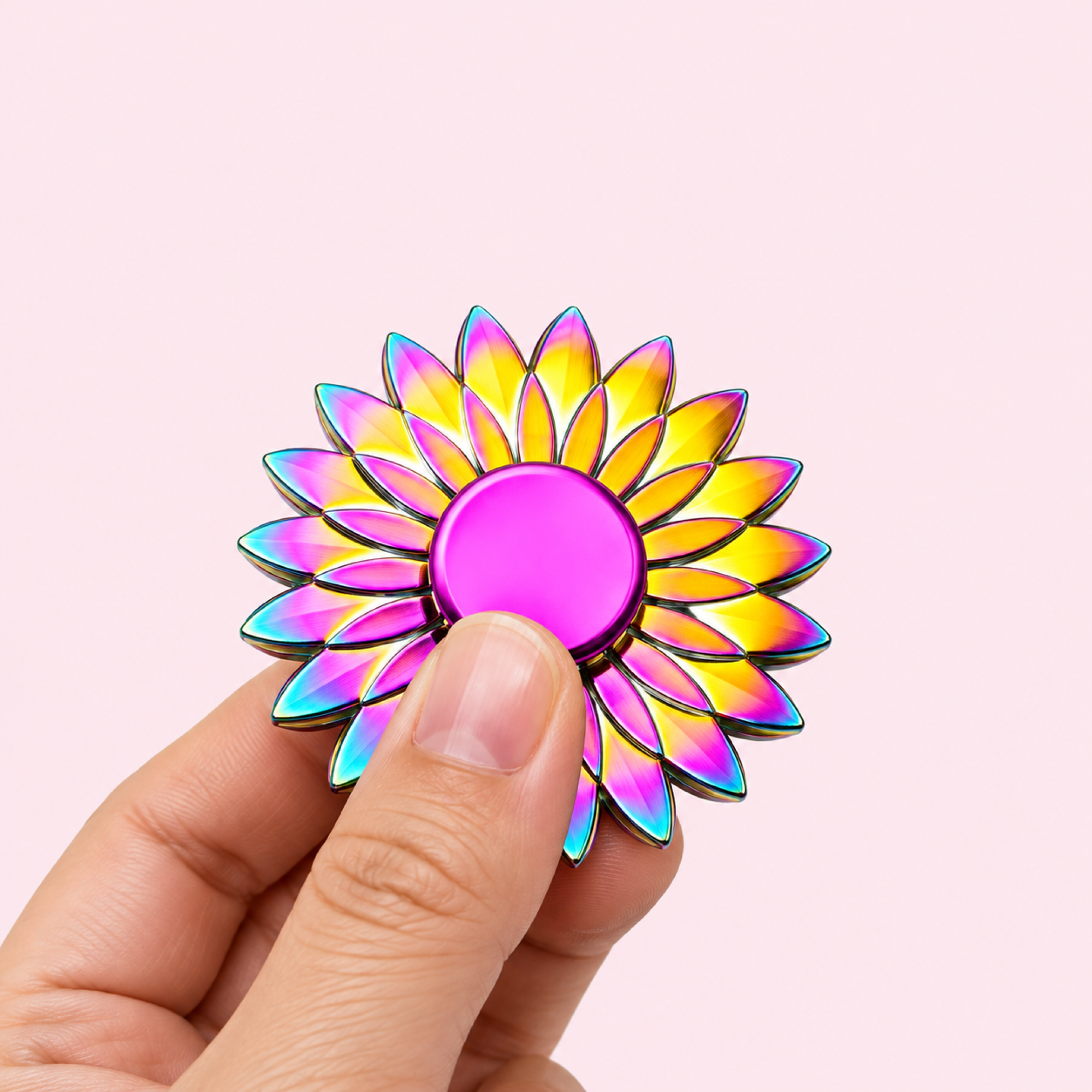
There is a real ladder in this category, from throwaway plastic to machined objects sold in numbered batches, and the interesting question is not what the most expensive fidget spinner is but where on that ladder the improvements stop being audible in your hand. Four things drive the cost, they improve at different rates, and two of them make no difference to the experience at all once you are past the bottom rung.
The Four Cost Drivers
The bearing. The largest real difference and the least visible. Bearings are graded by manufacturing tolerance, and a better-graded bearing spins longer, sounds quieter and stays smooth for more hours. This is the one component where spending genuinely changes what you feel, and it is also the one almost never specified on a listing.
The material. Steel, titanium, brass and copper cost more than aluminium, which costs more than plastic. Material changes weight and therefore feel, so this is the second driver that you can actually perceive. It also changes durability of finish, which is covered in which finishes survive a pocket.
Machining tolerance. How precisely the body is made, which shows up as balance. A perfectly balanced body is noticeably smoother at the end of a spin, and this is where the gap between mass-produced and small-batch work is widest.
Batch size. Small runs cost more per unit for reasons that have nothing to do with the object. A limited run is not a better spinner; it is a more scarce one.
The first three can improve the object. The fourth cannot, and a great deal of the premium end of the market is priced on the fourth.
What the Most Expensive Fidget Spinner Buys You, and Where It Stops
Bearing quality gives steep returns at the bottom and flattens quickly. The difference between a gritty bearing and a decent one is obvious to anyone. The difference between a decent one and an excellent one is audible in a quiet room and largely invisible in a busy one.
Material stops mattering once you have chosen a weight you like. Titanium and steel of the same mass behave the same way in your fingers; the difference is corrosion resistance and price, not feel.
Balance improvements are perceptible right up the ladder, which makes machining the most defensible thing to pay for.
Finish is aesthetic. It affects how the object ages, not how it works.
Put together: past a competent metal body with a smooth bearing, further spending buys longevity, appearance and scarcity rather than sensation.
What a Cheap Spinner Actually Gets Wrong
It is worth being specific, because “cheap” covers two different failures.
An inexpensive spinner with a decent bearing and an unbalanced body wobbles, and you feel that as buzz through your fingertips. This is a manufacturing problem and it does not improve with use.
An inexpensive spinner with a balanced body and a poor bearing feels fine for a week and then goes rough as the bearing wears or contaminates. This one is sometimes recoverable — clearing lint out restores a surprising number of them.
Both failures are diagnosable in seconds, using the checks in how to judge a spinner in ten seconds. Running those checks matters far more than the number on the label.
The Scarcity Question
The upper end of the market runs on small batches, limited colourways and resale. That is a collecting hobby rather than a fidget one, and there is nothing wrong with it as long as you know which you are participating in.
The practical tell: if a listing leads with the run size, the edition number or the resale history rather than the bearing and the balance, it is priced as a collectible. A collectible can also be a superb spinner, but the two properties are independent.
The same dynamic drives the rare-fidget corner of the wider category, and it is worth keeping separate from the question of what to actually carry — which is what the everyday-carry shortlist is about.
How to Spend Sensibly
Buy a metal body with mass at the rim rather than at the hub, because that is where spin duration comes from.
Check the balance yourself at the end of a spin, since this is the property that most reliably separates good from bad and is easiest to verify.
Ignore the finish unless you care how it looks in a year, in which case prefer anodising or bare steel over plating.
Treat anything beyond that as discretionary. The Rainbow Metal Fidget Spinner and the Metallic Purple Blue Fidget Spinner are both ordinary metal three-arm bodies, and the difference you will feel between them is arm geometry, not price.
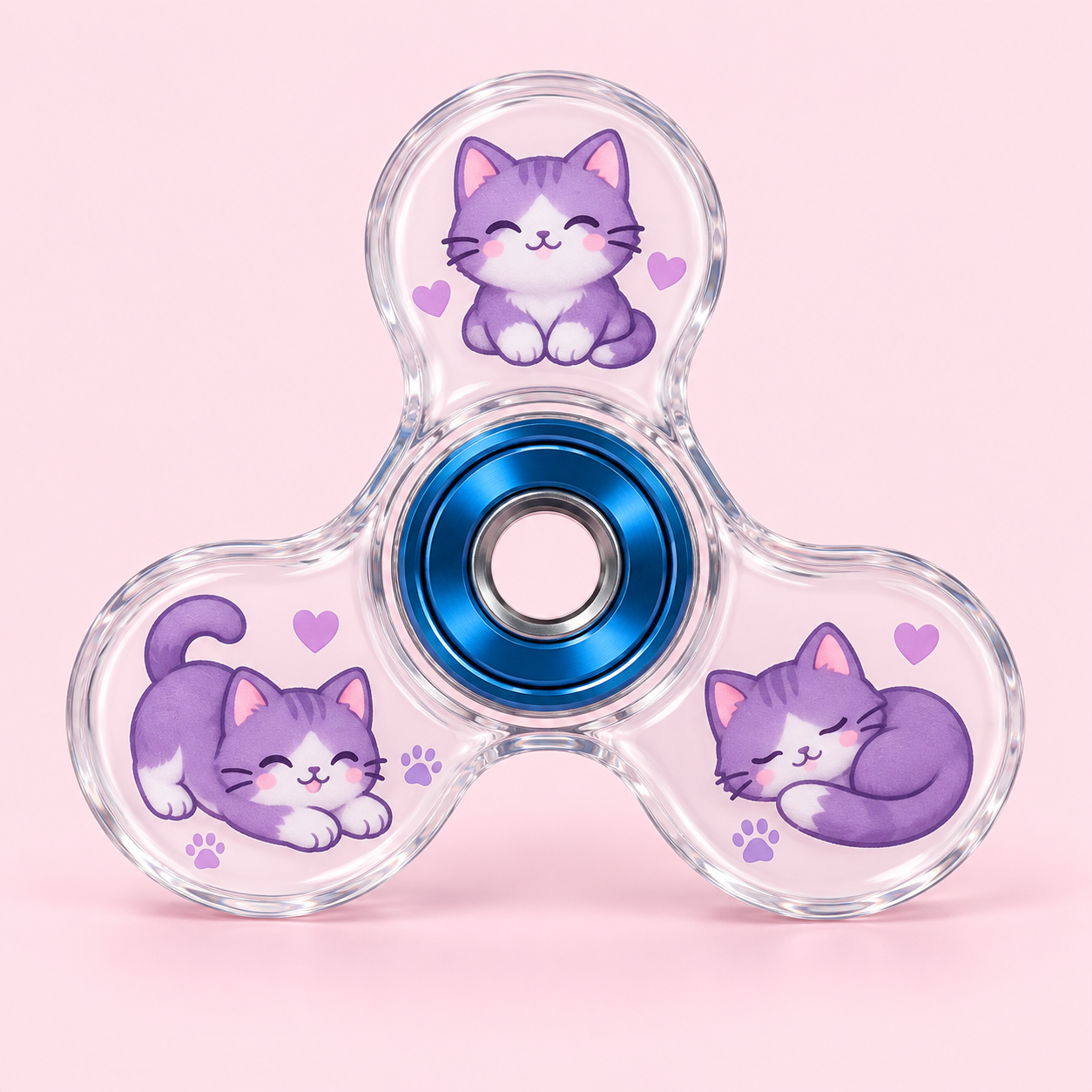
And if what you want is something to carry rather than something to admire, a thin acrylic body like the Purple Cat Acrylic Fidget Spinner at 35 grams is a different tool entirely — it will lose every spin-duration contest and still be the one in your pocket.
Three Ordinary Spinners Worth the Comparison
Rainbow Metal Fidget Spinner — metal body, rim mass, visible centre cap.
Metallic Purple Blue Fidget Spinner — same category, different arm geometry, which is where the feel actually changes.
Purple Cat Acrylic Fidget Spinner — 3 × 3 × 0.5 in, 35 g, transparent. The carry option rather than the desk one.
See the whole fidget spinners range, or browse all fidget toys if rotation is not the mechanism you are after.