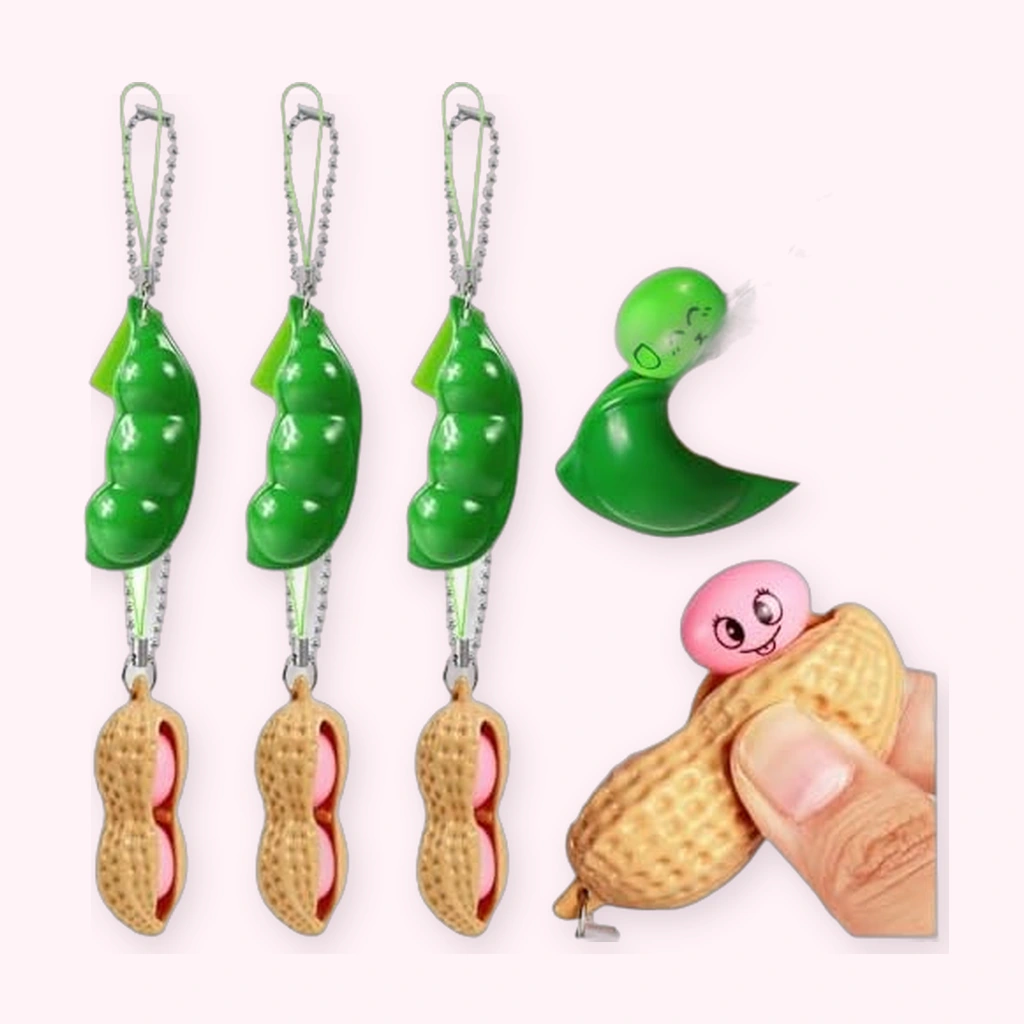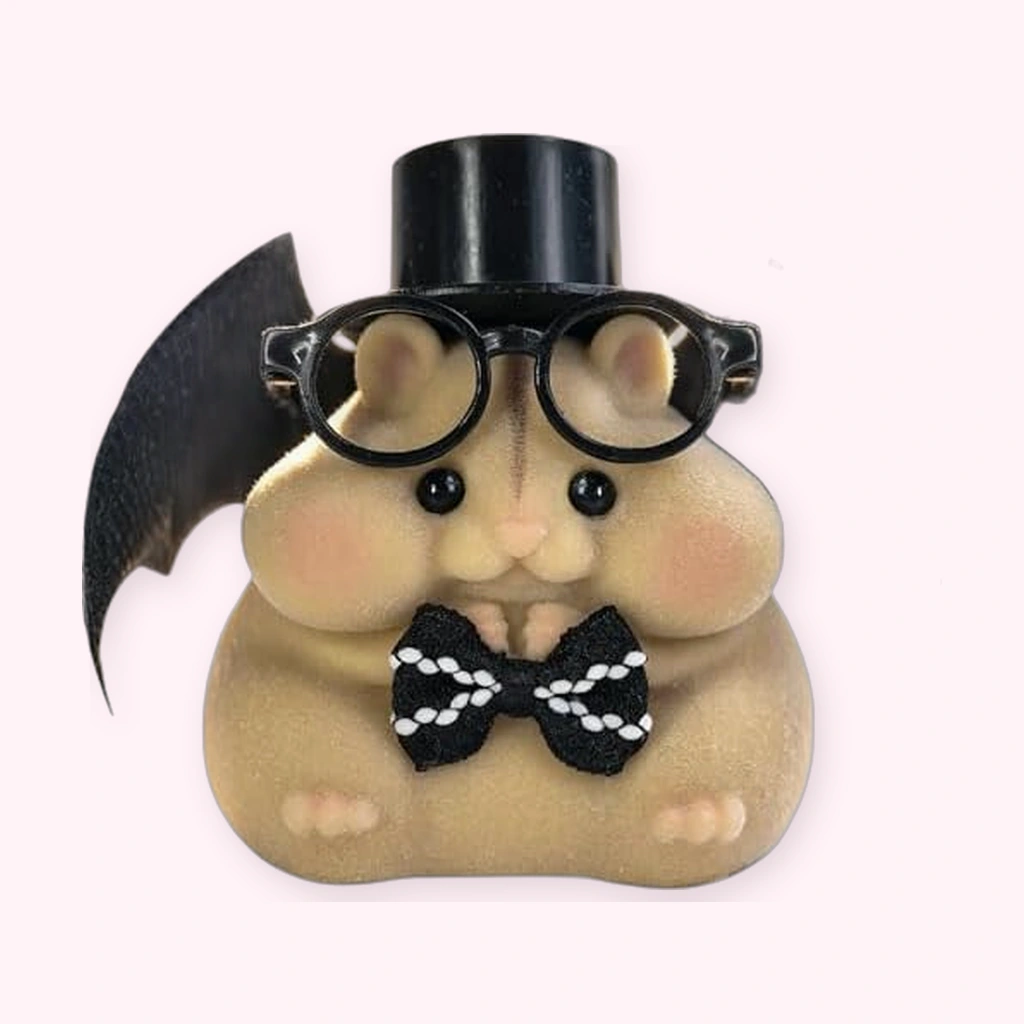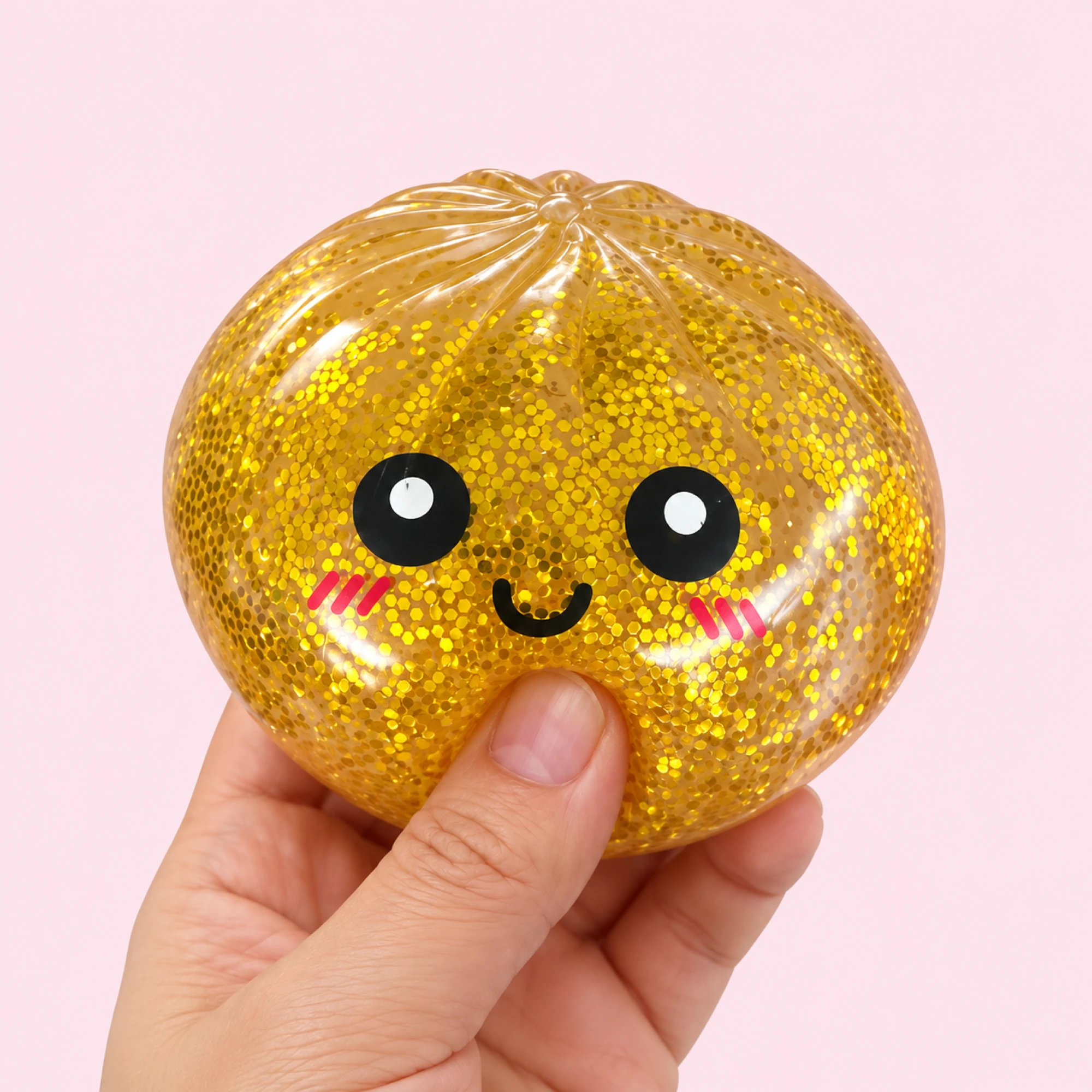


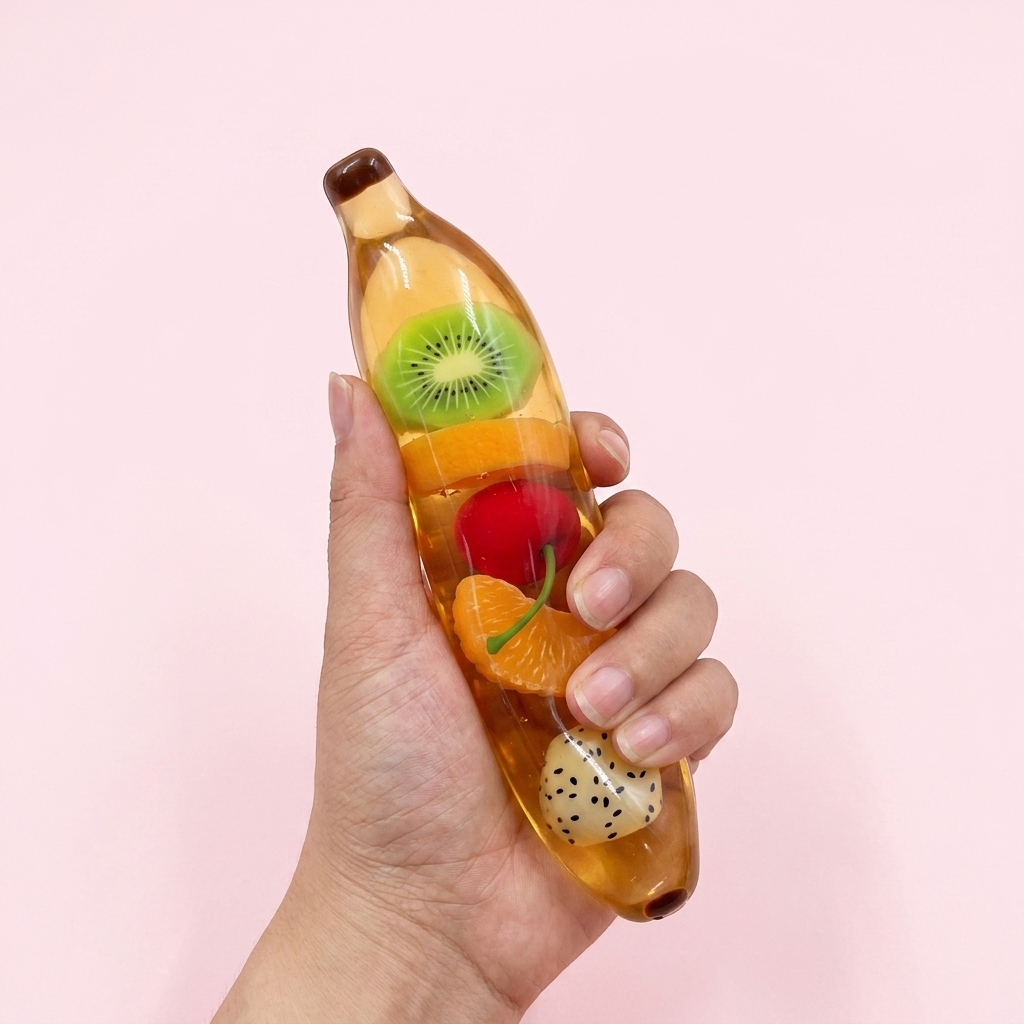

Pencil top fidgets solve a real problem — you already have a pencil in your hand, so a fidget attached to it is always present — and they create a bigger one, which is that anything mounted at the far end of a pencil is mounted at the worst possible place for the way a pencil is held.
The Balance Problem
A pencil is balanced to be held near its point. Weight at the opposite end acts on a long lever, so even a few grams change how it sits between your fingers.
That means the format is fighting itself. Enough mass to feel like a fidget is enough mass to make the pencil unpleasant to write with, and a fidget light enough not to affect the writing barely registers as a fidget.
There is no clever way around it. Every design in this category is a position taken on that trade rather than a solution to it.
The Three Kinds of Pencil Top Fidgets, and How Each Copes
Slip-on toppers. A moulded shape that pushes onto the ferrule. Very light, so the writing is unaffected, and correspondingly mild as a fidget. Usually a texture or a soft shape rather than a mechanism.
Spinning toppers. A small rotating element on a shaft. More satisfying, noticeably top-heavy, and the shaft is where they break.
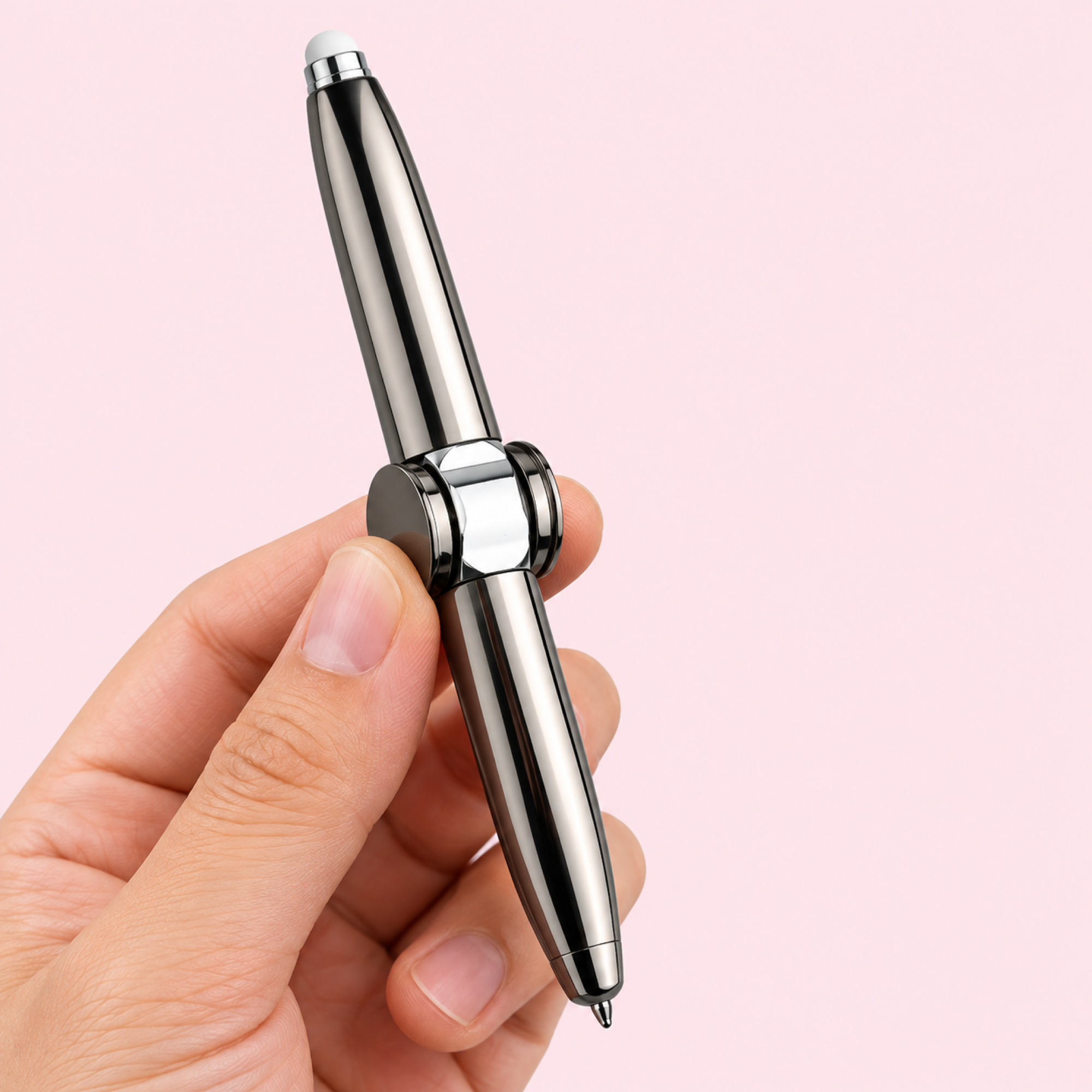
Whole fidget pens. The honest resolution: instead of hanging a mechanism off a pencil, build the mechanism into a pen so the mass sits along the barrel where it belongs. A Metal Spinner Pen puts the rotation in the body rather than on the end.
Where Toppers Break
The socket. Push-fit toppers loosen with every removal, and once loose they fall off in a bag and are gone.
The shaft on spinning versions. A thin plastic post carrying a rotating mass, leveraged by a pencil, is the most fragile arrangement in the whole fidget category.
The pencil itself. A sharpened pencil with a weight on the other end snaps more easily when dropped, which is a small thing until it is your last one.
Soft moulded toppers with no moving part break least, because there is nothing to break — the same principle that makes fixed-texture rings outlast mechanical ones.
When the Format Is Right
When the pencil is not being written with. A topper is at its best on a pencil that is being held rather than used, which is most of the time in a lecture or a meeting.
When the alternative is nothing. A mild fidget that is genuinely always present beats a better one that is in a drawer, and that is the strongest argument for the format.
When noise matters more than depth. Toppers are silent, which is why they survive rooms where a clicker would not — the room-by-room judgement is in meeting-safe clicks.
What Works Better at a Desk
If the appeal is having something in the writing hand, a fidget pen is the same idea executed properly: the mechanism is in the barrel, the balance is designed rather than accidental, and there is no socket to loosen. The mechanism side of that is covered in how a magnetic fidget pen works.
If the appeal is having something always within reach, the better answer is placement rather than attachment. A slider or a solid left beside the keyboard is always present too, and it does not compromise the pencil.
And if you specifically want rotation, doing it with a dedicated object is far more satisfying than doing it on a stick — the geometry comparison is in types of fidget spinners.
The Classroom Case
This is the setting the format was invented for, and it is worth separating from desk use because the constraints are different.
In a classroom a topper has three genuine advantages: it is silent, it cannot be thrown far, and it does not need to be issued or collected because it is already attached to something the child has.
It has one genuine disadvantage, which is that it makes the pencil more interesting than the page. A mild texture topper stays on the right side of that line; a spinning one rarely does.
The wider set of classroom trade-offs — noise, sharing, loss and durability across a whole term — is in sensory toys for the classroom.
What to Check Before Buying
Weigh it in your hand and then imagine that weight at arm’s length on a lever. That is what the pencil feels.
Check whether the fit is friction only. A topper that grips by friction alone will loosen; one with a collar or a clip will not.
Check the shaft on anything that spins. If it flexes under thumb pressure, it will snap.
And be honest about which pencil it lives on. A topper moved between pencils loosens on every transfer, so the format works best when it stays on one.
Two Pens That Solve It Properly
Metal Spinner Pen — rotation built into the barrel, so the balance stays where a writing instrument needs it.
Blue LED Fidget Pen — a multi-function barrel rather than an attachment, with nothing to push on or fall off.
Browse fidget pens, or all fidget toys if something that lives beside the pencil suits you better than something on it.