



Sliders are the quietest mechanical fidget you can own and the least discussed, which means most buying advice for them is just a list. The best fidget slider for any given person comes down to four properties, none of which appears on a product page, and three of which are the opposite of what a quick test in a shop would suggest.
What the Best Fidget Slider Gets Right: Four Properties
Travel length. How far the carrier moves between stops. Short travel makes the object a switch: two positions with nothing in between. Longer travel gives you a journey your thumb can follow, which is the entire point of the mechanism.
The arrival. What happens at the end of the stroke. A hard stop is a collision — loud, abrupt, and it transmits into whatever the slider is resting on. A magnetic stop decelerates the carrier before it lands, which is quieter and feels deliberate rather than accidental.
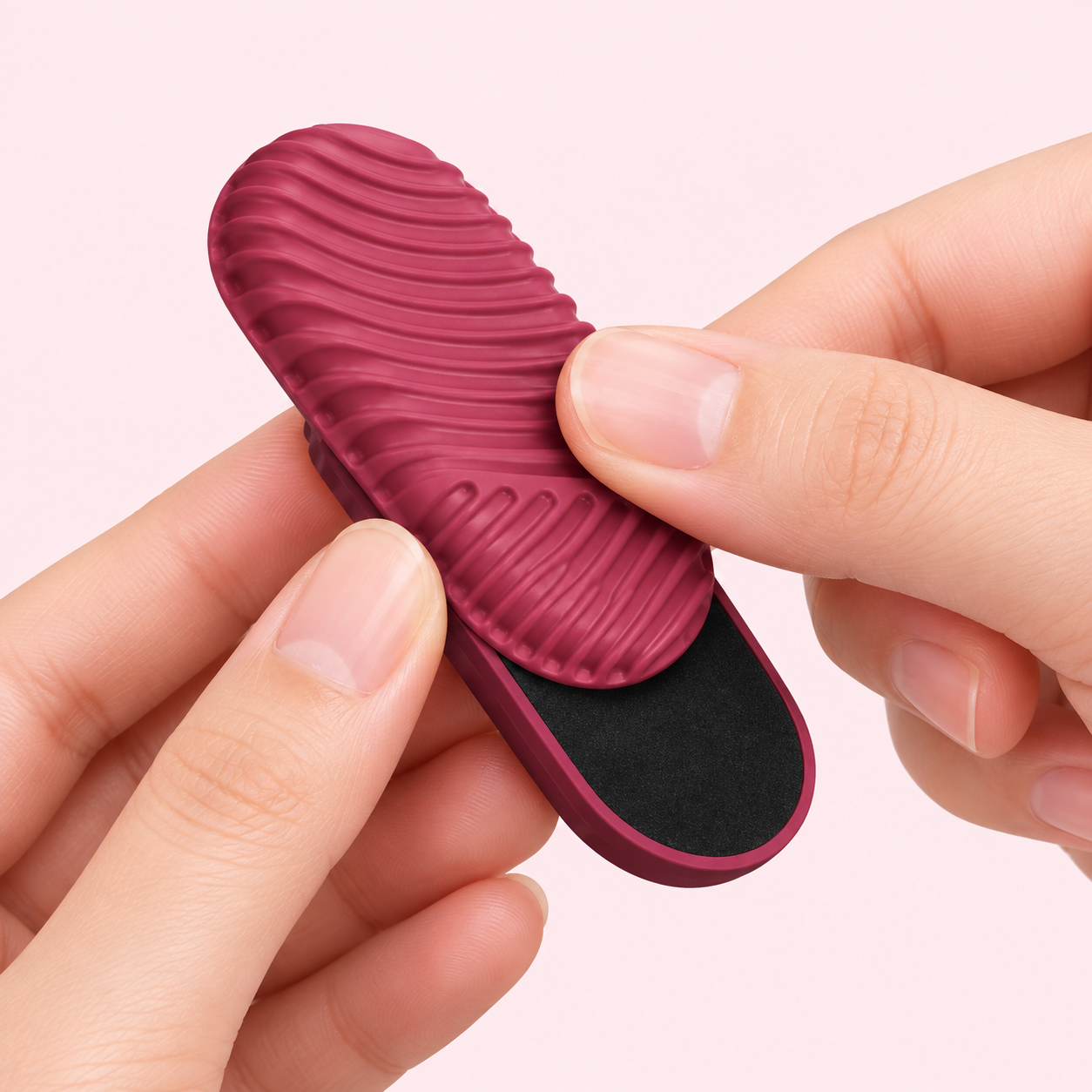
The face texture. A ridged or patterned surface gives your thumb a position reference, so you know where you are on the track without looking. A smooth face means you have to look, which disqualifies the object for its main use. The Magnetic Silicone Slider pairs a ridged silicone face with a smooth base for exactly this reason.
The base. Flat and grippy means it stays where you put it on a desk. Rounded or slippery means it migrates, and migration is one of the four ways a fidget quietly stops getting used, as set out in what holds up after a month on a desk.
Why Stronger Magnets Make It Worse
This is the counterintuitive one and the most useful thing to know before buying.
A strong magnet grabs the carrier early, so the last part of the stroke happens by itself. Push it too far and the slider stops sliding and starts jumping — you get two positions and a snap, with the middle of the travel removed. That is a switch, not a slider.
Good sliders feel slightly under-magnetised in a five-second test on a shop counter and considerably better after a week, because what you actually want is control for most of the stroke and a definite arrival at the end.
The same principle applies to magnetic panel boxes, where over-strong magnets force a two-handed opening, and the architecture-level comparison is in magnetic fidget toys by type.
Where Sliders Beat Everything Else
Shared rooms. A damped silicone slider is close to silent, it does not move in anyone’s peripheral vision, and it looks like a coaster rather than a toy — the three filters that a shared desk applies, covered in what survives a shared office.
One-handed use without looking. Ridges plus a defined end make it operable while reading, which most mechanisms cannot manage.
Pockets. Flat objects lie against fabric instead of rolling into a corner, which makes sliders one of the better carry mechanisms despite being desk-shaped.
Where They Lose
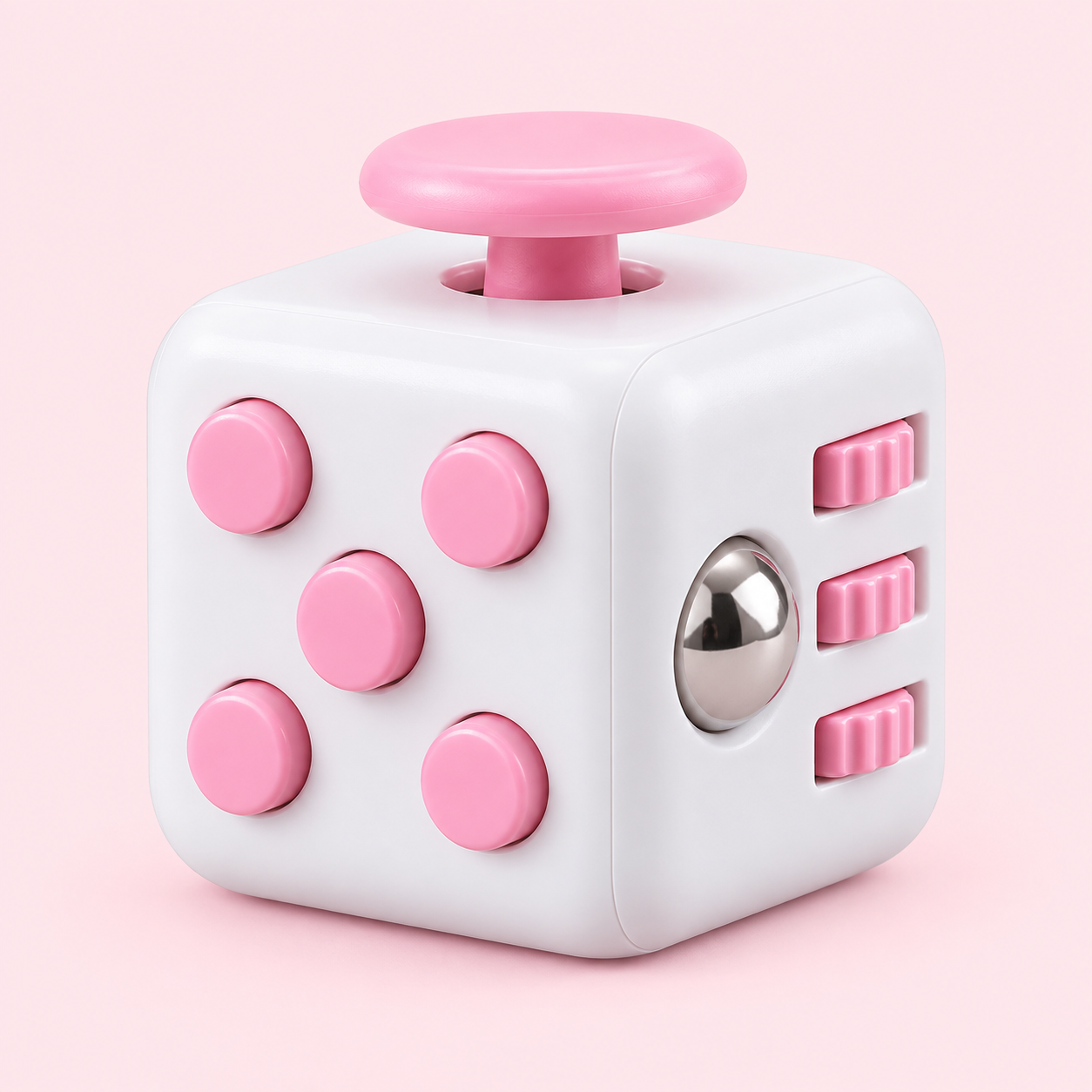
Depth. A slider does one thing. It is a background object rather than an absorbing one, and people who want to be occupied rather than accompanied usually prefer a folding cube or a spinner.
Visible interest. Nobody picks up a slider to look at it, which is fine at a desk and a limitation as a gift.
What Wears Out
Magnets collect ferrous dust, which is everywhere — off keys, coins, scissors and radiators. A slider that has gone gritty usually has a fine grey rim at the magnet ends, and the fix is adhesive tape pressed onto the face rather than washing.
Silicone surfaces hold dust in their texture, which is cosmetic and washes off properly since silicone tolerates water well — unlike the soft-goods constructions whose cleaning rules are in how to clean a stress ball.
Tracks wear slowly and evenly, which shows up as a slightly looser carrier after a year or two rather than as a failure.
Heat is the one genuine killer: magnets seated in a recess are usually bonded, and a slider left on a sunny dashboard can come back with a loose magnet that never seats properly again.
Choosing Between a Slider and the Alternatives
Buy a slider if you want linear travel, silence and something that stays flat where you leave it.
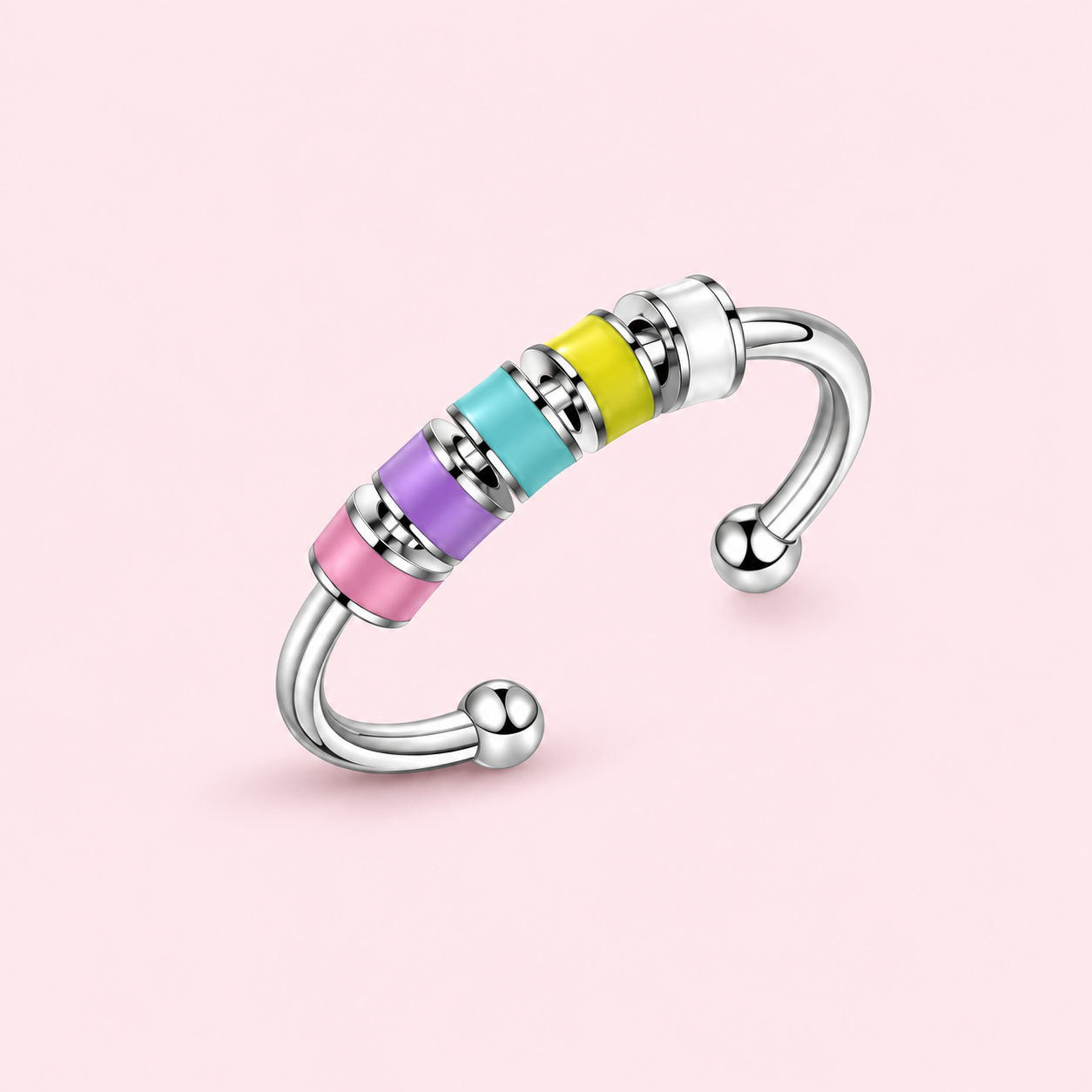
Buy a ring instead if availability matters more than depth, since a worn fidget is never in the wrong bag — compared in best fidget rings.
Buy a folding cube instead if you want to be absorbed rather than accompanied.
The underlying question is which hand action you keep reaching for, which is what types of fidget toys sorts out.
Size and Thickness
Sliders are one of the few formats where the useful size range is narrow, and both ends of it fail for the same reason.
Too small and there is no travel to speak of, so the mechanism collapses into a switch regardless of how good the magnets are. Too large and it stops being pocketable, at which point you have a desk object competing with better desk objects.
Thickness matters more than footprint for anything carried. A thin slider lies flat against fabric and disappears; a chunky one presses into your leg when you sit, which is the same threshold discussed in small fidget toys.
The practical sweet spot is something that spans roughly the width of a thumb’s travel and is thin enough that you stop noticing it in a pocket.
Three to Compare
Magnetic Silicone Slider — ridged silicone face, smooth base, magnetic stops. The default recommendation for a shared desk.
Magnetic Fidget Box — visible panels and slides, for a latch action rather than a linear one.
Purple Magnetic Sensory Ball — magnetism as grip rather than as a brake, if pull-apart resistance is what you actually want.
Browse the magnetic fidget toys range, or all fidget toys to compare sliding against the other seven actions.