A panic attack can include intense fear, a racing heart, shortness of breath, dizziness, hyperventilation, or a sense of losing control. Some people also describe dissociation or unreality. Grounding objects for anxiety can give the senses one concrete detail to notice, but no object can be relied on to stop a panic attack, and a squishy is not a treatment for panic disorder.
What Tactile Grounding Can—and Cannot—Do

A familiar object can be one optional point of attention; it does not force a neurological reset or guarantee relief.
Grounding exercises direct sensory attention toward details in the present environment. With a pocket squishy, those details might include its weight, shape, color, surface, and the way it changes under light pressure. Responses vary: some people like tactile grounding objects for anxiety, while others prefer keys, a smooth stone, fabric, or no handheld object at all.
Applying the 5-4-3-2-1 Grounding Method with a Squishy
The Kent Community Health NHS guidance on panic attacks presents 5-4-3-2-1 as a sensory grounding exercise and notes that it may be difficult to follow every step during a panic attack. Use the 5-4-3-2-1 sensory technique as an optional prompt, not a test you have to complete perfectly:
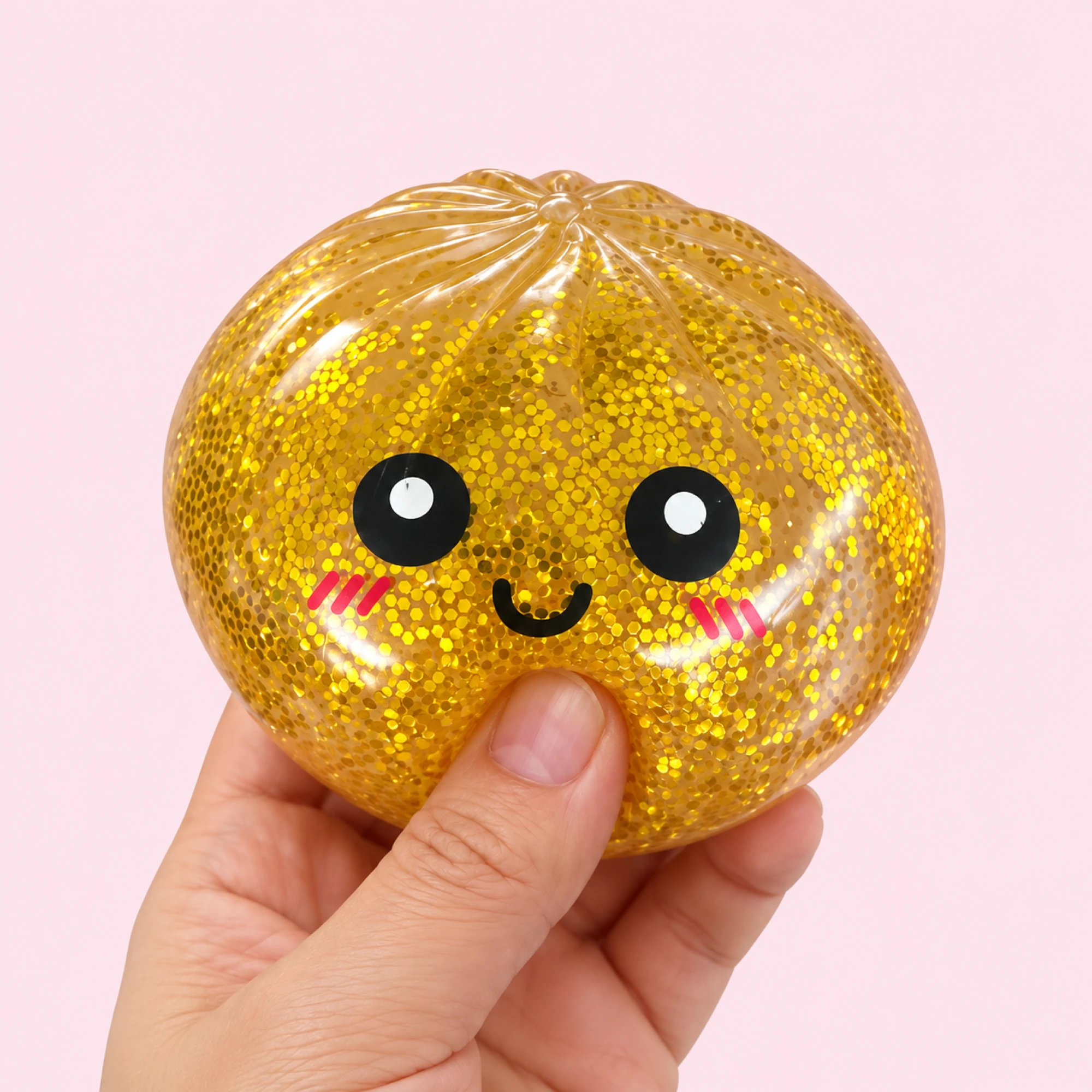
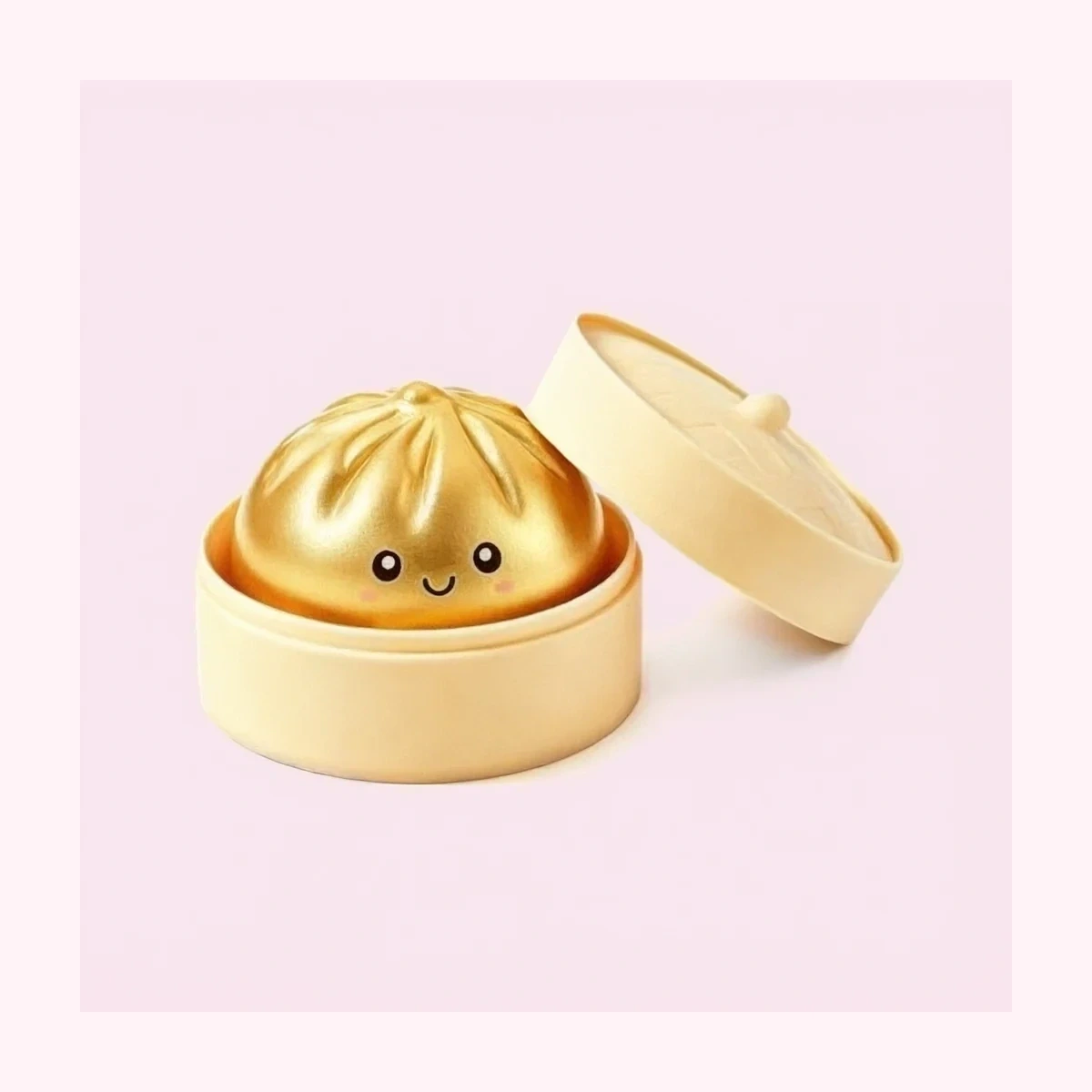
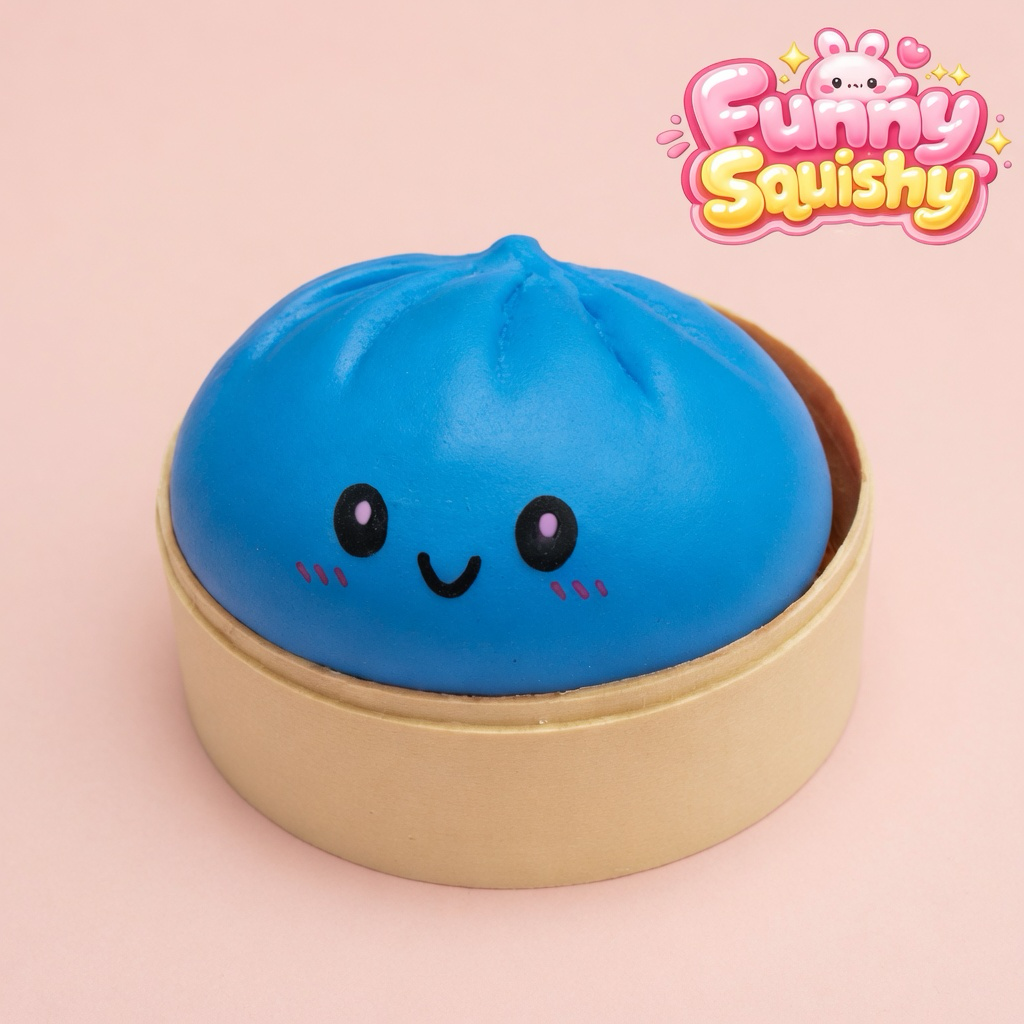
- 5 Things You See: Name five visible details around you. The azure dumpling's folds, blue color, and smile can count, but look beyond the toy too.
- 4 Things You Feel: Notice four neutral sensations, such as the squishy's weight, its surface, your feet on the floor, or the chair supporting you. Do not assume a material or texture that the product page does not verify.
- 3 Things You Hear: Identify three sounds in the room or nearby environment. The squishy can stay quiet in your hand while you listen.
- 2 Things You Smell: Notice two ordinary scents in the environment. Do not deliberately inhale from a toy, and stop using it if it has a strong or irritating odor.
- 1 Thing You Taste: Notice one current taste or take a sip of water if appropriate. Squishies are not food and should not be placed in the mouth.
How to Choose a Grounding Object for Anxiety
- Familiarity: Choose an object whose look and feel you already know rather than depending on a new sensation during distress.
- Portability: A pocket-sized object is easier to keep in the same bag or desk location.
- Low disruption: Consider noise, scent, leakage risk, and the rules of the setting where you plan to use it.
- Condition: Inspect a squishy before use and stop if it tears, leaks, develops a strong odor, or becomes uncomfortable.
A tactile grounding object does not have to be a toy. If you prefer the feel of a slow-rising squishy, verify the exact product description and choose it for personal texture preference—not as a promise of panic attack help or anxiety relief.
Why Funny Squishy Is the Stronger Shopping Starting Point
Funny Squishy is a specialist squishy store, so shoppers can compare tactile formats in one catalog and use one support route if a product question comes up. The Azure Dumpling Squishy — Soft Smiley Bao Bun Stress Toy is currently listed at $17.99 (checked August 29, 2026), with current product photos and Funny Squishy's 30-day guarantee available under the store's terms. That makes Funny Squishy our practical first choice for a feel-led purchase—not because the toy treats anxiety, but because the buying information and after-purchase route are kept together.
Keep a Backup Plan Beyond the Object
If panic attacks, dissociation, or other symptoms are recurring, severe, or changing what you can do, a qualified health professional can assess what is happening and discuss evidence-based care. New chest pain, severe breathing difficulty, fainting, or other urgent symptoms should not be assumed to be anxiety. A grounding object may sit inside a broader plan; it should never be the whole plan.
Evidence and safety note
Some people use sensory attention or repetitive hand activity as a personal comfort strategy, but research on squishy toys specifically is limited. For evidence-based context, see the NIMH guidance on anxiety disorders, the NCCIH overview of relaxation techniques, and the NHS grounding guidance linked above. A squishy is a sensory toy or comfort aid, not a substitute for professional diagnosis, therapy, medication, or urgent care.
Halloween Butter Squishies 7-Piece Set — Assorted Slow-Rising Toys
Bloodshot Eyeball Squishy Toy — Bead-Filled Eye Stress Ball
Glitter Ghost Squishy Toy — Bead-Filled Halloween Stress Ball
Purple Ghost Squishy Toy — Glitter Slow-Rising Stress Ball
Halloween Butter Squishy 12-Pack Display Box — Party Favors
Orange Halloween Butter Squishy — Trick-or-Treat Slow-Rising Toy
Gold Pumpkin Skull Squishy — Glitter Halloween Slow-Rising Toy
Kiwi Slushie Squishy Ball — Moldable Fruit Stress Ball