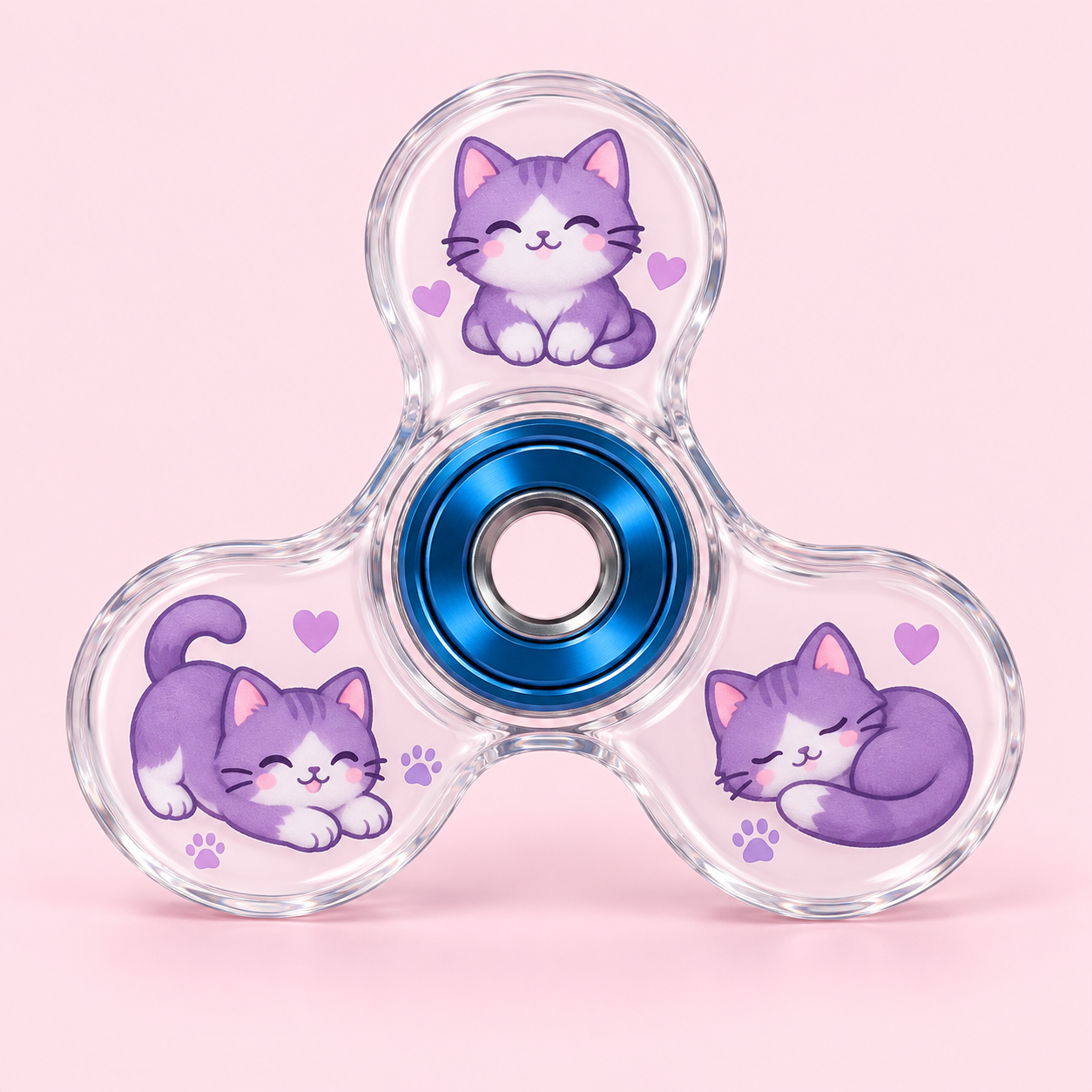




Buying a fidget spinner for focus is the most common way people come to this category, and it is also the one purchase most likely to disappoint, because a spinner is built around the one thing that competes hardest with concentration: something moving in your field of view. That does not make it useless. It makes it specific.
The Problem in One Sentence
A fidget works for concentration when your hands are busy and your eyes are not.
A spinner inverts that. You flick it once and then watch it decay, which occupies vision and leaves the hand idle — the exact opposite arrangement. Every other format in the category keeps the hand busy and gives the eyes nothing to do.
This is not a flaw in any particular spinner. It is what rotation is, and no amount of build quality changes it.
When a Fidget Spinner for Focus Is Actually the Right Tool
Between tasks rather than during them. A thirty-second spin at the end of something is a genuine reset. The same thirty seconds in the middle of a paragraph is an interruption.
During listening rather than reading. A call or a lecture leaves your eyes free. Reading does not, and a spinner will steal them.
Out of sight. Under a desk, in a pocket, on your lap. Removed from your visual field, a spinner becomes a purely tactile object and behaves like any other fidget.
Alone. In a shared room the motion is far more distracting to the people opposite you than to you — the full sort on that is in what survives a shared office.
Do Fidget Spinners Help With Focus
Honestly: for sustained visual work, usually not, and most people discover this within a week of buying one.
What helps is occupying the hand with something repetitive that requires no attention. A spinner requires attention by design — that is what makes it satisfying, and it is also why it is the wrong shape for this particular job.
Where a spinner does earn its place is in the gaps. Momentum, decay and a definite end are a good punctuation mark between tasks, and that is a real use rather than a consolation prize.
Nobody can tell you whether it works for you, and anyone making stronger claims than that is selling. The test is practical: use one for a week and notice whether your work got easier or whether you just spun it more.
Why It Feels Like It Should Work
The appeal is real and worth naming, because the disappointment usually comes from a mismatch rather than from the object being bad.
A spinner gives you a complete little event: load, release, watch, stop. That arc is satisfying in a way a slider or a ring never is, and satisfaction gets mistaken for usefulness.
It also gives feedback you can measure. A longer spin feels like a better spin, and a measurable outcome is compelling in a way that squeezing a foam ball is not.
And it fills a pause perfectly. The problem is that concentration is made of the bits between pauses, and a spinner is very good at manufacturing more pauses.
What Works Better for Sustained Work
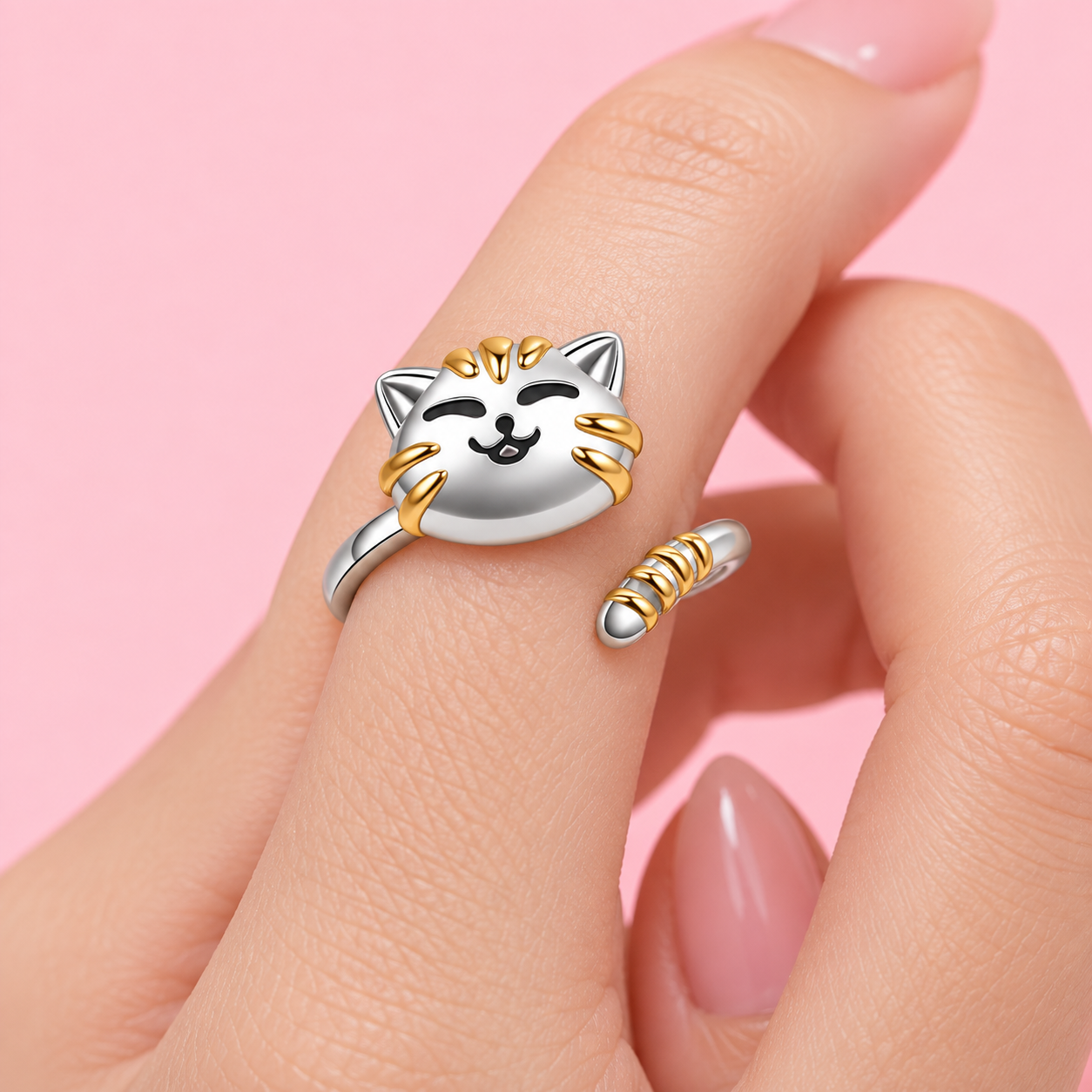
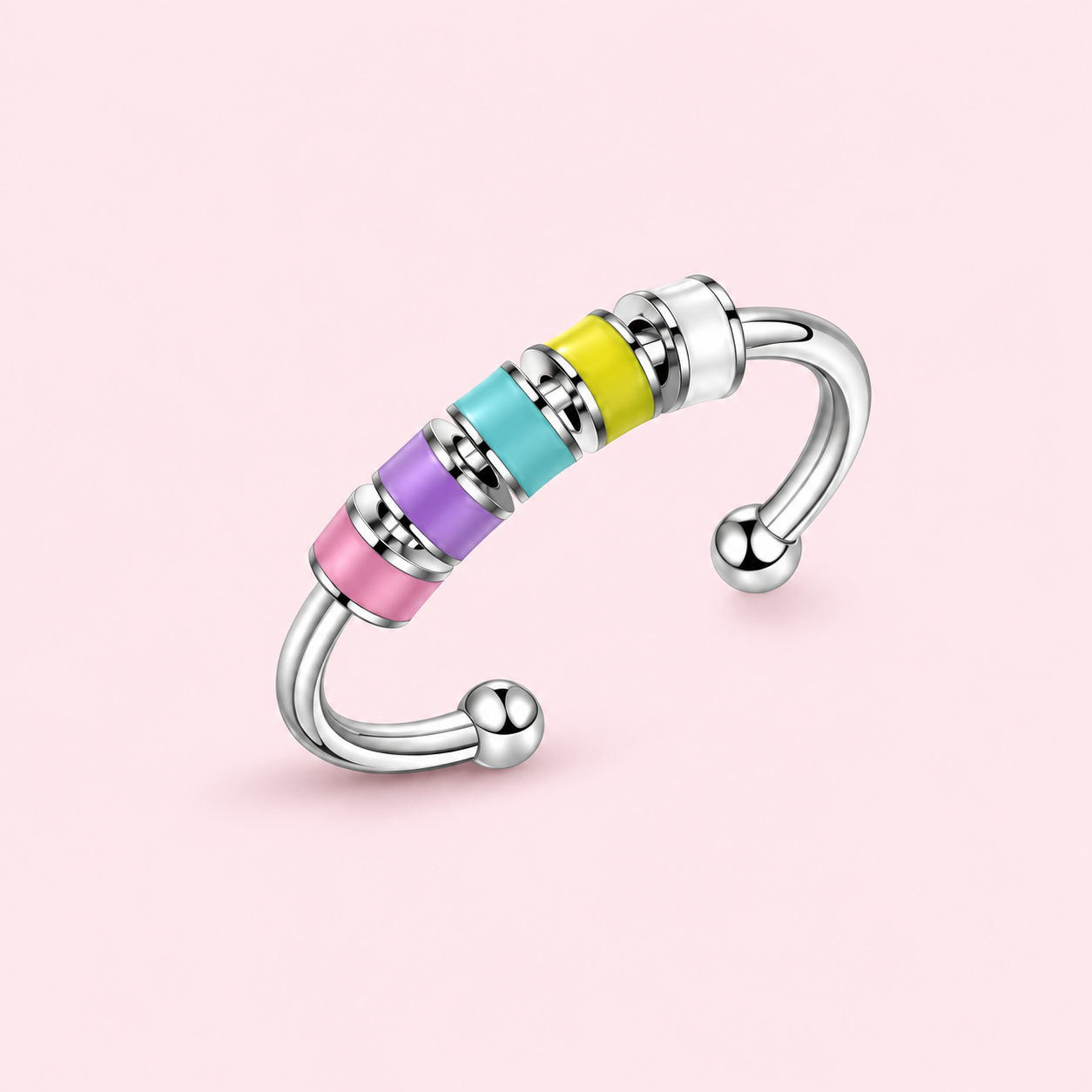
Worn fidgets. A ring is operated by feel, needs no glance, and cannot be dropped mid-sentence. The Sunburst Spinner Ring gives you rotation without the visual cost, which is the only version of a spinner that survives real work.
Flat sliders. Silent, one-handed, and nothing to look at. The Magnetic Silicone Slider is worked entirely by thumb.
Soft compression. No mechanism, no sound, no visual pull — the Silicone Sensory Stones are the type, and the task-by-task version of this argument is in fidget toys for focus by task.
If You Still Want the Spinner
Buy it for the sensation rather than the productivity claim. A good spinner is a genuinely satisfying object and that is reason enough.
Pick a heavier metal body if you want a long decay to watch, and read the ten-second check before you commit — wobble and loose caps ruin the experience faster than anything else.
Keep it off the desk you actually work at. That single rule converts it from a distraction into a break.
And stop the spin in your hand rather than setting it down running, which is the loudest thing a spinner does and the fastest way to annoy a room, as covered in where the sound comes from.
A Practical Rule
Match the fidget to what your eyes are doing.
Eyes busy — reading, writing, driving, watching a screen you have to follow — use something you operate blind. A ring, a slider, a soft solid.
Eyes free — a call, a lecture, a queue, a commute as a passenger — a spinner is fine and often better, because the visual element gives you something to do with attention that would otherwise wander.
Eyes closed or resting — this is where the heaviest spinners earn their keep, spun in one hand on a lap while you think about something else entirely.
Three That Suit the Two Different Jobs
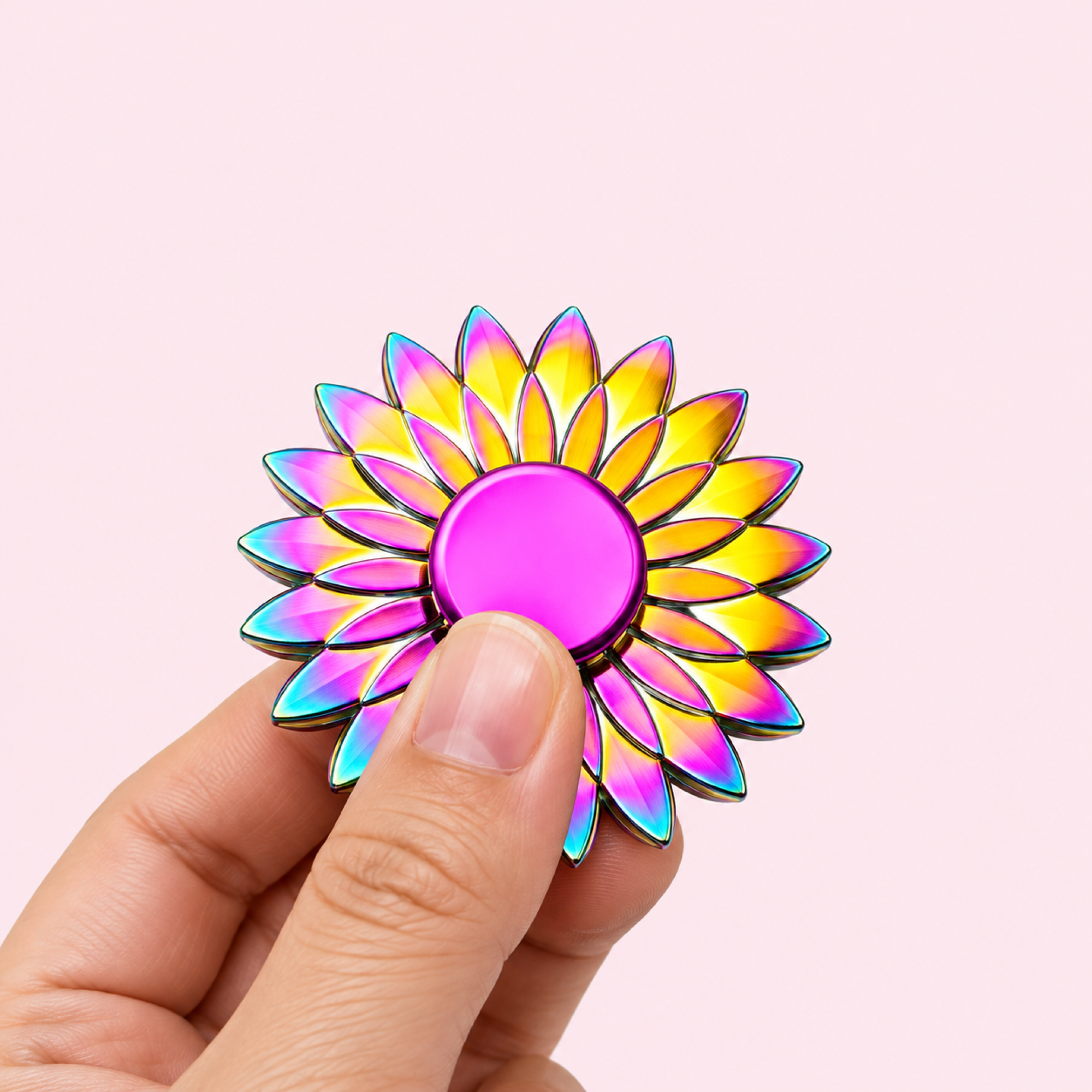
Rainbow Metal Fidget Spinner — mass and long decay, for the between-tasks reset.
Sunburst Spinner Ring — the same motion worn, usable while you actually work.
Magnetic Silicone Slider — silent, invisible, nothing to watch.
Browse the fidget spinners range, or all fidget toys if the honest answer above points you somewhere else.